Fire and Water Remediation: A Homeowner’s Recovery Guide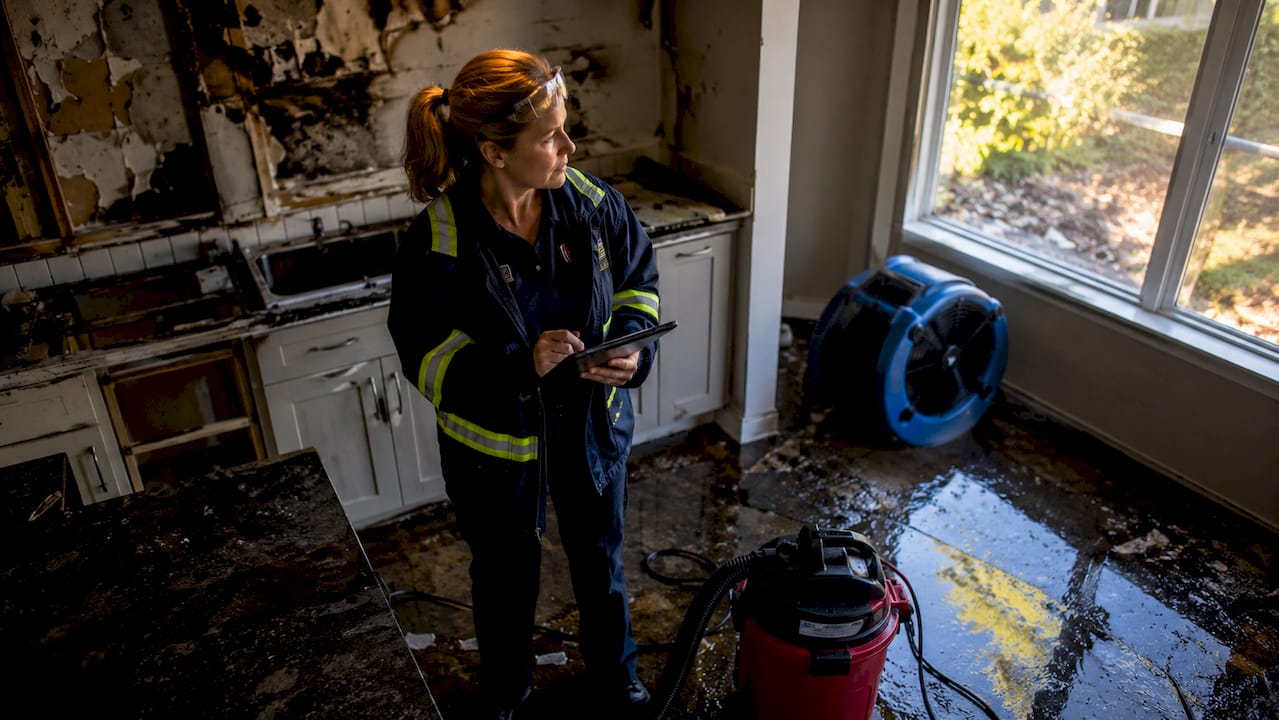
Fire and water remediation involves removing soot, smoke, and firefighting water to prevent further structural and health damage. Proper process sequencing, certified equipment, and timely action are essential for effective recovery and insurance approval. Ignoring water damage interaction, delaying remediation, or inadequate documentation can significantly extend repair time and costs.
Fire and water remediation is the coordinated process of removing soot, smoke residue, and firefighting water from a property simultaneously to prevent compounding structural and health damage. Most homeowners know fire destroys. Fewer realize that the water used to extinguish it creates a second wave of damage that can be just as destructive. Understanding both threats, and how they interact, is the difference between a full recovery and a prolonged, expensive ordeal.
What are the key phases in fire and water remediation?
Fire and water remediation follows a defined sequence governed by IICRC standards S500 for water damage, S700 for fire and smoke restoration, and S520 for mold remediation. These standards exist because skipping or rushing any phase creates problems that surface weeks later.
The phases run in this order:
Emergency stabilization. Technicians extract standing water, board up openings, and tarp the roof to stop additional damage. This phase happens within the first hours.
Water extraction and drying. Industrial equipment removes moisture from floors, walls, and framing. Crews deploy 20–40 air movers and dehumidifiers, monitoring wood moisture until it reaches 12–15% before any structural repair begins. Reaching that target matters because reconstruction on wet framing causes warping and latent mold growth.
Soot and smoke cleaning. Technicians apply specialized chemical treatments to neutralize acidic soot residue on walls, ceilings, and contents.
Structural evaluation. Engineers or certified inspectors assess load-bearing elements for fire weakening and water swelling.
Reconstruction. Drywall, flooring, and finishes are replaced once moisture readings confirm the structure is dry and stable.
Total timelines range from 3 weeks to 8 or more weeks, depending on damage severity. A minor kitchen fire with limited water intrusion may resolve in three weeks. A whole-floor fire with firefighting water soaking into the subfloor can run two months or longer.
Phase
Primary Goal
Key Metric
Emergency stabilization
Stop ongoing damage
Completed within hours
Extraction and drying
Remove moisture
Wood moisture 12–15%
Soot cleaning
Neutralize acidic residue
Surface pH normalized
Structural evaluation
Confirm structural integrity
Engineer sign-off
Reconstruction
Restore habitable condition
Final inspection passed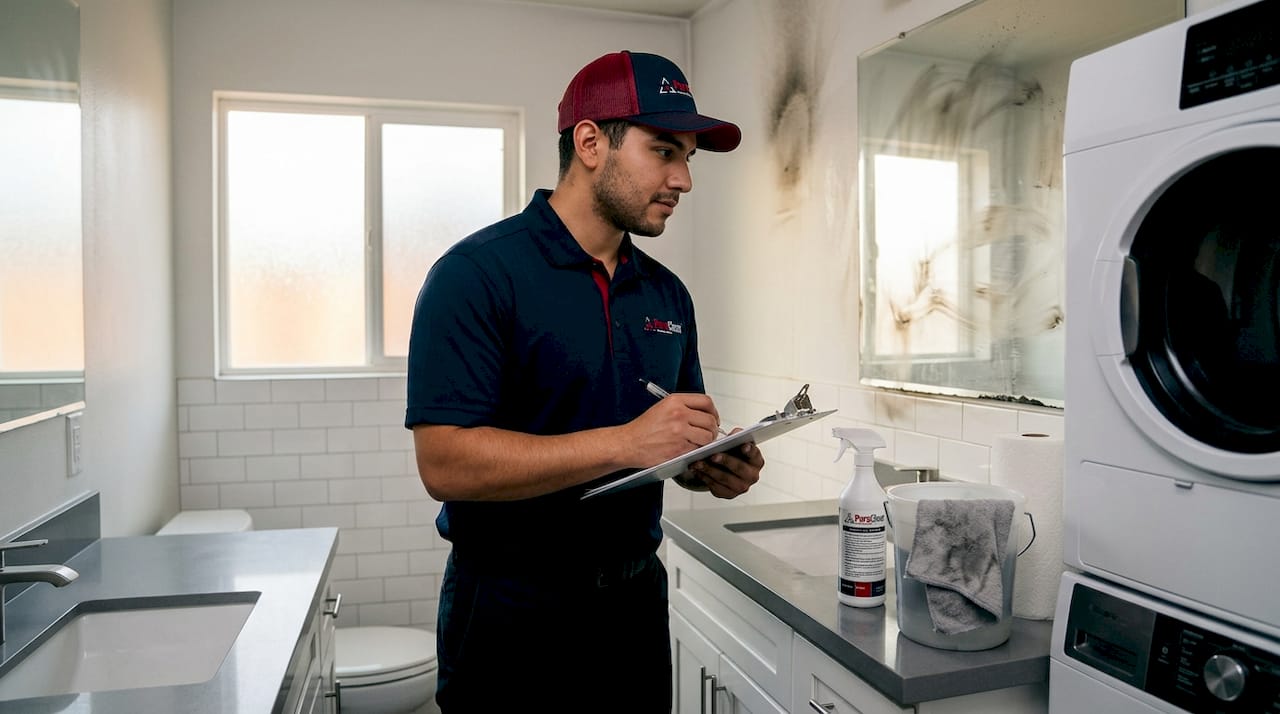
Pro Tip: Ask your restoration contractor for psychrometric readings at each drying check. These readings track temperature, humidity, and dew point, giving you objective proof that drying is progressing. Insurance adjusters accept this data as evidence.
How do fire and water damage interact to complicate remediation?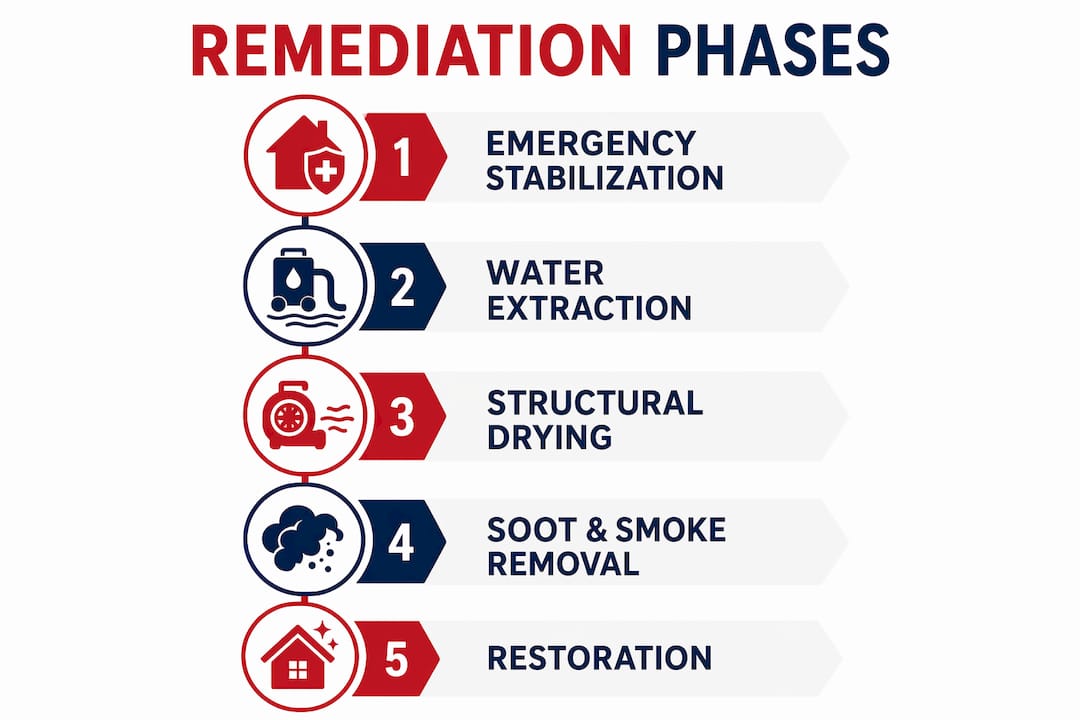
Many homeowners focus on fire damage and overlook the water damage left by firefighting efforts. That oversight is costly. The two damage types do not sit side by side. They react with each other chemically and physically, creating hazards that neither would produce alone.
Here is what that interaction looks like in practice:
Acidic soot formation. Soot residues react with moisture to form acidic substances that corrode metal fixtures and permanently stain porous surfaces within hours of the fire. Simple soap and water cleaning worsens this by spreading the acid deeper into the material.
Hidden moisture penetration. Water from fire hoses saturates wall cavities, framing, and insulation far beyond what is visible. Moisture mapping uses thermal imaging and moisture meters to locate water that visual inspection misses entirely.
Mold growth acceleration. Wet, soot-contaminated materials create ideal conditions for mold. Delaying remediation beyond 24–48 hours increases microbial growth, structural swelling, and damage class escalation.
Air quality hazards. Smoke particles, volatile organic compounds (VOCs), and mold spores circulate together in post-fire air. Proper ventilation, HEPA filtration, and negative air pressure control are required to make the space safe before workers or residents re-enter.
When wet soot penetrates porous materials like drywall and wood framing, it bonds chemically with the surface. Standard cleaning agents cannot break that bond. Specialized chemical neutralizers are the only effective treatment, and applying the wrong product first can seal the soot deeper, making professional removal impossible without full material replacement.
Pro Tip: Never run your HVAC system after a fire. Smoke particles and mold spores load into the ductwork and redistribute throughout the property every time the system cycles. Cleaning your HVAC after fire is a separate, specialized step that must happen before the system runs again.
What immediate actions should homeowners take after fire and water damage?
Speed matters more than most homeowners realize. A loss discovered and addressed within four hours produces significantly better outcomes than one addressed after 48 hours. Here is the sequence that protects both your property and your insurance claim.
Confirm the property is safe to enter. Wait for fire department clearance. Check for structural instability, gas leaks, and live electrical hazards before stepping inside.
Shut off utilities. Turn off gas, electricity, and water at the main shutoffs if you can do so safely. This stops secondary ignition and additional water intrusion.
Document everything before touching anything. Photograph and video every room, every damaged item, and every water stain. Thorough documentation is the foundation of your insurance claim. Adjusters cannot reimburse what was not recorded.
Call your insurance company. Report the loss immediately. Ask specifically about your deductible amount, your additional living expense (ALE) coverage, and what mitigation costs are reimbursable.
Begin emergency mitigation. Under most insurance policies, homeowners have a legal duty to mitigate further damage. This means arranging water extraction, board-up, and temporary tarping promptly. Keep every receipt and log every action with dates and times.
Call a certified restoration company. Professional restoration teams aim to arrive within hours of emergency calls, with some guaranteeing response within 45 minutes. That speed directly limits water saturation and mold spread.
Pro Tip: Keep a written log of every mitigation expense: board-up costs, hotel stays, equipment rentals, and meals if ALE applies. Insurance reimbursements follow documentation. Deductibles, often flat fees in the $500–$1,000 range, are paid directly to the restoration company, not the insurer.
Why professional fire and water remediation services are crucial
DIY attempts at fire and flood recovery carry risks that go beyond incomplete cleaning. Improper handling can spread contamination, create health hazards, and give your insurance company grounds to deny the claim. Certified professionals bring three things that homeowners cannot replicate on their own.
Industrial equipment. Truck-mounted extractors, desiccant dehumidifiers, and HEPA air scrubbers remove moisture and contaminants at a scale that consumer equipment cannot match.
Technical documentation. Certified technicians produce moisture maps, psychrometric data logs, and photo evidence that restoration companies provide directly to insurance adjusters as clinical evidence. This documentation accelerates claim approval.
IICRC certification. Technicians certified under ANSI/IICRC standards S500, S700, and S520 follow protocols that produce consistent, verifiable results. Certification is the clearest quality indicator when choosing a contractor.
Mold containment. Visible mold exceeding 10 square feet requires certified remediation. Attempting to clean it without HEPA-grade containment spreads spores to unaffected areas and voids coverage.
Air quality clearance. Professionals conduct air testing before declaring a space safe. That clearance protects residents and satisfies insurer requirements.
Puroclean technicians in Northeast Sacramento, Folsom, Rancho Cordova, and Citrus Heights carry IICRC certifications and respond 24 hours a day. Their fire damage restoration work covers both soot removal and structural drying under one coordinated response.
Common challenges and pitfalls in fire and water remediation
The most expensive mistakes in restoration after fire and water damage are not dramatic. They are quiet errors that compound over days and weeks.
Pitfall
Why It Happens
How to Avoid It
Rebuilding before full drying
Pressure to return home quickly
Verify wood moisture at 12–15% before any reconstruction
Improper soot cleaning
Using household cleaners on acidic residue
Use only IICRC-approved chemical treatments
Ignoring hidden mold
Relying on visual inspection alone
Require moisture mapping and air testing
Contaminated HVAC system
Overlooking ductwork after fire
Schedule professional HVAC cleaning before system restart
Incomplete expense documentation
Assuming the insurer tracks costs
Log every mitigation action with receipts and timestamps
The single most common pitfall Puroclean technicians encounter is reconstruction that starts too early. Contractors eager to finish the job, or homeowners eager to return, begin framing and drywall work before moisture readings confirm the structure is dry. The result is mold growth behind new walls, requiring demolition and a second round of remediation.
Pro Tip: Request a written drying log from your restoration contractor at every visit. This log records daily moisture readings by location. If readings plateau or rise, drying equipment needs adjustment. A written log also protects you if a dispute arises with your insurer about the timeline.
Key Takeaways
Effective fire and water remediation requires simultaneous treatment of soot and moisture, certified professional equipment, and thorough documentation to protect both your property and your insurance claim.
Point
Details
Act within 24–48 hours
Delaying remediation beyond this window accelerates mold growth and structural damage.
Treat fire and water together
Wet soot forms acidic residue that worsens without simultaneous drying and chemical neutralization.
Document before you touch anything
Photos, moisture maps, and expense logs are required for full insurance reimbursement.
Verify drying before rebuilding
Wood moisture must reach 12–15% or reconstruction causes latent mold and warping.
Use IICRC-certified contractors
Certification under S500, S700, and S520 standards is the clearest quality indicator available.
What I’ve learned after years of watching homeowners face this
The homeowners who recover fastest share one habit: they call a certified restoration company before they call a contractor. That order matters more than most people expect.
A general contractor’s job is to build. A certified restoration technician’s job is to document, dry, and stabilize. When those roles get reversed, reconstruction starts on wet framing, mold grows behind new drywall, and the homeowner faces a second remediation six months later. I have seen that scenario play out more times than I can count.
The other thing homeowners consistently underestimate is the air quality risk. Smoke particles and mold spores are invisible. A property can look clean and smell faintly of smoke while carrying airborne contaminant levels that cause respiratory symptoms weeks later. Poor air quality symptoms often appear gradually, which makes it easy to attribute them to stress rather than the environment. Air testing before re-occupancy is not optional. It is the only way to confirm the space is safe.
The narrow window for preventing secondary damage is real. Forty-eight hours is not a guideline. It is the point at which a manageable remediation becomes a significantly more complex and expensive one. If you are reading this after a fire, the most valuable thing you can do right now is make the call.
— Visual
Puroclean is ready when fire and water damage strikes
When fire and water damage hit your property, the clock starts immediately. Puroclean of Northeast Sacramento provides 24/7 emergency restoration with IICRC-certified technicians who handle both fire and water damage under one coordinated response. No handoffs between contractors. No gaps in documentation.
Puroclean produces the moisture maps, psychrometric logs, and photo documentation that insurance adjusters require for efficient claim processing. Whether you are in Northeast Sacramento, Folsom, Rancho Cordova, or Citrus Heights, Puroclean’s team is available around the clock to assess your property, begin extraction and drying, and guide you through every step of the recovery process. Contact Puroclean today for an immediate inspection and a clear restoration plan.
You can also find Puroclean and read more local recovery resources on Google Maps.
FAQ
What does fire and water remediation include?
Fire and water remediation covers emergency water extraction, structural drying, soot and smoke cleaning, air quality control, and reconstruction. The process follows IICRC standards S500, S700, and S520 to address both damage types simultaneously.
How long does fire and water damage restoration take?
Restoration typically spans 3 to 8 or more weeks depending on damage severity. Drying alone cannot conclude until wood moisture reaches 12–15%, which is the threshold required before any reconstruction begins.
Can I clean up fire and water damage myself?
DIY cleanup of significant fire and water damage risks spreading soot contamination, missing hidden moisture, and voiding your insurance claim. Visible mold exceeding 10 square feet requires certified professional remediation under IICRC guidelines.
How does water from firefighting cause additional damage?
Firefighting water saturates walls, framing, and insulation rapidly. It reacts with soot to form acidic residue that corrodes metals and stains porous materials within hours, creating compounding damage that requires simultaneous drying and chemical treatment.
What documentation do I need for my insurance claim?
Your claim requires photos of all damage taken before cleanup, moisture maps, psychrometric data logs, and a written record of every mitigation expense including board-up costs, hotel stays, and equipment rentals. Restoration companies provide this technical documentation directly to adjusters.
Recommended
Restoration After House Fire: Complete Step-by-Step Recovery – PuroClean of Northeast Sacramento
Role of Restoration After Fire: Complete Guide – PuroClean of Northeast Sacramento
Restoration Process Explanation Guide for Fast Recovery – PuroClean of Northeast Sacramento
Fire Damage Cleanup Guide: Restore Property Safely and Fast – PuroClean of Northeast Sacramento