


Fire Damage Explained: Causes, Types, and Recovery
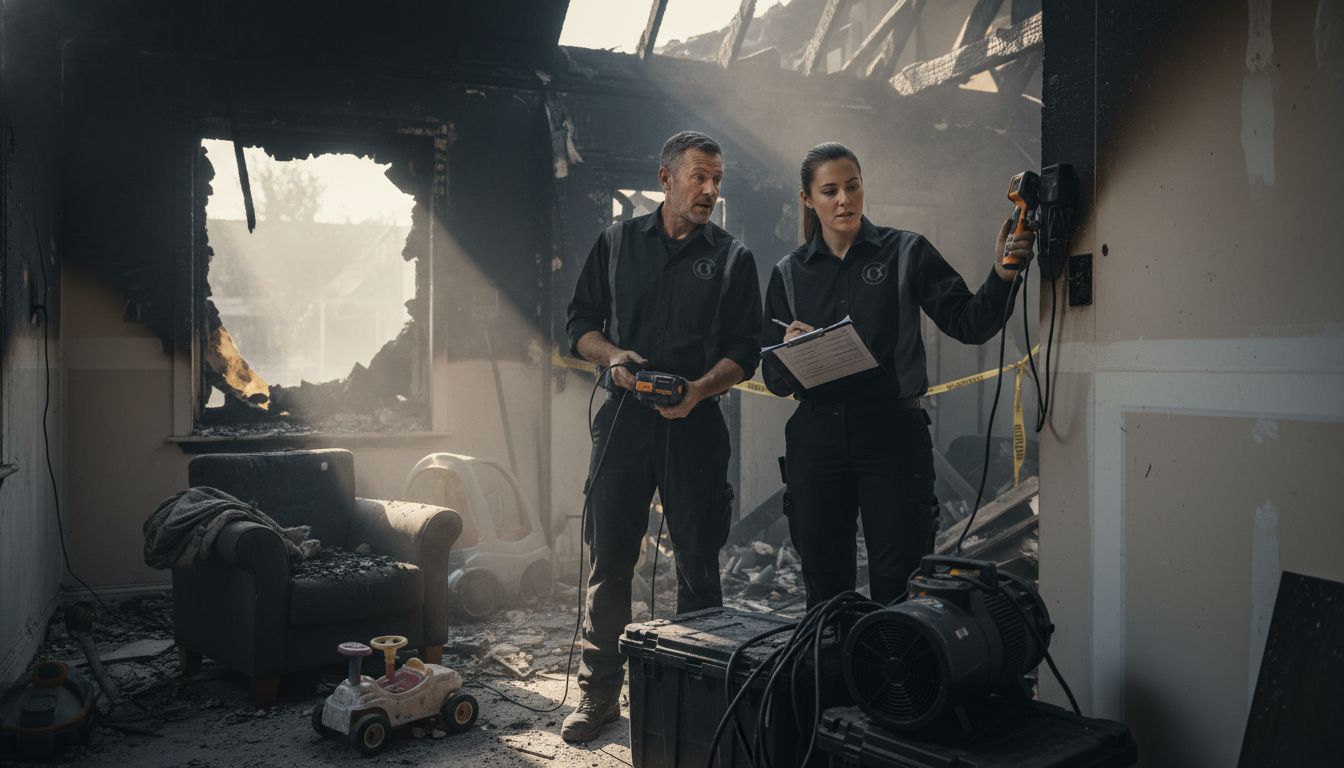
Fire can turn a safe home or thriving business into ruins in just minutes. Nearly 358,500 home fires occur each year in the United States, according to national fire data. The consequences go far beyond blackened walls and lost possessions, impacting finances and emotional well-being. Understanding the true scope of fire damage helps property owners prepare, recover stronger, and avoid pitfalls that often complicate the road to restoration.
Table of Contents
- What Is Fire Damage and Its Impact
- Main Causes and Types of Fire Damage
- How Fire Damages Structures and Contents
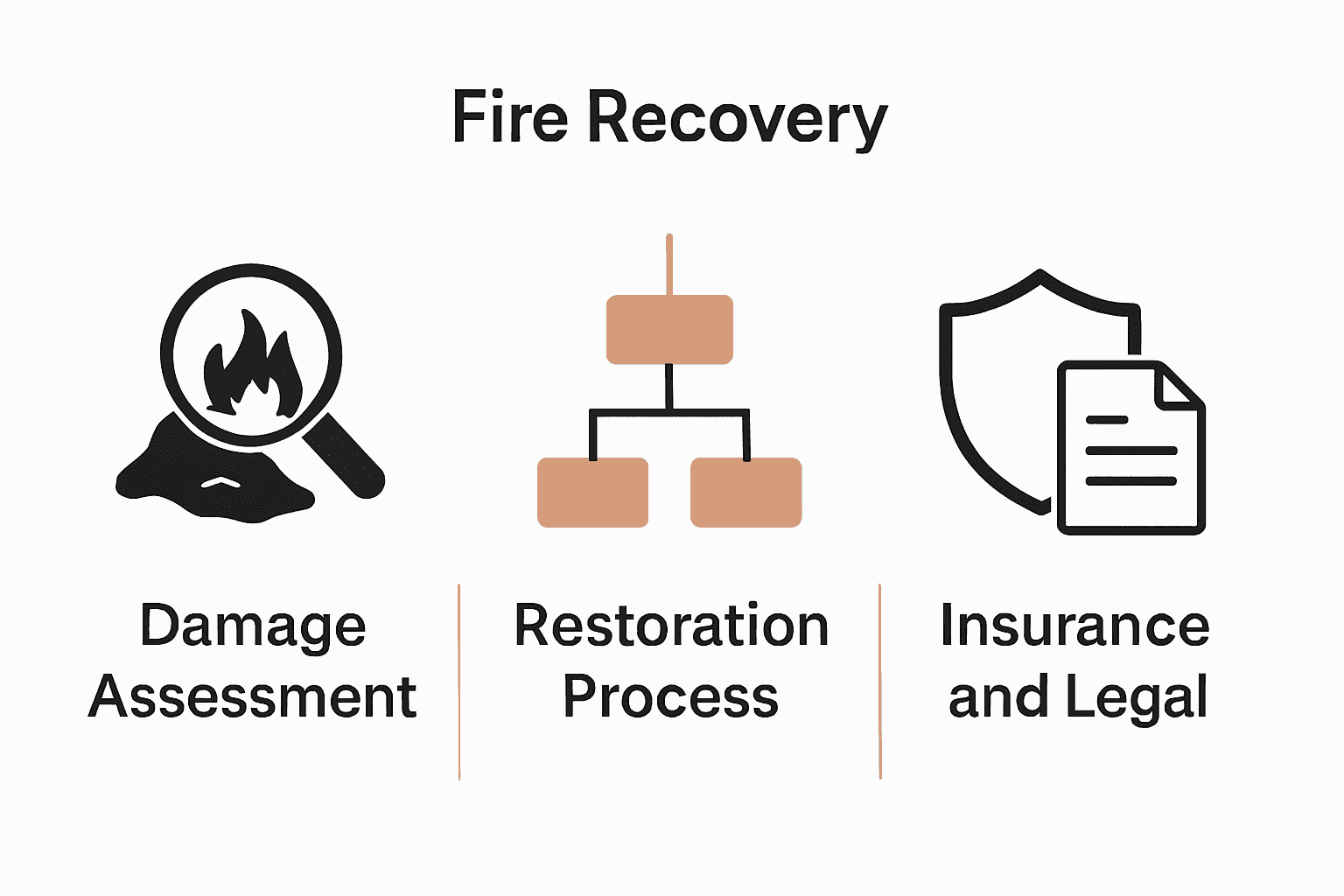
- Fire Damage Restoration Process Overview
- Insurance Claims and Legal Considerations
Key Takeaways
| Point | Details |
|---|---|
| Comprehensive Nature of Fire Damage | Fire damage includes structural, material, and emotional impacts, necessitating a thorough understanding of its complexities. |
| Diverse Causes of Fire | Common triggers range from electrical malfunctions to cooking accidents, highlighting the need for vigilance and safety measures. |
| Restoration Process Is Critical | The multi-stage restoration process requires professional intervention to effectively address visible and hidden damages. |
| Importance of Insurance Management | Proper documentation and understanding of insurance policies are essential for successful claims and legal recovery post-fire damage. |
What Is Fire Damage and Its Impact
Fire damage represents a devastating and complex phenomenon that can transform a thriving property into a landscape of destruction within minutes. According to icsi.edu, fire damage encompasses more than just physical destruction, extending into profound economic and emotional territories that can fundamentally alter a property owner’s life.
At its core, fire damage involves comprehensive destruction affecting structures, personal belongings, and critical infrastructure. The cga.ct.gov highlights that this damage isn’t limited to visible burn marks, but includes complex layers of impairment such as:
- Structural compromises in walls and foundations
- Smoke and soot contamination throughout interior spaces
- Water and chemical damage from firefighting efforts
- Potential electrical system failures
- Long-term material degradation
The impact of fire damage transcends immediate physical destruction. Property owners face significant challenges including substantial repair costs, potential loss of irreplaceable personal items, and complex insurance negotiations. Emotional trauma frequently accompanies these material losses, creating a multifaceted recovery process that demands professional intervention. Learn more about the restoration process in our guide on the stages of fire damage restoration.
Understanding fire damage requires recognizing its comprehensive nature – it’s not just about burned materials, but a holistic disruption that can affect every aspect of a property’s functionality and a person’s sense of security. Professional restoration becomes critical in navigating these complex challenges, offering systematic approaches to assessment, cleanup, and reconstruction.
Main Causes and Types of Fire Damage
Understanding fire damage requires deep insight into its complex origins and devastating manifestations. According to nascollege.org, fire damage stems from multiple critical sources that can unexpectedly transform a secure environment into a potential disaster zone.
Fire Causes represent a diverse range of potential triggers, including:
- Electrical system malfunctions
- Unattended cooking equipment
- Heating system failures
- Arson and intentional fire setting
- Lightning strikes
- Kitchen appliance accidents
- Faulty wiring and electrical overloads
The types of fire damage extend far beyond simple burning. icsi.edu reveals that fire damage encompasses multiple complex layers of destruction, including direct burning, extensive smoke and soot contamination, and secondary water damage from emergency firefighting efforts. Explore the most common causes of home fires in our comprehensive guide.
Each fire scenario presents unique challenges, with damage potential varying dramatically based on the fire’s origin, duration, and intensity. Electrical fires, for instance, can rapidly spread through wall cavities, while kitchen fires might concentrate damage in specific zones. Professional assessment becomes crucial in understanding the full scope of destruction and developing targeted restoration strategies that address both visible and hidden damage.

How Fire Damages Structures and Contents
Fire’s destructive potential extends far beyond visible flames, creating a complex landscape of damage that can compromise entire properties. According to theclm.org, the impact of fire encompasses profound structural and material degradation that can render buildings and personal belongings potentially irreparable.
Structural Damage manifests through multiple devastating mechanisms:
- Extreme heat causing metal warping and concrete cracking
- Compromised load-bearing walls and support structures
- Thermal expansion leading to foundational shifts
- Weakened electrical and plumbing systems
- Potential total structural collapse in severe cases
Personal contents suffer equally complex destruction. Smoke infiltration creates invisible but devastating damage, permeating fabrics, electronics, and porous materials with persistent odors and corrosive residues. Learn more about contents cleaning techniques in our comprehensive guide on smoke damage restoration.
The insidious nature of fire damage means that seemingly intact items can harbor significant risks. Water used in firefighting creates additional complications, potentially triggering mold growth and further material degradation if not immediately and professionally addressed. Professional restoration becomes crucial in salvaging structures and contents, requiring specialized techniques to neutralize chemical, thermal, and moisture-related damages.
Fire Damage Restoration Process Overview
Restoration after fire damage represents a complex, multi-stage journey that demands precision, expertise, and systematic intervention. According to theclm.org, the restoration process involves critical steps designed to mitigate damage and return properties to their pre-fire condition.
Key Restoration Stages include:
- Immediate property assessment and damage documentation
- Emergency site stabilization and securing the premises
- Water extraction and comprehensive structural drying
- Soot and smoke residue removal
- Deep cleaning of affected surfaces and contents
- Odor neutralization and air quality restoration
- Structural repair and reconstruction
Professional restoration requires specialized techniques and advanced equipment to address the multifaceted challenges presented by fire damage. Explore our comprehensive guide on fire damage restoration procedures to understand the intricate process of property recovery. As friday5.org highlights, engaging professional restoration experts ensures not just thorough property recovery but also smoother navigation of complex insurance claims.
Successful restoration goes beyond mere physical repair. It encompasses emotional recovery, insurance coordination, and strategic reconstruction that addresses both visible and hidden damage. Each fire scenario presents unique challenges, requiring tailored approaches that consider the specific type of fire, affected materials, and potential long-term structural implications.
Insurance Claims and Legal Considerations
Navigating the complex landscape of fire damage insurance claims requires strategic understanding and meticulous documentation. According to theclm.org, the legal dimensions of fire damage extend beyond simple compensation, introducing intricate processes like subrogation that can significantly impact property owners’ recovery options.
Key Insurance and Legal Considerations include:
- Comprehensive policy coverage review
- Detailed damage documentation
- Understanding subrogation rights
- Preserving evidence for potential legal claims
- Identifying potential third-party liability
- Navigating claim submission procedures
- Protecting your legal interests
Discover critical questions to ask your insurance agent after experiencing fire damage to ensure you’re fully informed about your coverage and recovery options. The subrogation process allows insurers to pursue recovery from parties potentially responsible for the fire, which can ultimately benefit policyholders by potentially recovering deductibles and uncompensated losses.
Successful insurance claim management requires proactive communication, thorough documentation, and understanding of legal nuances. Property owners must carefully track all fire-related expenses, maintain comprehensive records of damage, and work closely with both insurance representatives and restoration professionals to maximize their potential recovery and navigate the complex legal landscape surrounding fire damage claims.
Restore Peace of Mind with Expert Fire Damage Recovery
Experiencing fire damage is overwhelming and challenging. The article clearly shows how fires not only destroy property but also disrupt your sense of safety through issues like smoke contamination, water damage from firefighting, and complex structural problems. You need skilled help that understands these specific obstacles and can handle everything from emergency response to complete restoration with care and efficiency.
At PuroClean of Northeast Sacramento, we specialize in fast, professional fire and smoke damage restoration tailored to your unique situation. Our certified team uses advanced technology and proven methods to tackle soot, odors, structural repairs, and more. We also guide you through insurance processes so you can focus on recovery without added stress.
Begin your recovery journey with confidence.
Don’t wait while fire damage worsens. Connect with our expert restoration specialists today to get immediate help and start restoring your home or business. Your safety and peace of mind are our top priorities.
Learn more about our trusted emergency fire damage services and discover how we can support you every step of the way.
Frequently Asked Questions
What are the main causes of fire damage?
Fire damage can result from various sources, including electrical system malfunctions, unattended cooking equipment, heating system failures, arson, lightning strikes, kitchen appliance accidents, and faulty wiring.
How does fire damage affect structures and contents?
Fire can cause structural damage through extreme heat, leading to warped metals and cracked concrete, as well as compromising load-bearing walls. Smoke damage can infiltrate fabrics and porous materials, creating persistent odors and corrosive residues.
What does the fire damage restoration process involve?
The restoration process typically includes several key stages: immediate property assessment, emergency stabilization, water extraction, soot and smoke residue removal, deep cleaning, odor neutralization, and structural repair and reconstruction.
How can I navigate insurance claims for fire damage?
To effectively manage insurance claims for fire damage, focus on comprehensive policy coverage reviews, detailed documentation of damages, understanding subrogation rights, preserving evidence, and maintaining clear communication with both insurance representatives and restoration professionals.
Recommended
What to Do after A House Fire: Tips for Property Owners
Types of Smoke Damage: What They Are and How We Can Help
The Stages of the Fire Damage Restoration Process
The Anatomy of a Fire Damage Job – PuroClean Property Damage Experts