


Fire Damage Insurance: Protect Your Claim Now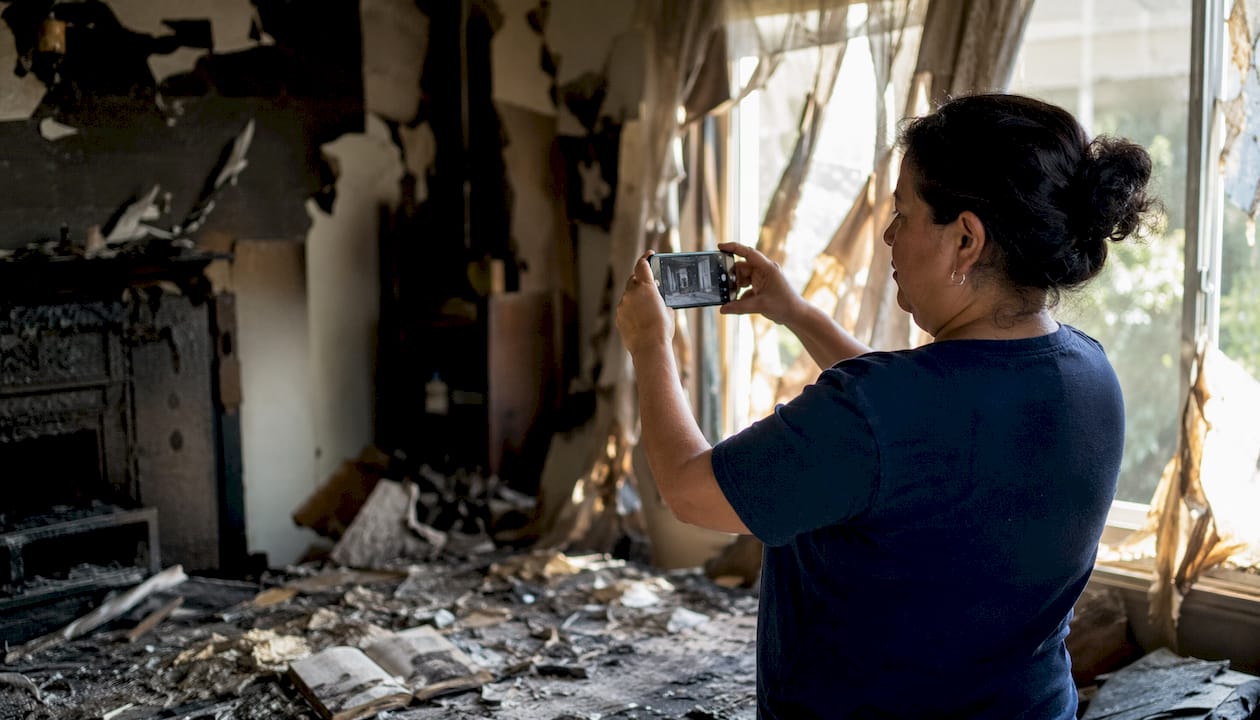
Accidental fire losses are generally covered by standard homeowners insurance — and the first 24 hours after a fire determine how smoothly your claim goes. Your policy’s dwelling coverage pays to repair or rebuild the structure; personal property coverage handles furniture, clothing, and belongings; and Additional Living Expenses (ALE) covers hotel bills and meals while your home is uninhabitable. What you do right now, before the adjuster arrives, matters as much as the policy itself.
Immediate steps to protect people and your claim:
Call 911 and evacuate. Do not re-enter until fire officials clear the structure.
Seek medical attention for anyone exposed to smoke or flames.
Notify your insurer promptly to open a claim and get a claim number.
Secure a copy of the fire department report as soon as it is available — insurers use it to validate cause and extent.
Photograph and video every room before touching anything. Do not discard damaged items; adjusters typically require inspection before disposal.
Board up openings and tarp the roof to prevent further damage — this is a contractual duty under most policies.
Keep every receipt for temporary housing, food, and clothing. Ask your insurer about an advance payment for urgent needs; it will be deducted from your final settlement.
Pro Tip: Take a video walkthrough narrating damage out loud — room by room, item by item. Spoken descriptions paired with visuals are far harder for an insurer to dispute than photos alone.
Table of Contents
How fire damage insurance works: coverage, valuation, and common mistakes
Your post-fire checklist for Northeast Sacramento
Puroclean of Northeast Sacramento is ready when you need it most
How fire damage insurance works: coverage, valuation, and common mistakes
Standard homeowners policies — HO-3 is the most common — cover fire and smoke damage across four main components: dwelling (the structure), personal property (contents), ALE (temporary living costs), and other structures like detached garages. Personal property limits typically run a portion of your dwelling coverage. What most homeowners miss is the difference between how those limits are paid out.
ACV vs. RCV — the number that changes your settlement:
Actual Cash Value (ACV): Your insurer pays depreciated value up front. A five-year-old sofa gets paid at today’s used-market value, not what a new one costs.
Replacement Cost Value (RCV): The insurer pays ACV first, then releases the depreciation holdback after you replace items and submit receipts. Never accept a final settlement before you have those receipts in hand.
Key insight: ACV vs. RCV confusion is one of the most common reasons homeowners end up short after a fire. If your policy pays RCV, the depreciation holdback can be substantial — sometimes tens of thousands of dollars on a major loss. Save every receipt, and do not sign a final release until replacement is complete.
The adjuster process typically runs: claim reported → initial inspection (sometimes via drone for large losses) → contents inventory → written estimate → supplements for hidden damage discovered during restoration. Hidden damage — HVAC plenum smoke contamination, water behind walls from firefighting — is common and often surfaces only after a restoration crew opens walls. A restoration company’s documented scope supports those supplement claims directly.
Pitfalls that shrink or delay payments:
Throwing out damaged items before the adjuster inspects them
Failing to mitigate (insurers can reduce settlements if you let preventable damage worsen)
Signing a check marked “full release” without crossing out that language — you can cross out release language, initial it, and notify the insurer in writing to preserve future claims for overlooked losses
Under-documenting ALE receipts (meals, laundry, pet boarding all qualify)
One more exclusion worth knowing: arson, intentional acts, and long-term neglect are not covered. Neither are floods or earthquakes — those require separate policies.
Your post-fire checklist for Northeast Sacramento
Follow this in order. The first hours set the trajectory for everything that follows.
Confirm safety first. Get everyone out, call 911, and wait for fire department clearance before re-entering. If anyone inhaled smoke, go to the ER — symptoms can be delayed.
Get the fire report. Request it from Sacramento Metropolitan Fire District or your local station as soon as it is filed. Include it with your claim file from day one.
Open your claim immediately. Call your insurer, get a claim number, and note the adjuster’s name and direct contact. Log every conversation with date, time, and what was said.
Relocate and track costs. If the home is uninhabitable, move to a hotel and keep every receipt — hotel, meals, laundry, even pet boarding. Your ALE coverage reimburses costs above your normal living expenses.
Mitigate before the adjuster arrives. Board up broken windows and doors, tarp damaged roofing, and shut off utilities if it is safe to do so. Mitigation is a contractual duty — skipping it gives insurers grounds to reduce your settlement.
Document everything before cleanup. Wide-angle shots, close-ups of serial numbers, and a room-by-room video. Write a personal property inventory: brand, model, approximate age, and estimated purchase price for every item.
Do not discard anything yet. Even charred or waterlogged items must stay until the adjuster signs off.
Hire a credentialed restoration company. Verify state contractor licensing, general liability insurance, and ask specifically how they handle supplement documentation and adjuster coordination. Check local restoration work to confirm experience with fire losses.
Review every settlement offer carefully. If the first check feels low, ask for the line-item estimate. If it carries “full release” language, cross it out before depositing.
Track the full restoration process — emergency stabilization through rebuild — and keep copies of every contractor invoice and insurer correspondence.
Pro Tip: Find Northeast Sacramento resources and local service contacts on the area map and blog — useful for locating fire department contacts, assistance programs, and vetted local contractors fast.
Puroclean of Northeast Sacramento is ready when you need it most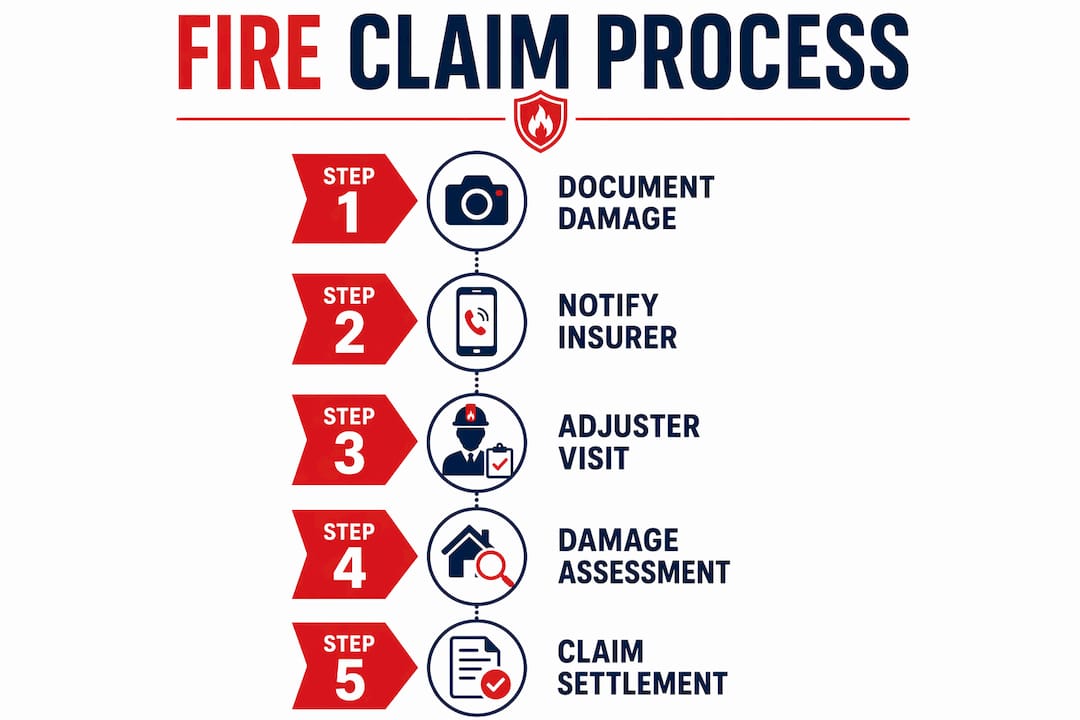
When a fire hits, the hours between the last ember and the adjuster’s first visit are the ones that protect your claim. Puroclean of Northeast Sacramento provides 24/7 emergency fire restoration — board-up, tarping, water extraction from firefighting, smoke and soot cleanup, structural drying, and contents inventory assistance. Every scope is documented to support your insurer’s estimate and flag hidden damage before it becomes a dispute.
Puroclean works directly with adjusters, providing written estimates and supplement documentation that keeps claims moving. Serving Northeast Sacramento, Folsom, Rancho Cordova, and Citrus Heights, the team dispatches around the clock. Call now or submit an online request to get a crew on-site fast — before secondary damage adds to your loss.
Recommended
Fire Damage Cleanup Guide: Restore Property Safely and Fast – PuroClean of Northeast Sacramento
Fire Damage Assessment: Key Steps for Recovery – PuroClean of Northeast Sacramento
Fire Damage Explained: Causes, Types, and Recovery – PuroClean of Northeast Sacramento
Fire Damage Assessment – Protecting Sacramento Properties – PuroClean of Northeast Sacramento