


Fire Restoration Classifications: Complete Guide
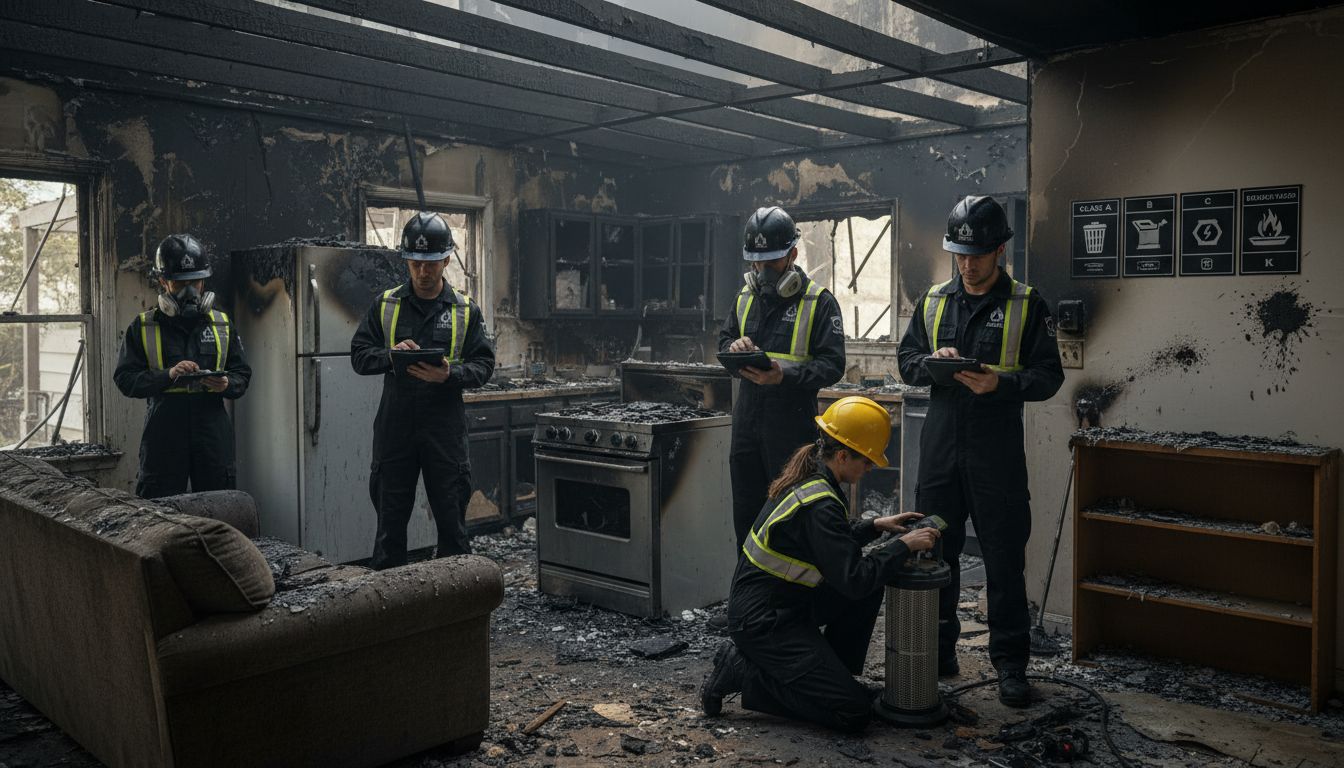
Over 300,000 residential fires are reported each year in the United States, creating damage that varies widely in scale and complexity. The type of fire and the materials burned directly influence how restoration professionals approach cleanup and repairs. By understanding fire restoration classifications, property owners and contractors can identify the safest, most effective strategies for returning damaged spaces to their original condition while minimizing health risks and long-term property impacts.
Table of Contents
- Defining Fire Restoration Classifications
- Primary Fire Damage Types and Classes
- How Classifications Guide Restoration Processes
- Regulatory Standards and Code Compliance
- Insurance Implications and Documentation Requirements
Key Takeaways
| Point | Details |
|---|---|
| Fire Classifications | Understanding fire classifications (A, B, C, D, K) is crucial for determining appropriate restoration strategies and techniques. |
| Unique Damage Remediation | Each fire class presents specific restoration challenges, necessitating tailored cleaning and repair approaches. |
| Regulatory Compliance | Adhering to safety standards and obtaining professional certifications are essential for ensuring effective and safe fire restoration processes. |
| Documentation for Insurance | Comprehensive documentation of fire damage is vital for accurate insurance claims and supporting restoration strategies. |
Defining Fire Restoration Classifications
Fire restoration classifications represent critical systematic approaches for understanding and addressing different types of fire damage scenarios. According to Wikipedia, these classifications help professionals identify appropriate remediation strategies based on the specific materials and contexts involved in a fire incident.
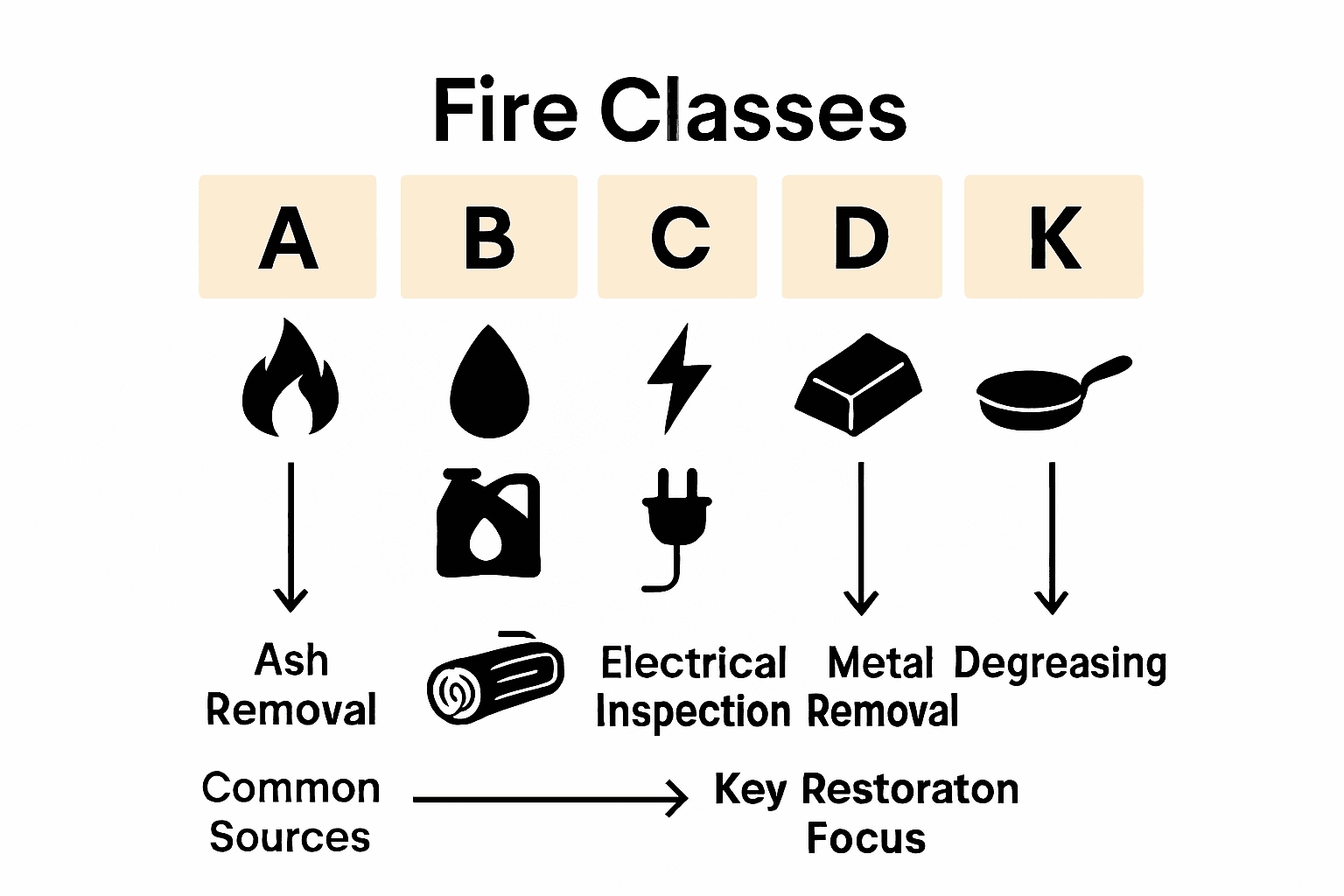
The primary fire classifications include:
- Class A: Fires involving ordinary combustible materials like wood, paper, cloth, and plastics
- Class B: Fires involving flammable liquids, gases, and greases
- Class C: Fires involving electrical equipment and energized electrical sources
- Class D: Fires involving combustible metals
- Class K: Fires involving cooking oils and kitchen-related fat-based substances
Understanding these classifications is essential because each type requires unique restoration approaches and specialized cleaning techniques. As Patrick Moffett explains, these designations help restoration professionals determine the most appropriate extinguishing methods and remediation strategies.
Restoration experts must carefully assess the specific class of fire damage to develop targeted recovery plans. This assessment involves evaluating material types, extent of damage, potential secondary impacts like smoke residue, and the structural integrity of the affected property. By precisely identifying the fire classification, professionals can implement more effective cleaning, repair, and reconstruction strategies that minimize long-term property damage and potential health risks.
Primary Fire Damage Types and Classes
Understanding the various fire damage types is crucial for effective restoration and property recovery. According to Pietech, fires are systematically classified into five distinct categories based on the specific type of fuel involved, each requiring unique remediation approaches.
Fire Damage Type Breakdown:
- Class A Damage: Involves ordinary combustible materials
- Includes wood, paper, cloth, and plastic materials
- Characterized by ash and char residue
- Typically leaves porous surfaces heavily damaged
- Class B Damage: Involves flammable liquids and gases
- Includes petroleum products, solvents, and chemical substances
- Creates complex residue patterns
- Often requires specialized chemical cleaning techniques
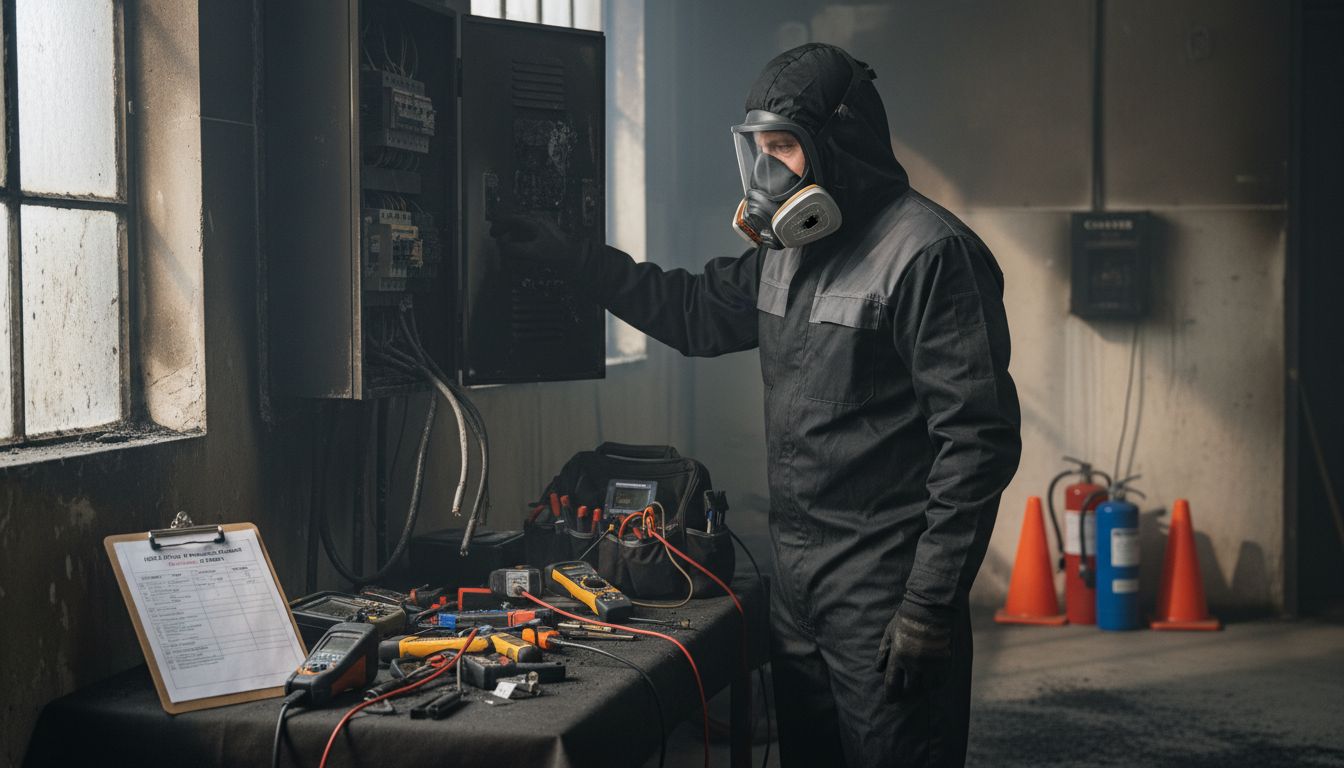
- Class C Damage: Electrical equipment and energized sources
- Presents unique challenges due to potential electrical hazards
- Requires complete electrical system evaluation
- Demands careful disconnection and assessment of electrical components
- Class D Damage: Combustible metal fires
- Extremely rare but highly dangerous
- Involves metals like magnesium, sodium, and potassium
- Requires specialized extinguishing agents
- Class K Damage: Kitchen and cooking-related fires
- Involves cooking oils, fats, and kitchen appliances
- Creates sticky, challenging residue
- Demands thorough degreasing and specialized cleaning protocols
Each fire damage type presents unique restoration challenges that require professional assessment and targeted remediation strategies.
 Restoration experts must carefully evaluate the specific fire class to develop comprehensive recovery plans that address structural damage, residue removal, and potential long-term property impacts.
For more detailed insights into managing different types of smoke damage, our professional team can provide comprehensive guidance and support throughout the restoration process.
How Classifications Guide Restoration Processes
Fire restoration is a complex process that demands precise understanding and strategic approach. According to the Restoration Industry Association, identifying specific fire classifications is crucial for determining appropriate restoration methods and ensuring safety and compliance with professional standards.
Key Restoration Guidance by Fire Classification:
- Class A Fires: Require comprehensive cleaning of porous surfaces
- Class B Fires: Demand specialized chemical decontamination techniques
- Class C Fires: Necessitate complete electrical system assessment and potential replacement
- Class D Fires: Require specialized metal-specific neutralization protocols
- Class K Fires: Need intensive degreasing and kitchen-specific restoration approaches
As highlighted by Restoration & Remediation Magazine, a comprehensive understanding of fire chemistry enables restoration professionals to make informed decisions about contaminant removal, residue neutralization, and odor control. This knowledge transforms the restoration process from a generic cleanup to a targeted, scientifically driven recovery strategy.
Professional restoration teams use these classification insights to develop customized restoration plans. By analyzing the specific fire type, professionals can select appropriate cleaning agents, determine necessary protective equipment, establish safety protocols, and predict potential long-term property impacts. This methodical approach ensures not just surface-level cleaning, but a thorough restoration that addresses both visible and hidden damage.
For comprehensive insights into managing complex fire damage scenarios, our guide to fire damage job anatomy provides detailed professional perspectives on navigating challenging restoration challenges.
Regulatory Standards and Code Compliance
Fire restoration regulations are complex systems designed to protect both property owners and restoration professionals. According to Wikipedia, fire classifications are standardized internationally through multiple organizations, including ISO 3941, AS/NZS 1850, DIN EN2, and NFPA 10, which provide comprehensive guidelines for fire categorization and appropriate intervention strategies.
Key Regulatory Compliance Requirements:
- Safety Standards
- Adherence to OSHA workplace safety regulations
- Compliance with federal and state environmental protection guidelines
- Proper handling and disposal of hazardous materials
- Professional Certification
- IICRC (Institute of Inspection, Cleaning and Restoration Certification)
- NADCA (National Air Duct Cleaners Association) standards
- Professional training and ongoing education requirements
- Documentation Protocols
- Detailed damage assessment reports
- Comprehensive restoration process documentation
- Insurance claim support materials
As the Restoration Industry Association emphasizes in their Fire Loss Specialist Course, regulatory compliance is not just about following rules—it’s about ensuring the highest standards of safety, professionalism, and client protection throughout the restoration process.
Professional restoration teams must navigate a complex landscape of federal, state, and local regulations. This requires continuous training, meticulous documentation, and a commitment to maintaining the most current industry certifications. By prioritizing regulatory compliance, restoration professionals protect themselves, their clients, and the properties they serve.
To ensure you’re working with a fully compliant restoration service, always verify the importance of IICRC certification when selecting a restoration partner.
Insurance Implications and Documentation Requirements
Navigation of insurance claims after fire damage requires meticulous attention to detail and comprehensive documentation. According to YPA Public Adjusters, different fire classes significantly impact insurance claims and restoration costs, with some fire types like Class D involving combustible metals presenting substantially more complex and expensive remediation challenges.
Critical Documentation Elements for Insurance Claims:
- Comprehensive Damage Assessment
- Detailed photographic evidence
- Precise inventory of damaged items
- Professional assessment of structural integrity
- Estimated repair and replacement costs
- Classification-Specific Documentation
- Specific fire class identification
- Detailed description of damage mechanisms
- Professional restoration strategy
- Potential long-term property impacts
- Supporting Evidence
- Expert restoration professional reports
- Third-party damage verification
- Repair and replacement cost estimates
- Timeline of damage and restoration process
As the Restoration Industry Association emphasizes in their Fire Loss Specialist Course, understanding fire classifications is crucial for supporting accurate insurance claims and ensuring compliance with industry standards.
Professional restoration teams serve as critical intermediaries between property owners and insurance providers. They must document every aspect of the fire damage restoration process, creating a comprehensive narrative that supports the insurance claim while providing transparent, verifiable information about the extent and nature of the damage.
For a deeper understanding of how professionals navigate complex restoration scenarios, explore our guide to fire damage job anatomy which provides insights into the intricate process of fire damage restoration and insurance documentation.
Trust Expert Fire Restoration Tailored to Your Damage Type
Fire damage can leave your property feeling overwhelming and uncertain, especially when facing different fire classifications like Class A wood fires or Class K kitchen blazes. The challenge lies in addressing each unique damage type with the right expertise to prevent lingering smoke odors, structural risks, or costly repairs. Knowing how to handle these distinctions is critical to restoring safety and peace of mind.
PuroClean of Northeast Sacramento understands the complexities behind every fire classification. Our team uses advanced restoration techniques backed by industry certifications to deliver fast, effective solutions for each fire class. Whether you face stubborn soot from ordinary combustibles or challenging residues from flammable liquids, we carefully tailor our approach to your home or business needs.
Take immediate action to protect your property and loved ones by contacting PuroClean of Northeast Sacramento today.
Don’t wait until hidden damage worsens. Visit our site for comprehensive fire and smoke restoration services you can trust. Learn more about our commitment to safety, quick response, and thorough remediation at PuroClean of Northeast Sacramento and start your recovery on the strongest foundation possible.
Frequently Asked Questions
What are the different classes of fire damage?
Fire damage is classified into five classes: Class A (ordinary combustibles like wood and paper), Class B (flammable liquids and gases), Class C (electrical equipment), Class D (combustible metals), and Class K (cooking oils). Each class involves unique challenges and requires specific remediation methods.
How does fire classification influence the restoration process?
Fire classification guides restoration professionals in selecting appropriate cleaning methods, evaluating safety protocols, and determining the necessary equipment for effective remediation. Each class of fire damage requires tailored strategies to address visible and hidden damage.
What is the importance of documenting fire damage for insurance claims?
Comprehensive documentation of fire damage, including detailed assessments, photographic evidence, and descriptions of damage types, is crucial for supporting insurance claims. It helps accurately represent the extent of the damage and the necessary restoration efforts to insurers.
What safety regulations must restoration professionals follow during fire damage recovery?
Restoration professionals must adhere to OSHA safety standards, comply with federal and state environmental regulations, and follow proper protocols for handling hazardous materials. Certification from organizations like IICRC is also essential for ensuring compliance and professionalism.
Recommended
The Stages of the Fire Damage Restoration Process
The Anatomy of a Fire Damage Job – PuroClean Property Damage Experts