


Flood & Fire Restoration: A Homeowner’s 2026 Guide
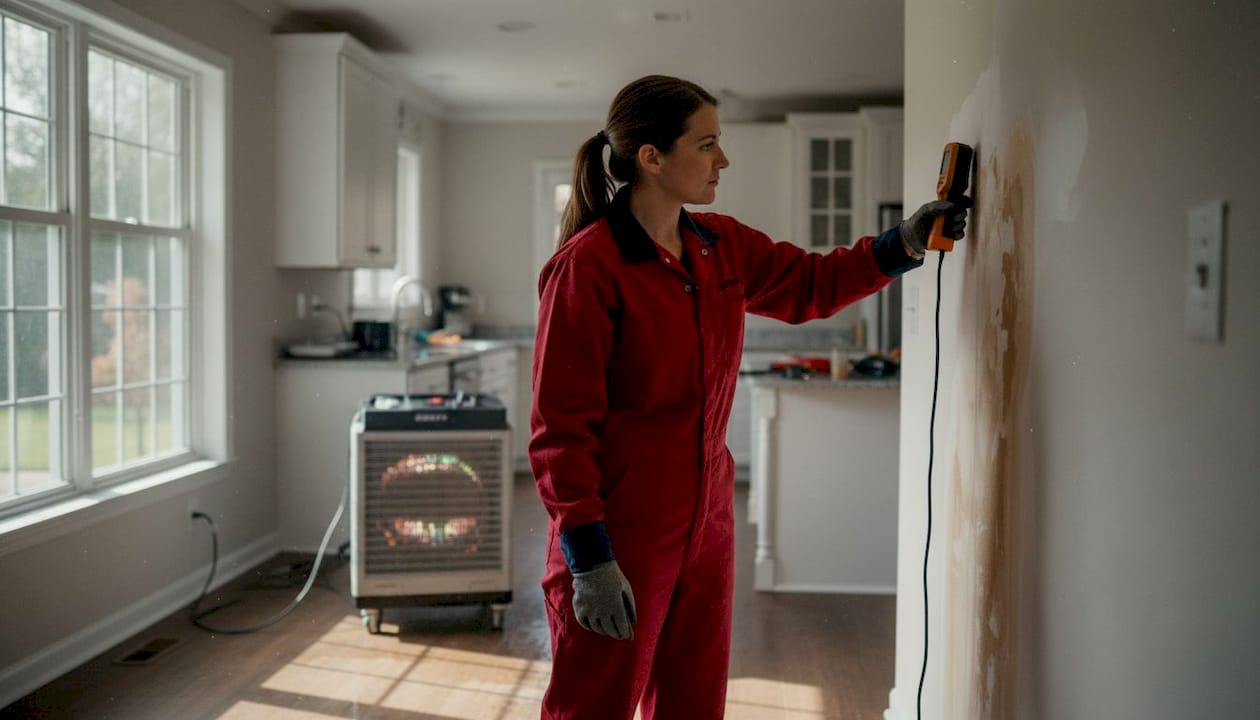
Flood & fire restoration is the professional process of mitigating, assessing, and returning a property to its pre-loss condition after water or fire damage, using science-based protocols and industry-standard procedures. The governing frameworks are ANSI/IICRC S500 (2026) for water damage and ANSI/IICRC S700 (2025) for fire and smoke restoration. Both standards mandate specific documentation, equipment use, and verification steps that separate professional restoration from a simple cleanup. If you are a homeowner or property manager facing a flood or fire right now, the decisions you make in the next 48 hours will determine how much of your property you save and how smoothly your insurance claim resolves.
What are the key steps in flood and fire restoration?
Professional property damage restoration follows a defined sequence. Skipping steps or rushing the order creates bigger problems later, including mold growth, structural failure, and rejected insurance claims.
Emergency safety assessment. Restoration contractors and emergency responders evaluate the structure for gas leaks, electrical hazards, and load-bearing damage before anyone enters. Waiting for professional clearance is not optional. Entering an unsafe structure risks serious injury.
Water extraction and structural drying. For flood events, water removal begins immediately. Mold starts growing within 24–48 hours after water intrusion, making the first two days the most critical window. Contractors deploy industrial extractors, air movers, and dehumidifiers, then track drying progress using psychrometric data logs required under ANSI/IICRC S500.
Soot removal and odor neutralization. Fire damage cleanup targets three distinct soot types: wet, dry, and protein-based. Each requires a different cleaning method. Odor neutralization goes beyond surface wiping and includes thermal fogging, hydroxyl generation, or ozone treatment depending on the contamination level. Puroclean technicians trained in smoke odor removal apply the correct method for each soot category.
HVAC assessment and decontamination. Smoke travels through duct systems and deposits soot on coils, filters, and air handlers throughout the entire property, not just the rooms with visible fire damage. ANSI/IICRC S700 requires a mandatory HVAC assessment by qualified specialists as part of every fire remediation scope.
Demolition and scope development. Contractors use moisture mapping to identify which materials must be removed and which can be dried in place. Premature reconstruction traps moisture and leads to mold growth behind new walls. Scope development produces a written work plan that supports insurance adjuster review.
Contents management. Furniture, electronics, clothing, and personal items are inventoried, then either cleaned on-site, packed out for off-site restoration, or documented for disposal. This inventory becomes part of your insurance claim.
Final verification. Contractors confirm dryness targets, odor elimination, and structural safety before the property is cleared for occupancy or reconstruction.
Pro Tip: Never authorize permanent repairs before your contractor completes moisture mapping. Drywall and flooring installed over wet framing will grow mold within weeks, and your insurer may deny the resulting claim.
How do ANSI/IICRC standards shape professional restoration practices?
The ANSI/IICRC standards are the technical backbone of every legitimate restoration project. Homeowners who understand them are better equipped to evaluate contractors and protect their claims.
ANSI/IICRC S500 (2026) governs water damage restoration. It requires moisture mapping of all affected materials, documentation of equipment placement and readings, and psychrometric logging throughout the drying period. Contractors must record temperature, relative humidity, and dew point at each inspection visit.
ANSI/IICRC S700 (2025) governs fire and smoke restoration. It classifies soot types, defines cleaning methods for each, and mandates HVAC inspection and decontamination as a required scope element, not an optional add-on.
Documentation is a formal technical requirement under both standards. Incomplete drying data can cause insurance supplement claims to be denied outright.
Compliance protects your claim. Insurers and adjusters use these standards as benchmarks. A contractor who cannot produce psychrometric logs or a written restoration work plan creates gaps that adjusters will exploit.
“Under ANSI/IICRC standards, documentation including drying data is a formal requirement and is critical for supplement claim approval. Failure to provide thorough data can cause insurance supplement claims to be denied.”
Choosing a contractor who works to current industry standards is not a luxury. It is the difference between a fully covered claim and a dispute that costs you thousands out of pocket.
What should homeowners do for safety and damage documentation?
Safety misconceptions cause real injuries every year. Homeowners assume a structure looks stable enough to enter, then discover hidden hazards. Professionals must assess hazards before mitigation begins. Your job before they arrive is to document from a safe distance and start your insurance process.
Safety first:
Do not enter the property until emergency responders or your restoration contractor declares it safe.
Common hazards include structural collapse, live electrical wires, gas leaks, and carbon monoxide from smoldering materials.
If you smell gas, leave the area immediately and call your utility provider from a safe distance.
Documentation strategy:
Photograph every room from multiple angles before anything is moved or cleaned.
Record video walkthroughs with narration noting visible damage, standing water levels, and affected areas.
Capture serial numbers and model information on damaged appliances and electronics.
Save all receipts for emergency expenses such as hotel stays, meals, and temporary storage. These qualify as Additional Living Expenses under most homeowner policies.
Insurance coordination:
Call your insurer as soon as you are safe. Get a claim number before your contractor begins work.
Maintaining a detailed log of contractor visits, expenses, and communications reduces disputes significantly.
Keep a written timeline of every event from the incident forward, including dates, times, and names of everyone you speak with.
Pro Tip: Create a shared cloud folder on the day of the incident. Upload every photo, receipt, and contractor document in real time. This single habit prevents the most common insurance claim delays.
Why is specialized HVAC cleaning critical after fire damage?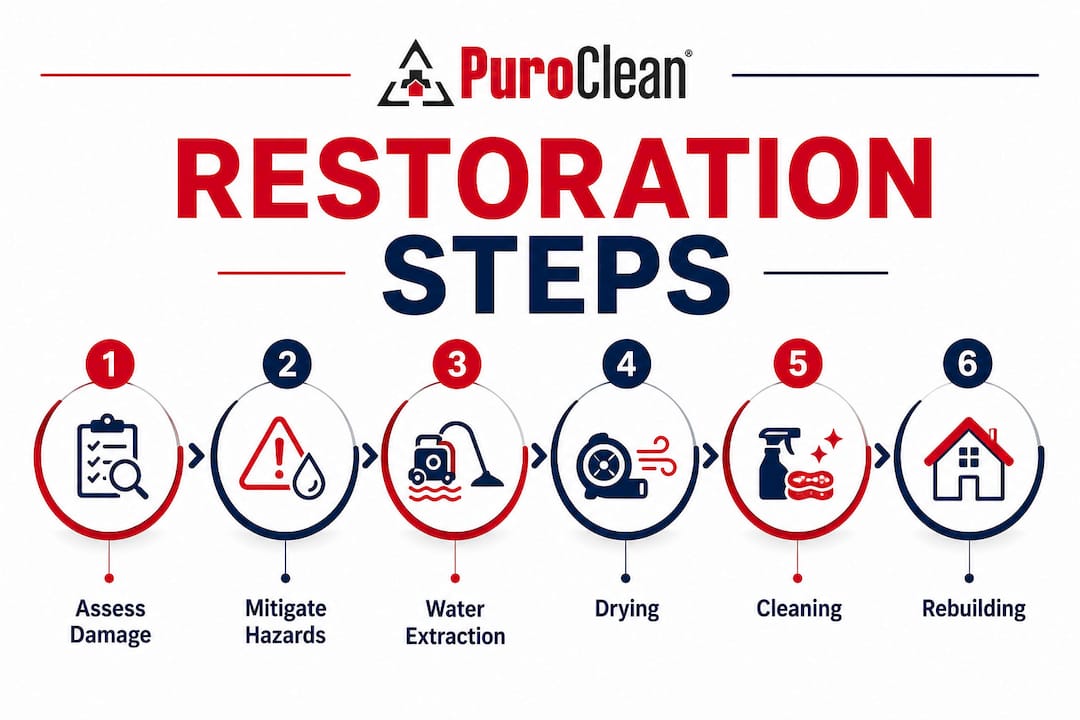
Smoke and soot do not stay in the rooms where a fire burns. They travel through return air vents and deposit throughout the entire duct system within minutes of a fire starting. HVAC cleaning is mandatory under ANSI/IICRC S700 because ignoring it guarantees persistent odors and ongoing health risks even after visible surfaces are cleaned.
The standard HVAC decontamination process covers:
Duct inspection and cleaning. Technicians use video inspection tools to assess soot deposits inside supply and return ducts, then clean using HEPA-filtered vacuums and agitation equipment.
Coil decontamination. Evaporator and condenser coils trap fine soot particles. Contaminated coils circulate smoke odors every time the system runs.
Air handler cleaning. The blower compartment, drain pan, and housing collect soot that standard filter replacement does not address.
Filter replacement. All filters are replaced after cleaning, not before, to capture residual particles dislodged during the process.
Neglecting HVAC scope creates three specific problems. First, corrosive smoke residues continue damaging metal components inside the system. Second, every time the HVAC runs, it redistributes odors and fine particles through the home. Third, occupants face ongoing exposure to combustion byproducts. Puroclean’s HVAC cleaning after fire process addresses all three issues as part of a complete fire remediation scope.
How to navigate insurance claims during flood & fire restoration?
Insurance claims for flood and fire events follow a specific process. Knowing the rules protects your payout and keeps your project moving.
Opening the claim:
Notify your carrier immediately with your policy number, the date and time of the loss, and the type of loss. Nothing more at this stage.
Do not provide a detailed damage description on the first call. That is the adjuster’s job. Premature estimates can undervalue your claim.
Request your claim number before authorizing any work beyond emergency mitigation.
Supporting your claim through the process:
Your contractor’s scope of work, written per ANSI/IICRC standards, is the primary document your adjuster uses to evaluate the claim.
Supplement claims arise when additional damage is discovered after the initial scope. Support every supplement with photos, moisture readings, and a written narrative from your contractor.
Keep copies of all contractor invoices, material receipts, and equipment logs. Insurers can request these at any point.
Avoiding common pitfalls:
Never sign a direction-to-pay agreement without reading it. These documents assign your insurance benefits directly to the contractor.
Do not dispose of damaged materials before your adjuster inspects them. Disposal before inspection can void portions of your claim.
If your insurer disputes the scope, request a re-inspection and provide your contractor’s documentation as supporting evidence.
The fire restoration classifications your contractor assigns directly affect the scope your insurer approves. Understanding those classifications puts you in a stronger position during adjuster negotiations.
You can also find Puroclean’s local service area on Google Maps to confirm coverage in Northeast Sacramento, Folsom, Rancho Cordova, and Citrus Heights.
Key Takeaways
Successful flood & fire restoration requires immediate professional action, strict compliance with ANSI/IICRC S500 and S700 standards, and thorough documentation to protect both the property and the insurance claim.
Point
Details
Act within 48 hours
Mold growth begins within 24–48 hours of water intrusion; extraction must start immediately.
Follow ANSI/IICRC standards
S500 and S700 govern every technical step; non-compliant work risks denied insurance supplements.
Document everything
Photos, timelines, and receipts reduce disputes and support supplement claims with insurers.
Include HVAC in every fire scope
Smoke contaminates duct systems throughout the property; S700 makes HVAC cleaning mandatory.
Separate triage from reconstruction
Complete moisture mapping before rebuilding to prevent mold growth behind new materials.
What I’ve learned from watching restoration projects go wrong
The most expensive mistakes in flood and fire recovery happen in the first 24 hours, and almost none of them involve the damage itself. They involve decisions made under stress without enough information.
Homeowners who enter a fire-damaged structure before professional clearance, who dispose of damaged contents before the adjuster visits, or who authorize reconstruction before drying is verified. These are the patterns that turn a covered loss into a financial dispute. The restoration process works best as a genuine partnership between you and your contractor. Your job is documentation and communication. Their job is technical execution. When both sides do their part, claims resolve faster and properties recover fully.
The detail that surprises most people is how much the HVAC system matters. A homeowner can have every visible surface cleaned perfectly and still live with smoke odor for months because no one addressed the duct system. That is not a minor oversight. It is a structural failure of the restoration scope.
The other lesson worth stating plainly: emergency triage and permanent repair are not the same thing. Rushing to rebuild feels productive. Moisture mapping before demolition feels slow. But the contractor who insists on mapping first is protecting you from mold remediation costs six months later that your insurer will not cover.
— Visual
Puroclean is ready when you need emergency restoration services
When a flood or fire hits your property in Northeast Sacramento, Folsom, Rancho Cordova, or Citrus Heights, the clock starts immediately. Puroclean’s technicians are available 24 hours a day, 7 days a week, trained to ANSI/IICRC standards for both water and fire restoration.
Puroclean handles the full scope: water extraction, structural drying, fire damage restoration, smoke odor remediation, HVAC decontamination, and contents management. Every project includes the documentation your insurer requires. If you need 24/7 water damage response or fire remediation support, Puroclean is the call to make first. Reach out now to get a trained technician on-site and your recovery started on the right foundation.
FAQ
What is flood & fire restoration?
Flood & fire restoration is the professional process of mitigating, cleaning, and rebuilding a property after water or fire damage, following ANSI/IICRC S500 and S700 standards to return it to pre-loss condition.
How quickly does mold grow after water damage?
Mold begins developing within 24–48 hours of water intrusion. Water extraction and structural drying must begin within that window to prevent permanent damage.
Do I need to clean my HVAC after a house fire?
Yes. ANSI/IICRC S700 requires mandatory HVAC inspection and decontamination after fire damage because smoke and soot contaminate duct systems throughout the entire property, not just fire-affected rooms.
When should I call my insurance company after a flood or fire?
Call your insurer as soon as you are in a safe location. Provide your policy number, the date and time of the loss, and the type of loss to open a claim number before restoration work begins.
What documentation do I need for a fire or flood insurance claim?
You need photos and video of all damage, a written scope of work from your contractor, psychrometric drying logs, receipts for emergency expenses, and a timeline of all contractor visits and communications.
Recommended
Restoration After House Fire: Complete Step-by-Step Recovery – PuroClean of Northeast Sacramento
Flood Damage Explained: Complete Restoration Guide – PuroClean of Northeast Sacramento
Flood Restoration Explained: Complete Property Recovery – PuroClean of Northeast Sacramento
Role of Restoration After Fire: Complete Guide – PuroClean of Northeast Sacramento