


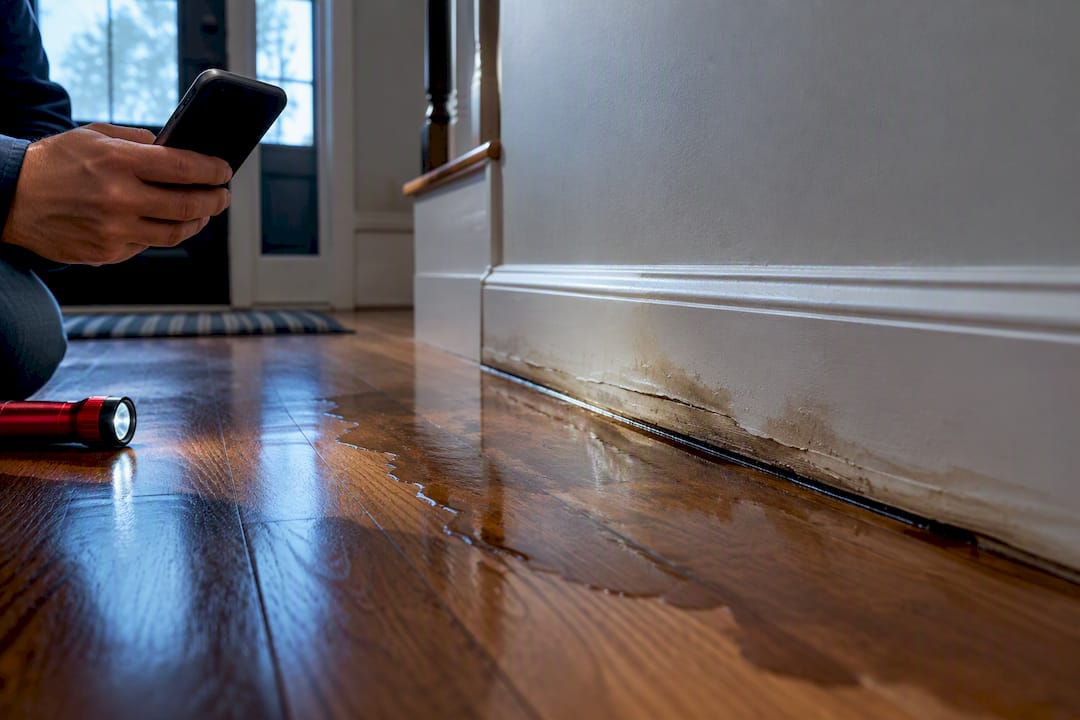
Most homeowners policies cover sudden, accidental water damage that originates inside the home, like a burst pipe or an overflowing washing machine. They do not cover flood, sewer backups, or damage caused by gradual neglect. Coverage splits between your dwelling and your belongings, and separate endorsements or policies can extend protection for events your standard policy excludes.
Puroclean
Respond Quickly to Water Damage
PuroClean helps Northeast Sacramento property owners with water extraction, structural drying, leak coordination, and emergency restoration.
Get emergency restoration help
Table of Contents
- Types of Water Damage Most Homeowners Policies Cover
- What’s Excluded and How Endorsements Fill the Gaps
- How Dwelling, Personal Property, and Living Expenses Work Together
- How Insurers Decide If Your Claim Qualifies
- What to Do the Moment You Find Water Damage
- Why Fast Mitigation Changes the Outcome of Your Claim
- Get Emergency Water Damage Help From Puroclean of Northeast Sacramento
- Where to Verify Water Damage Coverage Rules
- Sources
- FAQ
Types of Water Damage Most Homeowners Policies Cover
Insurance companies build their decisions around one question: did this happen fast, or did it build up over time? Sudden and accidental events get paid. Slow, preventable ones usually don’t.
That distinction comes from the standard ISO HO-3 policy form, the template most home insurers in the United States base their contracts on. It insures the dwelling on an “open perils” basis, meaning everything is covered unless specifically excluded, while personal property is typically covered only for perils it names outright. Water damage sits in a gray zone that depends heavily on how it started.
Here’s what typically qualifies as covered under most policies:
- Burst pipes: A supply line that ruptures without warning, soaking floors and drywall, is a textbook example of sudden, accidental damage.
- Ruptured water heater: When a tank fails and dumps 40 to 60 gallons across a utility room floor in minutes, insurers generally treat that as an unpredictable mechanical failure.
- Appliance overflow: A dishwasher hose that disconnects or a washing machine that overflows during a cycle usually counts as sudden, even if the appliance itself isn’t covered.
- Roof or wall breach from a covered peril: Wind tears off shingles during a storm and rain pours through the hole, that’s covered because wind is a named peril and the water intrusion is a direct result.
- Water used to fight a fire: If firefighters flood your living room to put out a kitchen fire, the resulting water damage rides along with the fire claim.
Notice the pattern. Each example above involves an event with a clear starting point, not a slow decline that a homeowner could have caught earlier. According to LegalClarity’s coverage analysis, insurers consistently draw the line at whether the damage originated inside the home and happened without warning. A pipe that bursts on a Tuesday afternoon is a different animal, in the eyes of your insurer, than a pipe that’s been weeping behind a wall for six months.
What’s Excluded and How Endorsements Fill the Gaps
Standard homeowners policies exclude far more water damage than most people realize until they file a claim and get denied. Knowing these exclusions before disaster strikes saves you from a painful surprise during an already stressful week.
The most common exclusions include:
- Flood: Water that rises from outside, whether from a river, storm surge, or heavy rain pooling on the ground, is never covered by a standard homeowners policy.
- Groundwater and seepage: Slow moisture intrusion through a foundation crack or basement wall falls outside normal coverage because it’s considered gradual and preventable.
- Sewer and sump pump backups: These require a separate endorsement; without one, a backed up sewer line flooding your basement is entirely your financial responsibility.
- Wear and tear: Aging pipes, deteriorating seals, and rusted fittings are treated as maintenance issues, not insurable losses.
- Negligence: If you knew about a leak and didn’t fix it, or left a home vacant and unheated through winter, insurers can deny the claim.
- Frozen pipe failures in vacant properties: Many policies exclude freeze damage entirely if the home sat unoccupied without heat during cold months.
The good news is that several of these gaps can be closed. A water backup endorsement covers sewer and sump pump failures, and according to the Insurance Information Institute, these endorsements typically carry their own limits and premiums separate from your base policy. Sub-limits commonly run in the $5,000 to $25,000 range, and higher tiers may be needed if you want contamination coverage included. Hidden damage or limited seepage endorsements can also cover concealed leaks inside walls or floors, but only when you genuinely had no way of knowing the leak existed.
Statistic Callout: Water backup endorsements often carry coverage limits between $5,000 and $25,000, and most exclude contamination unless you select a higher tier, according to the III.
One more detail catches homeowners off guard: your policy pays to repair the damage the water caused, not to replace the pipe or appliance that failed. According to Matic’s coverage breakdown, the drywall, flooring, and cabinetry get repaired, but the water heater itself is on you.
How Dwelling, Personal Property, and Living Expenses Work Together
A single water damage claim can touch three separate parts of your policy, each with its own rules for how much you get paid.
- Dwelling coverage pays for structural repairs, drywall, flooring, ceilings, and built-in cabinetry damaged by a covered water event.
- Personal property coverage reimburses you for ruined furniture, electronics, and belongings, either at replacement cost (what it takes to buy new) or actual cash value (replacement cost minus depreciation), depending on your policy type.
- Loss of use, also called additional living expense coverage, kicks in when the damage makes your home unlivable, covering hotel stays, restaurant meals, and other costs above your normal budget while repairs happen.
- Your deductible applies once per claim, not once per coverage category, and your policy limits set the ceiling on what you’ll be reimbursed regardless of actual repair costs.
Replacement cost policies pay more but often require you to actually replace the item first, then reimburse the difference after depreciation was initially withheld. Actual cash value policies pay less upfront but settle faster. Check which one you carry before you assume a five-year-old sofa gets replaced dollar for dollar.
How Insurers Decide If Your Claim Qualifies
Adjusters aren’t guessing when they approve or deny a water damage claim. They’re looking for physical evidence that answers one question: was this sudden, or has it been going on for a while?
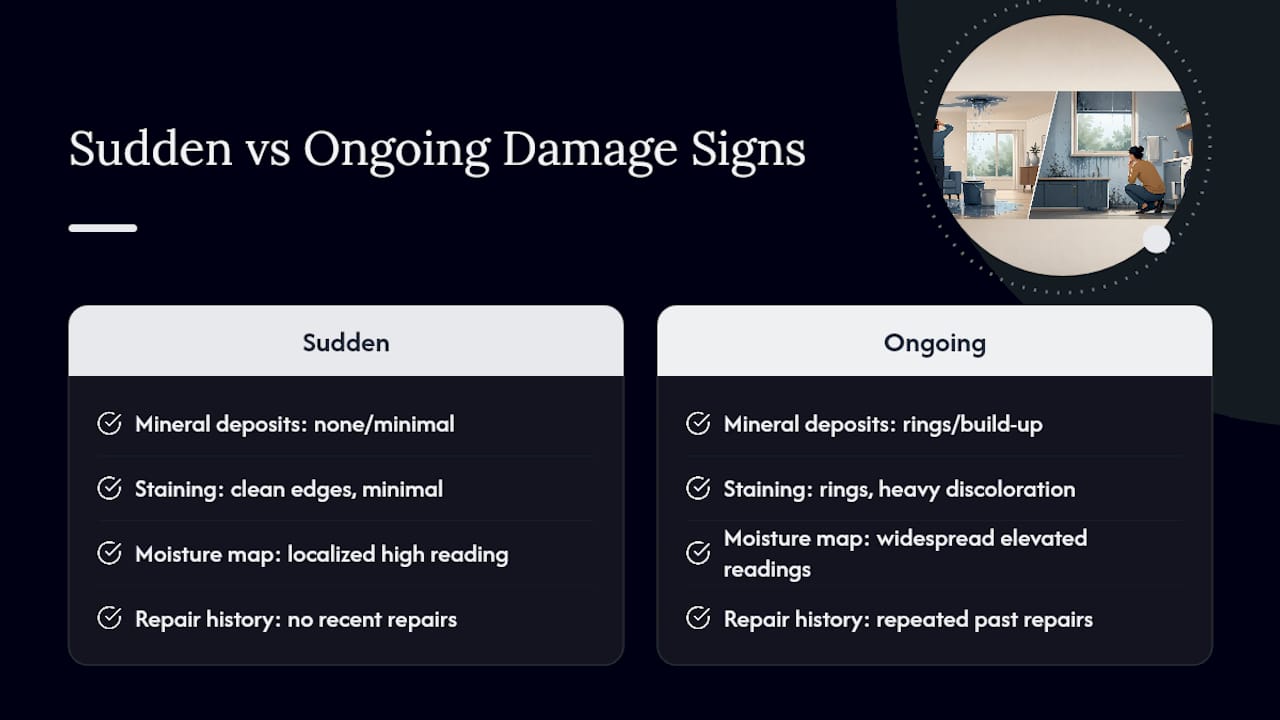
According to research on mold damage and insurance claims, adjusters lean on mineral deposits, staining patterns, moisture mapping readings, and repair history to reconstruct the timeline. Fresh water leaves clean edges and minimal staining. Water that’s been sitting for weeks leaves rings, discoloration, and often mold growth. A leak active for more than roughly two weeks is commonly treated as a maintenance failure rather than a sudden event, which puts the claim at real risk of denial.
Pro Tip: Take time-stamped photos the moment you spot water damage, even before you call your insurer. A phone photo with an automatic date stamp is often the single strongest piece of evidence you can hand an adjuster.
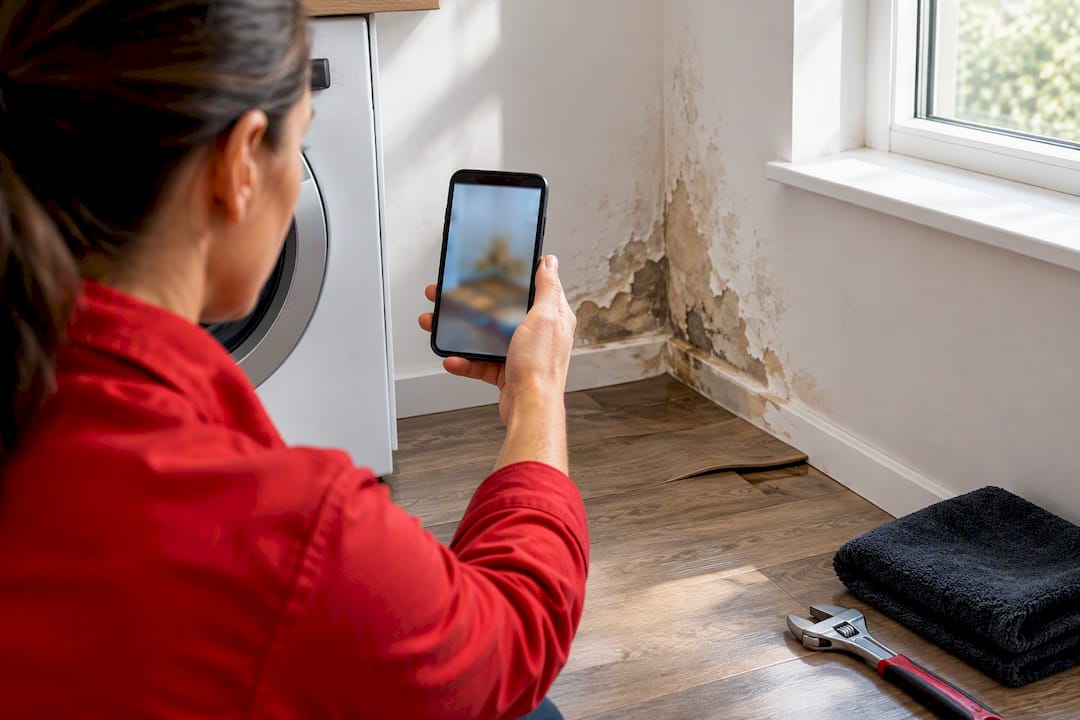
What to Do the Moment You Find Water Damage
Your actions in the first few hours after discovering water damage shape both the outcome of your claim and how much permanent damage your home suffers.
- Stop the source if it’s safe to do so, shutting off the main water valve or the fixture feeding the leak.
- Photograph and video everything before you touch anything, capturing wide shots and close-ups with your phone’s timestamp visible.
- Move valuables and furniture out of the affected area to limit further loss.
- Begin mitigation immediately, either by hiring an emergency water extraction service or documenting your own drying efforts, and keep every receipt for equipment rentals or supplies.
- Contact your insurer promptly, reporting the date discovered, the suspected cause, and initial photos. Most policies set a filing window, so don’t wait weeks to make the call.
- Bring in a restoration contractor when the damage is beyond a wet vac and a fan. A professional crew documents moisture readings, drying progress, and equipment logs that carry real weight with adjusters.
Following a structured checklist after a loss keeps you from missing a step that could cost you coverage later.
Why Fast Mitigation Changes the Outcome of Your Claim
Water sitting for 48 hours starts growing mold. Water sitting for two weeks starts looking like neglect to an adjuster. Restoration crews close that window fast, and the moisture reports, equipment logs, and photo timelines they generate become the documentation that turns a disputed claim into an approved one. Speed protects your home and your payout at the same time.
Get Emergency Water Damage Help From Puroclean of Northeast Sacramento
Puroclean of Northeast Sacramento gives homeowners something a claims adjuster’s checklist can’t: a crew on-site fast enough to stop damage from turning into a denied claim. When a pipe bursts at 2 a.m. or a water heater fails while you’re at work, the gap between “sudden and accidental” and “long-term neglect” often comes down to hours, not days.
Puroclean’s emergency water extraction, structural drying, and dehumidification services are available 24/7 across Northeast Sacramento, Folsom, Rancho Cordova, and Citrus Heights. Restoration crews often document moisture readings, drying timelines, and repair history, providing important evidence for insurance adjusters. If a leak has already caused hidden damage behind walls or under cabinets, Puroclean also handles leak detection and mold remediation so nothing gets missed before drywall goes back up. Read Puroclean’s guide on restoration and insurance claims to see what documentation insurers expect, then call for a rapid response the moment you spot standing water.
Where to Verify Water Damage Coverage Rules
For flood-specific coverage and provider lookup, visit FEMA’s FloodSmart program. The Insurance Information Institute breaks down covered perils in plain language, and Puroclean’s documentation guide and this maintenance and coverage resource cover the maintenance duties that protect your claim eligibility.
This article is general information, not a substitute for advice from a qualified financial advisor. Consult a qualified financial professional about your own circumstances before acting on anything here.
Sources
- Does Homeowners Insurance Cover Leaks? What’s Covered – LegalClarity
- FEMA FloodSmart — National Flood Insurance Program information
- Which disasters are covered by homeowners insurance? — III
- Mold damage and homeowners insurance — Edge Lawyers
- What is water backup coverage? — Matic
FAQ
Is a Slow Leak Covered by Homeowners Insurance?
Generally, no. A leak that develops gradually, especially one active for more than about two weeks, is typically classified as a maintenance failure rather than a sudden event, and most insurers deny these claims according to research on adjuster evidence practices.
Does Homeowners Insurance Cover Flood Damage?
No. Flood damage is excluded from every standard homeowners policy, regardless of the insurer. You need a separate policy through the National Flood Insurance Program or a private flood insurer to get that protection.
Will My Policy Pay to Replace the Pipe That Burst?
No. Homeowners insurance typically pays to repair the damage the failed pipe or appliance caused, like flooring, drywall, and cabinetry, but not to replace the component itself, according to Matic’s coverage explanation.
Is Mold Damage Covered by Homeowners Insurance?
It depends on the cause. Mold resulting directly from a covered, sudden water event is often included, but mold from a long-term leak or high humidity is usually excluded as a maintenance issue.
Do I Need a Separate Endorsement for Sump Pump Failure?
Yes. Standard policies exclude sump pump and sewer backups unless you add a water backup endorsement, which carries its own limits, often in the $5,000 to $25,000 range, according to the Insurance Information Institute.