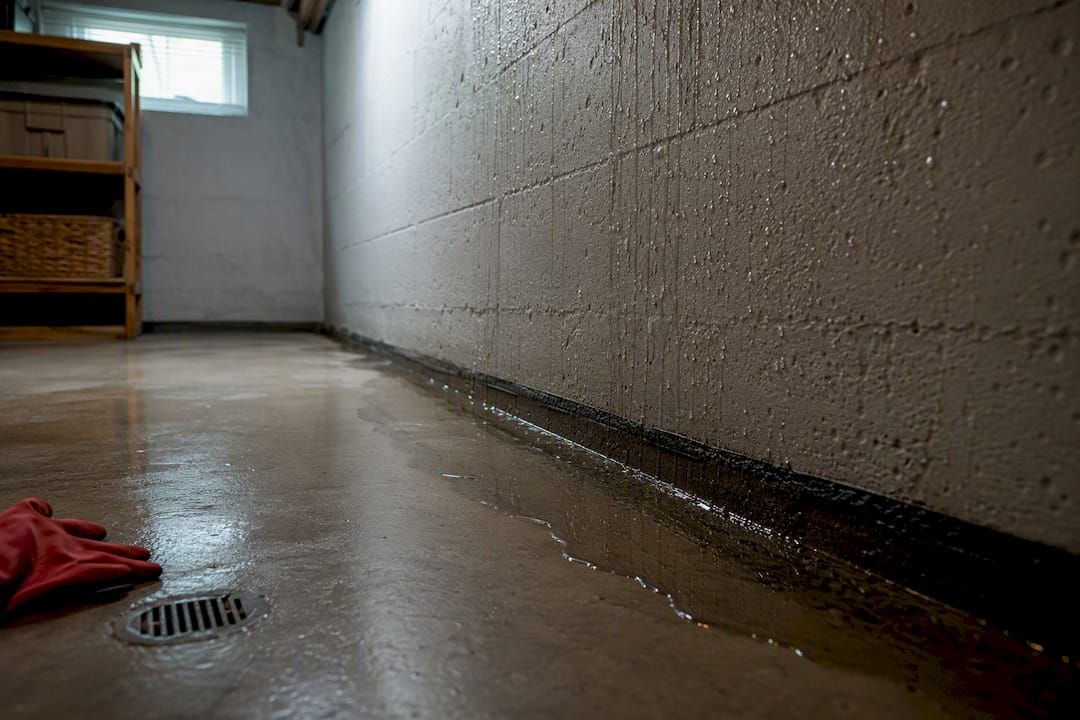
Yes, heavy rain is the leading cause of basement leaks, driven by surface runoff and hydrostatic pressure pushing against your foundation. First, protect yourself: cut power to any flooded outlets, move valuables to higher ground, and start pulling water out with a sump pump or wet vacuum. Photograph everything before you touch it. If water is rising fast or sitting near your electrical panel, stop reading and call an emergency restoration crew.
Puroclean
Restore Your Home After Water Damage
PuroClean helps Northeast Sacramento property owners with water extraction, structural drying, and water-related loss mitigation.
Table of Contents
- Why Do Basements Leak After Heavy Rain?
- How Can You Tell Where the Water Is Coming From?
- What Should You Do in the First Few Hours?
- What Are the Best Long-Term Basement Waterproofing Solutions?
- When Should You Call a Restoration Professional?
- How Much Does It Cost to Fix a Leaking Basement?
- How Do You Prevent Basement Leaks Before the Next Storm?
- What a Restoration Pro Wants You to Know
- How Puroclean Responds When Your Basement Floods After a Storm
- Sources
Why Do Basements Leak After Heavy Rain?
Most rain-driven basement leaks trace back to one of four mechanisms, and figuring out which one applies to your house determines whether you need a $200 fix or a $10,000 one.
Surface runoff is the most common culprit. When the ground around your foundation slopes toward the house instead of away from it, every storm sends water straight to your walls. Clogged or undersized gutters make this worse by dumping roof water in one concentrated spot right at the foundation’s base, rather than spreading it across the yard where soil can absorb it.
Hydrostatic pressure is the less obvious but often more damaging cause. When soil around your foundation becomes saturated, it acts like a sponge under pressure, forcing water through cracks, cold joints, and even porous concrete itself. Relieving that pressure through drainage works better than sealing alone, because water under enough pressure will simply find a new path in.
A few other patterns worth ruling out:
- Window wells that lack proper drainage can fill like small pools during a downpour and overflow directly into basement windows.
- Clogged exterior drains near the foundation stop working exactly when you need them most, during peak storm flow.
- Condensation, not an actual leak, causes some of what homeowners assume is water intrusion. It shows up as a general dampness on cool surfaces rather than a wet patch tied to a specific rain event.
How Can You Tell Where the Water Is Coming From?
Timing tells you almost everything. Water that shows up only during or right after a storm points to an exterior source: grading, gutters, or a foundation crack under hydrostatic load. Water that never stops, rain or no rain, usually means a plumbing leak or a persistently high water table.
Look at the pattern, not just the puddle:
- A flowing stream of water suggests an active crack or gap under real pressure.
- A damp patch that spreads slowly points to seepage through porous concrete.
- White, chalky mineral deposits (efflorescence) mark where water has been evaporating through the wall for a while, even if it looks dry now.
- Horizontal cracks near mid-wall height often signal hydrostatic pressure; vertical cracks are more commonly settlement-related.
Step outside during or right after a storm. Check whether downspouts actually discharge away from the house, whether the soil near your foundation stays soggy longer than the rest of the yard, and whether nearby window wells are holding standing water.
What Should You Do in the First Few Hours?
Act in this order, and don’t skip the safety step to save your carpet.
- Cut power to affected areas if you can reach the breaker safely. Never wade through standing water to get there; call an electrician instead if outlets or the panel are wet.
- Move and photograph your belongings. Elevate anything still dry, and take timestamped photos and video of the water level, damaged items, and visible entry points before you start cleanup.
- Stop the active inflow. Clear debris from gutters and downspouts, add a temporary downspout extension if you have one, and run your sump pump or a wet vac continuously.
- Divert surface water with sandbags or a temporary channel if water is pooling against the foundation faster than it can drain away.
- Patch emergency gaps with hydraulic cement or waterproof tape on visibly flowing cracks. Treat this as a stopgap, not a fix.
Pro Tip: Hydraulic cement sets in minutes, which makes it tempting to think you’ve solved the problem. You haven’t. It plugs the symptom; the pressure behind it is still building until you address drainage.
For a full room-by-room cleanup sequence once the water stops moving, our flooded basement cleanup guide walks through drying and salvage step by step.
What Are the Best Long-Term Basement Waterproofing Solutions?
Fix cheap problems before you pay for expensive ones. That’s not a slogan, it’s how drainage professionals actually sequence repairs: solve what’s happening above grade first, because it sometimes eliminates the need for anything below grade at all.
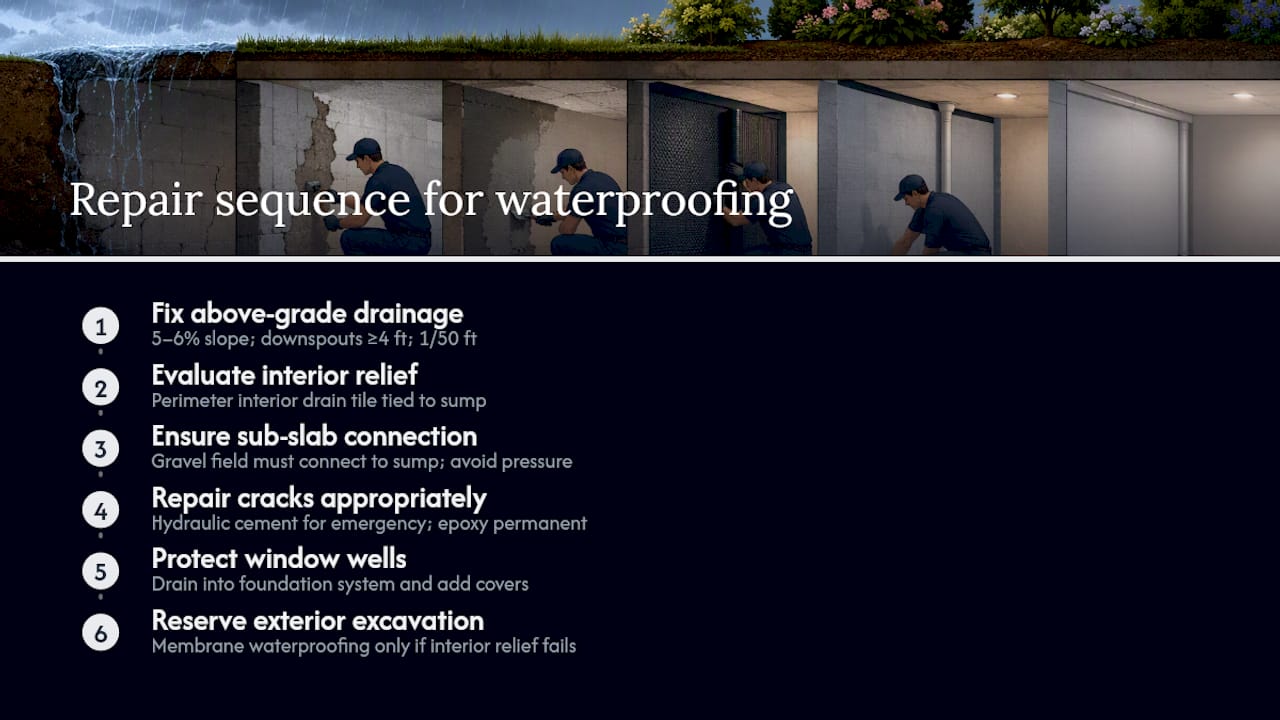
Start with grading and downspouts. Soil should slope away from the foundation at roughly a 5% to 6% grade where your lot allows it, and every downspout should discharge at least 4 feet from the house. The National Association of Home Builders also recommends at least one downspout per 50 linear feet of roof eave, which surprises a lot of homeowners who assumed two downspouts on a large house was plenty.
Interior drainage systems are the practical middle ground. Perimeter drain tile installed along the interior footing, tied into a sump pump, collects water before it ever reaches your floor and discharges it outside. This retrofit works well precisely when exterior excavation isn’t feasible, whether because of cost, a shared property line, or a finished exterior. The catch: the sub-slab gravel field has to connect properly to the sump, or hydrostatic pressure builds up anyway and quietly defeats the whole system.
Crack repairs split into two categories. Hydraulic cement is your emergency patch, good for stopping active flow today. Injection epoxy is the permanent fix for structural cracks, sealing the crack from within rather than just capping the surface. Neither one solves a hydrostatic pressure problem on its own; experts are blunt that sealing without addressing drainage just sends the water looking for a new exit.
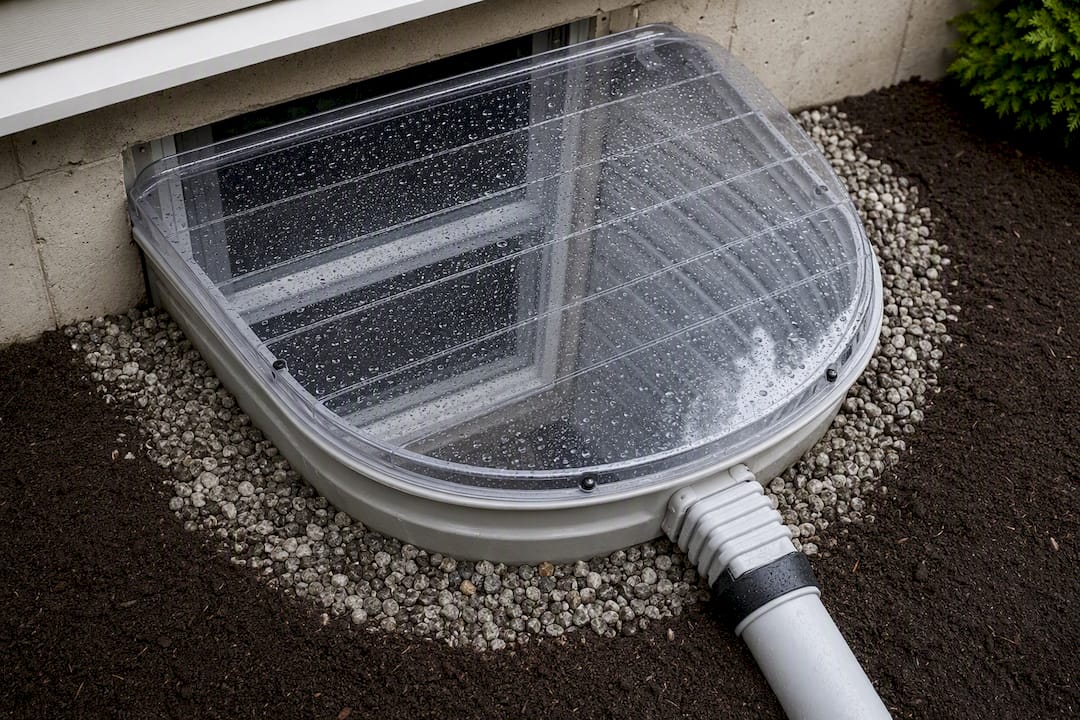
Window wells need their own drainage tied into the foundation drain system, plus a cover to keep rain and debris out in the first place.
Full exterior excavation with membrane waterproofing is the most thorough fix for sustained high water tables, but it’s invasive, expensive, and only worth it when interior relief genuinely can’t keep up. Our basement waterproofing guide breaks down which method fits which situation in more detail.
When Should You Call a Restoration Professional?
Some situations aren’t DIY territory, no matter how handy you are.
- Water is rising faster than your sump pump or wet vac can handle it.
- The same leak keeps coming back after you’ve already fixed the gutters and grading.
- You notice new cracking, bowing, or visible movement in a foundation wall.
- Standing water is near an electrical panel, outlets, or a gas appliance.
A restoration crew’s workflow typically starts with emergency extraction, then moisture mapping to find water hiding inside walls and framing where you can’t see it, followed by structural drying with commercial dehumidifiers and air movers. Mold prevention and, where needed, coordination with a plumber or foundation contractor round out the job.
Pro Tip: When you call around, ask for a written scope of work, not just a verbal quote. An itemized mitigation report with photos is exactly what your insurance adjuster wants to see, and vague estimates slow claims down.
Confirm 24/7 availability, ask what certifications the technicians hold, and get the equipment list in writing before work starts. Our water damage restoration services page outlines what that response typically includes.
How Much Does It Cost to Fix a Leaking Basement?
Costs scale directly with how invasive the fix is.
- Gutter and downspout repairs: typically a few hundred dollars.
- Regrading around the foundation: roughly $500 to $3,000, depending on yard size and access.
- Interior drain tile and sump pump installation: commonly $2,000 to $6,000.
- Full exterior excavation and membrane waterproofing: $5,000 to $15,000 or more, depending on foundation size and how hard the site is to access.
On insurance, the split matters. Standard homeowners policies generally cover sudden, accidental plumbing failures, but most exclude flood water and groundwater intrusion from heavy rain, which is exactly the scenario this article covers. A separate flood policy or rider often fills that gap. Keep every receipt and photo from your mitigation work; a documented, itemized report tends to move claims along faster than a verbal description of what happened.
How Do You Prevent Basement Leaks Before the Next Storm?
Small, seasonal habits prevent most of the leaks that turn into big repair bills.
- Clean gutters and downspouts twice a year, then test them with a hose to confirm water actually flows away from the foundation. Install leaf guards if clogging is a recurring problem.
- Recheck your grade every year or two. Soil settles, especially near a foundation, and a slope that sloped away from the house in year one can flatten out by year five.
- Test your sump pump monthly and keep a battery backup on hand. A sealed, airtight sump cover also cuts down on humid air seeping into the basement between rain events.
- Keep plantings and irrigation lines several feet back from the foundation, and check window wells before storm season for debris that blocks drainage.
Pro Tip: Running a hose against your foundation for ten minutes on a dry day is the cheapest diagnostic tool you own. If water pools instead of draining away, you’ve found your next project before the next storm finds it for you.
What a Restoration Pro Wants You to Know
Most repeat basement leaks get fixed the same way: someone finally clears the gutters, extends the downspouts, and fixes the grade. Crack patches and sealants buy time, but they don’t relieve the pressure pushing water toward your house in the first place. If you’re not certain whether a leak is cosmetic or structural, or water is anywhere near electrical systems, that’s not a weekend project. Call a restoration professional.
How Puroclean Responds When Your Basement Floods After a Storm
Puroclean is built for the exact scenario this article covers: water showing up fast, with a clock already running on mold and structural damage. Our teams provide 24/7 emergency water extraction and structural drying, coordinated leak detection when plumbing is part of the problem, and documented mitigation reports built specifically to support your insurance claim.
Every job comes with the certifications and equipment a real restoration response requires, and we know that after heavy rain, hours matter more than convenience. If your basement is actively taking on water, or you just came through a storm and want a professional inspection before small damage becomes a bigger repair, request emergency restoration service now and we’ll get a crew assessing the situation.
Sources
- Moisture in basements: causes and solutions | UMN Extension
- Bulk water control (Building Science Corporation)
- Ultimate Guide to stop basement water leaks | NAHB