


How to Assess Smoke Damage for Fast Restoration Results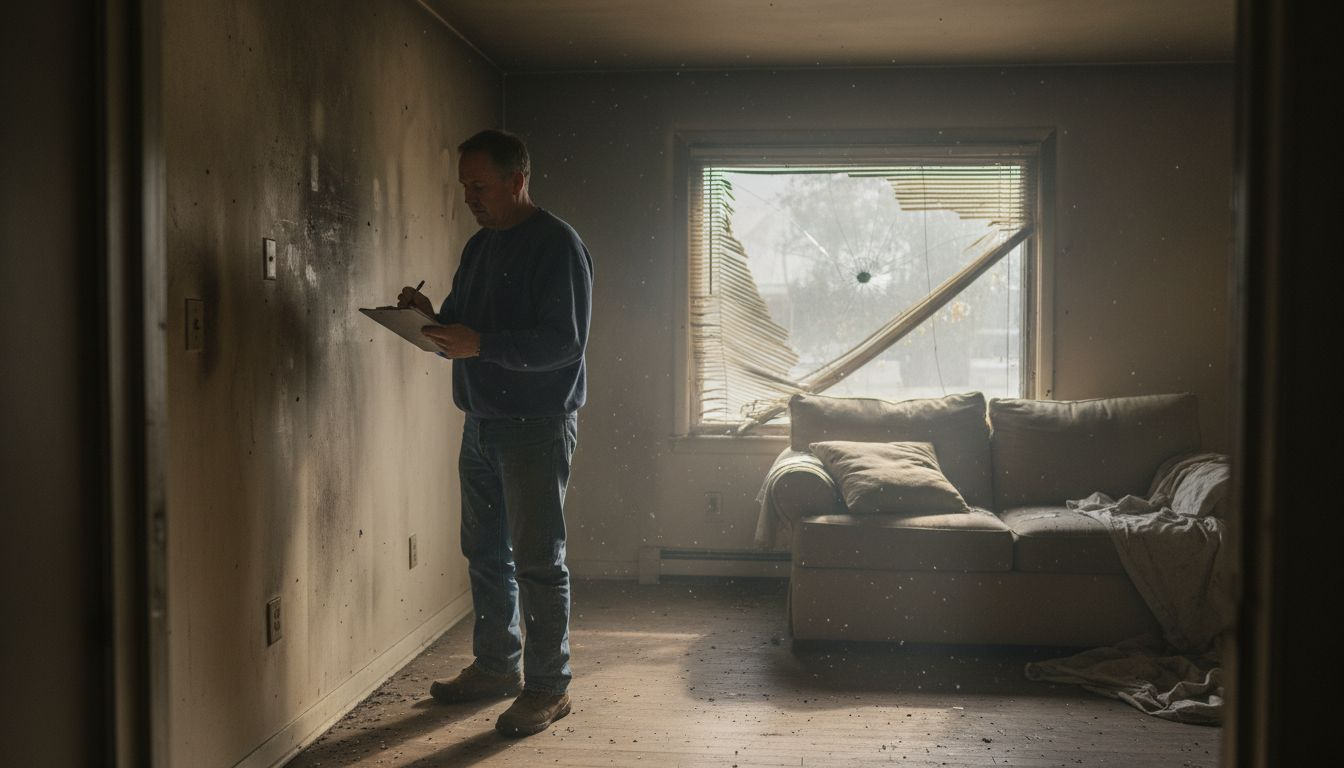
Smoke can linger long after a fire is out, leaving Northeast Sacramento homeowners worried about hidden damage and lingering odors. Facing the aftermath quickly feels overwhelming, yet preparing your property safely is the key to protecting your family and your investment. Here, you will find step-by-step smoke damage assessment advice, clear safety checks, and practical guidance on what to document for insurance and restoration—so you can start your recovery with confidence.
Table of Contents
Step 1: Prepare Your Property for Smoke Damage Inspection
Step 2: Identify Smoke Residue and Structural Impact
Step 3: Document Damage for Restoration and Claims
Step 4: Verify Restoration Needs and Next Steps
Quick Summary
Key Insight
Explanation
1. Ensure Property Safety Before Inspection
Check for structural damage, gas leaks, and hazards before entering your home to guarantee safety.
2. Document Damage Thoroughly for Claims
Take dated photos and videos of all affected areas, creating an inventory of damaged items for insurance claims.
3. Identify Types of Smoke Damage
Recognize visible smoke residue and potential structural impacts to inform restoration professionals accurately.
4. Consult Insurance Early
Contact your insurance company immediately to receive guidance on coverage and the cleanup process.
5. Engage Professional Restoration Services
Use certified restoration companies for effective smoke damage treatment and to ensure comprehensive restoration.
Step 1: Prepare Your Property for Smoke Damage Inspection
Before a professional inspector arrives, you need to make sure your property is safe to enter and document its current condition. This preparation step protects you, ensures accurate assessment, and helps your restoration team work efficiently.
Start by checking whether it’s safe to enter your home. Look for structural damage, downed power lines, or gas leaks. Open windows throughout the property and use fans to circulate fresh air, which reduces smoke odor and improves visibility for inspection. If you smell gas or notice structural concerns, stay out and call emergency services immediately.
Safety checks before entry:
Verify the building structure is sound with no obvious collapse
Check for electrical hazards or exposed wiring
Look for gas leaks or chemical smells beyond smoke
Ensure utility lines are safe from fire damage
Once you’ve confirmed basic safety, check structural safety and air quality before allowing anyone inside, especially children or elderly family members.
Next, contact your insurance company right away. They’ll guide you on next steps, coverage details, and whether to begin cleanup before the adjuster visits. Document everything with photos and videos of affected areas, taking wide shots and close-ups of smoke residue on walls, ceilings, and personal items.
Carefully mark or remove hazardous debris like broken glass or sharp metal. Don’t dispose of anything yet—your insurer may need to see damaged items. Make a detailed list of affected belongings with descriptions and approximate values.
Contact your insurance company before starting any cleanup work—documenting damage first protects your claim and ensures proper coverage.
Consider following a smoke damage cleanup checklist to track what you’ve documented and what still needs assessment. This keeps you organized and prevents missing important details.
Pro tip: Take dated photos and videos from multiple angles, keeping them in a cloud backup. Insurance adjusters appreciate clear documentation, and digital backups protect your evidence if physical records are damaged.
Step 2: Identify Smoke Residue and Structural Impact
Now that your property is safe to enter, it’s time to assess what smoke has damaged. Understanding both visible residue and hidden structural changes helps restoration professionals plan the right approach for your home.
Smoke leaves three types of damage that you need to identify. First, there’s visible residue like soot, ash, and char deposits on walls, ceilings, and furniture. Second, smoke contains volatile and semi-volatile organic compounds that absorb into porous materials and cause long-term odor problems. Third, heat and flames damage the structural integrity of wood, concrete, and other building materials.
Start by examining surfaces in each room. Look for black or gray soot stains on walls, ceilings, and light fixtures. Check inside cabinets and closets where smoke penetrates deeply. Run your finger along surfaces to feel the texture of residue—greasy or powdery deposits indicate chemical contamination that needs professional cleaning.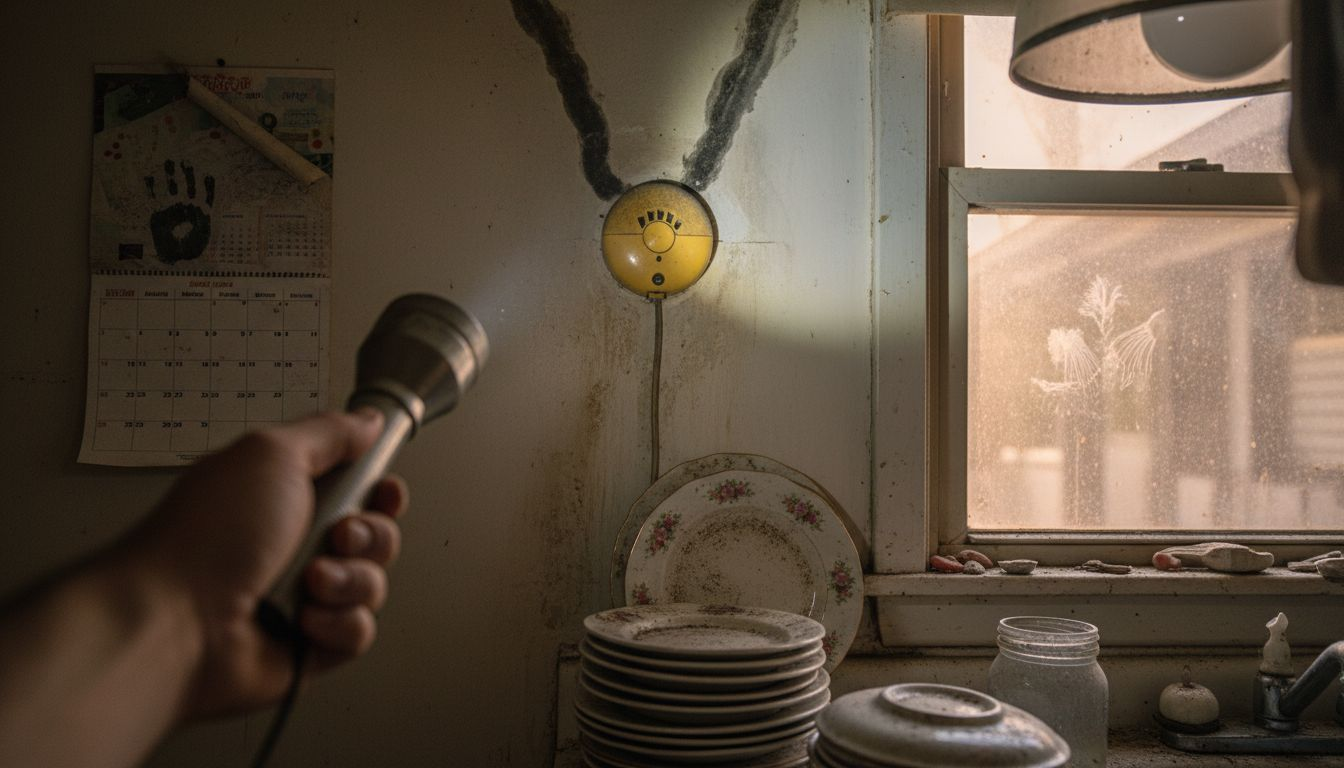
Types of visible smoke damage to document:
Here’s a quick reference for common types of smoke damage and their risks:
Damage Type
Appearance & Signs
Long-Term Risk
Soot Residue
Black, oily stains
Persistent odor, staining
Ash Deposits
Gray, powdery dust
Surface corrosion, air quality issues
Charred Surfaces
Burned, darkened materials
Structural weakness, fire hazard
Chemical Residue
Sticky, greasy film
Toxic exposure, challenging cleanup
Soot deposits on painted surfaces and trim
Ash residue on horizontal surfaces like shelves
Char marks indicating heat exposure near the fire source
Discoloration on fabrics, upholstery, and curtains
Residue inside appliances and electronics
Next, assess structural damage. Fire weakens building materials through heat exposure and physical damage. Look for cracking in concrete floors or foundation, warping in wooden beams or framing, and spalling where concrete surface has chipped away. Check for charring on wood framing in attics, basements, or near the fire origin.
Heat and smoke damage extends far beyond what’s visible—contaminants absorb into walls, insulation, and ductwork, requiring professional assessment to determine full restoration scope.
Pay attention to areas where heat was most intense. Walls near the fire will show more discoloration and structural stress. Use a flashlight to inspect dark areas like attics and crawl spaces where smoke travels and settles. Take detailed photos of all damage areas, including close-ups of problem spots and wide shots showing the full scope.
Note whether damage appears concentrated in one area or distributed throughout your home. This pattern helps professionals understand fire behavior and prioritize restoration work. If you notice structural concerns like sagging ceilings, cracked foundations, or charred framing, mark these areas clearly and avoid putting weight or pressure on them.
Pro tip: Use a flashlight and your phone’s video camera to document damage in dark spaces—pan slowly across each area so professionals can see exactly what they’re working with before arrival.
Step 3: Document Damage for Restoration and Claims
Proper documentation is your foundation for a successful insurance claim and efficient restoration. This step transforms your observations into concrete evidence that supports both your claim and the restoration team’s work plan.
Start with a systematic approach to photographing and recording damage. Take photos from multiple angles in each room, capturing both wide shots showing overall conditions and close-ups of specific damage areas. Include timestamps and room labels in your documentation so adjusters can follow your assessment. Video footage works well too—walk through each affected space slowly, narrating what you see.
Create a detailed inventory of damaged items. List each piece with descriptions, approximate purchase dates, and estimated replacement costs. Include furniture, electronics, personal belongings, and any structural components. This inventory becomes essential when documenting damage for insurance claims, as insurers need to understand what you owned and what was lost or damaged.
For each damaged item, note the following information:
Item description and brand (if known)
Location in the home
Condition before the fire (used, new, etc.)
Estimated replacement cost
Whether it was a total loss or partial damage
Document the severity of damage by location. Mark areas as heavily damaged, moderately damaged, or lightly affected. This categorization helps restoration professionals prioritize which spaces need the most intensive treatment. Photograph walls, ceilings, floors, and contents systematically, moving room by room.
Effective damage and loss assessment requires detailed location mapping and severity categorization—this supports both accurate claims and targeted restoration planning.
Keep receipts and proof of ownership whenever possible. Bank statements showing purchases, credit card statements, and insurance policies all strengthen your claim. Store digital copies in the cloud so they’re safe from further damage. If you can’t find receipts, photographs of items before the fire work as valuable evidence.
Make notes about what you spent on cleanup, temporary repairs, or emergency accommodations. These out-of-pocket expenses are often recoverable through your insurance claim. Save every receipt and record dates of expenses clearly.
Share your documentation with your insurance adjuster promptly. The more complete and organized your records, the faster your claim can be processed and restoration can begin.
Pro tip: Create a separate folder (digital or physical) for each room with photos, inventory lists, and receipts grouped together—this makes it easy for your adjuster to review and faster for restoration professionals to understand what needs priority.
Step 4: Verify Restoration Needs and Next Steps
With your assessment and documentation complete, it’s time to determine what restoration work is necessary and plan your path forward. This step connects your damage evaluation to professional restoration services and insurance guidance.
Review your documentation and identify which areas need professional restoration versus simple cleaning. Some damage requires specialized treatment while other areas may only need deep cleaning and ventilation. Prioritize based on health risks, structural concerns, and damage severity.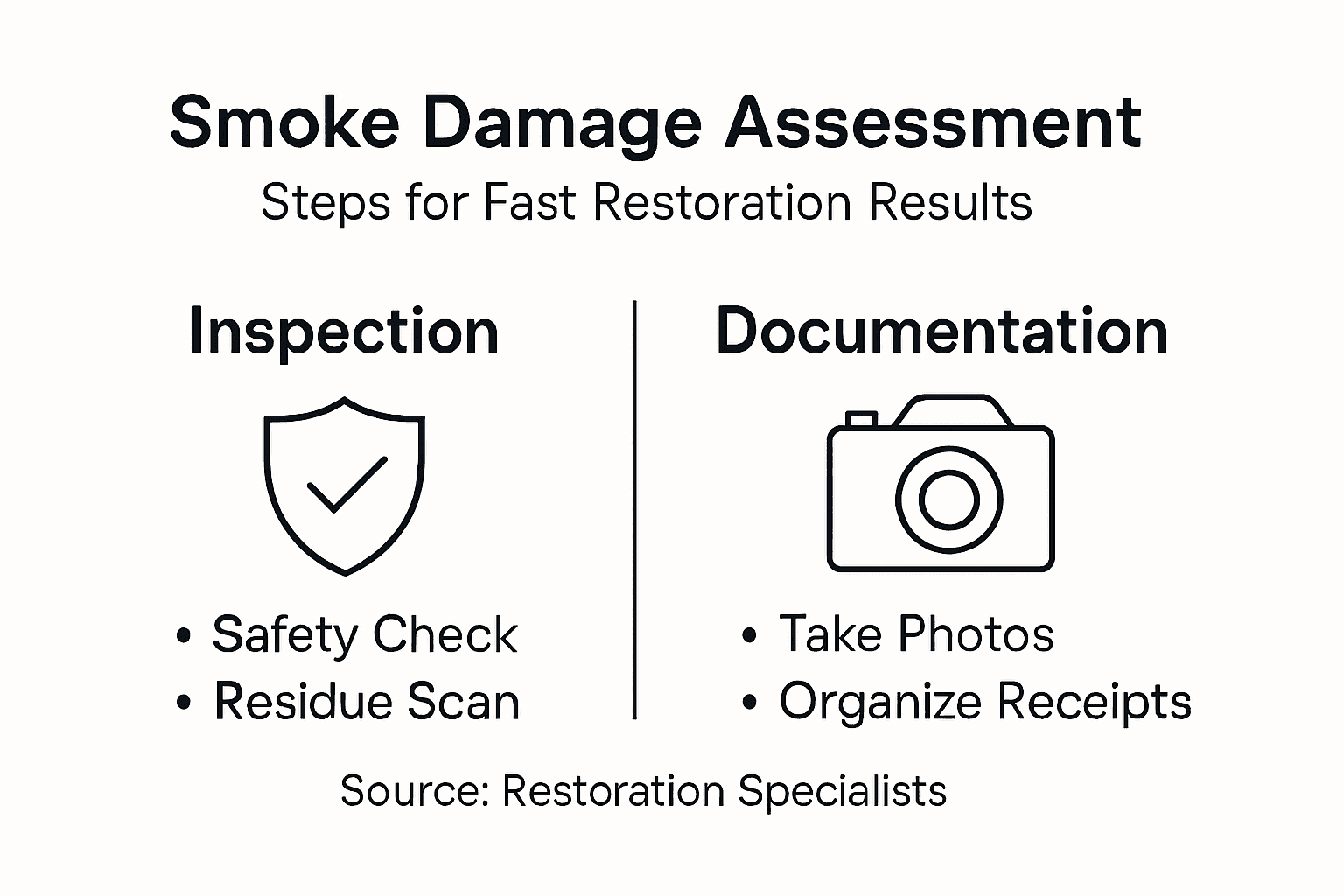
Smoke contamination varies significantly by location and material type. Porous materials like drywall, insulation, and carpet absorb more contaminants than hard surfaces. Areas closest to the fire source typically need more intensive restoration. Understanding these differences helps you communicate priorities to restoration professionals.
Key restoration considerations:
Air quality and ventilation needs for smoke odor removal
Contaminated materials requiring replacement versus cleaning
Structural repairs needed before cosmetic restoration
Health and safety risks from smoke particulates and chemicals
Timeline for drying wet materials to prevent mold growth
Contact certified fire restoration professionals to conduct a detailed assessment. They’ll evaluate contamination levels and health risks and recommend appropriate treatment methods. Professional equipment and expertise ensure thorough restoration that DIY approaches cannot achieve.
Work with your insurance adjuster to understand what your policy covers. Some insurance plans cover full professional restoration while others may require you to choose between professional services and cash settlements. Clarify coverage before committing to restoration work.
Professional restoration specialists know how to address invisible smoke damage that extends into walls, ductwork, and insulation—areas homeowners typically cannot access or treat effectively.
Ask restoration companies about their process, timeline, and costs. Request written estimates and understand what’s included in their service. Most reputable companies offer 24/7 emergency response, which matters for Northeast Sacramento properties where rapid mitigation prevents additional damage.
Discuss next steps in restoration including specialized cleaning of soot-stained surfaces, proper drying techniques, and replacement of irreparably damaged materials. A clear plan prevents delays and keeps your restoration on schedule.
The table below contrasts DIY cleaning against professional restoration approaches:
Aspect
DIY Cleaning
Professional Restoration
Equipment Needed
Basic household tools
Industrial-grade tools
Scope of Work
Surface and minor items
Deep cleaning, structural repair
Health Protection
Limited
Comprehensive with PPE
Time Required
Multiple days or weeks
Faster with expert teams
Once you’ve selected your restoration provider, provide them with all your documentation. Your photos, inventory lists, and damage notes save them time during initial assessment and help them understand your priorities.
Pro tip: Get multiple estimates from certified restoration companies and compare not just price but scope of work, equipment used, and timeline—the cheapest option isn’t always the fastest or most thorough for smoke damage.
Fast and Reliable Smoke Damage Assessment for Northeast Sacramento Homes
Dealing with smoke damage is overwhelming and time sensitive. The article highlights key challenges like identifying visible residue, assessing structural impact, and documenting everything thoroughly to support insurance claims. You want expert help that acts quickly to prevent further harm, removes lingering odors, and restores your property with care.
PuroClean of Northeast Sacramento understands these urgent needs. Our certified restoration specialists provide detailed damage assessments and professional smoke remediation tailored to your unique situation. We focus on rapid response to secure your home while coordinating with your insurance company to ease the claims process. Whether smoke or water damage strikes, our advanced technology and 24/7 availability empower you to regain control confidently.
Don’t let smoke damage worsen or go unaddressed. Connect with PuroClean of Northeast Sacramento now for expert fire and smoke restoration services that prioritize your family’s safety and property value. Visit our professional restoration platform to learn how we combine swift mitigation with thorough documentation. Take the first step toward fast and comprehensive recovery by contacting our team today.
Frequently Asked Questions
How do I know if my property is safe to enter after smoke damage?
To determine if your property is safe, check for structural damage, gas leaks, and electrical hazards. Only enter if you confirm everything is intact and safe; otherwise, contact emergency services for assistance.
What should I document for my insurance claim after smoke damage?
Document visible damage by taking photos and videos of affected areas, including both wide shots and close-ups. Make a detailed inventory of damaged items with descriptions, approximate values, and their condition before the incident.
What types of smoke damage should I look for during my assessment?
You should identify visible residues like soot and ash, along with hidden damage such as structural weakening in building materials. Look for discoloration, char marks, and chemical residues that indicate deeper contamination issues.
How can I effectively communicate restoration needs to professionals?
To communicate effectively, organize your documentation into categories based on severity and location of damage. Provide your restoration team with a clear list including priority areas requiring immediate attention, such as those near the fire source.
What are the common health risks associated with smoke damage?
Smoke damage can lead to health risks due to toxic chemicals and particulates accumulated in building materials. Ensure adequate ventilation and prioritize cleaning or replacing contaminated porous materials to maintain safe air quality.
Should I attempt to clean smoke damage myself or hire professionals?
While minor cleaning may be possible, hiring professionals is recommended for thorough restoration due to the complexity of smoke damage. Professional teams possess specialized equipment and expertise to deal with contaminants effectively and safely.
Recommended
Can I Remove Smoke Damage Myself or Should I Call a Pro? Smoke Removal DIY vs Pro: Smoke Removal Restoration Tips for Home Owners – PuroClean Disaster Restoration
Smoke Damage Restoration: Steps to Recover Your Property After a Fire
Smoke Smell Removal after a Home Fire: Tips from Professionals
Fire Damage Assessment: Key Steps for Recovery – PuroClean of Northeast Sacramento
Fissures Fondation Rive-Sud | Réparation & Injection Garantie