


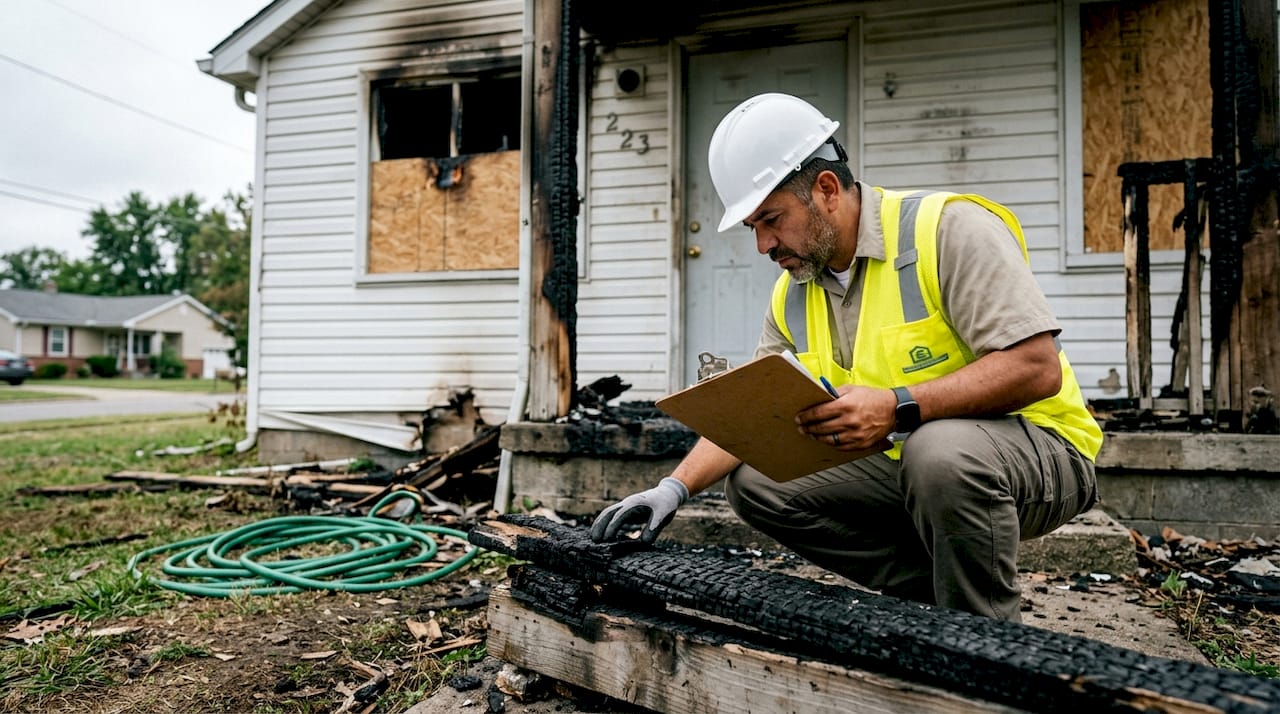
Residential fire damage restoration is the professional process of cleaning, repairing, and rebuilding a home after fire, smoke, soot, and firefighting water have caused damage. The industry term for this work is “fire and smoke remediation,” though most homeowners know it simply as fire restoration. The process moves through several distinct phases: emergency board-up, water mitigation, smoke and soot cleanup, contents recovery, structural assessment, and full reconstruction. Each phase connects directly to your insurance claim, and the decisions you make in the first 72 hours shape how smoothly the entire recovery goes.
What is residential fire damage restoration?
Residential fire damage restoration covers every step required to return a fire-damaged home to a safe, livable condition. Fire does not act alone. Smoke penetrates walls, ceilings, and HVAC systems. Firefighting water soaks floors and framing. Soot coats surfaces and embeds into porous materials within hours. A professional restoration company addresses all three damage types simultaneously, not in isolation.
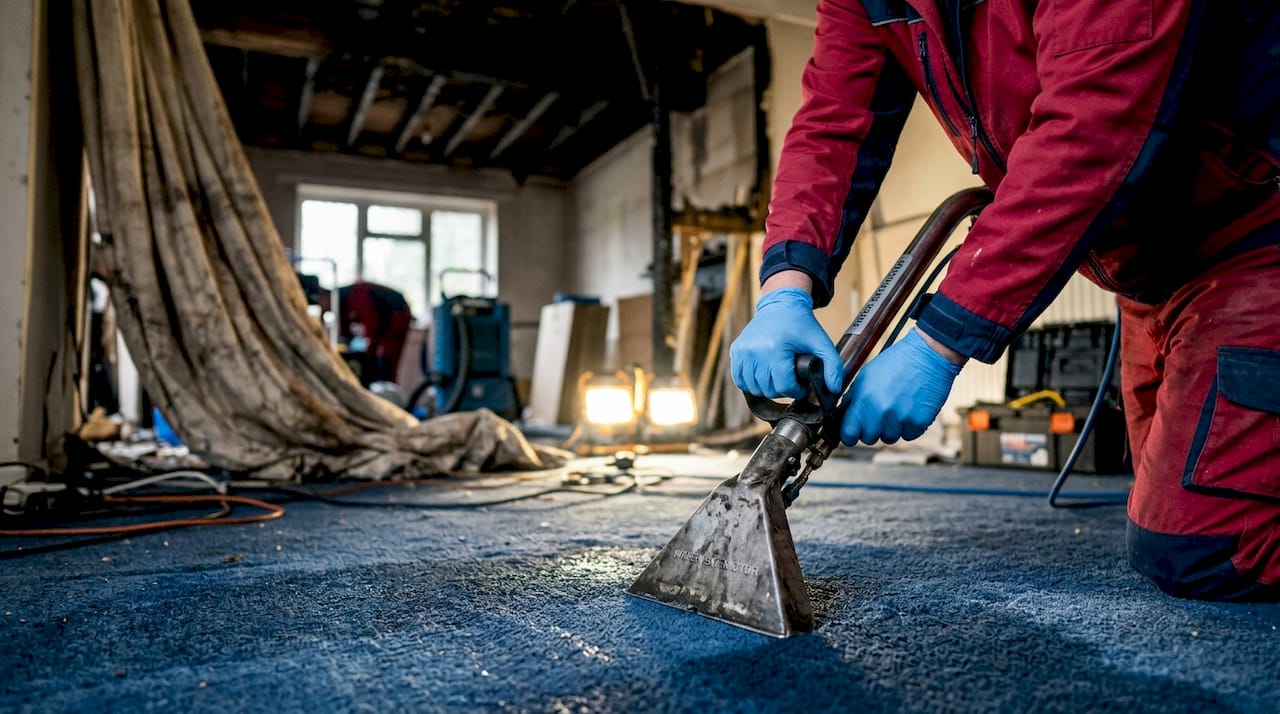
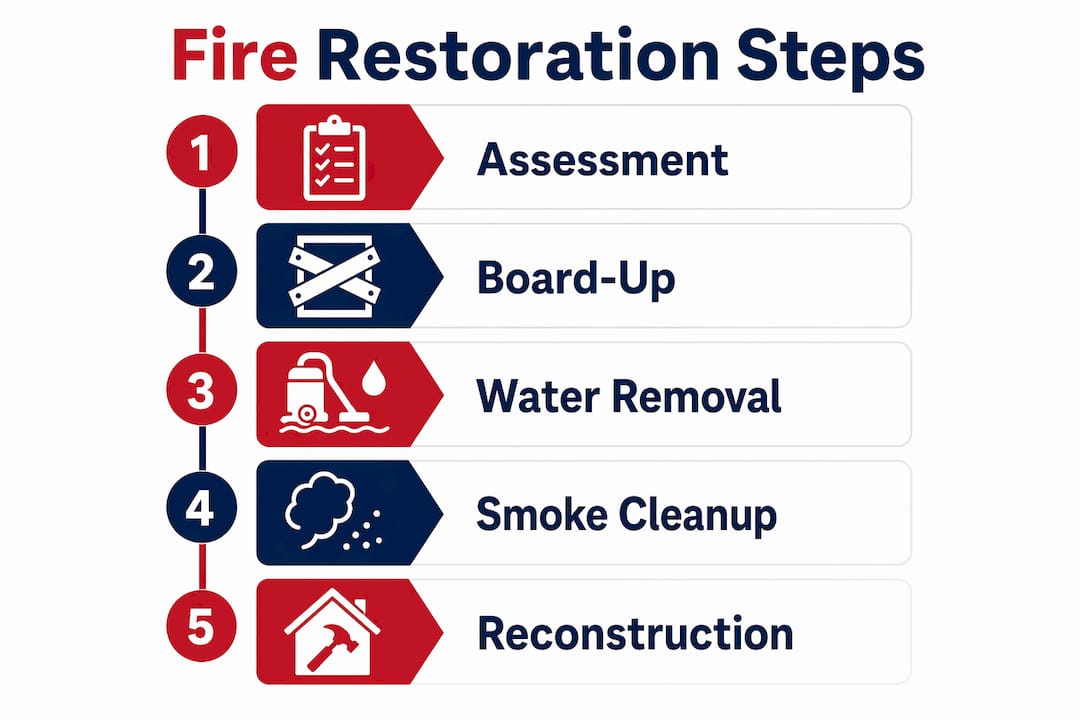
The process typically begins with emergency stabilization: boarding up windows, tarping the roof, and securing the structure against weather and unauthorized entry. From there, crews extract standing water, begin drying structural materials, and assess the full scope of fire and smoke damage. Reconstruction follows once the structure is clean, dry, and stable. Fire damage restoration handled by certified professionals protects both your home’s structure and your insurance claim.
What immediate steps should homeowners take after fire damage?
Speed matters after a house fire, but safety comes first. Do not re-enter the home until the fire marshal has cleared the property. Structural instability, toxic smoke residue, and compromised electrical systems make early entry dangerous. Once you receive clearance, follow these steps in order.
- Contact your insurance company. Notify your insurer within 24–72 hours of the fire. Most policies require prompt reporting, and delays can complicate your claim. The insurer will assign a claims adjuster and authorize emergency mitigation services.
- Arrange emergency board-up and tarping. Exposed openings invite weather damage, theft, and vandalism. A restoration company can deploy board-up crews the same day, and your insurance policy typically covers this cost as part of the claim.
- Document everything before cleanup begins. Walk through the property with your phone and record video of every room. Photograph damaged contents, structural damage, and smoke staining. This documentation is your primary evidence for the claim.
- Request the Fire Marshal’s report. The Fire Marshal’s origin and cause report is a critical document that insurers use to approve the scope of restoration work and distinguish covered losses from pre-existing conditions.
- Do not discard damaged items. Insurers need to inspect contents before disposal. Throwing things away prematurely can reduce your settlement.
Pro Tip: Take a second video walkthrough specifically of your personal contents, opening drawers and closets. A detailed contents inventory submitted early gives your adjuster a complete picture and reduces back-and-forth later.
Your duty as a homeowner is to mitigate further damage after a fire. That means stopping water intrusion, preventing mold growth, and securing the structure. Failing to act can give your insurer grounds to deny portions of your claim. Hiring a professional restoration company immediately satisfies this obligation and creates a documented record of your efforts.
How does the professional restoration process work?
Professional fire and smoke remediation follows a structured sequence. Skipping steps or rushing phases causes permanent damage to materials that could have been saved. Here is what each phase involves.
Water mitigation
Firefighting efforts can introduce thousands of gallons of water into a home. Crews use industrial extractors, air movers, and dehumidifiers to remove moisture and dry structural materials. Wet framing left untreated for more than 48–72 hours begins to grow mold, adding a second remediation problem to an already complex claim.
Smoke and soot remediation
Smoke damage is the most misunderstood part of home fire cleanup. Soot particles are acidic and continue to etch surfaces, corrode metals, and discolor materials long after the fire is out. DIY cleanup embeds soot permanently into porous surfaces, destroying items that professionals could have saved. Trained crews use dry chemical sponges, wet cleaning agents, and thermal fogging to address soot at the surface and molecular level.
Smoke odor treatment requires a specific sequence of chemical, oxidative, and sealing techniques. Professionals apply synthetic shellac-based sealers to lock odor molecules into surfaces before repainting. Skipping this step means odors return after reconstruction, requiring the work to be redone.
Contents pack-out and inventory
Restoration crews remove salvageable contents from the home, catalog each item, and transport them to a climate-controlled facility for cleaning. This protects your belongings during structural work and creates a detailed inventory for your insurance claim. Items that cannot be restored are documented for replacement value.
Structural assessment and demolition
A structural engineer or licensed contractor assesses load-bearing walls, roof systems, and foundations for fire damage. Charred framing, compromised connections, and heat-damaged concrete all require evaluation. Demolition removes only what cannot be restored, keeping reconstruction costs lower. All work must meet current local building codes, which sometimes requires upgrades beyond the original construction standard.
Pro Tip: Ask your restoration contractor for a line-item written scope before any work begins. A detailed scope protects you during insurance negotiations and prevents disputes about what was agreed upon. Written scopes and photo documentation are the two strongest protections a homeowner has throughout the process.
Reconstruction
Reconstruction begins once the structure passes inspection and the insurance scope is approved. Timelines vary widely based on damage severity, material availability, and permit processing times. Minor repairs may take four to eight weeks. Major structural rebuilds can run six to twelve months.
What are the typical costs and timelines for fire restoration?
Restoration costs range from $3,000 for minor fires to over $200,000 for major structural rebuilds. That wide range reflects the enormous variation in fire severity, materials affected, and local labor costs. Understanding where your damage falls on that spectrum helps you set realistic financial expectations.
| Damage Level | Estimated Cost | Typical Timeline |
|---|---|---|
| Minor (contained room fire) | $3,000–$15,000 | 4–8 weeks |
| Moderate (multi-room damage) | $15,000–$50,000 | 2–4 months |
| Major (structural rebuild) | $50,000–$200,000+ | 6–12 months |
Several factors push costs higher: pervasive smoke odor requiring full HVAC cleaning and replacement, water damage from firefighting, asbestos or lead paint discovered during demolition, and code-upgrade requirements during reconstruction. Your insurance policy covers most of these costs, but understanding your deductible and coverage limits before work begins prevents surprises.
For large claims, public adjusters charge 10–15% of the settlement but may help homeowners recover 20–50% more on claims over $30,000. That math works in your favor on complex, high-value claims where initial adjuster estimates frequently miss hidden damage.
How can homeowners work effectively with their insurance company?
Insurance navigation is where most homeowners lose money after a fire. The claims process has specific rules, deadlines, and documentation requirements that directly affect your payout. Following them precisely makes a measurable difference.
- Report promptly. Notify your insurer within 24–72 hours. Late reporting gives adjusters grounds to question the timeline of damage.
- Request a written habitability assessment. A home is considered uninhabitable not only due to structural damage but also due to pervasive smoke odor or destroyed key areas. A written habitability assessment from your restoration contractor triggers Additional Living Expense (ALE) coverage, which pays for hotel stays, meals, and temporary housing while your home is being restored.
- Submit supplemental claims for hidden damage. Initial adjuster estimates are preliminary. Supplemental claims for hidden damage such as water intrusion inside wall cavities and soot inside HVAC ducts are routine and expected. Document these discoveries with photos and contractor reports as they are uncovered.
- Track recoverable depreciation. Insurers withhold a portion of your payout called recoverable depreciation and release it only after you submit proof of completed restoration. Recoverable depreciation requires contractor invoices, photographs, and completion certificates to unlock. Missing this step leaves money on the table.
- Keep every receipt. ALE expenses, temporary storage costs, and out-of-pocket mitigation expenses are all reimbursable. A simple spreadsheet with receipts attached is enough.
Pro Tip: Request a copy of your full policy before meeting with the adjuster. Knowing your coverage limits, deductible, and ALE cap before the inspection puts you in a stronger position during scope discussions.
Hiring a public adjuster makes sense for claims above $30,000 where the initial estimate appears to undervalue the damage. Their fee comes out of the settlement, not your pocket upfront, and their expertise in claim language and documentation often closes significant gaps in coverage.
Key takeaways
Professional fire restoration requires immediate action, thorough documentation, and close coordination with your insurer to recover the full value of your loss.
| Point | Details |
|---|---|
| Act within 72 hours | Notify your insurer and arrange board-up within 24–72 hours to protect your claim. |
| Document before cleanup | Photograph and video every room and every damaged item before any work begins. |
| Expect supplemental claims | Initial adjuster estimates miss hidden damage; document and submit supplements as issues surface. |
| Claim ALE benefits | Get a written habitability assessment to unlock hotel and living expense reimbursement. |
| Recover withheld depreciation | Submit final invoices and photos to your insurer to release recoverable depreciation funds. |
What I’ve learned after watching homeowners navigate fire recovery
The single most expensive mistake I see homeowners make is starting cleanup before the insurance adjuster visits. They want to act, which is understandable. But removing debris, washing walls, or discarding damaged furniture before documentation is complete destroys the evidence your claim depends on. Adjusters cannot pay for what they cannot see.
The second mistake is treating smoke odor as a cosmetic problem. Smoke odor is a chemical problem. The molecules bond to surfaces at a molecular level, and painting over them without proper sealing just traps the smell temporarily. Within months, it returns. Proper smoke damage treatment uses a sequence of chemical cleaning, oxidative treatment, and shellac-based sealing before any primer or paint goes on. Skipping steps costs more in the long run than doing it right the first time.
The homeowners who recover fastest share one trait: they choose a restoration company with direct insurance experience and demand written communication at every stage. Verbal agreements disappear. Written scopes, signed change orders, and email confirmations create a paper trail that protects you if the claim gets disputed. Select professionals who understand the claims process as well as they understand construction. That combination is rare and worth seeking out.
Puroclean is ready when you need fire restoration help
Fire damage does not wait for business hours, and neither does Puroclean. Serving Northeast Sacramento, Folsom, Rancho Cordova, and Citrus Heights, Puroclean provides 24/7 emergency response for homeowners facing fire, smoke, and water damage after a fire.
Puroclean’s certified crews handle every phase of fire damage restoration from emergency board-up and water extraction through smoke remediation, contents pack-out, and full reconstruction. The team works directly with insurance adjusters to document damage thoroughly, support supplemental claims, and keep your project on schedule. If you need guidance on why professional restoration matters or want to understand the full scope of services available, Puroclean is one call away. Contact Puroclean today for an immediate assessment and a clear path forward.
You can also find Puroclean’s service area and local coverage details on Google Maps.
FAQ
How soon should I call a restoration company after a house fire?
Call a professional restoration company the same day the fire marshal clears the property. Prompt action limits secondary damage from smoke, soot, and firefighting water, and satisfies your insurance policy’s duty-to-mitigate requirement.
Does homeowners insurance cover fire damage restoration?
Most standard homeowners insurance policies cover fire damage restoration, including cleanup, structural repair, contents replacement, and Additional Living Expenses while the home is uninhabitable. Review your policy limits and deductible before work begins.
What is recoverable depreciation and how do I claim it?
Recoverable depreciation is the portion of your payout that insurers withhold until restoration is complete. Submit final contractor invoices, completion photographs, and any required certificates to your insurer to release those funds.
Can I clean up fire damage myself?
DIY cleanup after a fire typically causes permanent damage to salvageable items and can void portions of your insurance claim. Professionals use industrial equipment and chemical treatments that are not available to homeowners, and their documentation supports your claim throughout the process.
What triggers Additional Living Expense coverage?
A written habitability assessment from a licensed contractor or restoration professional triggers ALE coverage. Uninhabitability includes not just structural damage but also pervasive smoke odor or loss of key functional areas like kitchens and bathrooms.
Recommended
- Restoration After House Fire: Complete Step-by-Step Recovery – PuroClean of Northeast Sacramento
- Role of Restoration After Fire: Complete Guide – PuroClean of Northeast Sacramento
- Fire Damage Restoration Explained: Complete Process Guide – PuroClean of Northeast Sacramento
- Fire Damage Cleanup Guide: Restore Property Safely and Fast – PuroClean of Northeast Sacramento