


Role of Property Managers in Restoration Success

Over half of American commercial properties experience a significant disaster event within a decade. For property managers in Northeast Sacramento, the pressure to deliver fast, effective restoration solutions can define their professional reputation. Every emergency puts you at the center of complex project management, requiring real-time coordination, smart insurance communication, and strict compliance with legal standards. This guide shows how American property managers like you can streamline disaster response and safeguard the value of your properties when every decision counts.
Table of Contents
- What Property Managers Do During Restoration
- Types of Restoration Scenarios Managed
- Coordinating With Restoration Professionals
- Insurance Claims and Communication Roles
- Compliance, Safety, and Legal Responsibilities
Key Takeaways
| Point | Details |
|---|---|
| Property Managers’ Role | They act as strategic coordinators among contractors, insurers, and property owners during restoration projects. |
| Types of Restoration Scenarios | They manage diverse situations including water, fire, mold, and environmental restoration, each requiring specialized knowledge. |
| Insurance Communication | Property managers streamline the insurance claims process by documenting damage, negotiating with adjusters, and ensuring compliance with policy terms. |
| Compliance and Safety | They must adhere to legal and safety regulations while conducting restoration, necessitating meticulous documentation and monitoring practices. |
What Property Managers Do During Restoration
Property managers play a critical role in guiding and overseeing restoration efforts, acting as strategic coordinators between contractors, insurance providers, and property owners. Their responsibilities extend far beyond simple supervision, encompassing complex project management that ensures efficient and successful property recovery.
During restoration, property managers are responsible for coordinating multidisciplinary restoration teams, which involves carefully managing multiple stakeholders and ensuring seamless communication. They must meticulously track project progress, verify contractor compliance with established protocols, and address any emerging challenges quickly. This includes documenting damage, managing insurance claims, scheduling specialized restoration services, and maintaining transparent communication channels with all involved parties.
Additionally, property managers must conduct rigorous oversight of restoration activities, which involves monitoring contractor performance and policy adherence. They assess the quality of restoration work, verify that all interventions meet industry standards, and request corrective actions when necessary. Their role demands technical understanding of restoration processes, legal knowledge about property management regulations, and strong interpersonal skills to negotiate effectively with contractors and property owners.
The most successful property managers approach restoration as a holistic process, balancing technical requirements with proactive problem solving. They leverage their expertise to minimize disruption, control costs, and ensure the property is restored to its optimal condition as efficiently as possible.
Pro tip: Maintain a comprehensive digital documentation system that tracks all restoration activities, communications, and expenses to streamline the recovery process and protect your professional interests.
Types of Restoration Scenarios Managed
Property managers encounter a diverse range of restoration scenarios that require specialized knowledge, strategic planning, and adaptive management techniques. These scenarios span multiple property types and damage categories, demanding comprehensive understanding of complex recovery processes.
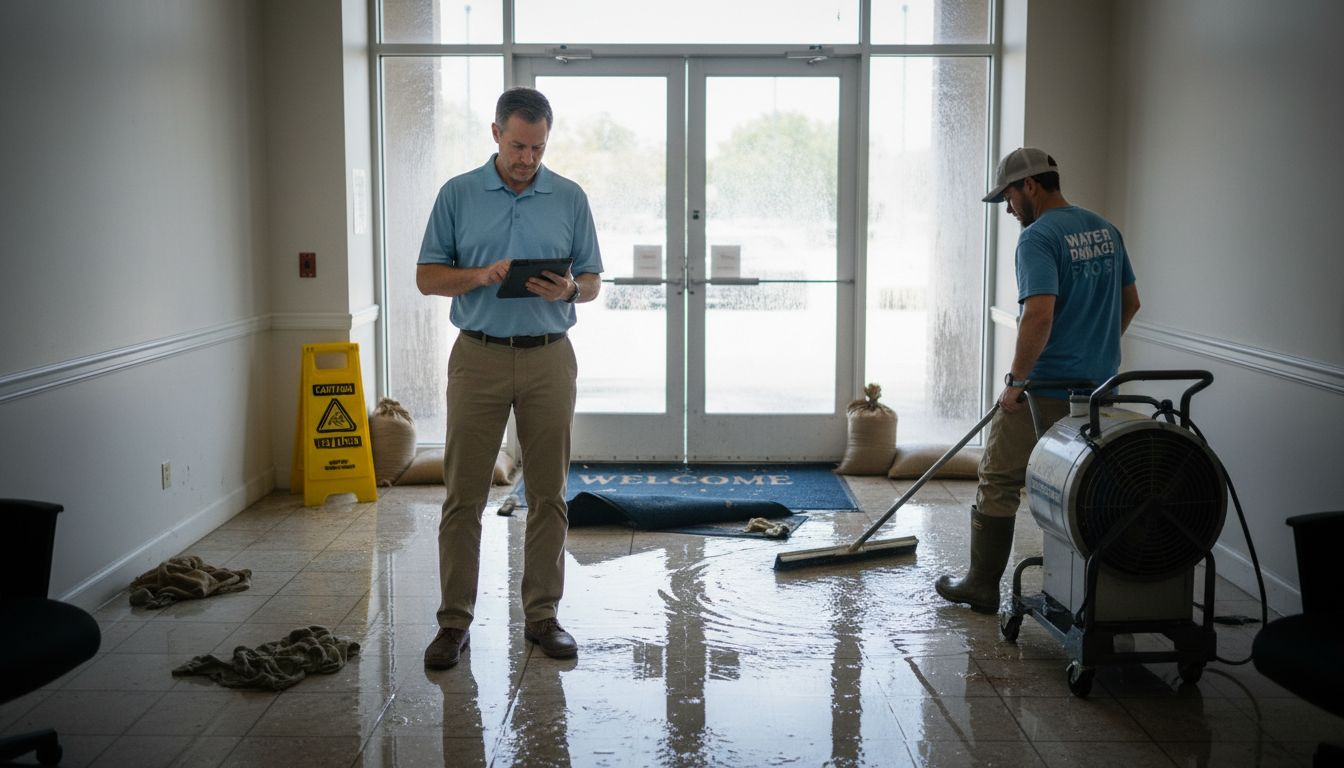
In commercial and residential settings, property managers frequently manage scenarios involving water damage, which can result from burst pipes, flooding, sewage backups, or storm-related incidents. They must also handle fire and smoke damage restoration, addressing structural compromises, soot removal, and smoke odor elimination. Mold remediation represents another critical restoration scenario, requiring managers to coordinate detailed inspection, containment, and thorough cleanup processes to prevent health risks and further property deterioration.
Large-scale environmental restoration projects present particularly complex scenarios involving ecological rehabilitation, water resource management, and wildlife habitat conservation. These restoration efforts demand intricate coordination between technical experts, regulatory agencies, and environmental specialists. Property managers must navigate multifaceted challenges that include regulatory compliance, stakeholder communication, and implementation of scientifically rigorous restoration strategies.
Beyond environmental contexts, property managers also manage restoration scenarios in specialized settings such as historic buildings, industrial facilities, healthcare institutions, and cultural heritage sites. Each unique environment requires tailored restoration approaches that balance preservation, safety standards, and functional recovery. The complexity of these scenarios underscores the critical importance of property managers as strategic coordinators who blend technical expertise with adaptive problem solving.
Here’s an overview of common restoration scenarios and their unique challenges:
| Restoration Scenario | Key Challenge | Required Expertise |
|---|---|---|
| Water Damage (Floods, Leaks) | Rapid moisture removal, mold risk | Plumbing, water mitigation |
| Fire and Smoke Damage | Soot removal, odor control | Structural, air quality testing |
| Mold Remediation | Health risk prevention | Environmental safety, remediation |
| Historic Building Restoration | Preserving authenticity | Preservation, architectural |
| Environmental Rehabilitation | Habitat/ecosystem impact | Ecology, regulatory compliance |
| Industrial Facility Restoration | Hazardous material management | Safety protocols, industrial ops |
Pro tip: Develop a comprehensive restoration scenario playbook that outlines specific protocols for different damage types, enabling faster and more efficient response during emergency recovery situations.
Coordinating With Restoration Professionals
Property managers serve as critical orchestrators in restoration projects, bridging communication between diverse professional teams and ensuring seamless project execution. Their role demands exceptional interpersonal skills, technical understanding, and strategic coordination capabilities to manage complex restoration efforts effectively.
Collaborative stakeholder management requires property managers to facilitate intricate communication networks involving ecologists, contractors, engineers, and local stakeholders. This involves establishing clear communication protocols, defining project objectives, allocating resources strategically, and resolving potential conflicts that might impede restoration progress. Successful coordination means creating an integrated approach where each professional contributes their specialized expertise toward comprehensive property recovery.
Effective coordination extends beyond technical communication. Property managers must also navigate the interpersonal dynamics of restoration projects, balancing technical requirements with stakeholder expectations. This involves maintaining transparent documentation, scheduling regular progress meetings, managing performance expectations, and ensuring all team members understand their specific roles and responsibilities. They act as mediators, translators, and strategic directors who transform complex technical processes into actionable restoration strategies.
Moreover, property managers must remain adaptive and responsive throughout restoration projects. This requires continuous monitoring of project progress, proactive problem solving, and the ability to quickly adjust strategies when unexpected challenges emerge. Their comprehensive oversight ensures that restoration professionals work cohesively, maintaining high standards of quality, safety, and efficiency throughout the recovery process.
This table summarizes how property managers add value coordinating with restoration professionals:
| Coordination Focus | Benefit to Project | Example Action |
|---|---|---|
| Stakeholder Alignment | Prevents miscommunication | Organizing kickoff meetings |
| Documentation Accuracy | Improves insurance outcomes | Maintaining detailed logs |
| Role Clarity | Speeds decision-making | Defining responsibilities early |
| Conflict Resolution | Minimizes project delays | Mediating disputes |
Pro tip: Create a standardized communication matrix that clearly defines roles, communication channels, and escalation procedures for each restoration professional involved in the project.
Insurance Claims and Communication Roles
Property managers play a pivotal role in navigating the complex landscape of insurance claims during restoration projects. Their expertise transforms a potentially stressful process into a streamlined, transparent experience for property owners, insurance providers, and restoration professionals.
Property managers serve as critical insurance claim liaisons, managing intricate communication networks between contractors, insurers, and property owners. They meticulously document damage, verify compliance with insurance requirements, and facilitate seamless claim processing. This involves preparing comprehensive damage reports, capturing detailed photographic evidence, tracking repair estimates, and maintaining precise communication records that support successful insurance claim resolutions.
The communication responsibilities extend beyond simple documentation. Property managers must strategically interpret insurance policy language, translate technical restoration requirements into clear terms for all stakeholders, and advocate for the property owner’s interests. They negotiate with insurance adjusters, challenge claim assessments when necessary, and ensure that all restoration work meets both insurance standards and property recovery objectives. Their nuanced understanding of insurance protocols helps prevent claim denials and accelerates the restoration timeline.
Moreover, property managers must maintain exceptional organizational skills throughout the claims process. This includes tracking multiple communication channels, managing correspondence timelines, coordinating expert assessments, and providing timely updates to all involved parties. Their ability to remain calm, professional, and detail-oriented under potentially stressful circumstances is crucial in achieving successful insurance claim outcomes and comprehensive property restoration.
Pro tip: Create a dedicated digital folder for each restoration project that includes chronological documentation, communication logs, photographic evidence, and professional assessments to streamline insurance claim processes.
Compliance, Safety, and Legal Responsibilities
Property managers navigate a complex landscape of legal and regulatory requirements during restoration projects, serving as critical guardians of safety, compliance, and risk management. Their responsibilities extend far beyond simple project oversight, encompassing comprehensive legal and ethical obligations that protect both property owners and restoration professionals.
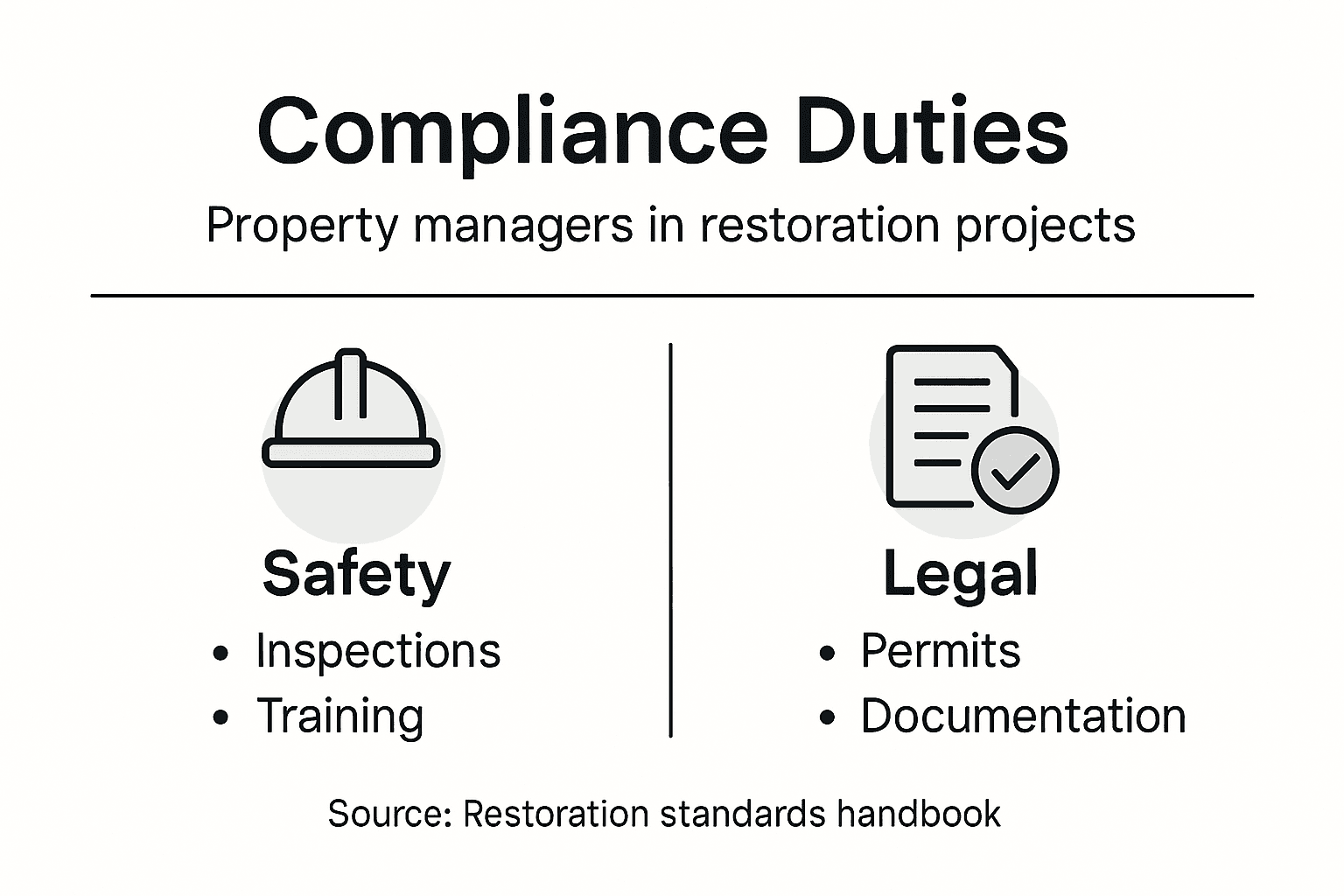
Compliance with preservation and safety regulations represents a fundamental aspect of property managers’ legal responsibilities. They must carefully navigate federal, state, and local standards, ensuring that restoration activities meet rigorous safety codes, environmental regulations, and historical preservation guidelines. This involves understanding nuanced legal frameworks like the Secretary of the Interior’s Standards for Rehabilitation, interpreting complex regulatory requirements, and implementing precise protocols that protect structural integrity, cultural heritage, and public safety.
Property managers must also administer contracts and enforce strict compliance mechanisms throughout restoration projects. This includes monitoring regulatory adherence and implementing corrective actions when potential violations are identified. They serve as critical intermediaries who translate legal requirements into actionable restoration strategies, ensuring that all activities align with Federal Acquisition Regulation standards and agency-specific policies. Their role demands comprehensive risk assessment, proactive legal management, and the ability to balance technical restoration needs with regulatory constraints.
Moreover, legal responsibilities extend to comprehensive documentation, transparent communication, and meticulous record-keeping. Property managers must maintain detailed logs of restoration activities, safety assessments, compliance checks, and professional interventions. These records serve not only as operational guides but also as legal safeguards that demonstrate due diligence, protect against potential liability, and provide clear evidence of professional standards throughout the restoration process.
Pro tip: Develop a comprehensive compliance checklist that integrates federal, state, and local regulatory requirements specific to your property type and restoration scope.
Streamline Your Restoration Management With Expert Support
Property managers face the demanding challenge of coordinating restoration projects that involve multiple experts, insurance claims, and strict compliance requirements. When dealing with water damage, fire restoration, mold remediation, or insurance communications, precision and timely action become critical. You need trusted partners who understand the urgency and complexity of these situations and can help you minimize disruption while ensuring quality outcomes.
At PuroClean of Northeast Sacramento, we specialize in comprehensive restoration services tailored for property managers overseeing emergency responses and long-term remediation efforts. Our industry-certified team offers 24/7 support, advanced technology, and clear insurance assistance, helping you maintain control over every stage of the restoration. Learn more about our Water Damage Restoration and fire and smoke damage solutions crafted to meet the highest standards.
Take command of your restoration projects today with professional assistance that turns complex recovery into a smooth process. Contact PuroClean of Northeast Sacramento now for immediate, trusted support that protects your property and peace of mind.
Frequently Asked Questions
What are the primary responsibilities of property managers during restoration projects?
Property managers coordinate multidisciplinary restoration teams, manage communication between stakeholders, track project progress, handle insurance claims, and ensure compliance with safety and legal standards.
How do property managers ensure successful communication with restoration professionals?
They establish clear communication protocols, define project objectives, and maintain transparent documentation to facilitate collaboration among contractors, ecologists, and other stakeholders.
What types of restoration scenarios do property managers handle?
Property managers address various scenarios including water damage, fire and smoke damage, mold remediation, and environmental rehabilitation, each requiring specialized knowledge and strategic planning.
How do property managers assist with insurance claims during restoration?
They serve as liaisons between property owners and insurance providers by documenting damages, preparing comprehensive reports, and negotiating with adjusters to ensure a smooth claims process.