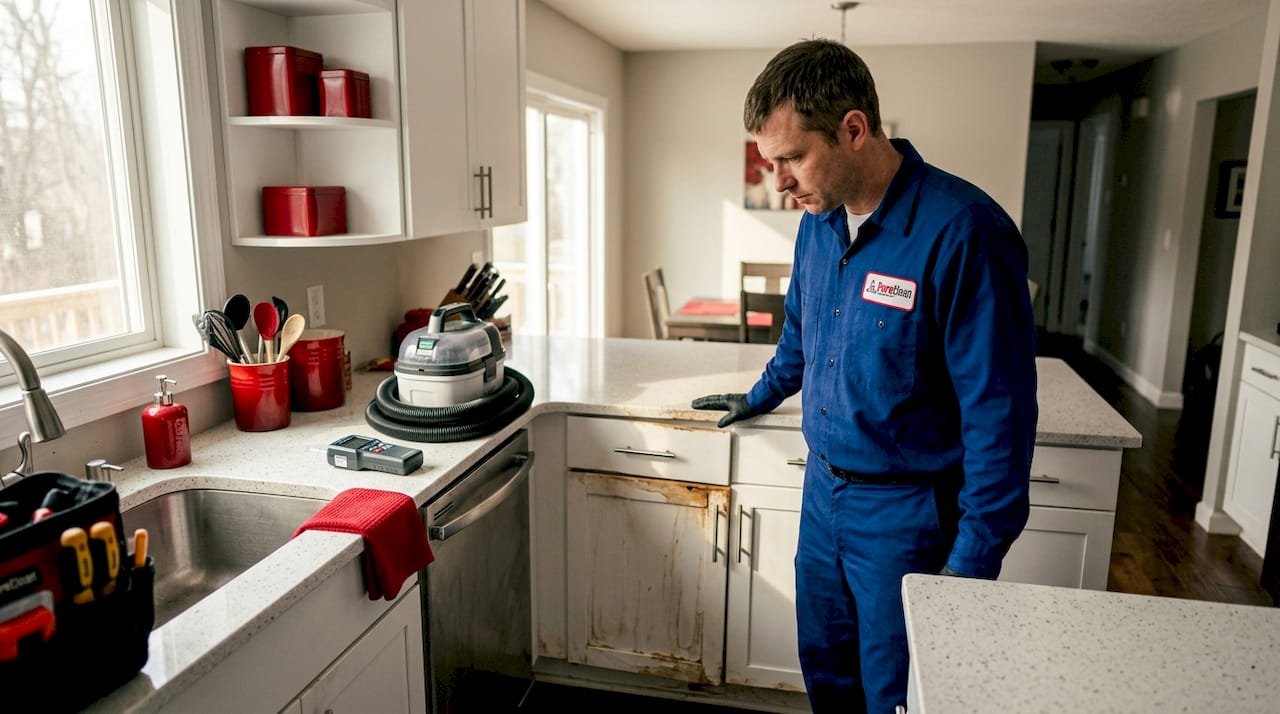
Smoke and water damage restoration is the professional process of cleaning, drying, deodorizing, and repairing property damaged by fire suppression efforts and smoke residues. Fires leave two overlapping crises: smoke and soot penetrating every porous surface, and thousands of gallons of suppression water saturating walls, floors, and structural cavities. Both must be addressed simultaneously. The 2026 ANSI/IICRC S700 standard governs professional fire and smoke cleanup, setting the sequence and methods that certified technicians follow. Skipping steps or treating the damage as purely cosmetic leads to mold, corrosion, and persistent odor that can render a property uninhabitable.
What happens during professional smoke and water damage restoration?
Professional restoration follows a strict sequence. Improvising the order causes more damage than the fire itself.
- Damage assessment and safety evaluation. Technicians document structural integrity, identify electrical hazards, and map the full extent of smoke and moisture penetration before any work begins.
- Emergency board-up and property securing. Broken windows and compromised walls are sealed to prevent weather intrusion and unauthorized entry.
- Industrial water extraction. High-capacity truck-mounted extractors remove standing water from floors, subfloors, and wall cavities. Speed matters here: moisture control within 24–48 hours is the threshold for preventing secondary structural warping and microbial growth.
- Structural drying. Professionals typically deploy 20–40 drying units, including industrial dehumidifiers and high-velocity air movers, in an average-sized home. Moisture meters track progress daily until readings return to pre-loss baselines.
- Dry soot removal. Per ANSI/IICRC S700, dry residue removal using HEPA vacuums and chemical dry sponges must happen before any wet or chemical cleaning. Wet cleaning soot before removing loose particles drives contaminants deeper into porous surfaces.
- Wet cleaning. Chemistry is matched to residue type. Alkaline cleaners address synthetic soot. Enzyme cleaners target protein residues from kitchen fires. pH-balanced solutions protect delicate finishes.
- Smoke odor removal. Thermal fogging, hydroxyl generators, and ozone treatments neutralize odors at the molecular level rather than masking them. Air scrubbers running under negative pressure prevent cross-contamination to unaffected rooms.
- HVAC inspection and remediation. Smoke travels through ductwork to rooms untouched by flames. Skipping HVAC remediation violates ANSI/IICRC S700 and guarantees ongoing contamination.
Pro Tip: Ask your contractor for daily moisture meter readings in writing. If drying progress stalls for two consecutive days, equipment placement needs adjustment. A good contractor volunteers this data without being asked.
Why simultaneous smoke and water management prevents secondary damage
Fire suppression water causes damage that compounds quickly. The two hazards do not wait for each other to be resolved before getting worse.
- Mold risk activates fast. Water used by fire departments penetrates wall cavities, insulation, and subfloors within minutes. Mold and structural rot begin developing if extraction and drying are delayed beyond 24–48 hours.
- Wet soot is harder to remove. Moisture causes dry soot particles to bond with surfaces. What a HEPA vacuum removes easily when dry becomes a chemical cleaning challenge when wet.
- Corrosion accelerates. Smoke chemistry is acidic. Combined with moisture, it corrodes metal fixtures, appliances, and structural fasteners faster than either agent alone.
- Odor embeds deeper. Smoke molecules penetrate porous materials more aggressively when moisture is present, making odor removal more difficult and expensive.
- Antimicrobial treatment is non-negotiable. Certified technicians apply EPA-registered antimicrobial agents to wet structural materials during the drying phase to suppress mold before it establishes.
The restoration process must run both tracks at once. Contractors who sequence them one after the other are working against the chemistry of the damage.
How to choose a reliable contractor for fire and smoke clean up
Contractor selection is where many property owners make their second biggest mistake after the fire itself.
- Verify IICRC firm certification. The Institute of Inspection, Cleaning and Restoration Certification sets the professional standard. Individual technicians should hold current credentials, not just the company.
- Check state licenses and insurance. Verify IICRC certification, state licenses, general liability, and workers’ compensation before signing anything. Contractors who cannot produce these documents immediately should not be hired.
- Demand itemized written scopes. Contractors refusing to provide itemized written scopes ask you to gamble with your insurance claim. A line-item estimate aligned with your policy avoids costly disputes later.
- Confirm rapid response capability. Emergency restoration services must begin within hours, not days. Ask specifically what equipment arrives on the first visit.
- Watch for red flags. Vague contracts, no proof of insurance, and demands for large upfront payments are disqualifying. Walk away.
- Understand Assignment of Benefits clauses. AOB agreements transfer your insurance claim rights to the contractor. This can result in claim complications and disputes with your insurer. Review every contract clause before signing.
Pro Tip: Document every conversation with your contractor and insurer with a date-stamped email summary. This creates a paper trail that protects you if scope disputes arise during the claim process.
The 7 types of fire restoration services a qualified contractor provides span from emergency mitigation through reconstruction. Knowing what each phase covers helps you hold your contractor accountable.
What equipment and techniques do professionals use?
Restoration technology has advanced significantly. The right equipment makes the difference between a property that smells clean and one that tests clean.
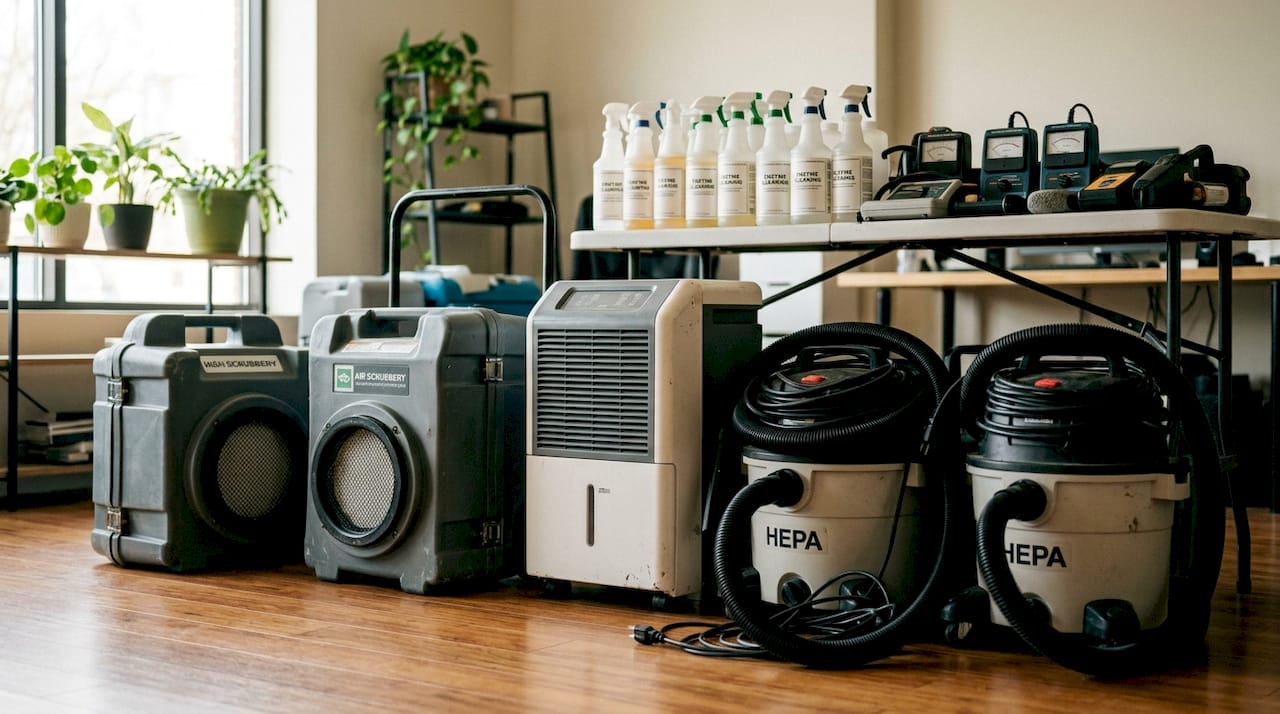
| Equipment or Technique | Primary Purpose | When It Is Used |
|---|---|---|
| HEPA vacuums and dry sponges | Dry soot removal from surfaces | Before any wet cleaning, per ANSI/IICRC S700 |
| Industrial dehumidifiers | Structural moisture extraction | Throughout the drying phase |
| High-velocity air movers | Accelerate evaporation from surfaces | Paired with dehumidifiers during drying |
| Thermal foggers | Penetrating smoke odor neutralization | After surfaces are cleaned and dry |
| Hydroxyl generators | Safe, occupied-space odor treatment | When occupants or pets remain nearby |
| Ozone generators | Deep odor elimination in sealed spaces | In unoccupied spaces post-cleaning |
| Air scrubbers with HEPA filters | Airborne particle and contaminant control | Throughout the entire restoration process |
| Moisture meters | Tracking drying progress in walls and floors | Daily readings until pre-loss baselines are reached |
Cleaning chemistry is equally specialized. Enzyme cleaners break down protein-based residues from cooking fires. Alkaline solutions cut through synthetic soot from burning plastics and furniture. pH-balanced agents protect painted surfaces and wood finishes. Using the wrong chemistry on the wrong residue type can permanently stain or etch a surface.
Pro Tip: Ask your contractor which cleaning agents they plan to use on each surface type and why. A certified technician answers this question without hesitation. Vague answers signal a lack of training.
Air quality testing before and after restoration confirms that the property is genuinely safe, not just visually clean. This documentation also supports your insurance claim and protects you from future liability.
What should you expect for timeline and cost?
Restoration timelines and costs vary widely based on fire size, residue type, and how quickly work begins.
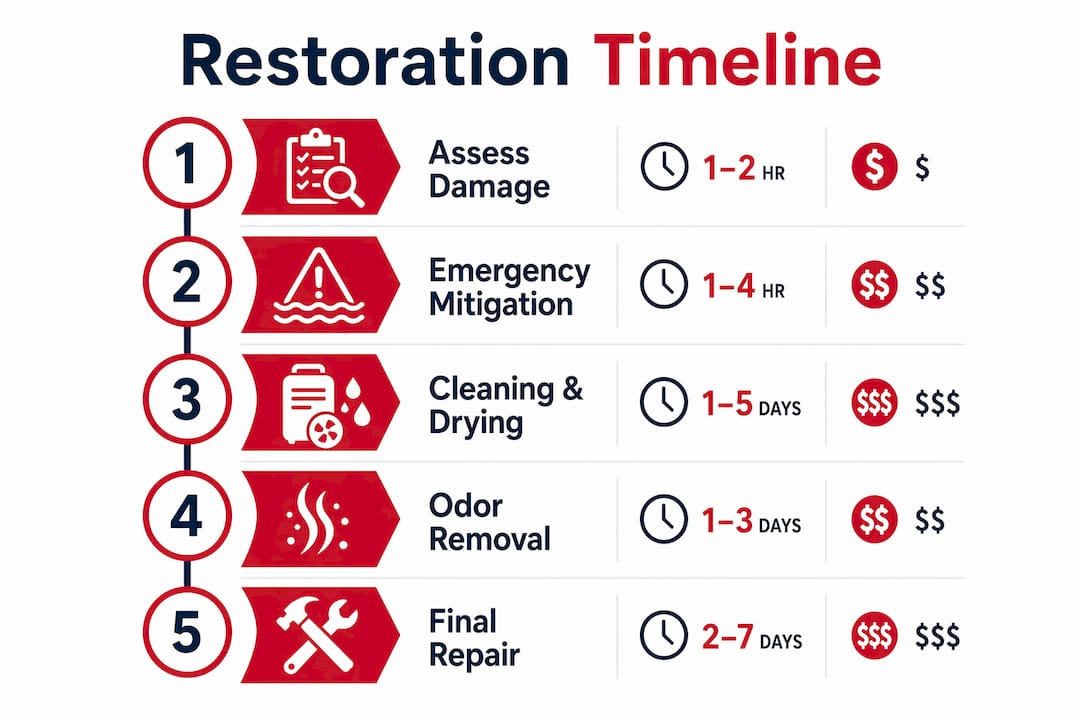
Minor fires with limited smoke spread take days for cleaning and a week or two for full drying. Major fires involving structural damage require weeks of mitigation followed by months of reconstruction. The cleaning and drying phases must be fully complete before any reconstruction begins. Starting repairs over wet or contaminated materials locks in future problems.
Cost is the factor that surprises most property owners. Fire damage restoration adds 30–60% more cost above water restoration alone. That premium reflects the specialized equipment, chemical treatments, and odor neutralization required for smoke residue. Water damage cleanup is labor and equipment intensive. Adding smoke remediation layers in chemistry, air quality testing, and odor treatment that water alone does not require.
Key factors that affect your total cost:
- Extent of fire and smoke spread across the structure
- Types of materials burned (synthetic materials produce more toxic, harder-to-clean soot)
- Presence of protein residue from kitchen fires, which requires enzyme treatment
- Number of drying units required and duration of the drying phase
- HVAC remediation scope
- Whether reconstruction is needed after mitigation
Insurance typically covers fire and water damage restoration when the cause is a covered peril. Your insurer will require a documented scope of work aligned with industry standards. Gaps in documentation are the primary reason claims are disputed or underpaid. Rapid action also reduces your total claim amount. Every day of delay adds secondary damage that increases the final bill.
Key Takeaways
Smoke and water damage restoration requires simultaneous management of both hazards using certified technicians, ANSI/IICRC S700 protocols, and specialized equipment to prevent secondary damage and control total costs.
| Point | Details |
|---|---|
| Act within 24–48 hours | Mold and structural damage begin within two days of fire suppression water exposure. |
| Follow ANSI/IICRC S700 sequence | Dry soot removal must happen before wet cleaning to prevent driving contaminants deeper. |
| Manage both hazards at once | Treating smoke and water damage separately multiplies cost and restoration difficulty. |
| Verify contractor credentials | Require IICRC certification, state licenses, and itemized written scopes before signing. |
| Document everything | Daily moisture readings, written scopes, and insurer communications protect your claim. |
What I’ve learned after years of watching restoration go wrong
The most consistent pattern I see in failed restorations is not bad equipment or wrong chemistry. It is the decision to treat urgency as optional. Property owners who wait two or three days to call a certified contractor because they are “assessing the situation” consistently face mold remediation bills that dwarf what early intervention would have cost.
The second pattern is price-driven contractor selection. The lowest bid almost never includes the full scope of work that ANSI/IICRC S700 requires. Contractors who skip the HVAC inspection or start wet cleaning before dry soot removal are not cutting corners by accident. They are cutting scope to win a bid. You pay for those shortcuts later, usually when your insurer disputes a claim for damage that developed after the initial restoration.
My honest advice: treat contractor credentials as non-negotiable. An IICRC-certified firm with documented technician credentials and a line-item written scope is not a premium option. It is the baseline. Anything less is a gamble with your property and your insurance claim.
Patience matters too. Thorough restoration takes longer than a quick surface clean. A property that tests clean on air quality meters and moisture readings is worth waiting for. One that looks clean but still smells like smoke three months later tells you exactly what was skipped.
Puroclean is ready when fire and water damage strike
When fire and water damage hit your property, the clock starts immediately.
Puroclean of Northeast Sacramento provides 24/7 emergency restoration with certified technicians who follow ANSI/IICRC S700 protocols on every job. From industrial water extraction and structural drying to soot removal, odor neutralization, and HVAC remediation, Puroclean manages fire and smoke clean up as a coordinated process, not a series of disconnected tasks. The team also provides full insurance claim documentation to support your adjuster and reduce disputes. For property owners in Northeast Sacramento, Folsom, Rancho Cordova, and Citrus Heights, fire damage restoration from Puroclean means a faster return to normal with no shortcuts. Call now to get a certified team on site today.
You can also find Puroclean’s service area and local resources on Google Maps.
FAQ
What is smoke and water damage restoration?
Smoke and water damage restoration is the professional process of extracting fire suppression water, removing soot and smoke residues, neutralizing odors, and drying structures to pre-loss condition following a fire. It follows ANSI/IICRC S700 standards for cleaning sequence and equipment use.
How long does fire and smoke damage restoration take?
Minor fire damage takes days for cleaning and one to two weeks for drying. Major structural fires require weeks of mitigation followed by months of reconstruction before the property is fully restored.
Can I clean smoke damage myself?
Surface wiping without HEPA vacuuming first drives soot deeper into porous materials, per ANSI/IICRC S700. Professional equipment, chemistry, and air quality testing are required to restore a property to a genuinely safe condition.
How much does smoke and water damage restoration cost?
Fire damage restoration adds 30–60% more cost above water restoration alone due to specialized smoke cleanup, odor neutralization equipment, and chemical treatments. Total cost depends on fire size, materials burned, and how quickly restoration begins.
What should I do immediately after a fire?
Call a certified emergency restoration service within hours, not days. Moisture control must begin within 24–48 hours to prevent mold, and soot begins bonding to surfaces almost immediately after a fire is extinguished.
Recommended
- Complete Guide to Smoke Damage Restoration Basics – PuroClean of Northeast Sacramento
- Smoke Damage Explained: Complete Guide for Property Owners – PuroClean of Northeast Sacramento
- 7 Smoke Cleanup Best Practices Every Property Owner Needs – PuroClean of Northeast Sacramento
- Fire Damage Restoration Explained: Complete Process Guide – PuroClean of Northeast Sacramento