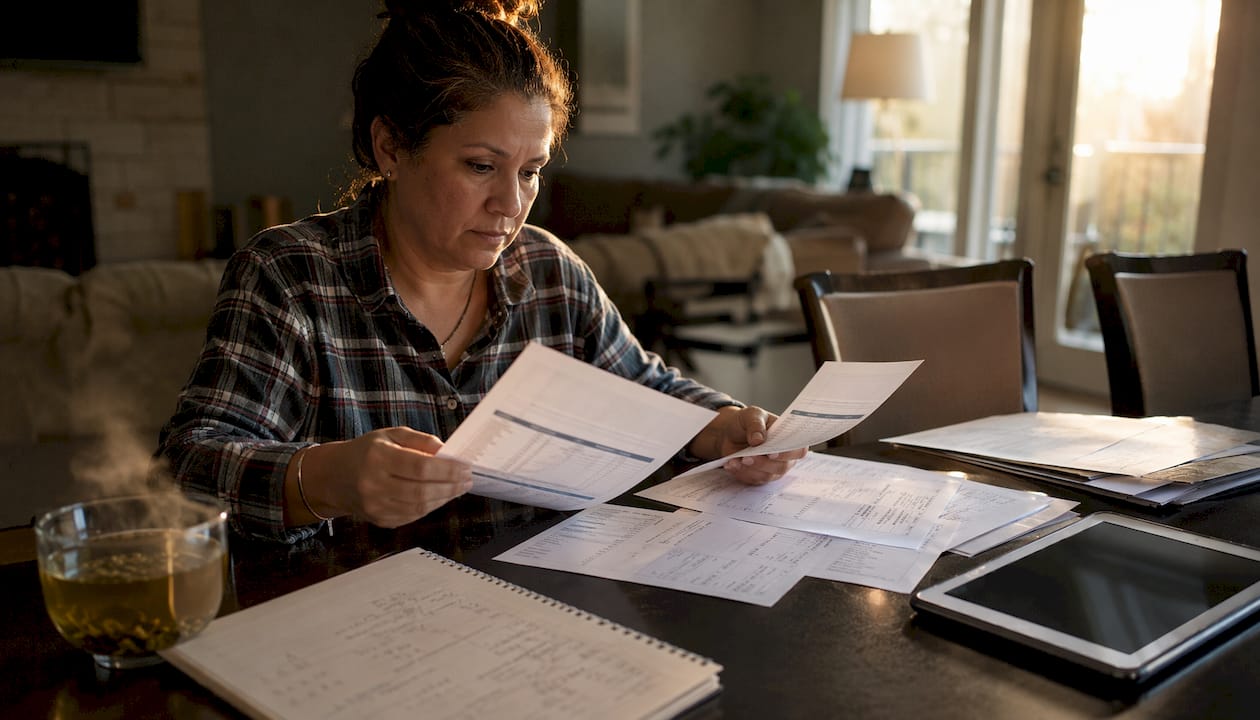
Smoke remediation cost is the total expense of cleaning, deodorizing, and restoring a property after fire-related smoke damage, and it typically ranges from $3,000 to over $50,000 with a national average near $27,091. That wide range reflects real differences in damage severity, property size, and the scope of services required. Labor alone accounts for 50%–70% of the total bill, which means the crew hours spent on soot removal, surface cleaning, and deodorization drive most of what you pay. Understanding what moves that number up or down puts you in a much stronger position when reviewing contractor estimates or negotiating with your insurance adjuster.
What factors influence smoke remediation cost?
The single biggest cost driver is the severity of the smoke damage. Light smoke from a contained kitchen fire behaves very differently from heavy, wet smoke produced by burning plastics or synthetic materials. Wet smoke leaves a thick, smeared residue that requires more aggressive chemical cleaning and longer labor hours. Structural restoration averages $4–$7 per square foot, so a 2,000-square-foot home with moderate damage can reach $14,000 in structural cleaning costs alone before deodorization or contents work begins.
Several other variables push the final number higher or lower:
- Affected area size. A single smoke-damaged room costs far less than a whole-house event where smoke traveled through every duct and wall cavity.
- Type of smoke residue. Dry soot cleans faster than wet smoke or protein residue from cooking fires, which bonds to surfaces and requires enzyme-based cleaners.
- HVAC cleaning. HVAC cleaning adds $500–$2,000 to the project. Skipping it almost always causes odor to return weeks later.
- Deodorization method. Ozone treatment or thermal fogging costs $200–$800 per session. Complex jobs require multiple sessions.
- Contents restoration. Furniture, clothing, and electronics require separate pack-out, cleaning, and storage, which adds to the total fire damage cleanup cost.
- Emergency stabilization. Board-up, tarping, and temporary power services billed in the first 24 hours can add thousands before the main remediation work starts.
Pro Tip: Get a written scope of work before any cleaning begins. Verbal agreements about what is included rarely hold up when the final invoice arrives.
What are the typical steps in professional smoke remediation?
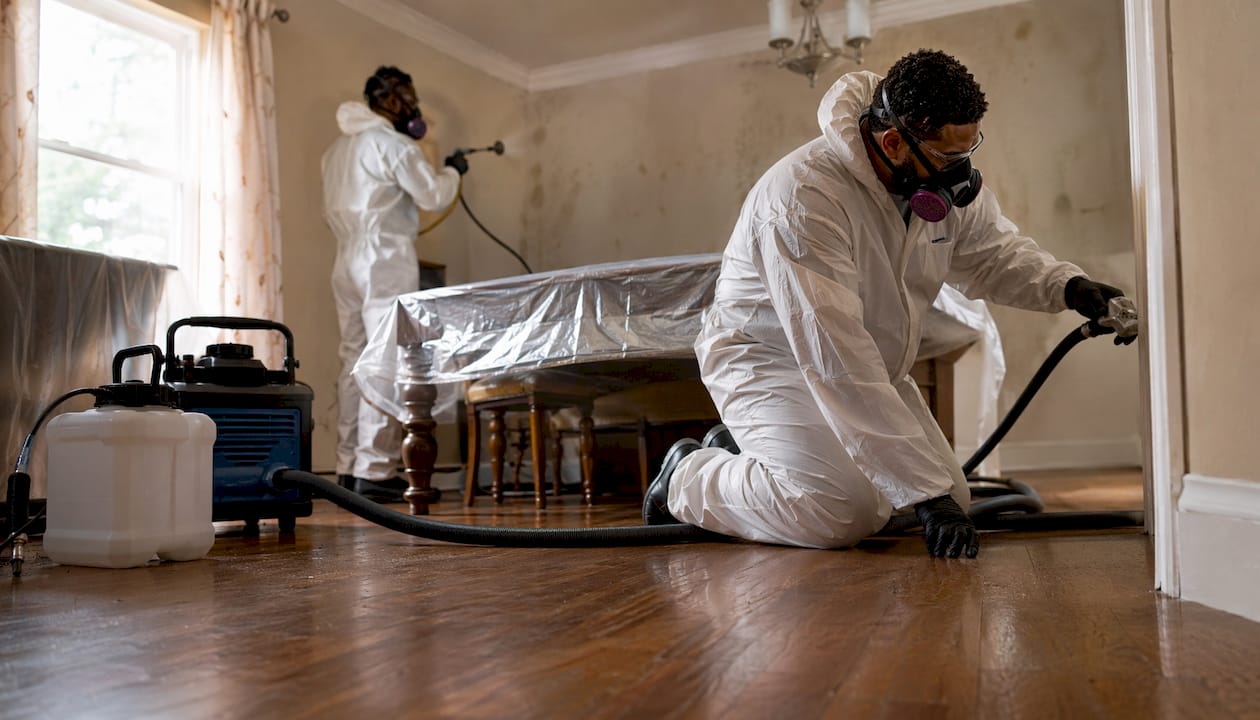
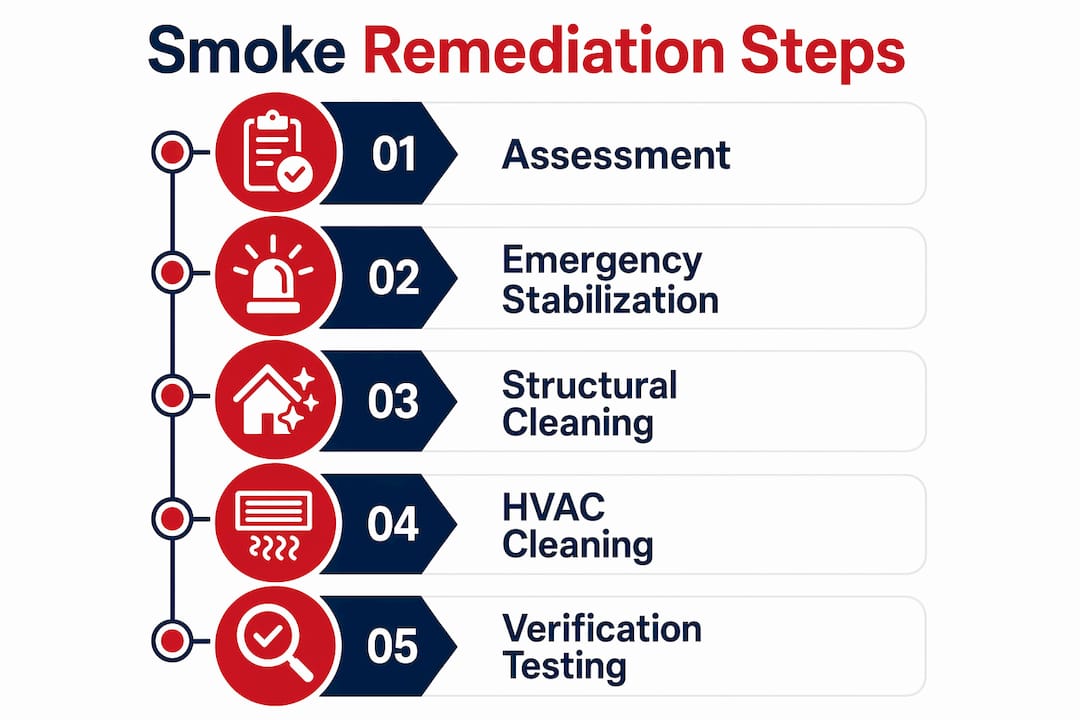
Professional smoke remediation follows a defined protocol. The standard process involves HVAC isolation, HEPA debris removal, targeted cleaning, molecular deodorization, and verification. Each step builds on the last, and skipping any one of them creates problems that show up months later as persistent odors or health complaints.
Here is how a certified restoration team works through a typical project:
- Emergency stabilization. Technicians secure the structure, isolate the HVAC system to prevent further smoke distribution, and document all visible damage with photos and moisture readings.
- HEPA debris removal. Industrial HEPA vacuums pull loose soot from surfaces, ceilings, and wall cavities before any wet cleaning begins. Wet-wiping soot before vacuuming grinds it deeper into porous materials.
- Chemical surface cleaning. Technicians apply alkaline or enzymatic cleaners matched to the specific residue type. Protein smoke from kitchen fires requires different chemistry than petroleum-based soot.
- Molecular deodorization. Hydroxyl generators or calibrated ozone treatments applied after cleaning neutralize odor molecules rather than masking them. This step is where the smoke odor removal price varies most widely.
- Sealing porous materials. Shellac-based primers seal drywall and framing after cleaning to lock in any residual odor compounds that cleaning could not fully extract.
- Verification testing. Air quality testing and surface sampling confirm the remediation met acceptable standards before the property is cleared for occupancy.
Minor jobs with limited damage can wrap up in 3 days. Major whole-house events can run 3 days to over 6 months depending on structural involvement and contents volume. You can review the full smoke remediation steps Puroclean follows for a detailed breakdown of each phase.
Pro Tip: Ask your contractor whether verification air testing is included in the estimate or billed separately. Some companies charge $300–$600 for post-remediation clearance testing.
How do insurance factors impact smoke remediation cost recovery?
Insurance coverage for smoke damage exists in most standard homeowner policies, but the payout you receive depends heavily on your policy type and how well you document the damage. The two policy structures that matter most are Replacement Cost Value (RCV) and Actual Cash Value (ACV). RCV pays what it costs to restore your property to its pre-loss condition. ACV subtracts depreciation, which can leave you thousands of dollars short on older homes or aging contents.
Insurance adjusters often view smoke cleaning as superficial, which means they may approve a basic wipe-down while your contractor’s scope calls for full HEPA vacuuming, HVAC cleaning, and sealing. That gap between what the insurer approves and what the job actually requires is where most disputes happen. Smoke damage claims are frequently litigated because average fire claim payouts are high and insurers have strong financial incentives to minimize approved scopes.
Practical steps that protect your claim:
- Photograph everything before any cleaning begins. Timestamps matter. Adjusters discount damage photos taken after initial cleanup.
- Request an itemized estimate. A single lump-sum number gives adjusters room to negotiate. Line items for structure cleaning, contents, HVAC, and deodorization are much harder to dispute.
- Understand your ALE coverage. Additional Living Expenses coverage pays for hotel and meals while your home is uninhabitable. Many homeowners do not claim it because they do not know it exists.
- Hire a public adjuster for large claims. On losses above $20,000, a public adjuster’s fee often pays for itself through a higher settlement.
Homeowners should understand ACV vs. RCV policy differences immediately after a loss to set realistic expectations for out-of-pocket costs.
What are common pitfalls in smoke remediation cost management?
The most expensive mistake homeowners make is attempting DIY cleanup before calling a professional. DIY smoke cleaning causes health risks, permanent staining, and insurance claim denial. Insurers can void coverage when they determine that improper cleaning worsened the damage. Professional certifications and documented work protect your claim and your home’s resale value.
Other costly mistakes include:
- Skipping HVAC cleaning. Improper HVAC remediation causes smoke odors to persist despite thorough surface cleaning. The ducts recontaminate every room each time the system runs.
- Relying on ozone alone. Ozone neutralizes airborne odor molecules but cannot penetrate soot embedded in drywall or framing. It must follow thorough physical cleaning, not replace it.
- Accepting lump-sum estimates. Restoration companies often under-price contents and deodorization when rolled into a single number. You cannot verify what you are paying for without line items.
- Skipping verification testing. Without post-remediation air quality testing, you have no proof the job was completed to standard. That matters for insurance sign-off and future property sales.
Pro Tip: Before signing any restoration contract, confirm that the company carries IICRC certification. The Institute of Inspection, Cleaning and Restoration Certification sets the industry standard for smoke and fire remediation protocols.
How to estimate and plan for fire damage remediation cost
Use per-square-foot benchmarks as your starting point for rough budgeting. Structural cleaning at $4–$7 per square foot gives you a floor. Add HVAC cleaning ($500–$2,000), deodorization ($200–$1,200 per room), and contents restoration to build a realistic total. For a 1,500-square-foot home with moderate smoke damage, a reasonable planning estimate falls in the $12,000–$25,000 range before insurance offsets.
The table below shows typical cost ranges by service category to help you read contractor estimates more clearly.
| Service category | Typical cost range |
|---|---|
| Structural surface cleaning | $4–$7 per sq ft |
| HVAC system cleaning | $500–$2,000 |
| Deodorization (per room) | $200–$1,200 |
| Contents pack-out and cleaning | $1,000–$10,000+ |
| Emergency stabilization | $500–$5,000 |
| Verification air testing | $300–$600 |
Keep a dedicated folder with all photos, contractor communications, and receipts from day one. Insurance adjusters request documentation in a specific format, and having it organized saves weeks of back-and-forth. For complex cases involving structural damage or whole-house smoke penetration, a professional consultation before accepting any settlement is worth the time. You can also use Puroclean’s fire damage assessment guide to understand what a thorough damage evaluation should cover.
Pro Tip: Budget separately for HVAC cleaning and emergency stabilization. Both are frequently omitted from initial estimates and then added as change orders, which disrupts your cash flow mid-project.
Key takeaways
Professional smoke remediation costs an average of $27,091 nationally, and the final number depends on damage severity, property size, HVAC scope, and how thoroughly your insurance claim is documented.
| Point | Details |
|---|---|
| Average cost benchmark | National average is near $27,091, with a range of $3,000 to over $50,000. |
| Labor drives the bill | Labor accounts for 50%–70% of total cost, making crew hours the primary variable. |
| HVAC cleaning is non-negotiable | Skipping HVAC cleaning to NADCA standards causes odor to return and adds future costs. |
| Itemized estimates protect you | Line-item estimates for structure, contents, and deodorization prevent insurance disputes. |
| Documentation wins claims | Photographing damage before any cleaning and hiring certified professionals protects your payout. |
What I’ve learned about smoke remediation costs after years in restoration
Most homeowners underestimate smoke damage because they cannot see it. Smoke travels through wall cavities, settles into HVAC ducts, and bonds to porous surfaces in ways that a visual inspection misses entirely. The properties that end up with persistent odor problems months after a fire almost always had one thing in common: someone cut the scope short to save money upfront.
The insurance piece is where I see the most frustration. Adjusters are trained to approve the minimum defensible scope. That is not malicious. It is their job. Your job is to counter with professional documentation, a certified contractor’s itemized estimate, and a clear understanding of your policy’s RCV or ACV structure. Homeowners who walk into that conversation prepared consistently recover more of their actual costs.
One thing I advocate for strongly: get the HVAC inspected and cleaned before anyone declares the job complete. I have seen beautifully cleaned homes with fresh paint and sealed drywall fail air quality tests because the duct system was never properly addressed. The HVAC cleaning process is not glamorous, but it is the step that determines whether the odor comes back in six weeks.
The homeowners who navigate this best treat smoke remediation like a construction project with a defined scope, a certified contractor, and a paper trail. Those who treat it like a cleaning job end up paying twice.
Puroclean’s fire and smoke restoration services in Northeast Sacramento
Smoke damage does not wait for business hours, and neither does Puroclean. Certified technicians respond 24/7 to stabilize your property, isolate your HVAC system, and begin the multi-step remediation process that actually eliminates smoke odor rather than masking it.
Puroclean handles direct insurance billing, which reduces your upfront out-of-pocket costs and keeps the claims process moving. The team covers the full scope of fire damage restoration including structural cleaning, contents pack-out, HVAC remediation, molecular deodorization, and post-remediation verification testing. Homeowners and property managers throughout Northeast Sacramento, Folsom, Rancho Cordova, and Citrus Heights can reach Puroclean any time for an emergency response or a detailed damage assessment.
You can also find Puroclean’s Northeast Sacramento location on Google Maps for directions and contact information.
FAQ
What is the average smoke remediation cost for a house?
The national average for fire and smoke damage restoration is near $27,091, with a range of $3,000 to over $50,000 depending on damage severity and property size.
Does homeowner’s insurance cover smoke remediation costs?
Most standard homeowner policies cover smoke damage, but payout amounts vary based on whether your policy uses Replacement Cost Value or Actual Cash Value. Detailed documentation and an itemized contractor estimate are critical to receiving a fair settlement.
How long does professional smoke remediation take?
Professional smoke remediation ranges from 3 days for minor damage to over 6 months for severe whole-house events. Timeline depends on the extent of soot penetration, contents volume, and structural involvement.
Why does HVAC cleaning matter for smoke damage?
Smoke residue trapped in HVAC ducts recontaminates cleaned surfaces every time the system runs. Cleaning the HVAC system to NADCA standards is the step that prevents odor from returning after the rest of the remediation is complete.
Can I clean smoke damage myself to save money?
DIY smoke cleaning risks permanent staining, health exposure to toxic soot particles, and insurance claim denial. Professional certification and documented work protect both your health and your property’s resale value.
Recommended
- Smoke Odor Removal: Restoring Homes After Fire – PuroClean of Northeast Sacramento
- Smoke Remediation Steps for Complete Odor Removal – PuroClean of Northeast Sacramento
- 7 Smoke Cleanup Best Practices Every Property Owner Needs – PuroClean of Northeast Sacramento
- Smoke Damage Explained: Complete Guide for Property Owners – PuroClean of Northeast Sacramento