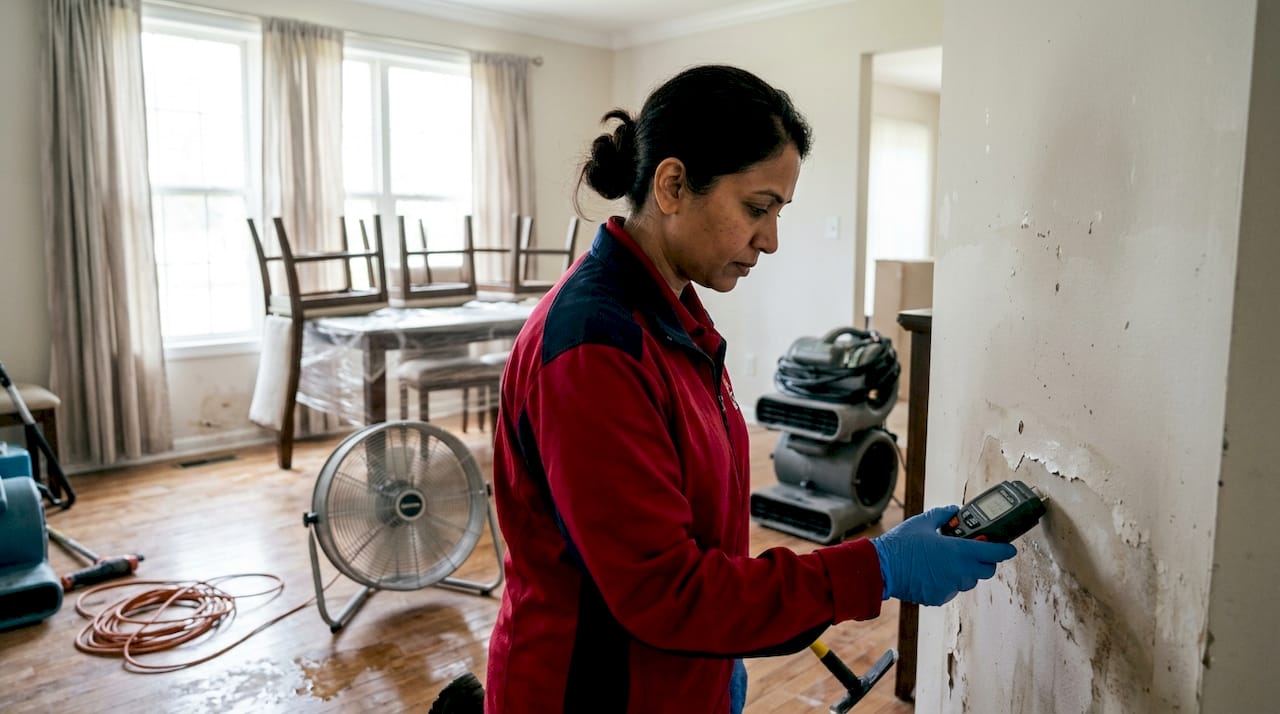
Water, fire, and mold restoration is the emergency process of stabilizing a damaged property, removing hazards, and returning it to safe, livable conditions. The industry term is “property restoration,” and it covers three distinct but often overlapping damage types. Rapid response within 4 hours of a loss significantly improves long-term outcomes, according to current IICRC standards. Delay is never neutral. Every hour without professional intervention increases the risk of mold growth, structural swelling, and permanent finish damage. Certified restoration professionals follow IICRC S500 protocols for water, IICRC S520 for mold, and established fire damage frameworks to protect both your property and your insurance claim.
What are the immediate steps in water, fire, and mold restoration?
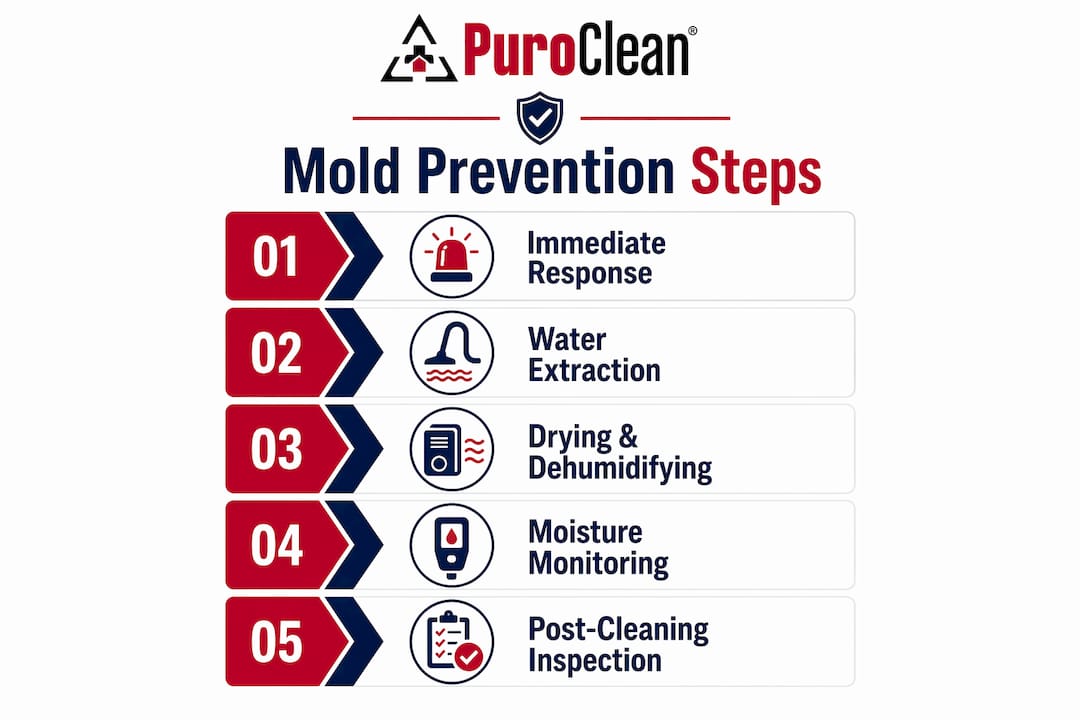
The first 24–48 hours after a loss determine most of the outcome. Professionals follow a strict sequence to stop damage from spreading before any cleaning or repair begins.
- Stop the source. For water damage, this means shutting off the main water supply or coordinating with a plumber for slab leaks. For fire damage, it means securing the structure and confirming utilities are safe before entry.
- Conduct a safety assessment. Technicians check for structural instability, electrical hazards, and air quality issues before anyone enters the property. Evacuation may be required for severe fire or flood events.
- Extract standing water. Truck-mounted extractors remove hundreds of gallons quickly. IICRC S500 protocols define the controlled drying process: air movers, dehumidifiers, daily monitoring, and containment zones. These methods prevent secondary damage and mold when applied promptly.
- Stabilize smoke and soot. Fire-affected areas require immediate dry cleaning of loose soot before any wet cleaning begins. Disturbing soot without a plan spreads acidic residue deeper into porous materials.
- Contain mold if detected. If mold is visible or moisture readings suggest active growth, technicians establish containment zones with negative air pressure before any disturbance occurs.
- Document everything daily. Moisture logs, photos, and equipment readings form the backbone of your insurance claim. Moisture mapping with daily logs is required to support claim disputes and verify drying progress.
Homeowners should avoid DIY for any significant damage. Moving wet materials without proper drying spreads contamination. Attempting soot cleanup without the right chemistry embeds residue permanently.
Pro Tip: Photograph every room, every damaged item, and every piece of restoration equipment on site before and after each day of work. This record protects you if your insurer questions the scope or timeline.
How do professionals prevent mold growth after water or fire damage?
Mold growth begins within 24–48 hours of moisture infiltration. That window is short, and it closes fast in warm climates like the Sacramento area.
The EPA and IICRC both require professional mold remediation for contamination over 10 square feet. Areas smaller than that may be addressed with strict DIY protocols, but any larger spread requires certified technicians. The distinction matters because improper mold removal disperses spores into the air and spreads contamination to clean areas.
Professional mold remediation is not the same as mold cleaning. Cleaning removes surface growth. Remediation addresses the source, contains the affected zone, removes contaminated materials, and verifies clearance with post-remediation testing.
- HEPA filtration captures airborne spores during removal. Standard shop vacuums push spores into the air rather than capturing them.
- Containment zones use polyethylene sheeting and negative air pressure to isolate affected areas from the rest of the property.
- Antimicrobial treatments applied after removal inhibit regrowth on structural surfaces.
- Moisture control is the final step. No treatment holds if the underlying moisture source remains active.
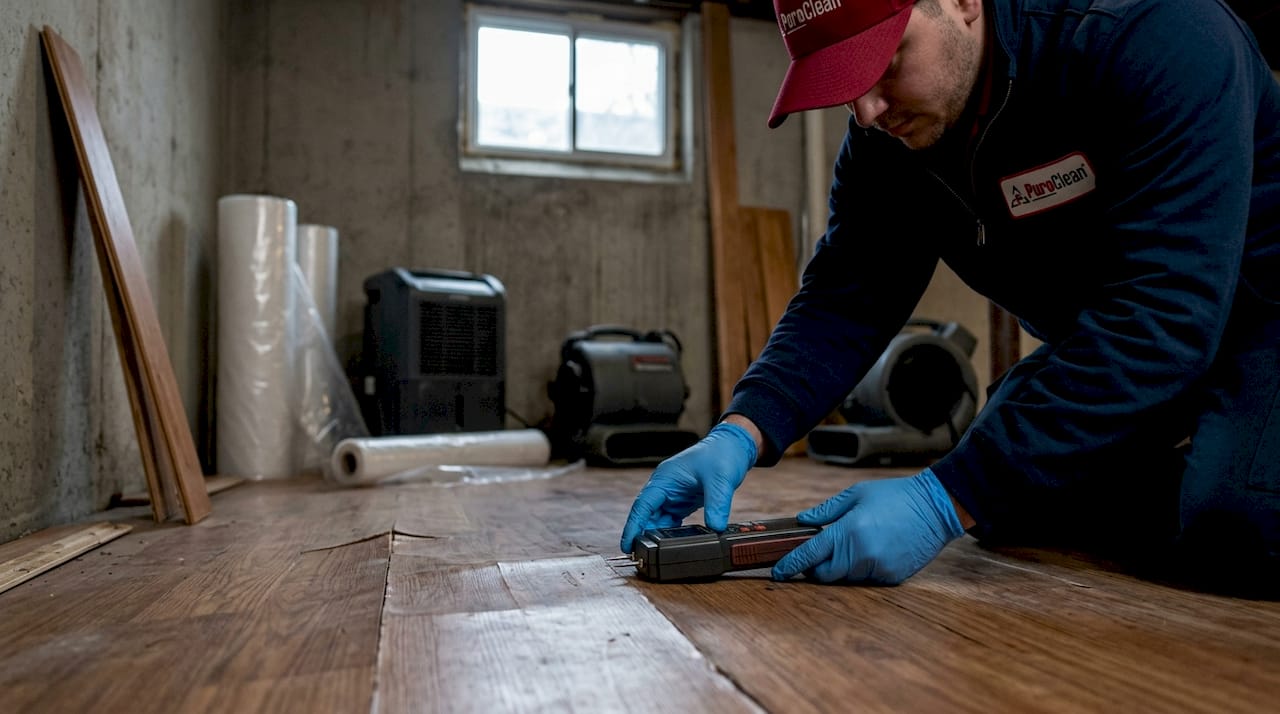
Replacing drywall or flooring before confirming dryness with moisture logs leads to mold regrowth and higher costs. Technicians use moisture meters and thermal imaging cameras to verify drying deep within wall cavities and subfloors, not just at the surface.
Pro Tip: When hiring for mold work, confirm the technician holds the AMRT (Applied Microbial Remediation Technician) credential from the IICRC. General contractors are not qualified for this work.
What techniques remove smoke odor and residue after fire damage?
Smoke residue is acidic and begins damaging electronics, metal surfaces, and finishes within hours of a fire. The damage is chemical, not just cosmetic. That is why fire damage cleanup follows a strict sequence rather than a single cleaning pass.
The three-stage cleaning process
Certified technicians use a stepwise approach to fire damage cleanup:
- Dry cleaning removes loose soot with chemical sponges and dry compounds before any moisture is introduced. Wet cleaning loose soot first drives it deeper into porous surfaces.
- Wet cleaning uses alkaline solutions to neutralize acidic soot residue on hard surfaces. The chemistry must match the soot type, which varies by what burned.
- Chemical cleaning addresses embedded residue on materials that survived the fire but absorbed smoke deeply, including wood framing, concrete, and HVAC components.
Odor neutralization methods
Masking odors without removing residue fails every time. Soot must be cleaned before odor treatments begin. Three primary neutralization methods are used depending on conditions:
| Method | How it works | Best for |
|---|---|---|
| Thermal fogging | Heated solvent particles penetrate porous surfaces | Structural materials, framing |
| Hydroxyl generators | UV light creates hydroxyl radicals that break down odor molecules | Occupied or sensitive spaces |
| Ozone treatment | Ozone gas oxidizes odor compounds | Vacant structures only |
HVAC cleaning is non-negotiable after a fire. Smoke particulates circulate through ductwork and recontaminate cleaned spaces if the system runs before being serviced. Technicians seal and clean ducts before any HVAC system is restarted. For a deeper look at smoke cleanup best practices, Puroclean’s blog covers each step in detail.
What should you verify before hiring a restoration contractor?
Hiring the wrong contractor after a disaster costs more than the damage itself. Unqualified work fails inspections, voids insurance claims, and leaves hidden damage that surfaces months later.
Verify five credentials before authorizing any restoration work:
- IICRC firm certification confirms the company follows current industry standards for water, fire, or mold work.
- Individual technician credentials such as WRT (Water Restoration Technician), FSRT (Fire and Smoke Restoration Technician), and AMRT (Applied Microbial Remediation Technician) confirm the person doing the work is trained.
- State contractor license is required for restoration work above a certain dollar threshold in most states. Verify it online through your state licensing board.
- General liability and workers’ compensation insurance protect you if a technician is injured on your property or causes additional damage.
- Local physical address confirms the company is not a storm-chasing operation that will disappear after collecting payment.
Large upfront cash payment requests without a documented scope of work signal poor insurance coordination and unprofessional practice. Certified companies provide written progress milestones and documented work before requesting payment.
The best restoration contractors provide Xactimate-formatted estimates that insurance adjusters accept directly. A low bid without this format often means the contractor cannot navigate the claims process, leaving you to cover the gap.
Pro Tip: Ask for references from jobs involving your specific damage type. A contractor experienced with burst pipes may not have the right process for fire and smoke restoration.
Key Takeaways
Effective water, fire, and mold restoration requires certified professionals, rapid response within 4 hours, and documented drying to protect both your property and your insurance claim.
| Point | Details |
|---|---|
| Act within 4 hours | Rapid professional response limits mold growth, structural swelling, and finish damage. |
| Verify IICRC credentials | Confirm WRT, FSRT, or AMRT certifications before authorizing any restoration work. |
| Document drying daily | Moisture logs and photos protect your insurance claim and verify complete drying. |
| Clean soot before treating odor | Residue removal must precede any odor neutralization for fire damage to be effective. |
| Avoid large upfront payments | Certified contractors provide documented scope and milestones before requesting payment. |
What I have learned from watching homeowners navigate restoration
The most expensive mistake I see is hiring based on price alone. A low bid from an uncertified contractor almost always produces one of two outcomes: hidden moisture that causes mold six weeks later, or an insurance claim dispute because the documentation does not meet adjuster standards.
Homeowners also underestimate how fast the clock runs. A property that looks “just wet” after a pipe burst can have active mold colonies behind drywall within two days. The visible surface dries first. The framing and insulation behind it stay wet for days without professional drying equipment.
The other misconception I encounter constantly is that smoke odor will “air out” on its own. It does not. Smoke particles bond chemically to porous surfaces. Without proper residue removal and neutralization, the odor returns every time humidity rises. Painting over smoke-damaged walls without cleaning them first is one of the most common and costly errors in fire recovery.
My honest recommendation: treat restoration like surgery. You would not choose a surgeon based on the lowest quote. Choose a certified professional with documented results, carry their contact number before you ever need it, and check your local restoration resources so you are not searching blind during an emergency.
Puroclean is ready 24/7 for water, fire, and mold emergencies
When damage strikes your property in Northeast Sacramento, Folsom, Rancho Cordova, or Citrus Heights, response time is everything. Puroclean’s certified technicians are available around the clock for water damage restoration, fire and smoke cleanup, and mold remediation. Every job follows IICRC standards, and every technician carries the credentials to prove it.
Puroclean provides detailed moisture documentation, Xactimate-compatible estimates, and direct insurance coordination so your claim moves forward without delays. Whether you are dealing with a burst pipe at 2:00 AM or assessing smoke damage after a kitchen fire, Puroclean’s team arrives equipped and ready to stop the damage and start your recovery.
FAQ
How quickly does mold grow after water damage?
Mold growth begins within 24–48 hours of moisture infiltration. Professional water extraction and drying within 4 hours of a loss significantly reduces mold risk.
What is the difference between mold cleaning and mold remediation?
Mold cleaning removes surface growth. Mold remediation addresses the moisture source, contains the affected zone, removes contaminated materials, and verifies clearance with post-remediation testing.
Can I clean smoke damage myself after a fire?
Small surface soot can be addressed carefully, but chemical soot residue requires professional dry, wet, and chemical cleaning in sequence. Improper cleaning embeds residue permanently and leaves odor that returns with humidity.
What credentials should a restoration contractor have?
Look for IICRC firm certification and individual technician credentials including WRT for water, FSRT for fire, and AMRT for mold work. Also verify a state contractor license and both liability and workers’ compensation insurance.
Why does “dry to the touch” not mean the property is fully dry?
Surface materials dry first while moisture remains deep in framing, insulation, and subfloors. Trained technicians use moisture meters and thermal imaging to verify complete drying, which is the only standard that prevents mold regrowth and supports insurance claims.
Recommended
- Restoration Process Explanation Guide for Fast Recovery – PuroClean of Northeast Sacramento
- How to Handle Water Damage: Step-by-Step Restoration Guide – PuroClean of Northeast Sacramento
- Water Damage Restoration Guide: Restore Property Fast – PuroClean of Northeast Sacramento
- Restoration After House Fire: Complete Step-by-Step Recovery – PuroClean of Northeast Sacramento