


What Is Forensic Cleaning and Why It Matters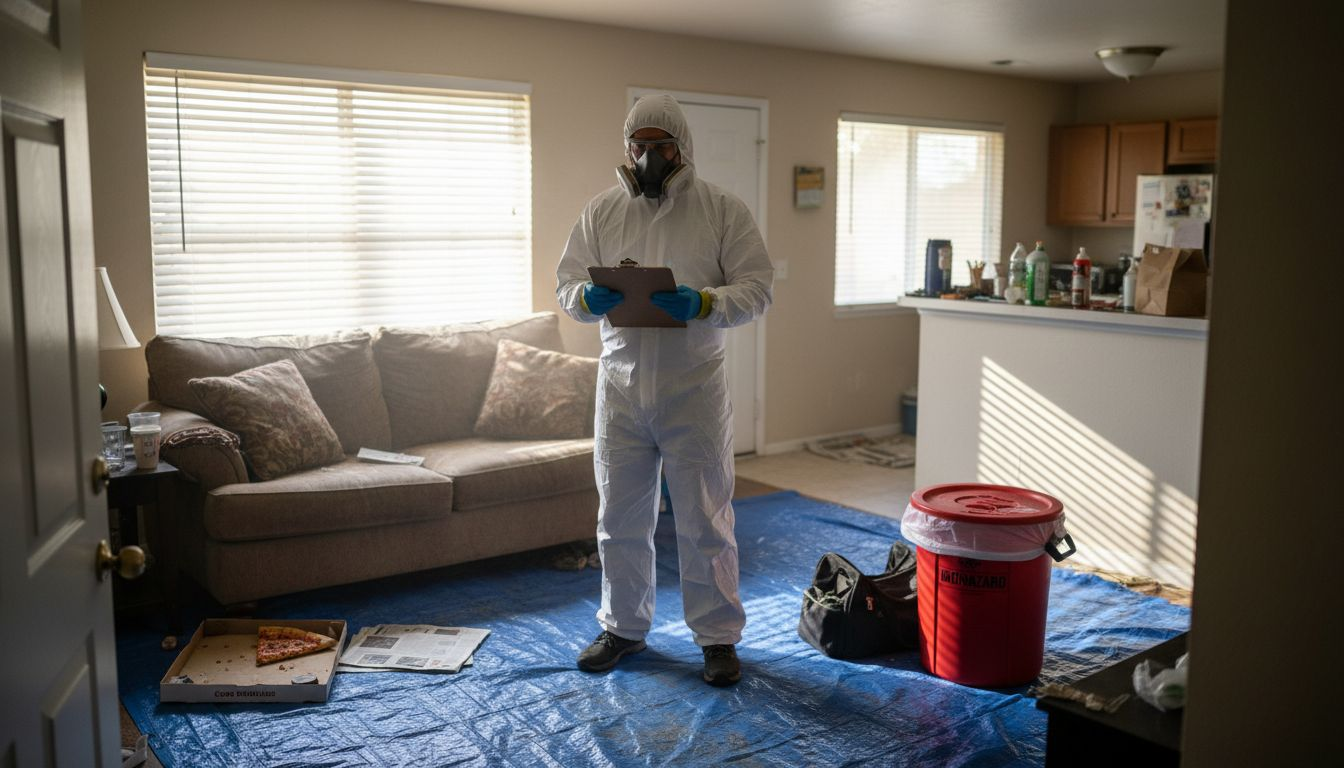
Facing unexpected water or fire damage in your Northeast Sacramento home leaves you scrambling for answers and support. Many homeowners assume a typical cleaning company can handle the aftermath, but forensic cleaning is a specialized service requiring certified professionals. The risks involve more than visible mess—biohazards demand strict protocols and legal compliance to protect your family’s health and secure your insurance claim. Learn how expert restoration teams manage these emergencies and why the right credentials matter.
Table of Contents
Forensic Cleaning Defined And Common Misconceptions
Types Of Situations Requiring Forensic Cleaning
The Step-By-Step Forensic Cleaning Process
Legal And Safety Protocols For Cleanup Providers
Costs, Risks, And Choosing A Trusted Professional
Key Takeaways
Point
Details
Forensic Cleaning Is Specialized
It involves handling biohazardous materials requiring trained professionals, unlike standard cleaning services.
Legal Compliance Is Essential
Forensic cleaners must follow strict regulations to ensure safe disposal and public health protection.
DIY Cleanup Poses Risks
Attempting to clean biohazards yourself can lead to health dangers and legal liabilities due to non-compliance with safety standards.
Verify Provider Credentials
Always check for OSHA certifications, liability insurance, and industry compliance before hiring a forensic cleaning service.
Forensic Cleaning Defined and Common Misconceptions
Forensic cleaning, also called crime scene cleanup, is the process of removing and properly disposing of blood, bodily fluids, and potentially infectious materials from trauma sites. This work requires specialized training, protective equipment, and strict protocols to protect public health.
Forensic cleaning is completely separate from standard janitorial services. A regular cleaning crew cannot legally or safely handle biohazards. The distinction matters because crime scene cleanup involves contamination risks and legal liability that demand professional expertise.
In Northeast Sacramento, homeowners facing traumatic events often don’t realize that their regular cleaning company cannot address the biohazard cleanup requirements. The specialized nature of forensic work sets it apart fundamentally.
What Forensic Cleaning Actually Involves
Forensic cleanup requires handling dangerous biological materials safely. Here’s what the process typically includes:
Removing contaminated materials, including carpet, drywall, and furniture
Cleaning and decontaminating all affected surfaces
Proper disposal of biohazard waste following federal regulations
Deodorization to eliminate odors from decomposition or trauma
Restoration of the space to safe, habitable condition
The work demands professional-grade disinfectants, specialized equipment, and certified personnel. These requirements aren’t optional—they’re legally mandated.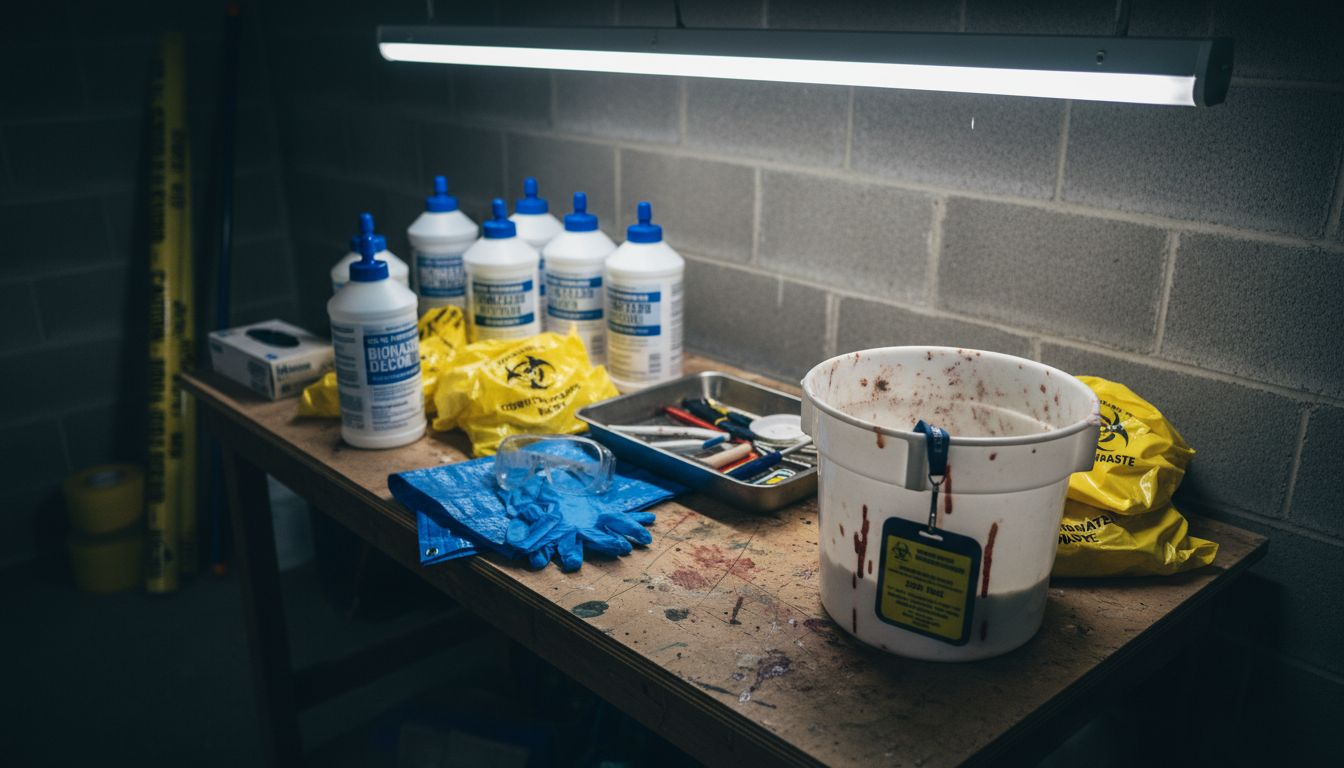
Here’s how forensic cleaning compares to standard cleaning services:
Aspect
Forensic Cleaning
Standard Cleaning Services
Required Training
Bloodborne pathogen certified
General cleaning training
Scope of Work
Biohazard removal & decontamination
Routine maintenance cleaning
Legal Requirements
Federal compliance & documentation
No specialized regulations
Equipment Used
PPE, EPA-approved chemicals
Basic cleaning tools and products
Health Risk
High if improper procedures
Minimal
Insurance Needed
Biohazard liability insurance
Standard business insurance
Forensic cleaning protects your family’s health and your property’s value while ensuring legal compliance with biohazard disposal regulations.
Common Misconceptions About Forensic Cleaning
Media coverage creates false impressions about this critical service. Most people misunderstand what forensic cleaning actually involves based on television portrayals that focus on drama rather than reality.
Misconception 1: It’s just like regular deep cleaning.
Not even close. Forensic cleaning requires hazard certifications, protective gear, and disposal protocols that general cleaners don’t have. One mistake can create health risks for your family.
Misconception 2: You can handle it yourself to save money.
This puts you and your family at serious risk. Improper handling of biohazards can spread infectious disease. Plus, DIY attempts often violate local and federal regulations, creating legal liability.
Misconception 3: The crime scene investigation team cleans up after themselves.
Investigators collect evidence. They don’t clean. Cleanup happens after law enforcement finishes, and it falls to professional restoration companies.
Misconception 4: Any cleaning company can do this work.
Wrong. Companies must have specific certifications, insurance, and compliance with bloodborne pathogen standards. Using an unqualified company exposes you to contamination and legal risk.
Understanding biohazard cleanup procedures helps you make informed decisions when you need help most.
Why This Matters for Northeast Sacramento Homeowners
When trauma occurs in your home, you need professionals who understand both the physical cleanup and the emotional sensitivity involved. Proper forensic cleaning restores your space safely and completely.
Your family’s health depends on thorough decontamination. Your property’s future value depends on proper restoration. And your peace of mind depends on knowing the job was done correctly and legally.
Pro tip: When contacting restoration services after a traumatic event, confirm they hold OSHA bloodborne pathogen certifications and carry liability insurance for biohazard work—these are non-negotiable credentials for your safety.
Types of Situations Requiring Forensic Cleaning
Forensic cleaning becomes necessary when biological contamination poses health risks and requires professional biohazard removal. The situations are serious, and they demand trained professionals who understand both the physical and emotional dimensions of the work.
Forensic cleaning isn’t limited to one type of scenario. Multiple situations across Northeast Sacramento and the surrounding areas require these specialized services. Understanding which situations qualify helps you know when to call professionals instead of attempting cleanup yourself.
Common Situations Requiring Professional Forensic Cleaning
Several circumstances demand professional biohazard removal and decontamination. Here are the primary situations:
Violent crime scenes involving blood, bodily fluids, or tissue contamination
Unattended deaths where decomposition has occurred and biohazards exist
Accidents and trauma from falls, vehicle collisions, or industrial incidents
Suicides involving significant biological contamination requiring specialized cleanup
Hoarding situations with severe contamination and biohazard materials
Infectious disease contamination in homes or facilities
Animal-related incidents involving deceased animals or severe contamination
Each scenario requires proper handling of biohazardous materials to prevent disease transmission and ensure evidence preservation for legal proceedings.
Why Professional Help Is Non-Negotiable
When you discover a situation requiring forensic cleaning, your instinct might be to clean it yourself. Don’t. This is one area where professional expertise isn’t optional—it’s essential for your safety and legal protection.
Unattended deaths present the most urgent situations. When someone passes away and isn’t discovered immediately, decomposition begins. Biological fluids, gases, and pathogens contaminate surfaces throughout the space.
Professional forensic cleaning prevents disease transmission, ensures regulatory compliance, and protects your family’s health during an already traumatic time.
Northeast Sacramento Specific Considerations
Homeowners in Northeast Sacramento, Folsom, Rancho Cordova, and Citrus Heights face various scenarios requiring forensic services. The region’s mix of residential neighborhoods and older properties means different contamination challenges across the area.
Trauma situations can happen unexpectedly in any home. When they do, professional response matters immediately. Waiting increases contamination risks and makes cleanup exponentially more difficult.
Crime scenes require law enforcement completion before cleanup begins. Once investigators release the scene, biohazard removal becomes urgent. Professional teams understand the timeline and coordinate with authorities seamlessly.
Real-life biohazard cleanup examples show how professionals handle diverse contamination scenarios and restore properties completely.
When to Call Forensic Cleaning Services
You should call professional forensic cleaners when:
You discover a death scene or unattended death situation
You’re responding to violent crime aftermath
You encounter severe biohazard contamination of any kind
Your family member experienced trauma with biological contamination
You’re uncertain whether a situation requires professional intervention
When in doubt, call. Professionals can assess the situation and determine what’s needed.
Pro tip: Don’t wait for law enforcement to tell you to call forensic cleaners—contact professionals immediately after police release the scene to begin decontamination while the situation is still manageable and before additional health risks develop.
The Step-by-Step Forensic Cleaning Process
Forensic cleaning follows a structured, methodical process designed to ensure safety, preserve evidence, and completely eliminate biohazard contamination. Each step matters because skipping or rushing through any phase compromises the outcome and creates health risks.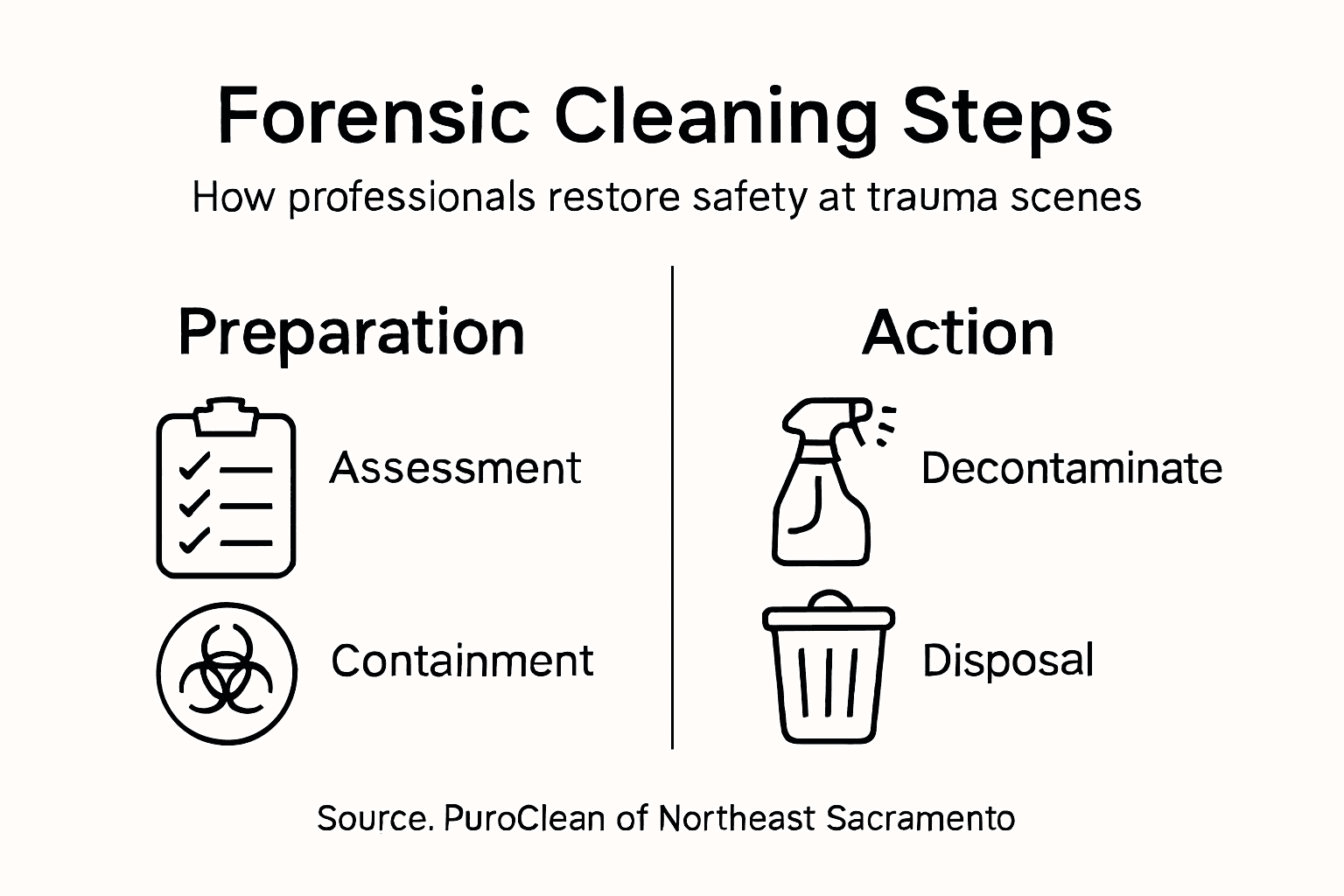
The process begins before any physical cleaning happens. Professional teams assess the scene, plan their approach, and prepare materials. This preparation phase determines how efficiently and effectively the entire cleanup will proceed.
Step 1: Scene Assessment and Safety Setup
Professionals start by thoroughly evaluating the contamination level, size of affected area, and potential hazards. This assessment determines which equipment, protective gear, and cleaning agents are needed.
Safety comes first. Teams establish containment barriers to prevent cross-contamination spreading to unaffected areas. They mark off the workspace and ensure proper ventilation systems are operational before beginning work.
Personal protective equipment (PPE) is non-negotiable. Workers wear specialized suits, respirators, gloves, and eye protection rated for biohazard exposure. This gear protects them from bloodborne pathogens and infectious diseases.
Step 2: Removal of Contaminated Materials
Next, professionals remove and properly dispose of contaminated items that cannot be cleaned and restored. This includes absorbent materials like carpet, padding, drywall sections, and furniture exposed to biohazards.
Removal requires careful handling to prevent spreading contamination. Items are placed in biohazard waste containers following federal regulations for hazardous material disposal.
Step 3: Cleaning and Decontamination
After contaminated materials are removed, professionals begin thorough decontamination using specialized chemicals. They apply EPA-approved disinfectants that eliminate bloodborne pathogens and infectious agents.
Cleaning happens methodically, starting from less contaminated areas and moving toward the most affected zones. This prevents recontamination of already-cleaned surfaces.
Surfaces are scrubbed thoroughly with appropriate cleaning agents
All crevices, baseboards, and hidden areas receive attention
Multiple passes ensure complete decontamination
Step 4: Deodorization
Biohazard contamination creates persistent odors from decomposition and biological breakdown. Professional deodorization goes beyond air fresheners—it eliminates odor molecules at their source using specialized equipment and treatments.
This step restores the space to an odor-free environment, which is essential for your family’s ability to occupy the home comfortably.
Professional forensic cleaning documentation creates a complete record proving the space meets safety standards and regulatory compliance requirements.
Step 5: Final Inspection and Verification
Before declaring the space safe, professionals conduct detailed inspections to verify complete decontamination. They test surfaces and check hidden areas to confirm no biohazards remain.
Documentation throughout the entire process ensures legal compliance and provides proof that cleanup met all regulatory standards. This documentation becomes important for insurance claims and legal proceedings.
Step 6: Restoration Coordination
Once biohazard cleanup is complete, professionals coordinate with restoration specialists to repair structural damage and replace removed materials. This final phase returns your home to its pre-incident condition.
Pro tip: Ask your forensic cleaning company for a detailed completion report with photographs and documentation—this protects your insurance claim and proves the space is safe for reoccupancy.
Legal and Safety Protocols for Cleanup Providers
Forensic cleaning companies operate under strict legal and safety requirements that protect workers, property owners, and the public. These protocols aren’t suggestions—they’re mandatory regulations backed by federal law and industry standards.
Understanding these requirements helps homeowners in Northeast Sacramento identify qualified, legitimate cleanup providers. When you hire professionals, you’re paying for compliance expertise, not just labor.
OSHA Regulations and Worker Protection
The Occupational Safety and Health Administration establishes mandatory standards for hazardous waste operations. OSHA hazardous waste operations standards govern how cleanup providers must train workers, manage biohazards, and protect employee health.
These regulations require:
Comprehensive training in bloodborne pathogen recognition and handling
Use of proper personal protective equipment rated for biohazard exposure
Medical surveillance programs monitoring worker health
Decontamination procedures for equipment and personnel
Emergency response planning for worker safety incidents
Companies that skip these requirements expose their workers to serious health risks and face significant federal penalties.
Industry-Specific Standards
Beyond OSHA regulations, forensic cleanup companies must follow the ANSI/IICRC S540 Standard. This industry standard outlines best practices for crime scene and trauma cleanup, covering everything from initial risk assessment to final documentation.
Compliance with these standards demonstrates that a cleanup company maintains professional-grade practices. It’s a sign they take their work seriously and prioritize quality outcomes.
Professional cleanup providers maintain certifications, insurance, and documented compliance with federal standards—verify these credentials before hiring.
Personal Protective Equipment Requirements
Workers handling biohazards cannot simply wear regular gloves and masks. Proper protective equipment includes specialized gear rated for bloodborne pathogen exposure.
Required PPE includes:
Full-body suits protecting skin from contamination
HEPA-filtered respirators or powered air-purifying respirators
Double gloves rated for chemical and biohazard resistance
Face shields protecting eyes and mucous membranes
Foot coverings preventing contamination spread
Skipping proper PPE creates immediate health risks. Workers exposed without protection can contract serious diseases from bloodborne pathogens.
Waste Disposal and Environmental Compliance
Biohazard waste cannot go in regular trash. Federal regulations classify contaminated materials as hazardous waste requiring specialized disposal through licensed medical waste facilities.
Cleanup companies must document waste removal, track disposal locations, and maintain records proving regulatory compliance. This documentation protects you legally and ensures proper environmental handling.
Liability Insurance and Legal Protection
Reputable cleanup companies carry liability insurance covering biohazard operations. This insurance protects you if something goes wrong during cleanup.
When hiring a provider, request proof of current biohazard cleanup insurance. Uninsured companies operating illegally create massive liability risks for property owners.
Pro tip: Before hiring any forensic cleaning company, verify they provide current OSHA training certificates, biohazard liability insurance, and written documentation of ANSI/IICRC S540 Standard compliance.
Costs, Risks, and Choosing a Trusted Professional
Forensic cleaning involves real costs and real risks. Understanding both helps you make informed decisions when hiring professionals for biohazard cleanup in your Northeast Sacramento home.
This isn’t an area where you should cut corners or try budget alternatives. The cheapest option often means inadequate cleanup, leaving contamination behind and creating long-term health risks for your family.
Understanding Forensic Cleaning Costs
Forensic cleaning expenses vary widely based on contamination severity, affected area size, and materials requiring removal. A small, contained incident costs less than extensive contamination spread across multiple rooms.
Factors affecting cost include:
Extent of contamination affecting how much material needs removal
Property size and layout determining time and equipment needs
Decontamination requirements based on biohazard type and severity
Specialized equipment needed for deep decontamination
Medical waste disposal following federal regulations
Restoration needs to return the space to livable condition
Expect costs ranging from several hundred to several thousand dollars depending on these factors. Insurance often covers significant portions of forensic cleanup expenses when it’s related to covered incidents.
Health and Safety Risks Without Professional Help
Attempting forensic cleanup yourself creates serious health risks. Biohazard exposure includes bloodborne pathogens, infectious diseases, and chemical hazards that spread rapidly through inadequate cleaning.
Common risks from improper cleanup:
Disease transmission to family members and future occupants
Chemical burns from mishandled disinfectants
Respiratory infections from airborne pathogens
Cross-contamination spreading biohazards to other areas
Legal liability if someone becomes ill from contamination
These risks aren’t theoretical. Medical professionals regularly treat people sickened by inadequate biohazard removal.
Professional forensic cleaning costs money upfront but prevents expensive medical treatment, property devaluation, and legal liability later.
Red Flags When Evaluating Providers
Not all cleanup companies have forensic cleaning expertise. Watch for companies that lack proper credentials or seem too cheap to be legitimate.
Red flags indicating unprofessional or unqualified providers:
No OSHA certifications or biohazard training documentation
Refusal to provide liability insurance proof
Unwillingness to discuss their process and safety protocols
Prices dramatically lower than other qualified companies
No references from previous forensic cleanup jobs
Lack of proper licensing or business registration
If something feels off, trust that instinct. Legitimate companies welcome credential verification.
Credentials and Standards to Verify
Before hiring, request specific documentation proving professional qualifications. Real forensic cleaning companies maintain these credentials and provide them readily.
Ask for proof of:
OSHA Hazardous Waste Operations training certificates
ANSI/IICRC S540 Standard compliance documentation
Current liability insurance covering biohazard operations
State business licensing and registration
References from previous forensic cleanup projects
Companies operating through proper restoration services maintain thorough documentation and readily share credentials with potential clients.
The following credentials should be verified before hiring a forensic cleaning provider:
Credential
Why It Matters
How to Verify
OSHA Training Certificate
Ensures worker safety standards
Request copy from provider
ANSI/IICRC S540 Compliance
Confirms industry best practices
Ask for documentation
Biohazard Liability Insurance
Protects homeowner from risk
Obtain certificate proof
State Business License
Indicates legal operation
Verify with state agency
References from Cleanup Jobs
Demonstrates experience
Contact past clients
Why Insurance Matters
Liability insurance protects you if something goes wrong during cleanup. Uninsured companies create massive risk for property owners.
When hiring, verify they maintain current biohazard cleanup liability insurance and provide certificate proof before work begins.
Pro tip: Contact your homeowner’s insurance before hiring forensic cleaners to confirm coverage and learn what documentation the cleanup company must provide for your claim.
Protect Your Home With Expert Emergency Restoration When Trauma Strikes
Forensic cleaning requires specialized skills to safely remove biohazards after traumatic events but emergencies like water damage and fire often follow or coincide with these situations. When your home faces contamination alongside water leaks, flooding, or fire smoke damage, you need a fast response team that understands restoration inside and out. Your family’s health and property value depend on quick, thorough mitigation done right the first time using advanced technology and certified expertise.
PuroClean of Northeast Sacramento offers 24/7 emergency water damage and fire restoration services designed to restore safety and comfort after any crisis. We coordinate with professional biohazard cleaners to ensure your entire home is cleaned and restored properly. Trust our industry-certified technicians to tackle water extraction, structural drying, leak detection, and fire damage swiftly so you can move forward with peace of mind.
Don’t wait until water or fire damage worsens after a traumatic event. Contact PuroClean of Northeast Sacramento now for rapid emergency restoration. Discover how our proven process protects your home and health in Northeast Sacramento, Folsom, Rancho Cordova, and Citrus Heights. Learn more about our complete restoration solutions at PuroClean Northeast Sacramento and secure your fastest path to recovery today.
Frequently Asked Questions
What is forensic cleaning?
Forensic cleaning, also known as crime scene cleanup, is the process of removing and disposing of blood, bodily fluids, and potentially infectious materials from trauma sites. It requires specialized training, protective equipment, and adherence to strict protocols to ensure public safety.
Why can’t standard cleaning companies handle forensic cleaning?
Standard cleaning companies lack the necessary certifications, training, and equipment to safely manage biohazards. Forensic cleaning involves legal liability and health risks that require professional expertise to handle correctly.
What types of situations necessitate professional forensic cleaning?
Professional forensic cleaning is needed in various situations, including violent crime scenes, unattended deaths, suicides, severe accidents, hoarding situations, infectious disease contamination, and animal-related incidents. Each of these scenarios poses health risks that require specialized cleanup.
What steps are involved in the forensic cleaning process?
The forensic cleaning process includes scene assessment and safety setup, removal of contaminated materials, thorough cleaning and decontamination, deodorization, final inspection, and restoration coordination. Each step is crucial to ensure the area is safe and habitable after a traumatic event.
Recommended
7 Real-Life Examples of Biohazard Cleanups Explained – PuroClean of Northeast Sacramento
What Is Biohazard Cleanup? Complete Breakdown – PuroClean of Northeast Sacramento
Biohazard & Hoarding Cleanup Services in Roseville, CA
Why Use Restoration Services: Complete Guide for 2024 – PuroClean of Northeast Sacramento