


What Is Water Restoration? A Homeowner’s Clear Guide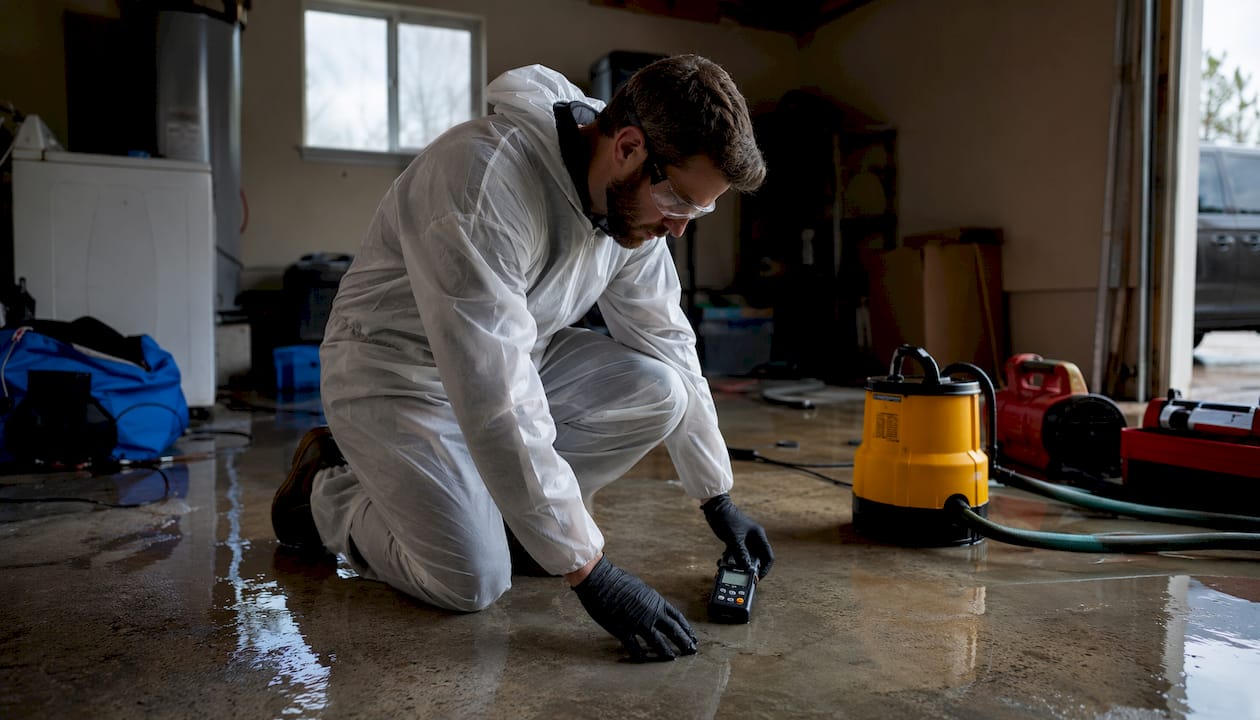
Water restoration is the professional process of returning a water-damaged property and its contents to their pre-loss condition through scientifically measured drying, not just surface cleanup. According to the ANSI/IICRC S500 standard, the industry benchmark for professional water damage restoration, the process covers six core phases:
Inspection and assessment of damage class and water contamination category
Water extraction using pumps and vacuums to remove standing water
Drying and dehumidification guided by moisture meter readings, not touch
Cleaning and sanitizing to eliminate contaminants and prevent mold
Reconstruction of structural elements and contents as needed
Final moisture verification against unaffected baseline readings
What separates water restoration from a simple cleanup is the reliance on scientific moisture measurement throughout. A wall that feels dry to the hand can still hold enough moisture inside to grow mold within 24–48 hours. Professionals use moisture meters, infrared cameras, and hygrometers to confirm that materials have actually returned to acceptable pre-loss moisture levels before signing off.
Table of Contents
How water mitigation and water restoration actually differ
The water damage restoration process, step by step
Common misconceptions about what water restoration includes
What affects the timeline and cost of water restoration
Health and safety precautions during water restoration
Puroclean responds fast when water damage can’t wait
Key Takeaways
How water mitigation and water restoration actually differ
Homeowners often use these terms interchangeably, but they describe two distinct phases of recovery that happen in sequence, not simultaneously.
Water mitigation and restoration are sequential but separate processes within the broader water damage recovery timeline. Here is what each one covers:
Water mitigation (happens first):
Stopping the active source of water intrusion
Removing standing water to prevent ongoing damage
Boarding up or tarping compromised areas
Protecting salvageable contents by moving or covering them
Water restoration (follows mitigation):
Structural drying to scientifically confirmed moisture targets
Cleaning and sanitizing all affected surfaces
Repairing or replacing damaged drywall, flooring, and framing
Restoring the property to its functional, pre-loss state
Think of mitigation as stopping the bleeding and restoration as the surgery that follows. Skipping or rushing mitigation makes restoration harder and more expensive. Stopping at mitigation leaves the property structurally compromised and at risk for mold.
The water damage restoration process, step by step
Understanding each phase helps you ask the right questions and avoid being caught off guard when a crew arrives.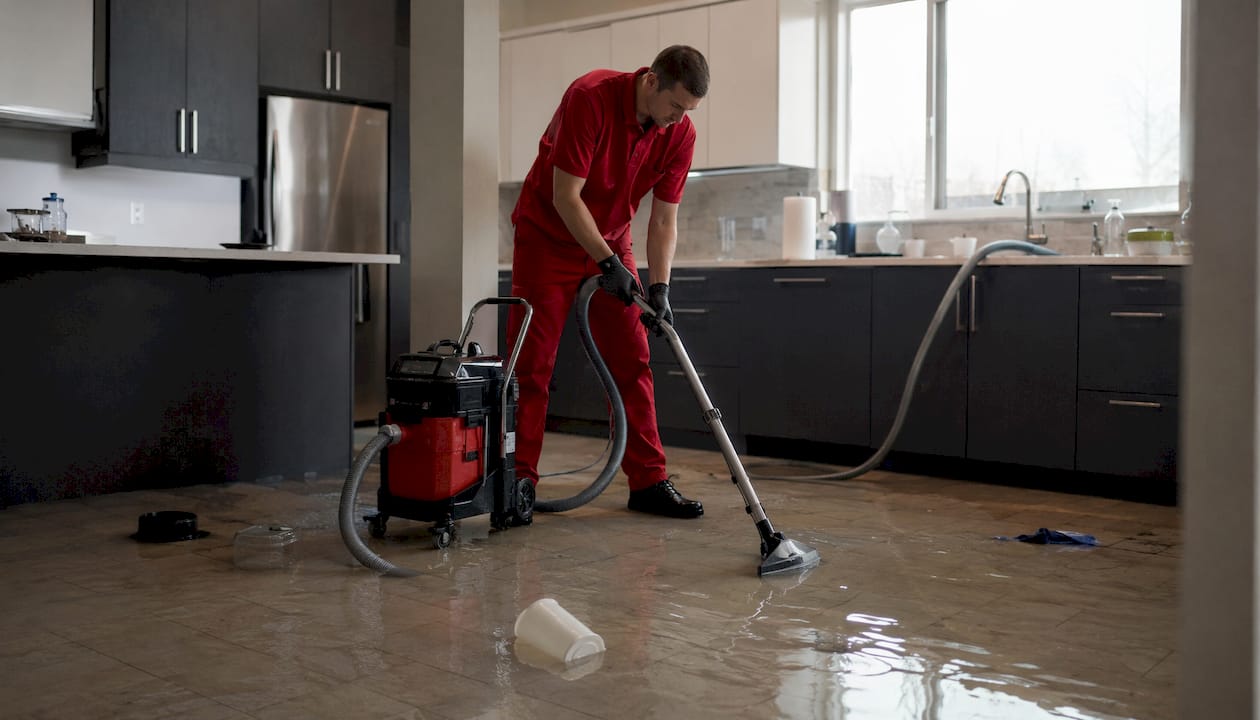
1. Inspection and damage assessment
The initial assessment determines the water contamination category (clean, gray, or black water) and the damage class (how far moisture has spread into materials). This step dictates which personal protective equipment the crew uses, what equipment gets deployed, and how long drying will take. Errors here cause cascading problems later.
2. Water extraction
Technicians use truck-mounted or portable pumps and wet vacuums to pull out standing water. Adequate extraction is foundational: dehumidifiers alone cannot compensate for water left sitting in flooring or wall cavities. Rushing this step prolongs drying time and raises the risk of delamination and secondary structural damage.
3. Drying and dehumidification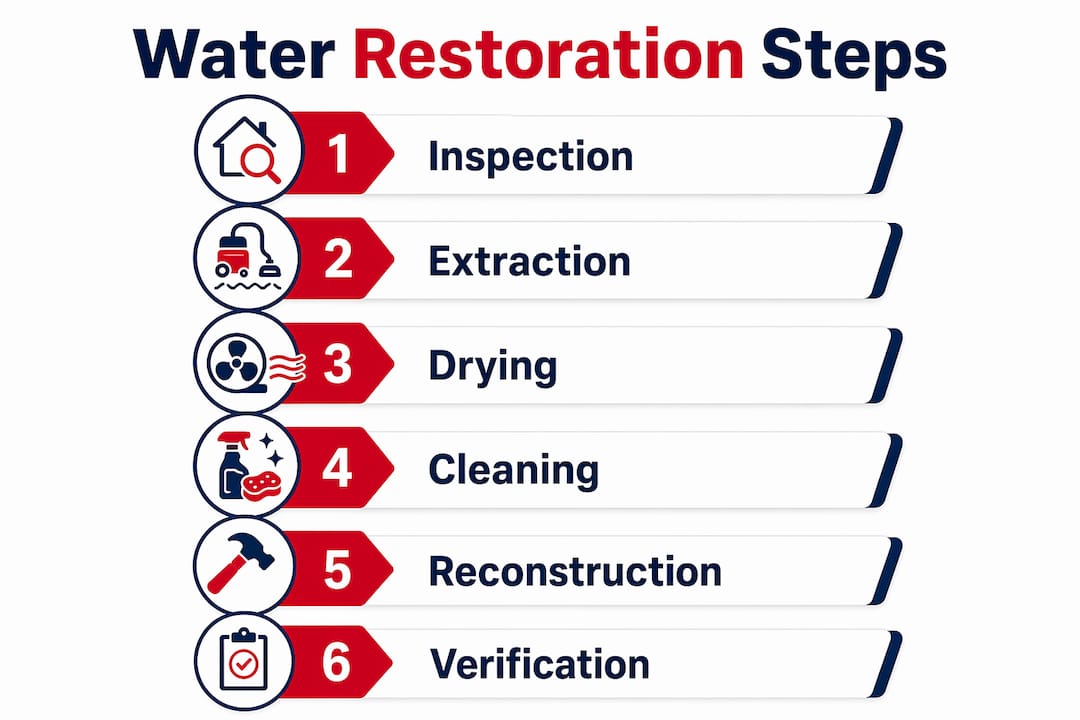
Air movers and dehumidifiers work together to draw moisture out of building materials. The target is not “feels dry” but a specific moisture content confirmed against readings from unaffected areas of the same structure. Professional drying requires continuous monitoring until materials reach that scientifically determined baseline.
4. Cleaning and sanitizing
Antimicrobial agents treat affected surfaces to eliminate bacteria and inhibit mold growth. Category 2 (gray water) and Category 3 (black water) losses require more aggressive sanitization protocols and additional PPE. This phase also covers odor treatment and HEPA vacuuming of debris.
5. Reconstruction
Once materials are confirmed dry, damaged drywall, insulation, flooring, and structural framing get repaired or replaced. The scope ranges from patching a single wall section to full room rebuilds, depending on damage severity.
6. Final verification and sign-off
No project should close until moisture meters confirm all materials have reached dry standard compared to unaffected baseline readings. Thorough documentation of readings, photos, and completed work protects both the homeowner and the restoration company.
Pro Tip: Ask your restoration contractor to show you the moisture readings from both the affected area and an unaffected reference area before signing off. If they cannot produce those numbers, the job is not finished.
Common misconceptions about what water restoration includes
Several persistent myths lead homeowners to underestimate the scope of the work or overestimate what they can handle themselves.
“Removing the water is the whole job.” Water extraction is one phase of a multi-step process. Without drying, sanitizing, and reconstruction, the property remains structurally compromised and biologically at risk.
“If it looks dry, it is dry.” Surface appearance is unreliable. Moisture trapped inside walls, subfloors, and insulation will not show until mold appears or materials fail. Scientific measurement is the only reliable standard.
“Mitigation and restoration are the same thing.” They are not. Mitigation stops damage from spreading; restoration repairs what was damaged. Both are necessary, and neither replaces the other.
“DIY restoration works fine for small leaks.” Small visible leaks can hide significant moisture intrusion in adjacent materials. Without moisture meters and professional drying equipment, DIY efforts frequently miss hidden saturation, leading to mold remediation costs that far exceed what professional restoration would have cost upfront.
What affects the timeline and cost of water restoration
Restoration costs vary based on damage severity, water contamination category, the size of the affected area, and the materials and labor involved. No two losses are identical, but several factors consistently drive costs up or down.
Time elapsed since the water event. The longer water sits, the lower the chance of restoring contents and structural materials successfully. Hours matter.
Water category. Clean water (Category 1) from a burst supply line costs less to remediate than gray water from an appliance or black water from a sewer backup, which requires full contamination protocols.
Affected area and materials. Hardwood floors, plaster walls, and finished basements cost more to restore than concrete or tile surfaces.
Insurance documentation. Proper photos, moisture logs, and itemized scope reports are what insurance adjusters need to process claims efficiently. Missing documentation delays settlement and can reduce payouts.
Timeline ranges from a few days for a contained, clean-water event to several weeks for a large-scale Category 3 loss with significant reconstruction. Acting within the first hour of discovery consistently limits both scope and cost.
Health and safety precautions during water restoration
Water damage creates conditions that are hazardous well beyond the visible wet area. Category 2 and Category 3 water carries bacteria, sewage pathogens, and chemical contaminants. Even Category 1 losses become Category 2 within 24–48 hours as microbial growth begins.
Professional crews follow ANSI/IICRC S500 health and safety protocols throughout the project. Key precautions include:
PPE selection based on contamination category. Gloves, respirators, and full protective suits are standard for gray and black water losses.
Containment of affected areas to prevent cross-contamination to unaffected parts of the property.
Occupant safety. Residents and pets should stay out of active work zones, particularly during extraction and sanitization.
Mold prevention through rapid drying. Mold prevention starts with getting materials dry within the critical window before spores establish.
Electrical safety. Power to affected areas should be shut off before any water contact with outlets, panels, or wiring.
Attempting to handle a Category 2 or Category 3 loss without proper PPE and training puts occupants at genuine health risk. For anything beyond a small, clean-water spill in a limited area, professional response is the safer call.
Puroclean responds fast when water damage can’t wait
When water is actively damaging your home or property, the clock is already running. Puroclean of Northeast Sacramento provides 24/7 water restoration services for homeowners and property managers throughout Northeast Sacramento, Folsom, Rancho Cordova, and Citrus Heights. Certified technicians arrive with the extraction equipment, moisture meters, and drying systems needed to start protecting your property immediately, not the next business day.
Puroclean follows the step-by-step restoration process outlined by ANSI/IICRC S500, from initial assessment through final moisture verification, and guides homeowners through insurance documentation at every stage. If you are dealing with a burst pipe, appliance failure, flooding, or any water intrusion event, contact Puroclean now for an immediate response. Find your nearest location on Google Maps.
Key Takeaways
Water restoration is not complete until moisture meters confirm all affected materials have returned to pre-loss baseline levels, guided by the ANSI/IICRC S500 standard from inspection through final sign-off.
Point
Details
Restoration vs. mitigation
Mitigation stops active damage; restoration repairs and rebuilds. Both are required for full recovery.
Scientific drying standard
“Dry to touch” is insufficient. Moisture meters must confirm baseline readings before project close.
Time is the biggest cost driver
The longer water sits, the lower the chance of restoring materials and the higher the total cost.
Health risks are real
Category 2 and 3 water losses require PPE, containment, and professional sanitization protocols.
Puroclean’s role
Puroclean of Northeast Sacramento provides 24/7 certified water restoration with full IICRC-standard documentation.
Recommended
How to Handle Water Damage: Step-by-Step Restoration Guide – PuroClean of Northeast Sacramento
Water Damage Restoration Guide: Restore Property Fast – PuroClean of Northeast Sacramento
Why Use Restoration Services: Complete Guide for 2024 – PuroClean of Northeast Sacramento
What Is Water Damage? Complete Guide for Property Owners – PuroClean of Northeast Sacramento