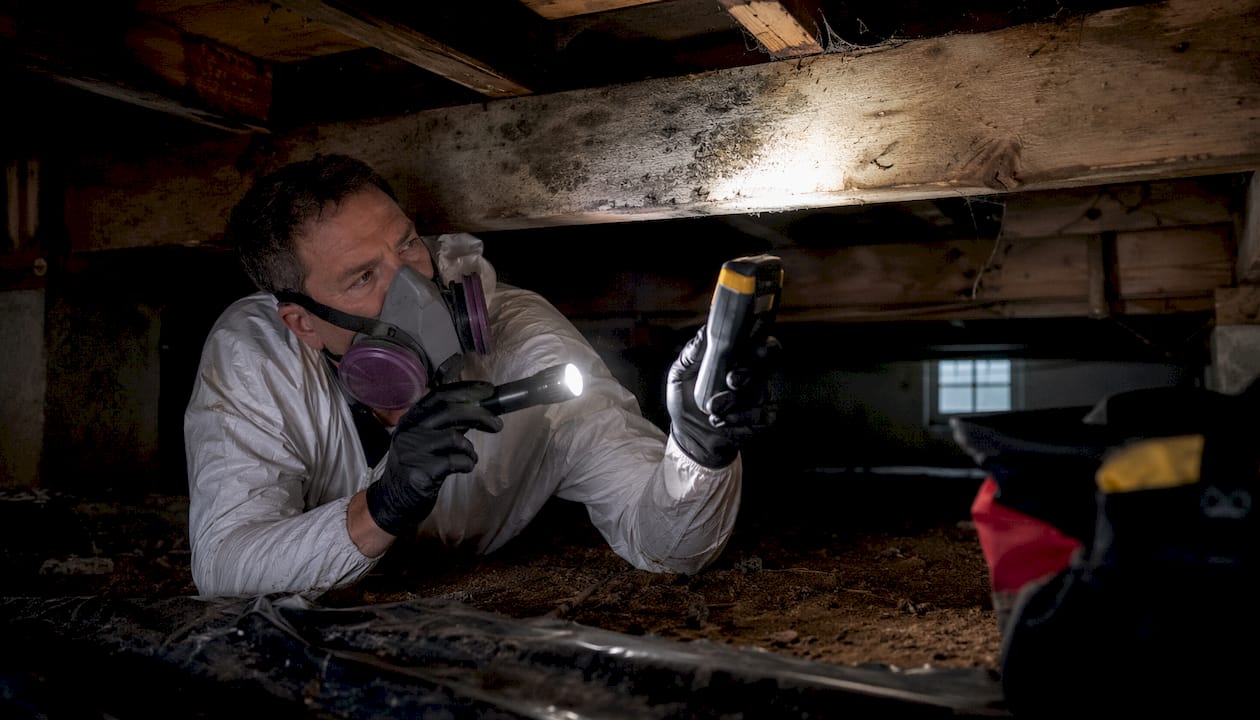
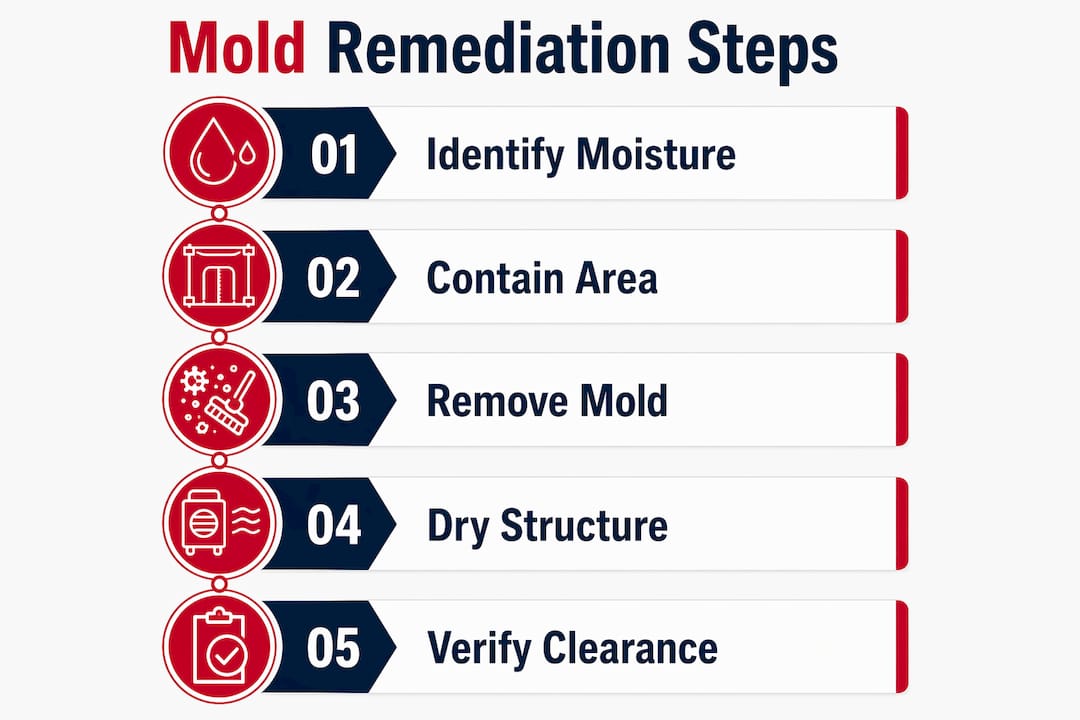
Mold remediation companies identify and correct the moisture source, contain the affected area, physically remove contaminated materials, clean remaining surfaces with HEPA filtration, dry the structure to target readings, and verify the property is safe before reconstruction begins. That full sequence, codified in the ANSI/IICRC S520 standard, is what separates professional remediation from a surface wipe-down. The U.S. EPA is direct: fixing the moisture source is non-negotiable, and all work must be documented to protect occupant health. If you see visible mold covering a significant area, mold after a sewage backup, or occupants with respiratory symptoms, call a certified pro immediately. Puroclean of Northeast Sacramento is available 24/7 for exactly these situations.
Table of Contents
- What do mold remediation companies do, step by step?
- Why certifications and standards protect you
- What Post-Remediation Verification actually confirms
- How long does remediation take, and what drives the cost?
- When to call a pro vs. handle it yourself
- How remediation fits into water and fire damage response in Northeast Sacramento
- Key Takeaways
- What restoration professionals see that homeowners miss
- Puroclean of Northeast Sacramento: 24/7 emergency response
- Useful sources and local resources
What do mold remediation companies do, step by step?
Professional remediation follows a locked sequence. Skipping any phase increases recurrence risk significantly.
- Inspection and scope assessment. Technicians use moisture meters and thermal imaging to map every affected area, including hidden cavities behind drywall and under flooring. The scope of work is documented before any demolition begins.
- Moisture-source identification and correction. The leak, condensation problem, or intrusion point is located and repaired. No remediation holds without this step.
- Containment. Polyethylene barriers seal the work zone. Jobs involving a moderate-sized area typically use limited containment; larger jobs require full containment with a decontamination airlock and negative-air pressure to prevent cross-contamination.
- Negative-air and HEPA filtration. Air scrubbers with HEPA filters run continuously, exhausting contaminated air outside the building envelope and protecting clean areas.
- Source removal of contaminated materials. Porous materials like drywall, insulation, and carpet that have been colonized are double-bagged in polyethylene and removed. Physical removal is the primary method; biocides alone are not a substitute.
- Multi-pass surface cleaning. Remaining surfaces get a three-pass treatment: HEPA vacuum, damp-wipe with detergent, then a second HEPA vacuum. Antimicrobial treatment follows cleaning, never replaces it.
- Structural drying. Industrial dehumidifiers and high-velocity air movers run until moisture readings meet targets set under ANSI/IICRC S500. Drying typically takes several days with daily readings.
- Reconstruction coordination. New drywall, insulation, and finishes go in only after moisture targets are confirmed. Rushing this step is one of the most common causes of repeat mold problems.
- Post-Remediation Verification (PRV). An independent Indoor Environmental Professional (IEP) conducts clearance testing before the space is reoccupied.
What to expect on day one: moisture mapping, containment setup, and a written scope of work delivered to you before demolition starts.
Before reconstruction begins: confirmed moisture readings, completed PRV report, and signed clearance documentation.
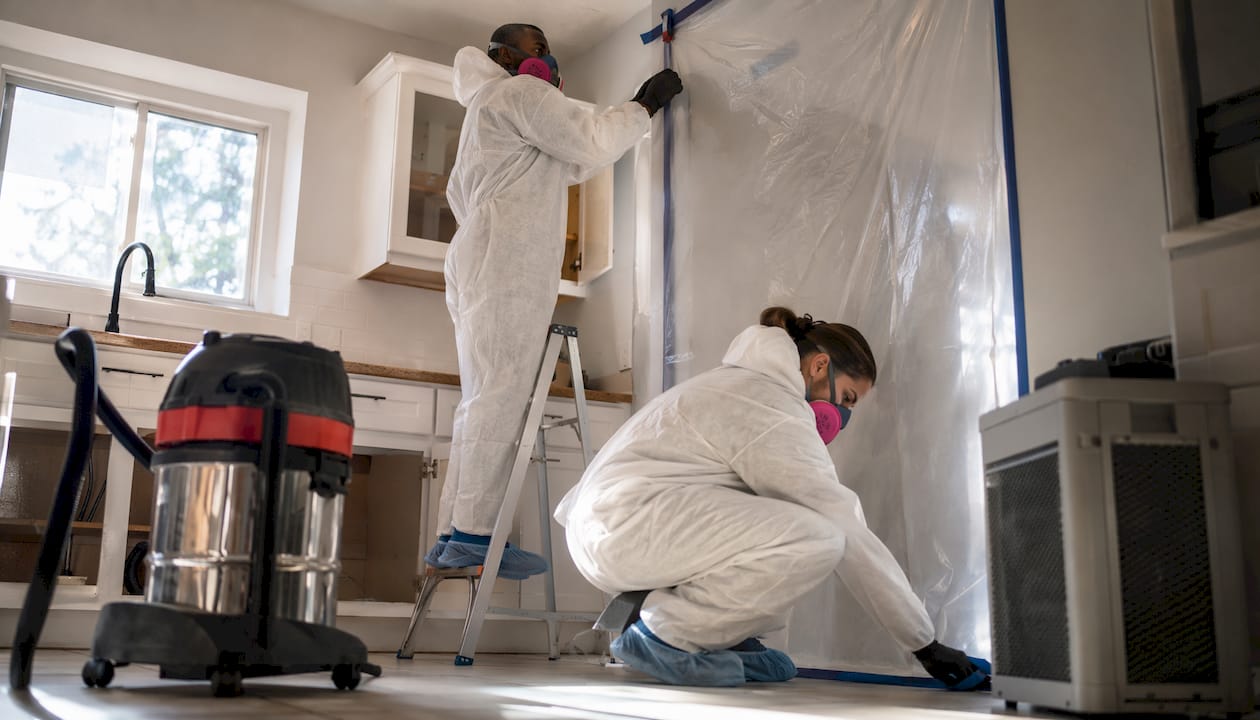
Pro Tip: The single most common reason remediation fails is skipping or deferring the moisture-source repair. Remediating mold without fixing the underlying leak almost always produces regrowth within weeks. Insist on seeing the repair documented before work proceeds.
Why certifications and standards protect you
The governing standard is ANSI/IICRC S520, which requires sequenced remediation, documented scope of work, and independent verification. When a contractor follows S520, you have a paper trail that insurance adjusters and future buyers can evaluate. When they don’t, you have a verbal promise.
Credentials to look for: IICRC-certified Applied Microbial Remediation Technicians (AMRT) on the crew, and an independent IEP from a body like the American Council for Accredited Certification (ACAC) or the American Industrial Hygiene Association (AIHA) performing clearance testing. The IEP’s job is specifically to be independent of the remediation contractor, which prevents the obvious conflict of interest in self-certified clearance.
The IICRC S520 also draws a clear line between “mold remediation” and “mold removal.” Removal is a surface task. Remediation is a documented, systematic process that addresses root causes and verifies results. Any contractor who promises “complete mold removal” is either oversimplifying or misleading you.
What Post-Remediation Verification actually confirms
PRV’s goal is returning the property to Condition 1, meaning indoor fungal ecology matches normal background levels found outdoors. Total sterilization is not realistic or necessary. What matters is that spore types and counts indoors are consistent with the outdoor baseline.
A valid PRV report includes:
- Visual inspection confirming no visible mold or moisture
- Moisture readings at or below target levels for all structural materials
- Air sampling results with an outdoor baseline comparison
- Surface sampling with lab chain-of-custody documentation
- A signed pass/fail determination from the IEP
The independent IEP standard exists because a contractor clearing their own work is a conflict of interest. For any full-containment job, the PRV inspector should have had zero involvement in the remediation itself.
Pro Tip: Before hiring a remediation company, ask directly: “Will the PRV be performed by someone independent of your crew?” If the answer is no or vague, that’s a red flag worth acting on.
How long does remediation take, and what drives the cost?
| Job scope | Inspection | Remediation work | Drying | PRV | Total (typical) |
|---|---|---|---|---|---|
| Limited (small area) | Day 1 | Days 1–2 | Days 2–4 | Day 5 | 5–7 days |
| Medium (moderate area) | Day 1 | Days 1–3 | Days 3–6 | Day 7 | 7–10 days |
| Large (extensive area) | Day 1 | Days 1–5 | Days 5–9 | Day 10+ | 10+ days |
Drying alone runs at least 2–3 days on even modest jobs. Reconstruction adds time on top of that.
Primary cost drivers:
- Extent of contaminated materials requiring removal (drywall, insulation, subfloor)
- Full containment and negative-air equipment for larger or complex jobs
- Independent PRV and laboratory testing fees
- Structural reconstruction after material removal
- Sewage or hazardous-material involvement (requires higher-level PPE and protocols)
- Emergency or 24/7 mobilization for active water intrusion
Get a written scope of work before any job starts. Your insurer will ask for it, and it protects you if disputes arise about what was and wasn’t completed.
When to call a pro vs. handle it yourself
Small mold patches on non-porous surfaces like bathroom tile, under 10 square feet, with no health-vulnerable occupants nearby, can reasonably be handled with proper PPE and containment. Anything beyond that belongs with a certified crew.
Call a professional immediately when:
- Visible mold covers more than 10 square feet
- Mold appeared after a sewage backup or contaminated water intrusion
- Mold is in or near the HVAC system
- Mold has returned after a prior cleanup attempt
- Any occupant has asthma, allergies, or a compromised immune system
- The property experienced significant water or fire damage
For limited DIY mold cleanup, use an N-95 respirator, nitrile gloves, and eye protection. Never run fans to dry a moldy area; that disperses spores through the building. And do not rely on bleach as a primary treatment. Dead mold remains allergenic, and bleach-only approaches leave spore fragments and potential mycotoxins behind.
Document everything before you touch anything: photos, dates, and receipts. Your insurance carrier will want them.
How remediation fits into water and fire damage response in Northeast Sacramento
After a burst pipe, slab leak, or fire, mold is rarely the first problem. Water extraction and structural drying come first, followed by soot and smoke removal for fire losses. Remediation slots in once the active damage is controlled, but the clock starts immediately: mold can colonize within 24–48 hours of water intrusion.
The typical sequence: rapid mitigation and water extraction → moisture mapping → containment and remediation → structural drying to S500 targets → PRV → reconstruction.
Pro Tip: Sacramento’s wet winters and warm summers create a narrow drying window. A job that dries in four days in July can take twice as long in January. Factor seasonal humidity into your timeline expectations and push for daily moisture readings.
Coordination matters here. Plumbing repairs, roofing patches, and HVAC balancing all need to happen before or alongside remediation, not after. Puroclean of Northeast Sacramento manages that coordination directly, working with your insurance adjuster and the trades involved. The local service area covers Northeast Sacramento, Folsom, Rancho Cordova, and Citrus Heights, with 24/7 emergency availability for water, fire, and mold situations.
Key Takeaways
Professional mold remediation requires moisture correction, physical source removal, HEPA filtration, structural drying to verified targets, and independent Post-Remediation Verification before reconstruction begins.
| Point | Details |
|---|---|
| Moisture correction is non-negotiable | Remediating without fixing the leak almost always results in regrowth within weeks. |
| PRV is the gold standard | An independent IEP must confirm Condition 1 clearance before re-occupancy or reconstruction. |
| Documentation protects you | Written scope, moisture readings, and lab results are required for most insurance claims. |
| Small mold patches on non-porous surfaces can sometimes be handled by homeowners; larger areas, sewage-related issues, or cases involving health-vulnerable occupants require a certified crew. | |
| Puroclean responds 24/7 | Puroclean of Northeast Sacramento coordinates water, fire, and mold response across the greater Sacramento area. |
What restoration professionals see that homeowners miss
The gap between a successful remediation and a failed one almost always comes down to two decisions made before the crew arrives: whether the moisture source was actually repaired, and whether the PRV was truly independent.
Homeowners often focus on the visible mold and assume that once it’s gone, the problem is solved. What they miss is that the conditions that grew the mold in the first place, a slow pipe drip, inadequate bathroom exhaust, or a compromised roof flashing, are still present. Certified protocols under IICRC S520 exist precisely to force that conversation before demolition starts. The 7 essential remediation steps aren’t bureaucratic overhead; they’re the difference between a one-time fix and a recurring expense. Biocides and paint-over approaches feel faster and cheaper until the mold comes back in six months. The properties that stay clean are the ones where someone insisted on a written scope, a verified moisture repair, and a signed clearance report from an independent IEP.
Puroclean of Northeast Sacramento: 24/7 emergency response
When mold follows water damage or a fire, speed and coordination are what prevent a contained problem from becoming a structural one.
Puroclean of Northeast Sacramento provides 24/7 emergency restoration for water extraction, structural drying, fire and smoke recovery, sewage cleanup, and mold remediation across Northeast Sacramento, Folsom, Rancho Cordova, and Citrus Heights. Every job includes insurance-claim coordination, documented scope of work, and moisture verification before reconstruction begins. Call the local team any time, day or night, to request an inspection or get a written scope for your insurance carrier.
Useful sources and local resources
- U.S. EPA Mold Remediation in Schools and Commercial Buildings: The primary federal guidance document covering PPE, containment levels, cleanup methods, and documentation requirements.
- U.S. EPA Mold Remediation Guide, Chapter 3: Detailed chapter on remediation planning, moisture correction, and occupant safety.
- ANSI/IICRC S520 Standard: The industry standard for professional mold remediation, covering sequenced workflow and PRV requirements.
- ACAC (American Council for Accredited Certification): Accreditation body for Indoor Environmental Professionals performing independent clearance testing.
- Puroclean Northeast Sacramento local page: Local service information, emergency contact, and blog resources for Northeast Sacramento homeowners and property managers.
- Puroclean mold remediation explained: Comprehensive property guide for homeowners who want deeper reading on the remediation process.
- Local service area map: Northeast Sacramento service area coverage and local resources.
Recommended next steps: request a written scope of work before any remediation begins, ask for PRV documentation from an independent IEP at project close, and contact Puroclean of Northeast Sacramento at any hour for emergency response or a mold inspection.
Recommended
- DIY Mold Remediation Process: Complete Step-by-Step Guide – PuroClean of Northeast Sacramento
- Mold Remediation Process Guide: Effective Cleanup Steps – PuroClean of Northeast Sacramento
- 7 Essential Mold Remediation Steps for Property Owners – PuroClean of Northeast Sacramento
- Mold Remediation Explained: Complete Property Guide – PuroClean of Northeast Sacramento