


Why Commercial Property Restoration Matters Most
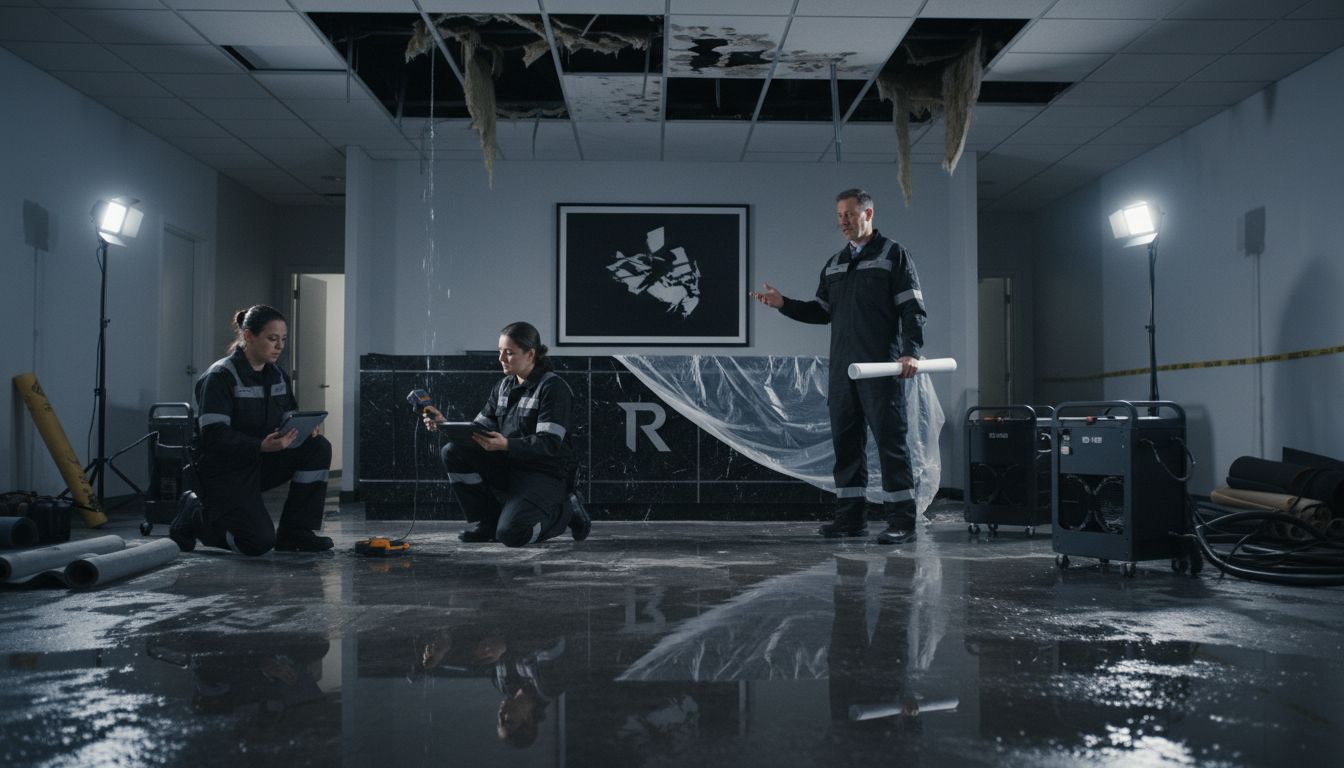
Every year, property disasters force thousands of businesses to close their doors, and only about 40 percent ever reopen. When commercial property suffers damage, downtime means lost revenue and mounting expenses. Knowing what restoration involves is crucial for any owner or facility manager facing such high stakes. This guide reveals the essential steps, unique challenges, and practical strategies behind professional commercial property restoration, helping you prepare for recovery before disaster strikes.
Table of Contents
- Defining Commercial Property Restoration Needs
- Types of Damage Affecting Commercial Buildings
- Restoration Process And Professional Benefits
- Legal Obligations And Regulatory Compliance
- Costs, Risks, And Insurance Considerations
Key Takeaways
| Point | Details |
|---|---|
| Comprehensive Assessment is Essential | A thorough damage assessment includes both structural and non-structural evaluations to ensure effective recovery. |
| Proactive Planning Reduces Risks | Anticipating and addressing vulnerabilities can significantly lower future damage and recovery costs. |
| Expert Intervention is Crucial | Professional restoration teams provide specialized knowledge and advanced tools essential for comprehensive rehabilitation. |
| Legal Compliance is Mandatory | Adhering to local and federal regulations protects safety and minimizes financial liabilities during restoration. |
Defining Commercial Property Restoration Needs
Commercial property restoration represents a complex and strategic process of recovering and rehabilitating business infrastructure after unexpected damage. According to FEMA, addressing both structural and non-structural vulnerabilities is critical to minimizing long-term risks and ensuring comprehensive property recovery.
These restoration needs encompass multiple critical dimensions beyond simple repair. Structural integrity involves comprehensive assessment of building frameworks, while non-structural restoration addresses critical systems like electrical, plumbing, and mechanical infrastructure. California Office of Emergency Services highlights that proactive restoration planning can significantly mitigate potential future damage and reduce overall recovery costs.
Key restoration needs typically include:
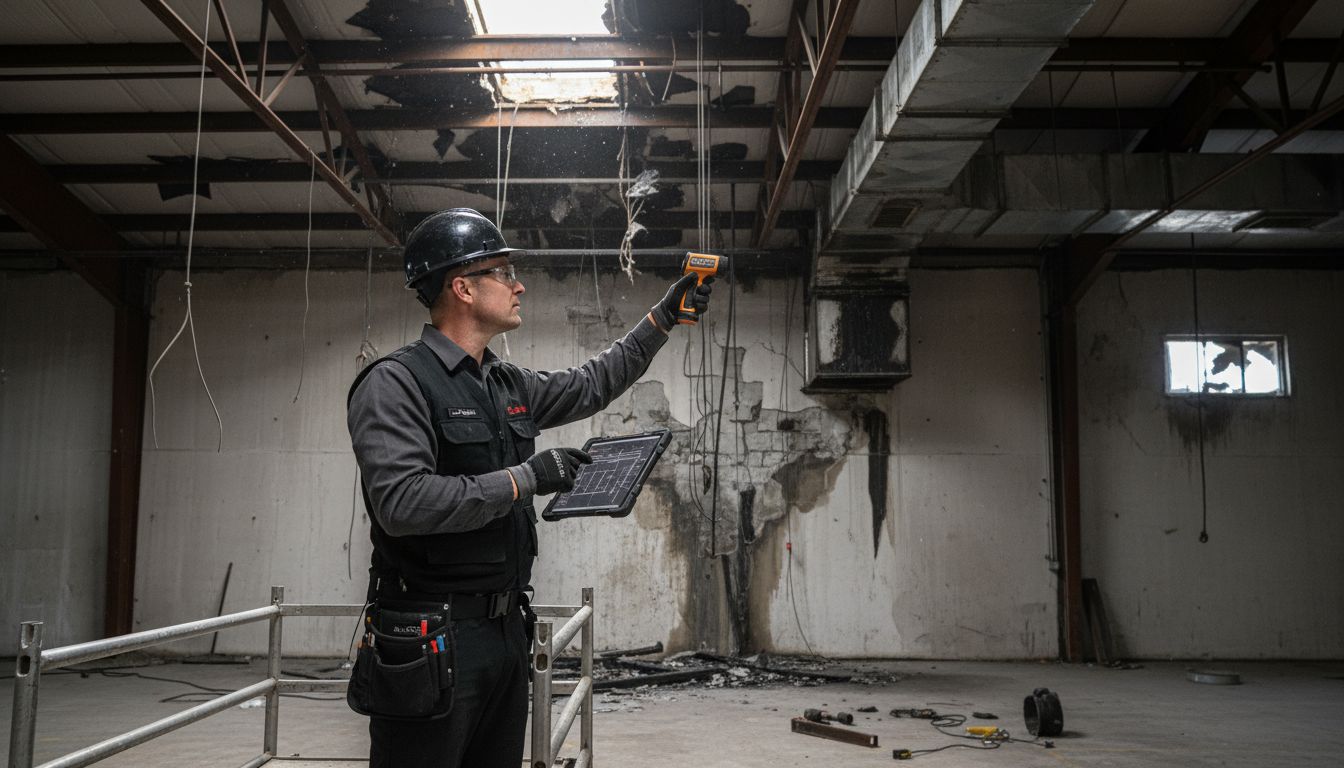
- Comprehensive damage assessment
- Structural stability evaluation
- Water and moisture remediation
- Electrical and mechanical system restoration
- Hazardous material containment and removal
- Complete facility sanitization and cleaning
Effective commercial property restoration requires a systematic approach that goes far beyond cosmetic repairs. Tips to Restore Your Michigan Business Safely emphasizes understanding the interconnected nature of building systems and the importance of professional intervention to ensure comprehensive recovery.
The ultimate goal of commercial property restoration is not just to return a facility to its pre-damage condition, but to create a safer, more resilient environment that can withstand potential future challenges. Professional restoration teams bring specialized expertise, advanced technological tools, and a comprehensive understanding of structural rehabilitation that individual property owners cannot replicate.
Types of Damage Affecting Commercial Buildings
Commercial buildings face a diverse range of potential damage types that can compromise their structural integrity and operational functionality. FEMA identifies several critical categories of damage that can significantly impact commercial properties, ranging from structural deformations to non-structural system failures.
Structural Damage represents the most severe category of property damage, potentially compromising a building’s fundamental safety. According to California Office of Emergency Services, commercial properties are particularly vulnerable to damage from seismic events, especially when featuring heavy roofs, oversized windows, and unbraced equipment.
The primary types of damage affecting commercial buildings include:
- Water damage from leaks, flooding, or plumbing failures
- Structural deformation and frame compromises
- Electrical system disruptions
- Mechanical system breakdowns
- Fire and smoke damage
- Mold and moisture-related deterioration
When exploring the potential risks, Water Damage: Top 5 Consequences of Water Damage in Office Buildings in Michigan reveals that water damage can be particularly destructive, potentially causing extensive structural and operational challenges for businesses.
Understanding these damage types is crucial for proactive risk management. While some damages are immediately apparent, others can develop gradually, silently undermining a building’s structural integrity. Professional restoration experts play a critical role in identifying, assessing, and addressing these complex damage scenarios, helping businesses minimize potential long-term financial and operational impacts.
Restoration Process and Professional Benefits
Professional property restoration represents a comprehensive and strategic approach to recovering commercial buildings after significant damage. FEMA emphasizes the critical importance of addressing both structural and non-structural issues during the restoration process, highlighting the complexity of effective property rehabilitation.
Professional restoration services offer a systematic methodology that goes far beyond simple repairs. According to Impact Wealth, these services play a pivotal role in minimizing long-term financial expenses and ensuring swift operational recovery for businesses facing unexpected property damage.
Key benefits of professional restoration include:
- Comprehensive damage assessment
- Advanced technological interventions
- Rapid response and mitigation strategies
- Detailed documentation for insurance purposes
- Prevention of secondary damage
- Cost-effective restoration solutions
The Advantages of Hiring a Professional Disaster Restoration Company underscores the importance of expert intervention, demonstrating how professional teams can transform potentially catastrophic damage into manageable restoration projects.
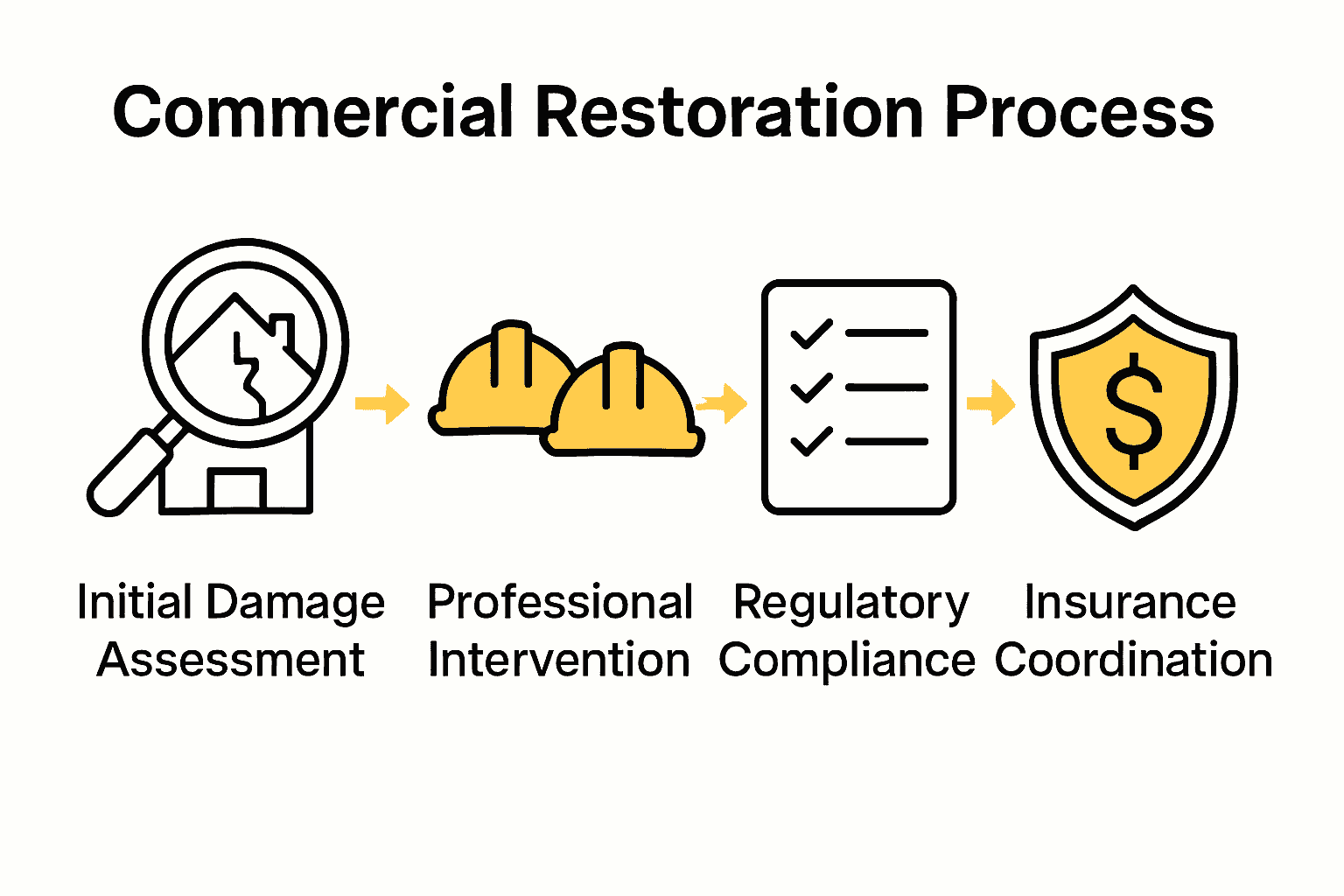
The restoration process typically involves multiple strategic phases: initial damage assessment, moisture and contamination detection, comprehensive cleaning, structural repair, and final reconstruction. Professional restoration experts bring specialized knowledge, cutting-edge equipment, and a systematic approach that individual property owners simply cannot replicate, ultimately protecting both the physical asset and the business’s operational continuity.
Legal Obligations and Regulatory Compliance
Commercial property restoration involves navigating a complex landscape of legal requirements and regulatory standards designed to protect both property owners and occupants. FEMA emphasizes the critical importance of adhering to established design and performance standards that ensure structural integrity and safety in commercial buildings.
Regulatory compliance extends far beyond simple repair work, encompassing comprehensive safety protocols and structural assessment requirements. According to California Office of Emergency Services, commercial property owners must proactively address potential vulnerabilities, particularly in regions prone to seismic activity, through mandatory retrofitting and strict building code adherence.
Key legal and regulatory considerations include:
- Compliance with local and federal building safety codes
- Mandatory structural integrity assessments
- Environmental hazard mitigation requirements
- Proper documentation of restoration processes
- Insurance and liability protection standards
- Accessibility and disability accommodation regulations
The Vital Role of Local Insurance Agents in Property Restoration highlights the intricate relationship between legal compliance, insurance requirements, and effective property restoration, demonstrating how professional expertise can help navigate these complex regulatory landscapes.
Ultimately, legal obligations in commercial property restoration serve a critical purpose: protecting human safety, preserving property value, and ensuring that restored buildings meet rigorous standards of structural integrity and functional safety. Failure to comply with these regulations can result in significant financial penalties, potential legal liabilities, and compromised occupant safety.
Costs, Risks, and Insurance Considerations
Navigating the financial landscape of commercial property damage requires a comprehensive understanding of potential risks, associated costs, and insurance coverage complexities. Impact Wealth highlights the significant financial implications that unexpected property damage can impose on business operations, extending far beyond immediate repair expenses.
Insurance coverage plays a critical role in mitigating financial risks associated with property restoration. Texas Department of Insurance emphasizes the importance of understanding policy details, noting that different insurance policies offer varying levels of protection and have specific exclusions that can dramatically impact financial recovery strategies.
Key financial considerations for commercial property owners include:
- Direct restoration and repair costs
- Potential business interruption expenses
- Equipment replacement and technological infrastructure restoration
- Indirect costs of operational downtime
- Long-term structural integrity preservation
- Potential legal and compliance expenses
Xactimate: The Tool You Didn’t Know You Needed to Restore Your Home demonstrates how professional restoration services utilize advanced tools to provide accurate cost assessments and streamline the insurance claims process.
Ultimately, proactive risk management and comprehensive insurance coverage are essential strategies for protecting commercial property investments. Business owners must carefully evaluate their potential vulnerabilities, understand their insurance policies, and develop strategic restoration plans that minimize financial exposure and ensure swift recovery from unexpected property damage.
Restore Confidence in Your Commercial Property Today
When unexpected damage threatens your business, the challenges you face go beyond visible repairs. From water damage and structural concerns to complex mold and biohazard cleanup, it is critical to address every aspect of restoration with expert care. The article highlights how overlooking these details can increase financial risks and disrupt your operations. You need a partner who understands the urgency of comprehensive commercial property restoration and can deliver swift, thorough results that protect your investment and peace of mind.
At PuroClean of Northeast Sacramento, we specialize in exactly these challenges. Our team brings advanced technology, industry certifications, and 24/7 emergency response to quickly evaluate and restore your property from water, fire, mold, and other damages. We work closely with insurance providers to simplify your claims while safeguarding your property’s structural integrity and safety.
Don’t wait for damage to worsen and costs to rise. Visit our commercial restoration services page now to learn how professional restoration can make your business safer and more resilient. Reach out today for immediate help and get your property back to its best condition without delay.
Frequently Asked Questions
What is commercial property restoration?
Commercial property restoration is the process of recovering and rehabilitating business infrastructure after damage, addressing both structural and non-structural vulnerabilities to ensure comprehensive recovery.
Why is professional intervention important in commercial property restoration?
Professional intervention is crucial because restoration experts bring specialized knowledge, advanced tools, and a systematic approach to recover properties effectively while preventing further damage and minimizing costs.
What types of damage can affect commercial buildings?
Commercial buildings can face various types of damage, including water damage, structural deformation, electrical disruptions, mechanical breakdowns, fire damage, and mold deterioration.
How can property owners manage costs associated with restoration?
Property owners can manage costs by understanding their insurance coverage, developing proactive risk management strategies, and employing professional restoration services that utilize advanced assessment tools to streamline the insurance claims process.
Recommended
Understanding Water Damage Prevention Tips for Businesses – Mats4U USA
Tips to Restore Your Michigan Business Safely
Recovering From Storm Damage in Michigan
Effective Commercial Damage Restoration
Water Damage: Top 5 Consequences of Water Damage in Office Buildings in Michigan
What is Commercial Property Insurance? Understanding Its Importance – Rental Income Insurance