


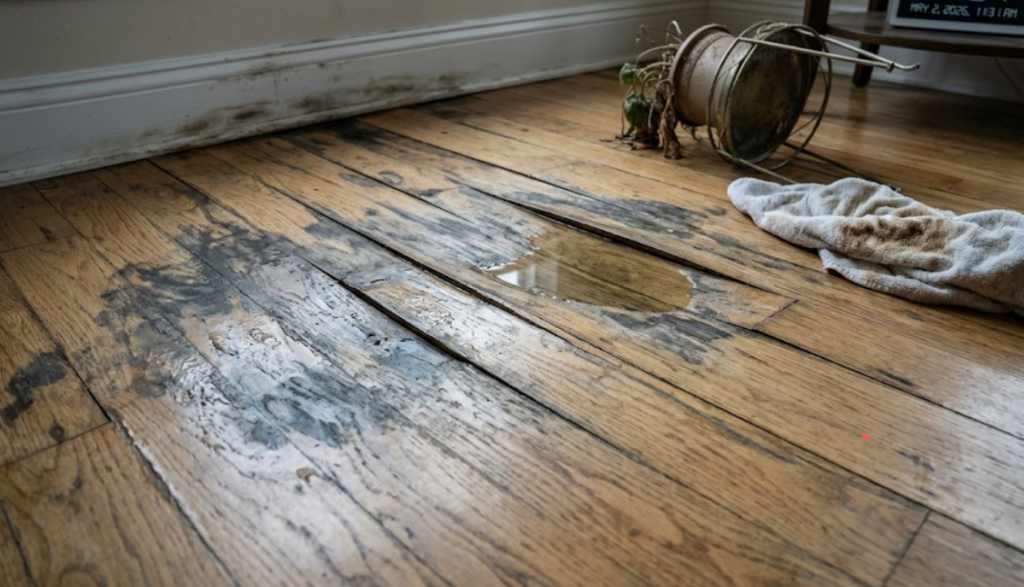
Saving Hardwood Floors From Water Damage – Full Guide
Table of Contents
Hardwood floors are among the most valued features in any home. They are durable, beautiful, and can last for generations when properly maintained. But hardwood and water are natural enemies, and water damage to hardwood floors is one of the most distressing scenarios a homeowner can face. Whether the source is a burst pipe, a dishwasher leak, flooding, or an overflowed bathtub, the impact on hardwood floors from water can range from minor surface staining to complete structural failure requiring full replacement.
The good news is that prompt, informed action can save hardwood floors from water damage in many cases – even when the initial damage appears severe. The bad news is that delays, incorrect drying methods, or incomplete treatment almost always turn a salvageable situation into an irreversible one. In Tacoma, where the humid Pacific Northwest climate slows natural drying and accelerates mold growth, the urgency of responding correctly to hardwood floors from water damage events cannot be overstated.
This comprehensive guide covers the science of how water damages hardwood floors, how to assess whether your floors can be saved, the professional drying and restoration process, and when replacement is unavoidable. Armed with this knowledge, you will be prepared to act quickly and decisively the next time water threatens your hardwood floors.
How Water Actually Damages Hardwood Floors
To understand how to save hardwood floors from water damage, it helps to first understand what water actually does to hardwood at a structural level. Hardwood is a hygroscopic material, meaning it naturally absorbs and releases moisture in response to the ambient humidity of its environment.
This is normal behavior and does not cause lasting damage under typical household conditions. Problems arise when hardwood is exposed to significantly more moisture than it can equilibrate to – specifically, when liquid water or very high humidity causes rapid, uneven moisture absorption.
Cupping – The Most Common Form of Water Damage to Hardwood Floors
Cupping occurs when the bottom of a hardwood board absorbs more moisture than the top surface, causing the edges of each board to rise higher than the center. The floor develops a wavy, corrugated appearance that is both visually apparent and a tripping hazard. Cupping in hardwood floors from water damage is extremely common and, when caught early, is one of the more reversible forms of water damage. As the wood dries and moisture equalizes between the top and bottom of each board, cupping can naturally reduce or even resolve completely.
However, if cupping is addressed incorrectly – particularly if someone sands the floor while it is still wet in an attempt to flatten it – the result is a condition called crowning. As the wood continues to dry after sanding, the now-flattened tops of the boards dry and shrink, causing the centers of the boards to rise higher than the edges. Crowning is permanent and cannot be reversed without replacement.
Buckling – Severe Separation From the Subfloor
Buckling occurs when hardwood boards absorb so much moisture that they swell beyond the expansion gaps provided during installation and physically lift away from the subfloor. Buckled boards may rise several inches from the floor surface. Buckling in hardwood floors from water damage typically indicates a significant water intrusion event and often requires replacement of the affected boards, though the extent depends on how quickly the water is removed and drying begins.
Staining and Surface Discoloration
Water that sits on hardwood floors leaves mineral deposits and can cause gray or black staining from oxidation of the wood’s tannins or from mold growth at the surface. Some staining can be removed through professional sanding and refinishing, but deep staining or staining associated with mold growth may render individual boards unsalvageable.
Subfloor Damage and Mold Growth
Water that penetrates through hardwood flooring to the subfloor beneath creates a second layer of damage that is often more serious than the visible hardwood damage. A wet subfloor can develop mold within 24 to 48 hours in Tacoma’s climate, and a mold-affected subfloor requires remediation before any hardwood restoration or replacement work proceeds. If a wet subfloor is sealed beneath newly installed or restored hardwood, the resulting mold growth will destroy the floor from below and create a serious health hazard.
Immediate Steps to Save Hardwood Floors From Water Damage
The window for saving hardwood floors from water damage is real but limited. Every hour that passes after a water intrusion event increases the degree of damage and reduces the probability of successful restoration. Here is what to do the moment you discover water on your hardwood floors.
Remove the Water Source and Stop Further Intrusion
Before anything else, stop the water. Shut off the water supply if the source is a plumbing failure. If the source is storm-related, do what you can to prevent further water entry. There is no point in drying a floor that is still being actively wetted.
Extract Standing Water Immediately
Remove all standing water from the hardwood floor surface as quickly as possible using towels, mops, and a wet-dry vacuum. The longer water sits on hardwood, the deeper it penetrates. A wet-dry vacuum is particularly effective because it can extract water from the surface and from the gaps between boards. Do not use a standard vacuum cleaner for this task.
Remove Area Rugs, Furniture, and Other Items
Move all furniture, area rugs, and other items off the affected hardwood immediately. Area rugs trap moisture against the floor surface and dramatically slow the drying process. Furniture legs can leave permanent staining on wet wood. Every item removed from the wet floor reduces the moisture load and improves air circulation.
Begin Ventilation and Dehumidification
Open windows and interior doors to increase air circulation, if outdoor humidity levels are lower than indoor levels. Run dehumidifiers continuously in the affected area. In Tacoma, where outdoor humidity is frequently elevated, you may need to rely primarily on dehumidifiers rather than open windows to reduce ambient moisture. Do not use high heat to dry hardwood floors – rapid heating causes uneven drying that can crack boards and worsen cupping.
Professional Assessment of Hardwood Floors From Water Damage
While emergency first response steps can be taken by any homeowner, proper assessment of hardwood floors from water damage requires professional equipment and expertise. A certified water damage restoration professional brings tools and knowledge that make the difference between a complete assessment and a partial one.
Moisture Metering Throughout the Affected Area
Professional technicians use pin-type and pinless moisture meters to measure moisture content throughout the affected hardwood and the subfloor beneath. These readings create a moisture map of the entire affected area, identifying zones of highest saturation and tracking the drying progress over time. Without objective moisture data, it is impossible to know whether drying is complete or whether hidden moisture is still present.
Thermal Imaging to Detect Hidden Moisture
Thermal imaging cameras detect temperature differentials that indicate moisture presence beneath hardwood floors and inside wall cavities adjacent to the affected area. Water that has migrated under baseboards and into wall cavities is invisible to the naked eye but clearly visible on a thermal image. Addressing only the visible floor surface while leaving hidden moisture in adjacent walls virtually guarantees mold growth.
Subfloor Condition Assessment
Professional restoration technicians assess the condition of the subfloor beneath the hardwood, which may require removing a section of flooring for direct inspection. A subfloor that is structurally sound and shows no mold is a strong indicator that hardwood restoration – rather than replacement – is viable. A subfloor with significant mold, delamination, or structural compromise requires remediation before any flooring work proceeds.
The Professional Drying Process for Hardwood Floors From Water Damage
Professional restoration of hardwood floors from water damage uses specialized equipment and techniques that are fundamentally different from consumer-grade approaches. The goal is controlled, complete drying that removes moisture from both the hardwood and the subfloor without causing additional damage from uneven or excessively rapid drying.
Specialty Floor Drying Systems
Professional water damage restoration companies use specialty mat drying systems specifically designed for hardwood floors. These systems consist of flat, flexible mats placed directly on the floor surface that connect to a powerful commercial drying unit. The system forces warm, dry air directly under and through the flooring panels, drying both the hardwood and the subfloor simultaneously from below. This targeted approach is dramatically more effective than ambient air drying alone and achieves complete drying in a fraction of the time.
According to industry data, specialty mat drying systems can reduce drying time for hardwood floors from water damage by up to 60 percent compared to standard air mover and dehumidifier setups. In Tacoma’s climate, where every hour of drying delay increases mold risk, this speed advantage is significant.
Commercial Dehumidification
Commercial-grade dehumidifiers process far greater volumes of air than residential units and can maintain low relative humidity levels in the work area even during active drying operations. Maintaining low ambient humidity throughout the drying process creates a vapor pressure gradient that draws moisture out of the hardwood and subfloor continuously. Multiple units are typically deployed throughout the affected area to ensure even drying conditions.
Monitoring and Documentation
Professional drying of hardwood floors from water damage is not a set-it-and-forget-it process. Technicians take daily moisture readings at multiple points throughout the affected area to track drying progress, identify any areas that are drying more slowly, and determine when the structure has reached industry-standard target moisture levels. This documentation also serves as objective evidence for insurance purposes.
Sanding and Refinishing After Water Damage to Hardwood Floors
Once hardwood floors from water damage have been confirmed fully dry through objective moisture testing, assessment of the floor’s condition determines whether sanding and refinishing can restore the surface. Boards that show residual cupping after complete drying may flatten further over time as the wood fully equilibrates to normal indoor humidity conditions.
Restoration professionals typically recommend waiting a period of several weeks after confirmed drying before making a final determination about sanding, since premature sanding of boards that are still undergoing moisture equalization can result in crowning as described earlier.
When sanding is appropriate, professional drum sanding removes the damaged surface layer of the hardwood, eliminates minor surface staining and grain raising, and creates a smooth, uniform surface for refinishing. Multiple grits of sandpaper are used progressively, followed by professional application of finish coats that restore the floor’s appearance and provide a protective barrier against future moisture exposure.
When Hardwood Floors From Water Damage Cannot Be Saved
Despite the best response and professional drying, some hardwood floors from water damage cannot be restored and must be replaced. Replacement is typically required when boards have buckled severely and cannot be re-secured to the subfloor, when wood has cracked or split along the grain due to rapid moisture absorption, when deep staining from mold cannot be removed through sanding alone, when the wood has been wet for an extended period and has lost structural integrity, or when the subfloor has been so extensively damaged that the hardwood cannot be properly supported after restoration.
Partial board replacement – replacing only the most severely damaged boards while retaining salvageable sections – is sometimes possible and can significantly reduce replacement costs. A professional restoration contractor can assess which boards warrant individual replacement versus which areas require full floor replacement.
Preventing Water Damage to Hardwood Floors in Tacoma
In Tacoma‘s climate, proactive protection of hardwood floors from water damage is a year-round concern. Place water-absorbent mats at exterior doors to reduce tracked-in moisture. Use furniture leg protectors under all furniture resting on hardwood. Install water leak detection sensors under dishwashers, refrigerators, and washing machines.
Maintain indoor relative humidity between 35 and 55 percent using dehumidifiers during the wet season. Ensure the home’s exterior drainage directs water away from the foundation. Inspect plumbing supply lines under sinks and behind appliances regularly.
Annual application of a penetrating hardwood floor finish or refresher coat maintains the moisture barrier on your floors and provides additional protection against minor moisture exposure. Consult with a hardwood flooring professional about the appropriate finish type for your specific floor and its current condition.
Conclusion – Act Fast to Save Your Hardwood Floors From Water Damage
Saving hardwood floors from water damage is entirely possible in many cases – but only with fast, correct action. Every hour of delay narrows the window for restoration and increases the likelihood of permanent damage, mold growth, and full replacement costs. In Tacoma, where the climate amplifies every moisture-related risk, acting immediately and calling professionals without hesitation is the single best decision you can make for your hardwood floors.
If water has damaged your hardwood floors in Tacoma, call PuroClean of Northeast Tacoma at (206) 929-0155 right now.
Our certified water damage restoration team responds rapidly, brings professional-grade specialty drying equipment designed specifically for hardwood floors, and follows a proven process that maximizes the chance of successful restoration. Do not wait and hope the floors dry on their own – every hour matters. Call PuroClean of Northeast Tacoma today and give your hardwood floors the best possible chance of a full recovery.