

Table of Contents
Workplace contamination is a serious and legally consequential event that demands an immediate, professional, and fully documented response. Whether the contamination involves a chemical spill, a biohazard event, mold growth, sewage backup, or the aftermath of a traumatic incident, workplace contamination cleanup is a specialized discipline that sits at the intersection of employee safety, environmental compliance, regulatory law, and property restoration.
Employers and facility managers in Tacoma who attempt to address workplace contamination without professional expertise risk serious consequences – not only to the health of employees and occupants but to their legal standing, insurance coverage, and business continuity.
This comprehensive guide covers the full scope of workplace contamination cleanup: the types of contamination that require professional response, the regulatory framework that governs employer obligations, what a professional workplace contamination cleanup engagement involves, how to protect employees and maintain business operations during cleanup, and how to choose the right professional team for the job. Understanding these fundamentals before a contamination event occurs positions employers to respond effectively when it matters most.
Types of Workplace Contamination That Require Professional Cleanup
Workplace contamination takes many forms, and the appropriate cleanup response varies significantly depending on the nature of the contaminant, the scope of the affected area, and the regulatory framework that applies. The following are the most common categories of workplace contamination that require professional cleanup services.
Chemical Spills and Hazardous Material Releases
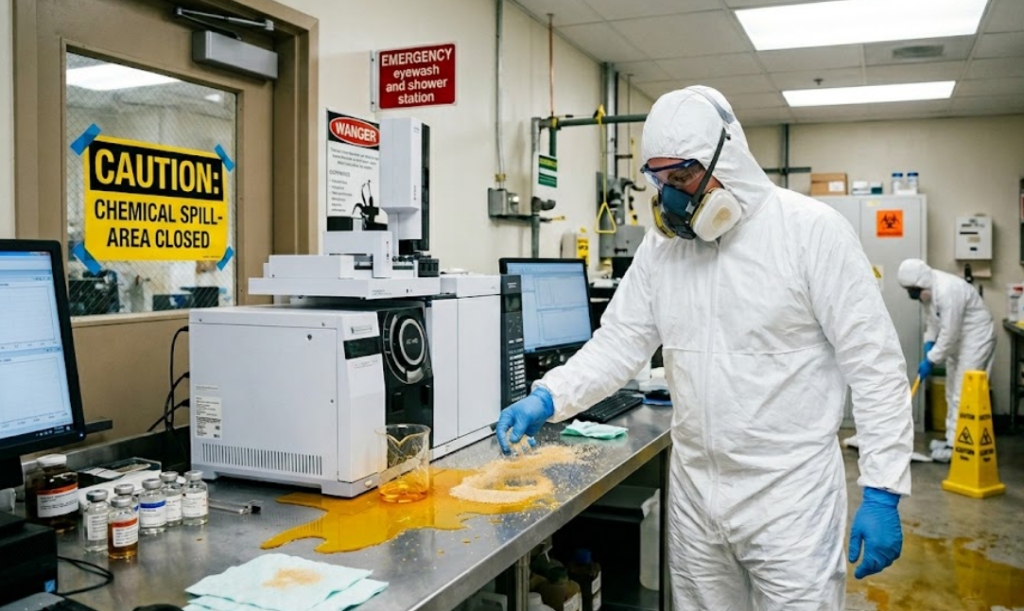
Chemical spills in industrial, laboratory, manufacturing, and even office environments can involve a wide range of hazardous substances – acids, bases, solvents, fuels, cleaning agents, and process chemicals. The appropriate response to a chemical spill depends on the specific chemicals involved, the volume released, the surfaces affected, and whether the spill has entered drainage systems or migrated beyond the immediate release area. Professional workplace contamination cleanup teams with hazmat training and appropriate equipment handle chemical spill response safely and in compliance with applicable regulations, including those of the Washington State Department of Ecology and the Environmental Protection Agency.
Biohazard and Bloodborne Pathogen Events
Workplace contamination involving blood or other potentially infectious materials – whether from a traumatic injury, a medical emergency, or an assault – requires cleanup in compliance with OSHA’s Bloodborne Pathogen Standard (29 CFR 1910.1030). This regulation establishes specific requirements for exposure control, personal protective equipment, decontamination procedures, and waste disposal that employers must meet when addressing biohazard contamination in the workplace. Standard janitorial staff are neither trained nor equipped to perform OSHA-compliant biohazard cleanup, making professional workplace contamination cleanup services the legally and practically correct response.
Sewage Backup and Category 3 Water Events
Sewage backup in a commercial facility is classified as Category 3 water – the most contaminated category in the IICRC water damage restoration standard – because it contains human waste, bacteria, viruses, and other pathogens. A sewage backup in a break room, restroom, or production area contaminates all surfaces it contacts and requires professional workplace contamination cleanup that addresses both the physical removal of contaminated water and solid material and the thorough decontamination of all affected surfaces. Tacoma’s aging commercial plumbing infrastructure and the region’s heavy rainfall events, which can overwhelm municipal sewer systems, make sewage backup a genuine risk for commercial facilities throughout the city.
Mold Contamination
Mold in a commercial workplace is both a health issue and a regulatory concern. Significant mold growth in an occupied commercial building can trigger complaints under OSHA’s General Duty Clause, which requires employers to maintain a workplace free from recognized hazards. In Tacoma’s climate, commercial buildings with plumbing leaks, roof intrusions, or HVAC condensation issues that go unaddressed are at elevated risk of developing the kind of extensive mold contamination that requires professional workplace contamination cleanup rather than routine janitorial response. The Institute of Inspection, Cleaning and Restoration Certification (IICRC) S520 Standard provides the industry benchmark for professional mold remediation in commercial settings.
Smoke, Soot, and Fire Residue
A fire event in a commercial workplace – even one confined to a single area – distributes soot and smoke residues throughout the building via HVAC systems and air movement. These residues are not only aesthetically damaging but contain toxic compounds that make the workplace environment hazardous. Professional workplace contamination cleanup following a fire event includes both the structural cleaning of affected areas and the treatment of HVAC systems to prevent the continued distribution of smoke residues through the building.
Trauma and Unattended Death Scenes
Traumatic incidents in the workplace – including accidents, violent events, and unattended deaths – create biohazard contamination that requires professional cleanup in compliance with OSHA bloodborne pathogen regulations. Beyond the regulatory requirement, the sensitivity of these situations and the impact on employee well-being make professional workplace contamination cleanup that is conducted discreetly and efficiently an important component of an employer’s response to these events.
Employer Legal Obligations During Workplace Contamination Events
Employers in Washington State operate under a layered framework of federal and state regulations that establish specific obligations when workplace contamination occurs. Understanding these obligations is essential for Tacoma employers who need to respond to contamination events correctly and avoid significant legal and financial exposure.
OSHA General Duty Clause
Under Section 5(a)(1) of the Occupational Safety and Health Act – the General Duty Clause – employers are required to maintain a workplace free from recognized hazards that are causing or likely to cause death or serious physical harm. Workplace contamination that poses a recognized health risk triggers this obligation. Employers who fail to respond promptly and adequately to contamination events face potential OSHA citations, fines, and in serious cases, personal liability. Professional workplace contamination cleanup that meets industry standards provides the documented evidence of appropriate employer response that OSHA compliance requires.
Washington Industrial Safety and Health Act
Washington State’s workplace safety law – the Washington Industrial Safety and Health Act (WISHA), administered by the Washington State Department of Labor and Industries – imposes requirements that in some cases exceed federal OSHA standards. Washington employers should be familiar with both the federal and state frameworks governing their obligations in contamination events. L and I inspectors have authority to inspect workplaces and issue citations for unsafe conditions, including inadequate response to contamination events.
Environmental Regulations for Hazardous Waste Disposal
Workplace contamination cleanup that generates hazardous waste – chemical spill materials, contaminated personal protective equipment, biohazardous waste – must comply with Washington State Department of Ecology regulations for hazardous waste generation, storage, transport, and disposal. Professional workplace contamination cleanup companies maintain the required generator registrations, use licensed hazardous waste transporters, and dispose of contaminated materials at licensed treatment and disposal facilities. This regulatory compliance chain is one of the most important reasons why professional cleanup is essential rather than optional for commercial contamination events.
The Professional Workplace Contamination Cleanup Process
Professional workplace contamination cleanup follows a systematic process tailored to the specific type and scope of contamination involved. While the details vary by contamination type, the following phases apply to the full range of commercial contamination events.
Immediate Response and Exposure Assessment
The first priority in any workplace contamination event is protecting people. Professional cleanup teams begin with an assessment of the contaminated area to identify the nature and extent of the contamination, establish the boundaries of the affected zone, and determine the appropriate level of personal protective equipment required for safe entry. In chemical contamination events, material safety data sheets for the substances involved guide the assessment. In biohazard events, all biological material is treated as potentially infectious pending more specific information.
Affected areas are cordoned off and access restricted to essential personnel with appropriate training and protective equipment. Depending on the severity of the contamination and the operational layout of the facility, portions of the workplace may need to be temporarily evacuated or closed to maintain employee safety during the cleanup process.
Containment and Source Removal
Contamination is contained to prevent further spread before removal begins. Liquid contaminants are contained using absorbent materials and physical barriers. Biohazard areas are isolated using polyethylene containment barriers and negative air pressure systems where appropriate. HVAC systems serving the affected area may be shut down to prevent the spread of contaminants through ductwork.
The physical removal of contaminated materials – whether chemical spill residues, biological material, mold-affected building components, or sewage-contaminated materials – follows protocols specific to the contaminant type and applicable regulatory requirements. All removed materials are classified, packaged, and staged for disposal according to their hazard classification.
Decontamination of Surfaces and Structures
Following source removal, all surfaces in the affected area undergo thorough decontamination using appropriate agents. For biohazard contamination, hospital-grade disinfectants effective against the relevant pathogens are applied to all contaminated surfaces and allowed appropriate contact time to achieve effective kill rates. For chemical contamination, neutralization agents appropriate to the specific chemicals involved are used. For mold contamination, antimicrobial treatments are applied to structural surfaces after removal of mold-affected materials.
Decontamination in a commercial workplace environment must address not only floor-level surfaces but all surfaces that contamination may have contacted, including walls, shelving, equipment surfaces, and overhead structures. Professional workplace contamination cleanup teams document the full extent of decontamination work performed to support regulatory compliance records.
Air Quality Management and Verification
Many workplace contamination events affect indoor air quality – chemical vapors, mold spores, smoke particulates, and biological aerosols all compromise the air environment in ways that must be addressed as part of a complete workplace contamination cleanup. Professional cleanup includes air quality monitoring throughout the remediation process and post-cleanup air testing to verify that contaminant levels have been reduced to safe, acceptable thresholds before employees re-enter the affected areas.
HEPA air scrubbers and industrial dehumidifiers are deployed as needed throughout the cleanup process to maintain air quality in the work zone and prevent the spread of airborne contaminants to adjacent areas of the facility. Documentation of air quality readings before, during, and after remediation provides the objective evidence of safe conditions that regulatory compliance and employee protection require.
Waste Documentation and Disposal
Every contaminated material removed during professional workplace contamination cleanup is documented, classified, and disposed of through the appropriate regulated channel. Biohazardous waste goes to licensed medical waste disposal facilities. Hazardous chemical waste goes to licensed hazardous waste treatment and disposal facilities. General contaminated materials are disposed of at licensed solid waste facilities. The waste documentation generated during this process – manifests, disposal receipts, certificates of destruction – forms part of the compliance record that employers should retain as evidence of proper remediation.
Post-Remediation Clearance and Documentation
Professional workplace contamination cleanup concludes with a formal clearance process – inspection of the remediated area, review of all documentation, and where applicable, third-party testing that verifies contaminant levels have been reduced to safe and compliant thresholds. The clearance report and complete project documentation are provided to the employer as a permanent record of the remediation event. This documentation is essential for regulatory compliance, insurance purposes, and any future due diligence inquiries related to the property.
Maintaining Business Continuity During Workplace Contamination Cleanup
One of the most pressing concerns for Tacoma employers facing a workplace contamination event is the impact on business operations. Professional workplace contamination cleanup companies understand that minimizing business disruption is as important as the technical quality of the cleanup work, and experienced teams develop cleanup schedules and phasing plans that allow operations to continue wherever safely possible during the remediation process.
Phased cleanup approaches that address the most contaminated areas first while maintaining operations in unaffected portions of the facility, after-hours or weekend scheduling of particularly disruptive work phases, and rapid response timelines that minimize total downtime are all strategies that professional workplace contamination cleanup teams employ to support business continuity for their commercial clients.
Employers should also review their commercial property insurance and business interruption coverage before a contamination event occurs. Business interruption coverage that activates during periods when workplace contamination has rendered part or all of a facility temporarily unusable can provide critical financial support during the remediation period. An experienced restoration company documents the timeline, scope, and operational impact of workplace contamination cleanup in a way that supports business interruption insurance claims.
Choosing the Right Workplace Contamination Cleanup Company in Tacoma
The stakes in a commercial contamination event are high enough that the choice of cleanup company matters enormously. Look for a company with demonstrated commercial contamination cleanup experience across the full range of contamination types, appropriate certifications including IICRC certification in relevant disciplines, documented OSHA compliance including bloodborne pathogen training for all applicable staff, proper licensing and insurance including pollution liability coverage, the capacity to respond on a 24-hour emergency basis, and a track record of working with commercial insurers and providing regulatory-compliant documentation.
Do not choose a workplace contamination cleanup provider based on price alone. An inadequate cleanup that does not meet regulatory standards, does not fully address the contamination, or does not produce the compliance documentation required can cost far more in regulatory penalties, legal liability, and employee health consequences than the most thorough professional service.
Conclusion – Act Immediately for Professional Workplace Contamination Cleanup
Workplace contamination cleanup is a time-sensitive, legally regulated, and technically specialized service that demands professional expertise from the moment a contamination event is discovered. Employers who respond promptly with professional cleanup services protect their employees, meet their legal obligations, preserve their property, and document their compliance.
Those who delay or attempt inadequate responses face escalating hazards, regulatory exposure, and business disruption that could have been minimized with immediate professional action.
If your Tacoma facility is facing a workplace contamination event of any kind, call PuroClean of Northeast Tacoma at (206) 929-0155 right now. Our certified commercial restoration team responds around the clock, brings the full range of professional workplace contamination cleanup capabilities, and delivers the thorough documentation your regulatory compliance and insurance claims require. Protect your employees, protect your business, and protect your property. Call PuroClean of Northeast Tacoma today.