


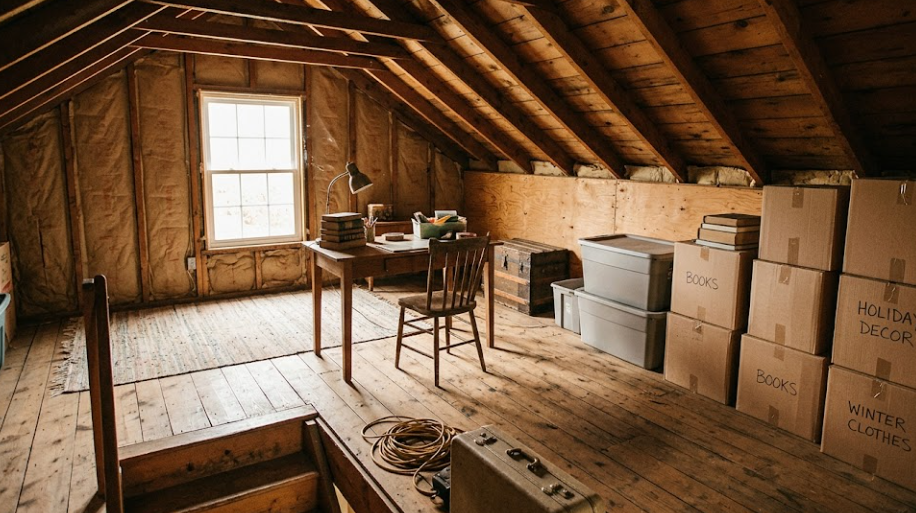
The attic is one of the most neglected spaces in any home. Most homeowners enter their attic only when retrieving stored items or investigating a suspected problem, and by the time a problem becomes obvious enough to trigger that visit, significant damage is frequently already underway.
Attic moisture damage is among the most consequential and costly problems a Tacoma homeowner can face, and in the Pacific Northwest climate – where elevated humidity, persistent rainfall, and mild temperatures create ideal conditions for moisture accumulation and mold growth year-round – it is also among the most common. Understanding attic moisture damage, how to identify it, what causes it, and what proper professional attic moisture damage repair involves is essential knowledge for every homeowner in the Tacoma region.
This comprehensive guide covers every aspect of attic moisture damage repair: the specific causes that allow moisture to accumulate in attic spaces, the warning signs that indicate a problem is developing or already advanced, the serious structural and health consequences of unaddressed attic moisture, what the complete professional repair process looks like from assessment through reconstruction, and the prevention strategies that protect your Tacoma home from future attic moisture problems.
Whether you are dealing with a discovered attic moisture issue right now or want to understand what to watch for before a small problem becomes a large one, this guide provides the expert information you need.
Why Attic Moisture Damage Is Such a Serious Problem in Tacoma
Tacoma’s climate is nearly ideal for attic moisture accumulation and the damage it causes. The region receives approximately 38 inches of rainfall annually, concentrated in sustained storm events during the fall and winter months. Ambient outdoor relative humidity exceeds 80 percent for much of the year. Temperatures remain mild enough to support active mold growth even during winter months.
These conditions mean that any attic space that is not properly ventilated, insulated, and sealed against moisture intrusion will develop moisture-related problems over time – and in many Tacoma homes, the attic conditions that allow this to happen have been in place for years or decades without anyone noticing.
The consequences of unaddressed attic moisture damage compound progressively. What begins as elevated moisture content in roof sheathing and rafters progresses to surface mold, then to mold colonization deep within the wood, then to structural wood rot, and ultimately to compromised roof structural integrity. At each stage the scope and cost of attic moisture damage repair increases.
A moisture problem addressed before mold establishes itself may require only ventilation correction and dehumidification. The same problem discovered after significant mold and rot have developed requires extensive remediation, structural repair, and potentially full roof sheathing replacement – a project that can cost tens of thousands of dollars.
The Most Common Causes of Attic Moisture Damage in Tacoma Homes
Attic moisture accumulates from several distinct sources, and effective attic moisture damage repair requires correctly identifying which source or sources are responsible. Treating the moisture without eliminating the source guarantees recurrence.
Inadequate Attic Ventilation
Proper attic ventilation is the single most important factor in preventing attic moisture damage in Tacoma homes. A well-ventilated attic maintains air circulation that carries moisture-laden air out of the attic space before it can condense on cold roof sheathing and framing surfaces. The standard building science requirement for attic ventilation is one square foot of net free ventilation area for every 150 square feet of attic floor area, divided equally between low intake vents at the soffit and high exhaust vents at the ridge or upper roof surface.
Many older Tacoma homes fall significantly short of this standard. Original soffit vents may be blocked by insulation that was pushed too far toward the eaves during a past weatherization project. Ridge vents may be absent entirely, or may be present but undersized for the attic volume.
Gable vents alone without a balanced soffit-to-ridge flow path do not provide the continuous air washing effect that effectively manages attic moisture. In these inadequately ventilated attics, moisture from the living space below accumulates during Tacoma’s rainy season and condenses on the cold underside of roof sheathing – a process called winter condensation that is one of the leading causes of attic moisture damage repair requirements in the Pacific Northwest.
Improperly Vented Bathroom and Kitchen Exhaust Fans
Bathroom exhaust fans, kitchen range hoods, and clothes dryer vents that terminate in the attic rather than through the roof or wall to the exterior are one of the most damaging and most common contributors to attic moisture damage in Tacoma homes. Each flush of warm, humid air from a bathroom exhaust into the attic deposits significant moisture directly into the attic environment.
A household of four using bathrooms normally can introduce several gallons of water vapor into the attic daily through improperly terminated exhaust fans. Over a Tacoma winter, this cumulative moisture load saturates insulation, produces condensation on roof sheathing, and creates conditions for aggressive mold growth.
The surprising reality is that many Tacoma homes have bathroom fans that appear to be connected to ductwork but that ductwork terminates at an unsealed penetration in the attic floor rather than continuing to an exterior vent cap. The homeowner assumes the fan is working correctly, but every shower introduces warm humid air directly into the attic. Confirming that all exhaust ductwork actually exits the building envelope is a critical first step in any attic moisture damage repair project.
Air Leakage From the Living Space Below
Warm, humid air from the living space below rises into the attic through every gap, crack, and penetration in the ceiling plane – recessed light fixtures, plumbing penetrations, attic hatch openings, and ceiling fans are all common air leakage pathways. In Tacoma’s climate, the temperature differential between the warm interior of a home and the cold attic space creates significant stack effect pressure that drives this air movement upward. As warm humid air enters the cold attic, it cools to its dew point and deposits moisture on framing and sheathing surfaces. Air sealing of the ceiling plane – the boundary between the conditioned living space and the unconditioned attic – is an essential component of preventing attic moisture damage and a necessary part of complete attic moisture damage repair.
Roof Leaks and Flashing Failures
Direct water intrusion through the roof assembly is a more obvious cause of attic moisture damage than the condensation-based mechanisms described above, but it is no less damaging. Failed flashings at chimneys, skylights, plumbing vents, and roof-to-wall intersections are among the most common entry points for rain water in Tacoma’s wet climate. Deteriorated or missing shingles, ice dam damage in years when Tacoma experiences significant freezing events, and clogged gutters that allow water to back up under roofing materials all create pathways for liquid water to enter the attic assembly directly. Unlike condensation damage, which develops gradually over months, a roof leak that deposits liquid water directly onto insulation and sheathing can produce saturated conditions and rapid mold growth within days.
Whole-House Humidifiers and Mechanical System Issues
Whole-house humidifiers that are set too high for the outdoor temperature can introduce more moisture into the home than ventilation can remove, elevating indoor humidity to levels that increase attic condensation risk. HVAC equipment or ductwork routed through the attic that develops leaks can introduce conditioned air – with its associated moisture load – directly into the attic environment. In Tacoma homes where attic-located HVAC equipment was not originally designed with adequate condensate management, equipment leaks can introduce significant water directly into the attic insulation and sheathing.
Warning Signs of Attic Moisture Damage in Tacoma Homes
Because the attic is rarely visited, attic moisture damage often reaches an advanced stage before it is discovered. Knowing the indirect warning signs that appear in accessible areas of the home significantly improves the chance of early detection.
Dark Staining or Black Discoloration on Roof Sheathing
The most direct indication of attic moisture damage is visible discoloration on the underside of roof sheathing when you look into the attic space. Black or dark gray staining on OSB or plywood sheathing indicates mold growth that has been supported by sustained elevated moisture. Fresh mold on sheathing appears as dark spots or a uniform dark gray coloring that does not wipe away. This finding requires immediate professional assessment and attic moisture damage repair – surface mold on sheathing indicates the wood moisture content has been elevated above the 19 percent threshold that activates wood-destroying organisms.
Frost or Ice on Attic Framing During Cold Snaps
During the occasional cold weather events that affect Tacoma, homeowners who enter their attic may observe frost or ice deposits on the underside of roof sheathing, on rafter surfaces, or on the tops of ceiling joists. This frost is direct evidence that warm, humid air from the living space is reaching the cold attic surfaces and depositing moisture as frost. When temperatures rise, this frost melts and deposits water directly into insulation and framing. Frost in the attic is a reliable early warning sign that attic moisture damage is developing and that ventilation and air sealing corrections are needed before mold and structural damage progress further.
Ceiling Stains or Water Marks in Living Spaces
Brown or yellow staining on ceilings in the top-floor rooms of a Tacoma home indicates that water has migrated through the ceiling assembly from the attic above. This can result from condensation that has accumulated to the point of dripping onto the attic floor, from a roof leak that has saturated attic insulation to the point of breakthrough, or from a malfunctioning bathroom exhaust fan that has deposited moisture in the attic directly above the bathroom. Any ceiling stain in a top-floor room warrants attic inspection.
Musty Odors in Upper-Floor Rooms
Mold growing in an attic space produces volatile organic compounds that can migrate through air leakage pathways into the living space below. A musty odor that is stronger in upper-floor rooms and particularly near ceiling fixtures, attic hatch locations, or recessed lighting is a reliable indicator of attic mold that warrants immediate professional investigation.
Increased Heating and Cooling Costs
Attic insulation that has been compressed, displaced, or saturated by moisture loses its thermal performance significantly. An unexplained increase in heating or cooling costs in a Tacoma home – particularly when it develops gradually over time – can be an indirect indicator of compromised attic insulation resulting from moisture damage. While many factors can affect energy costs, a pattern of increasing costs without changes in occupancy or usage habits warrants an attic inspection as part of a broader energy audit.
The Health Consequences of Attic Mold From Moisture Damage
The mold that develops from attic moisture damage is not contained safely in an isolated space above the living area. Mold spores produced in the attic migrate into the living space through the same air leakage pathways that allowed humid air to enter the attic in the first place – recessed lights, ceiling fans, attic hatches, and other penetrations. The Centers for Disease Control and Prevention documents that mold exposure causes respiratory symptoms, allergic reactions, and worsened asthma in exposed individuals, with more serious effects possible for those with compromised immune function.
The species of mold most commonly associated with attic moisture damage in Tacoma – including Cladosporium, Penicillium, and Aspergillus species that colonize wood under elevated humidity conditions – are significant allergens and respiratory irritants. In homes with significant attic mold, occupants may experience persistent respiratory symptoms, allergy-like reactions that do not respond to medication, and general discomfort that improves when they leave the home and worsens when they return. These symptoms in an otherwise healthy household member are a compelling reason to have the attic professionally inspected for moisture damage and mold.
The Professional Attic Moisture Damage Repair Process
Professional attic moisture damage repair is a multi-phase process that addresses both the damage that has already occurred and the underlying conditions that caused it. Remediating attic mold without correcting the ventilation, air sealing, or exhaust duct deficiencies that allowed the moisture to accumulate guarantees recurrence – often within a single rainy season in Tacoma’s climate.
Phase One – Comprehensive Assessment
Professional attic moisture damage repair begins with a thorough assessment of the entire attic space. Restoration specialists measure the moisture content of roof sheathing and framing at multiple locations using calibrated pin-type moisture meters, document the extent and type of any visible mold growth, assess the condition and coverage of attic insulation, evaluate the installed ventilation system against the required net free ventilation area, identify all exhaust fan and mechanical vent terminations, and inspect the ceiling plane for air leakage pathways. This comprehensive assessment drives the scope of work for the repair project and ensures that all contributing factors are identified and addressed.
Phase Two – Source Correction
Before any remediation work begins, the moisture source or sources identified in the assessment are corrected. Improperly terminated exhaust fans are re-ducted to exterior vent caps. Roof leaks or flashing failures are repaired by a qualified roofing contractor. Blocked soffit vents are cleared. Additional ventilation is designed and installed to bring the attic to the required ventilation rate. Air sealing of the ceiling plane – foaming or caulking all penetrations, installing properly sealed attic hatch covers, addressing any other identified air leakage pathways – is completed before remediation proceeds.
This source correction phase is often the most important investment in a complete attic moisture damage repair project. The remediation work that follows addresses existing damage. The source correction work prevents the damage from recurring. Skipping or shortcutting source correction is the most common reason attic moisture damage repair fails to produce lasting results.
Phase Three – Attic Insulation Removal
Attic insulation that has been compressed, displaced, contaminated by mold, or saturated by water cannot be restored to its original thermal and moisture performance and must be removed before remediation of the structural surfaces begins.
Professional removal of attic insulation uses commercial insulation removal vacuums that capture material without releasing it into the living space below. All removed insulation is bagged and disposed of properly. In older Tacoma homes where attic insulation may contain vermiculite – a material that in some cases was contaminated with asbestos – insulation must be tested before removal and, if asbestos is confirmed, abated by a licensed contractor.
Phase Four – Mold Remediation of Structural Surfaces
With insulation removed, all structural surfaces in the attic – roof sheathing, rafters, top plates, and ceiling joists – are accessible for professional mold remediation. The specific remediation approach depends on the extent and penetration depth of the mold colonization. Surface mold on sheathing that has not penetrated deeply into the wood can be addressed through mechanical abrasion using wire brushes or rotary tools that remove the mold-colonized surface layer, followed by application of EPA-registered antimicrobial treatment.
More extensive mold colonization that has penetrated deeper into the wood or that covers large areas of sheathing may require dry ice blasting or soda blasting – professional techniques that remove surface mold more efficiently over large areas while minimizing moisture introduction during the remediation process.
In cases where roof sheathing or framing has been structurally compromised by wood rot – a consequence of advanced moisture damage that has supported decay fungi as well as surface mold – affected structural components must be removed and replaced. Rot-affected sheathing that is soft, crumbling, or delaminated cannot be treated and restored – it must be replaced with new material. Rot in rafter framing requires structural repair that must be engineered and permitted in compliance with Tacoma and Pierce County building codes.
Phase Five – Treatment and Encapsulation
After mechanical remediation, all treated attic surfaces receive application of a professional-grade antimicrobial encapsulant specifically formulated for wood surfaces in attic environments. This treatment penetrates the wood surface to address any residual mold spores that mechanical cleaning did not reach, and creates a surface barrier that resists future mold colonization under elevated humidity conditions. The encapsulant also locks in any residual odor compounds and provides a clean, sealed surface that makes future visual inspection more effective.
Phase Six – New Insulation and Restoration
With remediation complete and source corrections confirmed, new insulation is installed to current energy code standards. In Tacoma, this typically means R-38 to R-60 blown-in insulation for existing homes – the specific R-value target depends on the home’s vintage and the applicable Washington State Energy Code requirements. Proper installation includes maintaining clear airflow channels at the soffit-to-ridge path and installing insulation baffles at each rafter bay to prevent insulation from blocking the critical soffit intake vents. Any structural repairs to sheathing or framing are completed before insulation installation.
Attic Moisture Damage Repair and Homeowners Insurance in Tacoma
Whether homeowners insurance covers attic moisture damage repair in Tacoma depends significantly on the cause of the moisture. Mold or moisture damage resulting from a sudden and accidental covered event – such as a roof leak caused by a covered storm event – is typically covered under the dwelling portion of a standard homeowners policy. Mold resulting from long-term condensation problems caused by inadequate ventilation or improperly terminated exhaust fans is typically classified as a maintenance issue and is not covered.
This distinction creates an incentive for homeowners to address attic ventilation and air sealing deficiencies proactively, before moisture damage develops to the point of requiring professional remediation. The cost of correcting a ventilation deficiency or re-routing a bathroom exhaust fan is a fraction of the cost of professional attic moisture damage repair after significant mold has developed – and the homeowner bears that remediation cost without insurance support in most cases.
When a roof leak is the identified cause of attic moisture damage, the remediation costs may be covered under the policy’s dwelling coverage. Thorough documentation of the condition at the time of discovery, including photographs, moisture meter readings, and professional assessment reports, supports the insurance claim and helps establish the cause and extent of the damage for the adjuster’s review.
Preventing Attic Moisture Damage in Tacoma Homes
Proactive prevention is dramatically less costly than attic moisture damage repair after significant damage has developed. The following practices address the most common contributors to attic moisture problems in Tacoma homes.
Inspect your attic at least annually – ideally at the end of the rainy season in spring, when any moisture accumulation from the winter will be at its most visible. Look specifically for dark staining on sheathing, frost deposits on framing surfaces, compressed or wet insulation, and any evidence of pest activity that could be creating additional air leakage pathways.
Verify that all bathroom exhaust fans and the kitchen range hood actually vent to the exterior of the building. Insert your hand near the exterior vent cap while the fan is running and confirm air flow. If no air flow is detectable at the exterior, the ductwork is either disconnected, blocked, or terminates inside the attic.
Confirm that soffit vents are not blocked by insulation and that ridge or upper roof venting is present and functional. If you are unsure whether your attic has adequate ventilation, a home energy auditor or insulation contractor can assess the installed ventilation against the required rate for your attic area.
Have your roof inspected by a licensed roofing contractor every three to five years and after any significant storm event. Pay particular attention to flashing conditions at all penetrations and transitions, as these are the most common entry points for liquid water in Tacoma’s storm climate.
Consider scheduling an annual attic inspection with a professional moisture assessment as part of your home maintenance routine. Given the combination of Tacoma’s climate and the significant cost of major attic moisture damage repair, this modest investment provides meaningful early detection value.
Do Not Let Attic Moisture Damage Silently Destroy Your Tacoma Home
Attic moisture damage repair is one of the most consequential investments a Tacoma homeowner can make in their property – but the best version of that investment is the one that catches problems early, before mold colonization advances to structural wood rot and before a manageable remediation project becomes a major reconstruction. The attic is not a space to ignore. In Tacoma’s climate, it is one of the highest-risk areas in any home for moisture accumulation and the serious damage that follows.
If you have discovered moisture damage, mold, or any of the warning signs described in this guide in your Tacoma attic, call PuroClean of Northeast Tacoma at (206) 929-0155 right now.
Our certified mold and moisture damage specialists conduct comprehensive attic assessments, identify all contributing moisture sources, and deliver complete attic moisture damage repair – from professional mold remediation and structural treatment through new insulation installation and source correction. We work directly with your insurance company and document every step of the process. Call PuroClean of Northeast Tacoma today and protect your home from the top down.