


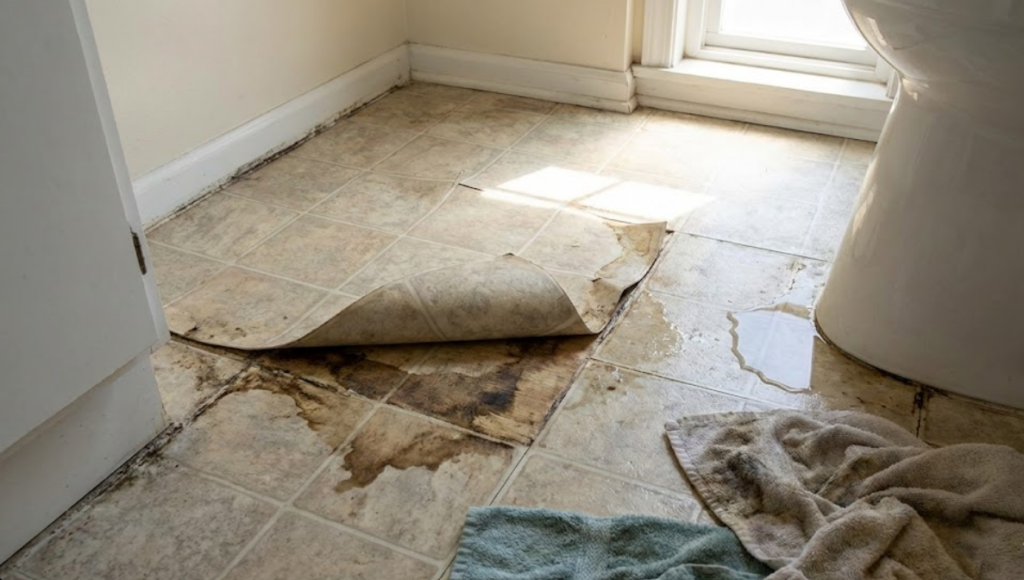
The Hidden and Costly Truth About Bathroom Floor Water Damage Repair
Table of Contents
Water problems in a bathroom rarely stay small for long. What begins as a minor leak around a toilet or a small crack in grout can quickly spread beneath the surface. When moisture reaches the bathroom floor, it can compromise subflooring, weaken structural components, and create conditions for mold growth. For homeowners in Washington, understanding how to respond to damage beneath the bathroom floor is critical for protecting both property value and indoor air quality.
According to national insurance industry data, water damage and freezing account for nearly 30 percent of homeowner insurance claims each year. Bathrooms are one of the most common sources of these claims because plumbing fixtures, high humidity, and daily water use place constant stress on the bathroom floor. When leaks go unnoticed, repair costs increase significantly.
If you are concerned about soft spots, loose tiles, or staining on your bathroom floor, acting quickly can prevent deeper structural issues. In this comprehensive guide, we will explain the causes of damage, warning signs to watch for, the professional restoration process, cost factors, and prevention strategies that help keep your home safe.
Why Bathroom Floor Water Damage Happens
The bathroom is one of the most moisture heavy areas of any home. Showers, bathtubs, toilets, and sinks all direct water toward the bathroom floor daily. Even when fixtures function properly, humidity and condensation can affect flooring materials over time.
Common causes of damage to the bathroom floor include:
- Failed wax rings under toilets
- Cracked shower pans
- Loose grout or deteriorated caulking
- Overflowing bathtubs or sinks
- Leaking supply lines
- Pipe bursts within walls
- Poor ventilation leading to condensation buildup
When water seeps beneath tile or vinyl, it often becomes trapped between the finished surface and the subfloor. This hidden moisture can deteriorate the structural integrity of the bathroom floor without visible warning.
If you need professional bathroom floor water damage repair in Tacoma WA, Call PuroClean of Northeast Tacoma today at (206) 929-0155 to schedule your inspection or request emergency service.
Early Warning Signs of Bathroom Floor Damage
Identifying early indicators of trouble allows homeowners to minimize costly repairs. The following symptoms suggest potential problems within the bathroom floor.
Soft or Spongy Areas
If certain sections of the bathroom floor feel unstable underfoot, moisture may have compromised the subfloor. This is especially common near toilets and showers.
Cracked or Loose Tiles
Tile that shifts or cracks often indicates movement beneath the bathroom floor. Subfloor swelling caused by water infiltration frequently leads to tile failure.
Discoloration or Staining
Dark stains on grout lines or flooring materials can signal ongoing moisture exposure affecting the bathroom floor.
Musty Odors
Persistent odors may indicate hidden mold beneath the bathroom floor, particularly if ventilation is inadequate.
Warped Vinyl or Lifting Edges
Vinyl flooring can bubble or lift when water accumulates underneath the bathroom floor surface.
The Hidden Risks of Ignoring Bathroom Floor Damage
Delaying repairs can intensify structural problems. Water trapped beneath the bathroom floor can weaken plywood subfloors and damage joists. Over time, structural deterioration may spread to adjacent rooms.
Mold growth is another serious risk. Studies from the Environmental Protection Agency show that mold can begin growing within 24 to 48 hours of moisture exposure. When mold develops beneath the bathroom floor, remediation becomes more complex and expensive.
Ignoring damage may also affect resale value. Prospective buyers often request inspections of moisture prone areas, including the bathroom floor. Visible deterioration can reduce buyer confidence and negotiation leverage.
Professional Bathroom Floor Water Damage Repair Process
Proper restoration involves more than replacing surface materials. Certified technicians follow a structured process to ensure the bathroom floor is thoroughly restored.
Inspection and Moisture Detection
Specialized moisture meters and thermal imaging tools detect hidden water beneath the bathroom floor. Identifying all affected areas prevents future recurrence.
Water Extraction
If standing water is present, high capacity extraction equipment removes moisture quickly. Prompt extraction limits further damage to the bathroom floor.
Structural Drying
Commercial air movers and dehumidifiers are positioned to dry the bathroom floor and underlying materials. Proper airflow is essential to eliminate trapped moisture.
Removal of Damaged Materials
In cases of severe damage, technicians may remove compromised sections of the bathroom floor and subfloor to ensure safe reconstruction.
Mold Remediation
If mold is discovered beneath the bathroom floor, containment procedures and antimicrobial treatments are applied according to industry standards.
Reconstruction and Replacement
Once the structure is dry and stable, new materials are installed to restore the bathroom floor to its original appearance and strength.
Cost Factors in Bathroom Floor Water Damage Repair
The cost of repairing a damaged bathroom floor depends on several variables:
- Type of flooring material such as tile, vinyl, laminate, or hardwood
- Extent of subfloor involvement
- Size of the affected area
- Presence of mold contamination
- Structural repairs required
Minor repairs confined to a small section of the bathroom floor may involve limited replacement and drying. However, extensive damage that affects framing or adjacent rooms will increase overall restoration costs.
Insurance coverage may apply if the water damage resulted from a sudden plumbing failure. Documentation from professional restoration specialists helps support claims related to the bathroom floor.
Preventing Future Bathroom Floor Damage
Prevention is more affordable than restoration. Consider these proactive measures to protect your bathroom floor:
- Inspect caulking and grout regularly
- Replace worn toilet wax rings
- Install water leak detection devices
- Ensure proper bathroom ventilation
- Address minor plumbing leaks immediately
- Monitor water pressure levels
Routine maintenance significantly reduces the likelihood of moisture damaging the bathroom floor.
Why Professional Expertise Matters
Attempting do it yourself repairs may address surface symptoms but overlook hidden moisture. Professional restoration companies use advanced equipment to evaluate the full extent of damage to the bathroom floor.
Incomplete drying can lead to recurring problems, including mold growth and structural weakening. Certified technicians follow industry standards established by the Institute of Inspection Cleaning and Restoration Certification to ensure the bathroom floor is restored safely and effectively.
Choosing experienced professionals also provides peace of mind. You gain clear communication, documented findings, and a structured restoration plan tailored to your home.
Bathroom Floor Materials and Water Vulnerability
Different materials respond differently to water exposure.
Tile Flooring
Tile is water resistant, but grout lines allow moisture penetration. If water seeps beneath tile, the bathroom floor substructure can deteriorate unnoticed.
Vinyl Flooring
Vinyl offers surface protection but may trap water underneath. Prolonged exposure can damage the underlying bathroom floor.
Laminate Flooring
Laminate is highly susceptible to swelling when moisture penetrates seams. Prompt repair is essential to protect the bathroom floor.
Hardwood Flooring
Wood expands and contracts with moisture changes. Water exposure can warp and stain the bathroom floor permanently.
Understanding material behavior helps homeowners make informed decisions about repairs and upgrades.
Protecting Your Washington Home
Washington’s climate includes periods of high humidity and rainfall. These environmental factors can slow drying times and increase the risk of persistent moisture within the bathroom floor.
Rapid response is especially important in this region. Professional intervention reduces the chance of mold growth and structural damage.
Act Quickly to Protect Your Bathroom Floor
Damage beneath the surface often progresses silently. What appears to be a minor issue can evolve into significant structural concerns affecting the bathroom floor and surrounding areas.
By recognizing early warning signs, understanding repair processes, and seeking professional assistance, you protect your home’s safety and long term value. Prompt restoration not only preserves the integrity of your bathroom floor, it also prevents health risks associated with mold and moisture.
If you suspect water damage in your bathroom, do not wait.

Call the Experts at PuroClean of Northeast Tacoma
When you need professional bathroom floor water damage repair, trust the experienced team at PuroClean of Northeast Tacoma. We provide fast response and comprehensive restoration services designed to protect your home from further damage.
Our certified technicians are available 24 hours a day to assess your bathroom floor, identify hidden moisture, and begin immediate mitigation. We offer detailed inspections, transparent communication, and dependable repairs you can trust.
If you need professional bathroom floor water damage repair in Tacoma WA, Call PuroClean of Northeast Tacoma today at (206) 929-0155 to schedule your inspection or request emergency service. Let us restore your bathroom floor and provide the peace of mind you deserve.