


Fire Damaged Drywall Replacement Tacoma – Expert Guide
Table of Contents
When a fire damages a home, the destruction is never limited to what the flames directly touched. Smoke, soot, heat, and water from firefighting operations affect every surface and material in the structure, often in ways that are not immediately visible.
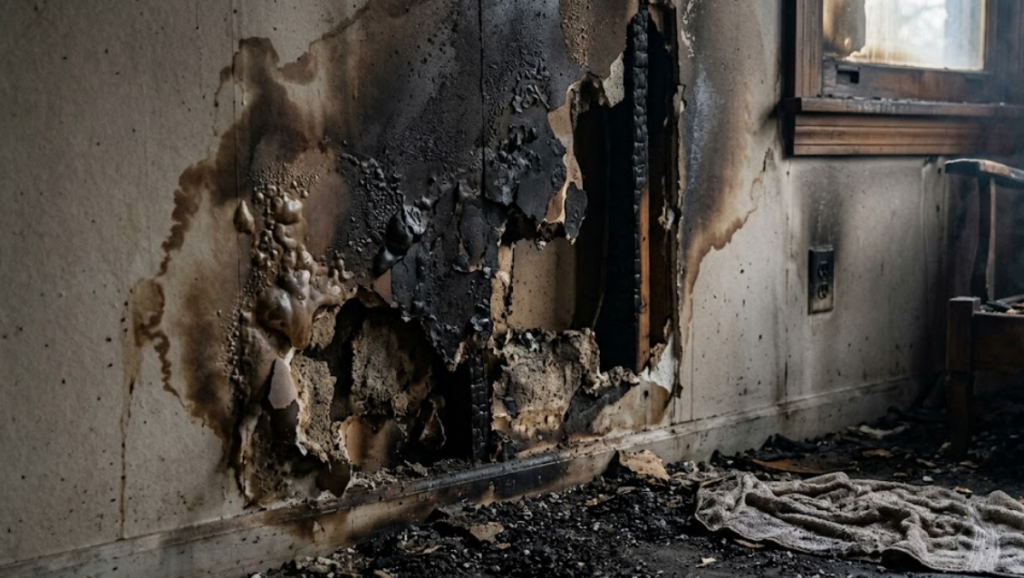
Among the most important and frequently underestimated tasks in fire restoration is fire damaged drywall replacement. Drywall that has been exposed to fire, intense heat, or smoke cannot simply be cleaned and repainted. It must be assessed systematically and replaced wherever it has been compromised – both for structural reasons and for the health and safety of everyone who will live in the restored home.
This guide explains exactly why fire damaged drywall replacement is such a critical component of fire restoration, how professionals determine which drywall must be replaced versus which can be salvaged, and what the complete replacement process involves.
Whether you are a Tacoma homeowner navigating the aftermath of a fire or simply want to understand this process before a crisis occurs, this information will help you make informed decisions and avoid costly mistakes.
Why Fire Damaged Drywall Replacement Cannot Be Skipped or Simplified
Drywall – also called gypsum board or wallboard – is the primary interior wall and ceiling surface in most modern homes. It is composed of a gypsum plaster core sandwiched between two layers of paper facing. This construction makes drywall relatively affordable and easy to install, but it also makes it highly vulnerable to fire, smoke, and moisture damage in ways that are not always obvious from a surface inspection.
How Fire and Heat Damage Drywall Structurally
Gypsum contains chemically bound water molecules – approximately 21 percent of its weight is water. When exposed to fire or intense heat, this water is driven out through a process called calcination. Calcined drywall is significantly weakened, crumbles easily, and loses much of its structural integrity and fire-resistance rating. Drywall that has been calcined cannot be restored by any surface treatment. Fire damaged drywall replacement is the only appropriate response wherever calcination has occurred.
Even drywall that was not directly in the fire zone may have been exposed to sufficient heat to cause partial calcination. A professional restoration technician uses a simple probe test – pressing a fingernail or small tool into the drywall surface – to check for the chalky, crumbling texture that indicates calcination. Any section that fails this test must be replaced.
Smoke and Soot Infiltration in Drywall
Smoke does not stay in the room where a fire occurs. It travels under pressure through every gap, penetration, and porous surface in a structure. Drywall, despite its smooth surface, is somewhat porous, and both the paper facing and the gypsum core can absorb smoke odor compounds and toxic combustion byproducts. When this absorption is significant, no amount of surface cleaning, sealing, or painting will permanently eliminate the odor.
Ozone treatment, thermal fogging, and encapsulating primer sealers can address surface-level smoke contamination on drywall that is otherwise structurally sound. However, drywall that has absorbed heavy smoke or soot throughout its thickness – which is common in rooms adjacent to or above a fire – typically requires fire damaged drywall replacement rather than remediation. The persistence of smoke odor after restoration is one of the most common complaints associated with fire restoration projects where inadequate drywall replacement decisions were made.
Water Damage from Firefighting Operations
Firefighting operations introduce large volumes of water into a structure. Drywall absorbs water readily, and saturated drywall loses structural integrity, becomes susceptible to mold growth, and often develops surface staining. In Tacoma’s humid climate, drywall that has been soaked during firefighting operations and not completely dried within a very short window will almost certainly develop mold. Once mold is established within the gypsum core or the paper facing, fire damaged drywall replacement is the appropriate and most cost-effective solution.
How Professionals Determine the Scope of Fire Damaged Drywall Replacement
One of the most important and technically demanding aspects of fire restoration is determining exactly which drywall sections must be replaced and which can be appropriately treated and retained. This determination affects both the cost of the project and the quality of the long-term outcome, and it should always be made by an experienced, certified restoration professional rather than by a general contractor or homeowner working from visual inspection alone.
Proximity to the Fire Source
Drywall in the room where the fire originated and in adjacent rooms is almost always a candidate for full fire damaged drywall replacement. The heat, direct flame contact, and heavy smoke exposure in these areas typically renders the drywall unsuitable for retention. Ceilings in fire rooms are particularly prone to severe damage because heat rises and accumulates at the ceiling level, causing calcination even where the flames did not directly reach.
Smoke Odor Testing
Experienced restoration technicians can assess the degree of smoke contamination in drywall through a combination of professional-grade odor detection and knowledge of fire behavior. Rooms that developed heavy smoke during the fire event, even without direct flame contact, may have drywall with deep odor penetration that warrants replacement. Attempting to seal in odor rather than removing the source material is a short-term solution that frequently fails when humidity, heat, or time cause the trapped odors to re-emerge.
Moisture Readings
Moisture meters measure the water content within drywall and other building materials. Drywall that tests at elevated moisture levels after firefighting operations needs either aggressive drying with professional equipment or replacement if the moisture has been present long enough to risk mold establishment. In Tacoma, where ambient humidity slows the natural drying process, erring toward fire damaged drywall replacement in moisture-affected areas is often the more prudent choice.
The Fire Damaged Drywall Replacement Process Step by Step
Professional fire damaged drywall replacement is a multi-step process that integrates with the broader fire restoration project. Here is what each phase involves.
Containment and Dust Control
Before removal begins, the work area is contained using polyethylene sheeting to prevent dust, debris, soot, and potential mold spores from spreading to unaffected areas of the home. This is particularly important in a fire restoration context because drywall dust from fire-damaged material can carry residual soot and potentially hazardous combustion byproducts.
Careful Removal of Damaged Drywall
Fire damaged drywall is removed in sections, with care taken to avoid disturbing any electrical wiring, plumbing, or structural framing elements within the wall cavity. In older Tacoma homes, the presence of knob-and-tube wiring, asbestos-containing materials, or lead paint can complicate removal and may require specialized abatement procedures before standard drywall replacement work proceeds. All removed material is bagged and disposed of properly.
Inspection and Treatment of the Wall Cavity
With the drywall removed, the wall and ceiling cavities are inspected for smoke contamination, moisture, mold, and structural damage to framing. Insulation that has been contaminated by smoke or water is removed and replaced. Structural framing that shows fire damage, charring beyond the surface, or moisture-related deterioration is repaired or replaced before new drywall is installed. Any surfaces within the cavity that show smoke contamination are treated with appropriate sealers.
New Drywall Installation
New drywall is installed using appropriate type and thickness for each application. Standard living areas typically use half-inch drywall, while ceilings may use five-eighths-inch drywall for additional sag resistance. Areas near garages or between living spaces and mechanical rooms may require Type X fire-rated drywall per building code. Tacoma and Pierce County building codes govern these specifications, and a professional restoration contractor ensures full compliance.
Taping, Mudding, Finishing, and Priming
New drywall panels are taped at the seams, finished with joint compound in multiple coats, sanded smooth, and primed before painting. In a fire restoration context, the primer used is typically a high-quality shellac-based or pigmented oil-based sealer specifically designed to lock in any residual smoke odors and prevent them from bleeding through the final paint coat. This sealer coat is a non-negotiable element of any professional fire damaged drywall replacement project.
The Cost of Fire Damaged Drywall Replacement in Tacoma
The cost of fire damaged drywall replacement depends on the scope of the project – how many rooms are affected, whether ceiling replacement is required in addition to walls, and whether hazardous material abatement is needed. In the Tacoma market, professional drywall installation typically ranges from $2 to $4 per square foot for labor alone, with materials adding additional cost. A whole-home fire restoration involving extensive fire damaged drywall replacement can represent a significant portion of the total restoration budget.
Most homeowners insurance policies cover fire damaged drywall replacement as part of a fire damage claim. It is important that the scope of drywall replacement is fully and accurately documented by the restoration company in the insurance claim submission. Insufficient documentation can lead to under-settlement, leaving the homeowner responsible for costs that should properly be covered by their policy.
Common Mistakes to Avoid With Fire Damaged Drywall Replacement
Homeowners and inexperienced contractors sometimes make decisions about fire damaged drywall that seem cost-effective in the short term but create serious problems later. The most common mistakes include the following.
Painting over smoke-stained drywall without proper sealer – Standard paint will not lock in smoke odors. Within weeks or months, odors re-emerge and the surface must be stripped back to the drywall and properly sealed anyway, doubling the work and cost.
Failing to replace drywall that shows only minor visible damage – Heat-stressed or partially calcined drywall that appears intact may fail a probe test or develop structural issues after restoration is complete. Having a certified restoration professional assess all drywall in the affected zone is the only way to make reliable replacement decisions.
Skipping the cavity inspection – What is behind the drywall matters as much as the drywall itself. Installing new drywall over a contaminated, wet, or mold-affected wall cavity creates a concealed problem that will resurface – often at much greater cost.
Do Not Compromise on Fire Damaged Drywall Replacement
Fire damaged drywall replacement is not an optional upgrade or a place to cut costs in a fire restoration project. It is a foundational element of a safe, complete, and lasting restoration. Drywall that has been calcined, deeply contaminated with smoke, or saturated with firefighting water must be replaced – not cleaned, not painted over, not left in place behind new finishes. The health, safety, and long-term value of your restored Tacoma home depend on getting this right.
If your Tacoma home has suffered fire damage and you need professional guidance on fire damaged drywall replacement or complete fire restoration, call PuroClean of Northeast Tacoma at (206) 929-0155. Our certified restoration specialists assess every area of damage thoroughly, perform complete fire damaged drywall replacement where needed, and restore your home to safe, full habitability. We work with your insurance company to document everything properly and ensure your claim covers the full scope of necessary work. Call PuroClean of Northeast Tacoma today and get your home back the right way.