


Mold Growth After Water Damage Tacoma – Act Fast
Table of Contents
Water damage is destructive on its own. But in Tacoma, Washington, the real threat that follows a flood, a burst pipe, or a roof leak is often something you cannot see right away. Mold growth after water damage in Tacoma is one of the most serious and costly consequences that homeowners and business owners face, and the region’s persistently damp climate makes the problem uniquely urgent. What begins as a water intrusion event can escalate into a full-scale mold infestation within days if the right conditions are present – and in Tacoma, those conditions are almost always present.
This guide explains how and why mold growth after water damage develops so rapidly in Tacoma, what it does to your property and your health, how to identify it early, and what proper professional remediation looks like. Whether you are dealing with the aftermath of flooding, a plumbing failure, or storm damage, understanding the mold risk is essential to protecting your home, your family, and your investment.
Why Mold Growth After Water Damage in Tacoma Happens So Quickly
Mold is not an unusual or exotic organism. It is present in the environment at all times, including inside nearly every home and building. Under normal, dry conditions, mold spores exist at low enough concentrations that they pose no particular risk. But introduce moisture – even a modest amount – and mold spores find everything they need to colonize rapidly.
According to the Environmental Protection Agency, mold can begin to grow on wet surfaces in as little as 24 to 48 hours. In Tacoma’s climate, where relative humidity levels are elevated for much of the year and temperatures remain mild, that timeline can be even shorter. Tacoma receives roughly 38 inches of rainfall annually, and the surrounding air holds a great deal of ambient moisture year-round. When water intrudes into a structure, the building materials absorb that moisture and create an environment where mold does not just grow – it thrives.
The combination of water-saturated wood framing, drywall, insulation, carpet, and subflooring alongside Tacoma’s naturally humid outdoor air creates a nearly perfect incubator for mold growth after water damage. Without immediate, professional drying, mold is not a possibility – it is a near certainty.
The Most Common Sources of Water Damage That Lead to Mold in Tacoma Homes
Mold growth after water damage in Tacoma follows any event that introduces moisture into a structure and leaves it there. The most frequent causes include the following.
Burst and Frozen Pipes
Tacoma winters occasionally dip below freezing, particularly during cold snaps that affect the region every few years. Frozen pipes that burst release enormous volumes of water rapidly. If the home is unoccupied when the failure occurs, water can saturate walls, floors, and ceilings for hours or days before anyone discovers the problem. By then, mold growth conditions are well established.
Roof Leaks and Storm Damage
The Pacific Northwest storm season brings sustained, heavy rainfall to Tacoma. Roof leaks during these events allow water to enter the attic and wall cavities of a home, saturating insulation and framing. Because this moisture is hidden from view, it often goes undetected for extended periods, giving mold growth after water damage ample time to establish itself deep within the building structure.
Flooding and Groundwater Intrusion
Tacoma has low-lying areas near Commencement Bay and several creek systems that can flood during significant rain events. Groundwater intrusion into basements and crawlspaces is also common in the region. Flooding events deposit large volumes of water that carry organic debris and existing mold spores directly into the structure, accelerating the colonization process dramatically.
Appliance Failures and Plumbing Leaks
Slow leaks from dishwashers, washing machines, water heaters, and supply lines create chronic low-level moisture that accumulates in hidden areas like wall cavities, under flooring, and inside cabinetry. This gradual moisture often goes undetected until visible mold growth or structural damage makes it impossible to ignore. By this stage, the remediation required is often far more extensive than it would have been had the leak been caught early.
Understanding the Health Risks of Mold Growth After Water Damage
Mold is not merely a cosmetic problem. Significant mold growth after water damage in Tacoma homes and businesses poses genuine health risks that can affect every occupant of the building, particularly those with respiratory conditions, allergies, or compromised immune systems.
The Centers for Disease Control and Prevention documents that mold exposure can cause nasal and throat irritation, coughing, wheezing, eye irritation, and skin reactions in otherwise healthy individuals. For those with asthma, mold exposure can trigger attacks of increased severity. Individuals with chronic lung disease, young children, and elderly occupants face the greatest health risks from sustained mold exposure.
Certain mold species, including Stachybotrys chartarum – commonly called black mold – produce mycotoxins that are associated with more serious health effects. While the scientific evidence regarding the full scope of health effects from mycotoxin exposure is still developing, the precautionary principle is clear: significant mold growth in an occupied building is a health hazard that must be addressed promptly and professionally.
How to Identify Mold Growth After Water Damage in Your Tacoma Property
Early identification of mold growth after water damage is critical. The sooner mold is detected, the more limited and less expensive the remediation will be. Look for the following warning signs in any area of your Tacoma home or business that has experienced water damage.
Visible Discoloration on Surfaces
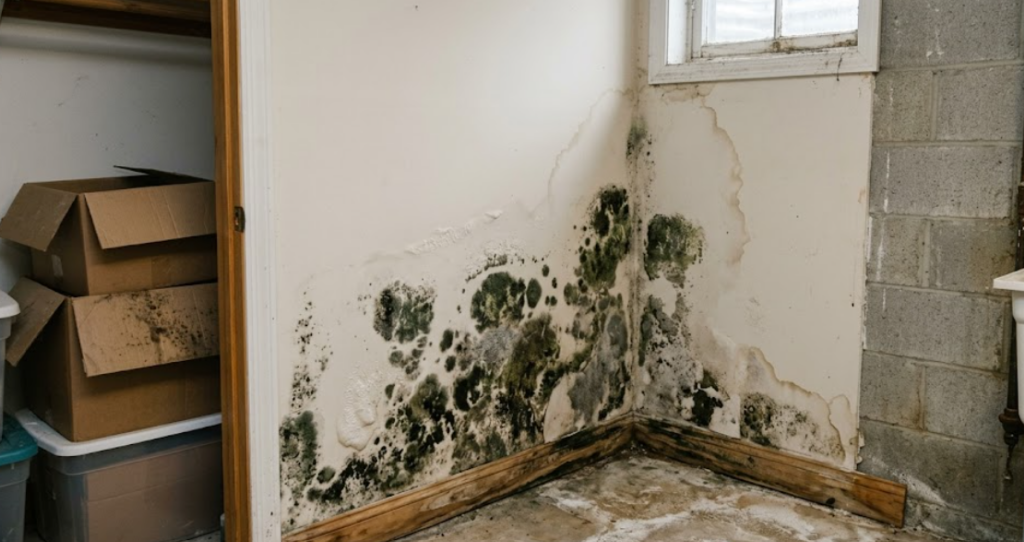
Mold growth typically appears as spots or patches of discoloration ranging in color from white or gray to green, brown, or black. Common locations include drywall surfaces, ceiling tiles, grout lines, wood framing, and the backs of cabinets. Any unexplained discoloration on a surface that has been exposed to moisture should be treated as a potential mold issue until proven otherwise.
A Persistent Musty Odor
Mold produces volatile organic compounds as a byproduct of its metabolic activity. These compounds create the characteristic musty, earthy odor associated with mold growth. If a room or area of your Tacoma home has developed an unexplained musty smell following any water intrusion event, investigate immediately. A strong odor in the absence of visible mold often indicates that growth is occurring inside wall cavities, under flooring, or in other concealed spaces.
Warping, Buckling, or Soft Surfaces
Water-damaged materials that have not been properly dried often show physical signs of deterioration. Hardwood floors that are buckling or soft to the touch, drywall that is bubbling or soft, and walls that appear to bow outward are all indicators of sustained moisture that may be supporting mold growth behind the surface.
Allergy or Respiratory Symptoms That Improve Away From the Building
One of the most telling signs of significant mold growth in a structure is a pattern of allergy or respiratory symptoms that improve when occupants leave the building and worsen when they return. If members of your household are experiencing unexplained symptoms that follow this pattern after a water damage event, have the structure professionally inspected immediately.
The Professional Mold Remediation Process After Water Damage in Tacoma
Mold growth after water damage requires a systematic, professional approach that goes far beyond surface cleaning. Consumer-grade mold cleaners and DIY methods are inadequate for significant mold infestations and can actually spread mold spores to previously unaffected areas of the structure. Here is what professional mold remediation looks like in a Tacoma property.
Comprehensive Moisture and Mold Assessment
Professional remediation begins with a thorough assessment of the structure using moisture meters, thermal imaging cameras, and air quality testing. This step identifies all areas of elevated moisture and visible or suspected mold growth, including hidden areas inside walls, above ceilings, and beneath flooring. Without this complete picture, remediation cannot be comprehensive.
Containment to Prevent Cross-Contamination
Before any disturbing of mold-affected materials begins, professional technicians establish containment barriers using polyethylene sheeting and negative air pressure systems. This prevents mold spores from becoming airborne and spreading to unaffected areas of the structure during the remediation process.
Controlled Removal of Mold-Affected Materials
Porous materials such as drywall, insulation, and carpet padding that have been significantly colonized by mold cannot be effectively cleaned. They must be carefully removed in a controlled manner, bagged, and disposed of properly. Non-porous hard surfaces can often be cleaned and treated with appropriate antimicrobial agents. All work is performed by technicians wearing appropriate personal protective equipment.
HEPA Filtration and Air Scrubbing
During and after material removal, high-efficiency particulate air (HEPA) filtration systems run continuously to capture airborne mold spores and maintain safe air quality within the work area and adjacent spaces. This step is essential for protecting both workers and building occupants.
Structural Drying and Post-Remediation Verification
Addressing the mold growth alone is not sufficient if the underlying moisture source has not been eliminated. Professional remediation includes confirmation that the structure is fully dried to industry-standard moisture levels before any reconstruction begins. Post-remediation air quality testing verifies that mold spore counts have returned to acceptable levels before occupants re-enter the space.
The True Cost of Ignoring Mold Growth After Water Damage in Tacoma
Delaying professional remediation of mold growth after water damage is one of the most expensive mistakes a Tacoma property owner can make. Mold does not stop growing while you decide what to do. Every day of delay allows the infestation to spread further into the structure, affecting more materials and requiring more extensive removal and reconstruction.
According to industry data from the Insurance Information Institute, the average mold remediation claim in the United States exceeds $15,000. Severe infestations involving multiple rooms or structural framing can cost significantly more, particularly in Pacific Northwest markets where labor costs are above the national average. Beyond the direct remediation costs, mold that is discovered during a real estate transaction can complicate or derail a sale entirely. Disclosure obligations in Washington State require sellers to reveal known mold issues, and a mold inspection that reveals significant growth can reduce a property’s value considerably.
Preventing Mold Growth After Water Damage in Tacoma
The single most effective prevention strategy for mold growth after water damage is rapid, professional drying of any structure that has experienced water intrusion. Every hour that passes after water damage occurs increases the risk and extent of subsequent mold growth. Calling a professional water damage restoration company the moment water damage is discovered is the most impactful action a Tacoma homeowner can take.
Beyond emergency response, regular maintenance reduces exposure significantly. Keep gutters clean and ensure proper drainage away from the foundation. Inspect plumbing connections under sinks and behind appliances at least twice a year. Maintain indoor humidity levels below 50 percent using dehumidifiers during Tacoma’s wet season. Address any roof damage promptly after storms. Install water leak detection sensors near appliances and in basements or crawlspaces.
Act Immediately to Stop Mold Growth After Water Damage in Tacoma
Mold growth after water damage in Tacoma is not a problem that resolves itself or waits patiently while you weigh your options. In this climate, it spreads aggressively and silently, destroying building materials and threatening the health of everyone in the structure. The difference between a manageable remediation and a catastrophic one is often measured in hours, not weeks.
If your Tacoma property has experienced any form of water damage – however minor it may appear – do not wait to find out whether mold will develop. Call PuroClean of Northeast Tacoma at (206) 929-0155 right now. Their certified restoration professionals respond quickly, use advanced moisture detection equipment to find every affected area, and provide complete mold remediation and structural drying services. Protect your home, protect your family, and protect your investment. Call PuroClean of Northeast Tacoma today.