 PuroClean of Northeast Tacoma
Severe Rainwater Intrusion Cleanup Solutions That Protect Your Tacoma Home
Table of Contents
Heavy rainfall can be both a blessing and a serious threat to homeowners. When rainwater enters areas where it does not belong, it can quickly cause structural damage, health risks, and costly repairs. Rainwater intrusion is one of the most common causes of water damage in residential and commercial properties, especially in regions that experience frequent storms or prolonged wet seasons. Left unaddressed, even minor rainwater intrusion can escalate into major problems such as mold growth, wood rot, and foundation deterioration.
Rainwater intrusion cleanup is not just about removing visible water. It involves identifying the source, drying affected materials, preventing microbial growth, and restoring the property to a safe condition. This comprehensive guide explains how rainwater causes damage, how to recognize early warning signs, what professional rainwater intrusion cleanup involves, and how homeowners can reduce future risks.
Call (206) 929-0155 today to schedule a rainwater damage inspection or request immediate cleanup from our trusted local restoration team.
Understanding Rainwater Intrusion
What Is Rainwater Intrusion
Rainwater intrusion occurs when rainwater penetrates a building through the roof, walls, windows, foundation, or other structural openings. Unlike plumbing leaks, rainwater damage is often intermittent and weather dependent, making it harder to detect until damage becomes visible.
Rainwater is classified as Category 3 water when it enters a structure due to environmental exposure. This means it may carry contaminants such as dirt, bacteria, and organic debris, increasing health risks and the need for thorough cleanup.
Why Rainwater Is Especially Damaging
Rainwater exposure often affects multiple building materials at once. Drywall, insulation, flooring, and wood framing absorb moisture quickly. According to FEMA data, just one inch of water inside a home can cause over $25,000 in damage, depending on construction type and finishes.
Because rainwater intrusion can recur with every storm, untreated issues often worsen over time.
Common Causes of Rainwater Intrusion
Roof Damage and Deterioration
Missing shingles, cracked flashing, clogged gutters, and aging roofing materials are leading contributors to rainwater intrusion. Even small roof defects allow rainwater to seep into attics and wall cavities.
Faulty Windows and Doors
Improperly sealed windows and doors allow rainwater to enter during wind driven storms. Over time, sealants break down, creating pathways for moisture intrusion.
Foundation Cracks
Hairline cracks in foundations or basement walls allow rainwater to seep in during heavy rainfall or saturated soil conditions. Hydrostatic pressure forces water through even the smallest openings.
Poor Drainage and Grading
When soil slopes toward a building instead of away from it, rainwater collects near the foundation. Clogged downspouts and inadequate drainage systems worsen the problem.
Siding and Exterior Wall Failures
Damaged siding, deteriorated caulking, and gaps around penetrations such as vents allow rainwater to infiltrate wall assemblies.
Signs You Need Rainwater Intrusion Cleanup
Water Stains and Discoloration
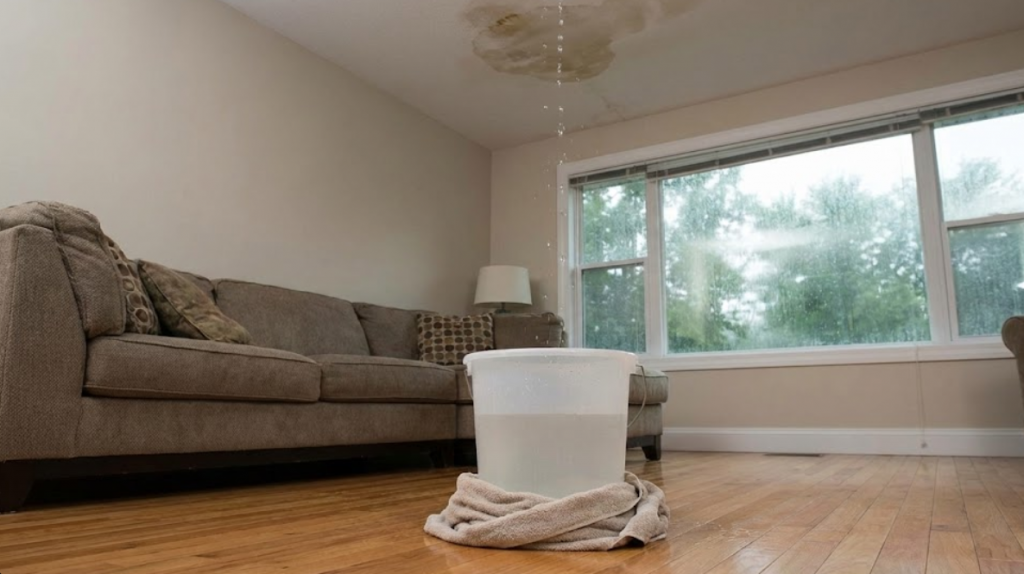
Brown or yellow stains on ceilings or walls are classic indicators of rainwater intrusion. These stains often appear after storms.
Musty Odors
Persistent damp or musty smells signal trapped moisture and possible mold growth caused by rainwater exposure.
Peeling Paint or Bubbling Drywall
Moisture trapped behind walls causes paint to peel and drywall to swell or bubble.
Mold Growth
Mold can begin growing within 24 to 48 hours after rainwater intrusion. Visible mold or allergy like symptoms should be taken seriously.
Warped Floors or Baseboards
Wood flooring and trim absorb rainwater easily, leading to warping, buckling, or separation.
Why Immediate Rainwater Intrusion Cleanup Matters
Delaying rainwater intrusion cleanup increases repair costs and health risks. Studies show that water damage left untreated for more than 48 hours significantly raises the likelihood of mold growth, which can complicate restoration and insurance claims.
Fast response limits structural damage, prevents microbial growth, and reduces overall restoration expenses.
Call (206) 929-0155 today to schedule a rainwater damage inspection or request immediate cleanup in Tacoma from our trusted local restoration team.
The Professional Rainwater Intrusion Cleanup Process
Inspection and Moisture Detection
Professionals begin rainwater intrusion cleanup with a thorough inspection to identify water entry points and affected materials. Tools such as moisture meters and infrared cameras help locate hidden moisture.
Water Extraction
Standing water is removed using high powered pumps and wet vacuums. Rapid extraction reduces saturation and secondary damage.
Drying and Dehumidification
Industrial air movers and dehumidifiers are used to dry structural components. Proper drying is essential to prevent mold growth and material failure.
Cleaning and Sanitizing
Rainwater often contains contaminants. Antimicrobial treatments are applied to disinfect affected areas and inhibit microbial growth.
Mold Remediation When Needed
If mold is present, containment and remediation procedures are implemented as part of rainwater intrusion cleanup.
Structural Repairs and Restoration
The final phase restores damaged materials such as drywall, flooring, insulation, and trim to pre loss condition.
Health Risks Associated With Rainwater Intrusion
Rainwater can carry bacteria, pollen, and organic debris. Prolonged exposure increases risks of respiratory irritation, allergic reactions, and asthma symptoms. Mold spores released from damp materials can significantly impact indoor air quality.
According to the Environmental Protection Agency, indoor mold exposure can cause nasal congestion, throat irritation, coughing, and eye irritation, particularly in vulnerable individuals.
Insurance Coverage for Rainwater Damage
Homeowners insurance coverage for rainwater intrusion varies. Sudden and accidental water damage may be covered, while long term seepage or maintenance related issues may be excluded.
Documenting damage promptly and initiating professional rainwater intrusion cleanup improves claim outcomes. Restoration companies often assist with documentation and communication during the claims process.
Preventing Future Rainwater Intrusion
Maintain the Roof
Schedule annual roof inspections and replace damaged shingles or flashing promptly.
Clean Gutters and Downspouts
Ensure gutters are free of debris and downspouts direct rainwater away from the foundation.
Seal Windows and Doors
Inspect and reseal exterior openings regularly to prevent rainwater entry.
Improve Drainage
Correct grading issues and install proper drainage systems to move rainwater away from the structure.
Inspect the Foundation
Seal cracks and install waterproofing solutions as needed.
Install a Sump Pump
In flood prone areas, sump pumps help manage groundwater and rainwater accumulation.
Long Term Consequences of Ignoring Rainwater Intrusion
Ignoring rainwater intrusion leads to chronic moisture issues, mold infestations, weakened structural components, and reduced property value. Over time, repeated exposure can compromise framing and insulation, making homes less energy efficient and more expensive to repair.
Choosing the Right Rainwater Intrusion Cleanup Company
Experience and Certification
Choose professionals trained in water damage restoration and rainwater intrusion cleanup.
Rapid Response Availability
Storm damage often occurs outside normal business hours. A 24 hour response capability is critical.
Comprehensive Services
The best providers handle cleanup, drying, mold remediation, and full restoration.
Local Expertise
Local companies understand regional weather patterns and construction challenges related to rainwater.
Rainwater intrusion is a serious issue that demands immediate and professional attention. Effective rainwater intrusion cleanup protects your home from structural damage, health hazards, and escalating repair costs. By understanding how rainwater enters your property and taking swift action when problems arise, you can safeguard your investment and maintain a healthy living environment.
Preparation, maintenance, and professional response are the most reliable defenses against rainwater damage.
If your property has been affected by rainwater intrusion, do not wait for the damage to worsen. PuroClean of Northeast Tacoma provides expert rainwater intrusion cleanup, drying, and restoration services designed to protect your home and your health. Call (206) 929-0155 today to schedule a rainwater damage inspection or request immediate cleanup from our trusted local restoration team.


 PuroClean of Northeast Tacoma