


When fire damages a home or commercial property, the flames themselves are rarely the final problem. Smoke and its accompanying odors penetrate every porous surface in the structure – drywall, wood framing, insulation, carpet, upholstery, clothing, and personal belongings – embedding themselves so deeply that ordinary cleaning and ventilation cannot reach them.
Weeks after a fire has been extinguished, the persistent, acrid smell of smoke reminds occupants and property owners that the restoration is not truly complete. Of all the professional odor elimination technologies available to fire restoration specialists, thermal fogging smoke odor removal stands out as one of the most effective and scientifically sound methods for addressing smoke odors at the source rather than masking them at the surface.
If you are dealing with smoke odor after a fire event in your Tacoma home or business and have heard about thermal fogging but are not sure what it involves, how effective it really is, or when it is the right choice, this comprehensive guide answers every important question. We cover the science behind smoke odor penetration, exactly how thermal fogging smoke odor removal works, when it is most effective, what the process looks like in a professional restoration context, how it compares to other odor removal technologies, and the top five frequently asked questions property owners ask about this technique.
Why Smoke Odor Is So Difficult to Eliminate – The Science Behind the Problem
To understand why thermal fogging smoke odor removal is so effective, you first need to understand why smoke odors are so stubbornly resistant to conventional cleaning methods. Smoke is not simply particulate matter floating in the air. It is a complex aerosol containing hundreds of chemical compounds – volatile organic compounds (VOCs), aldehydes, phenols, nitrogen oxides, sulfur compounds, and polycyclic aromatic hydrocarbons – produced by the incomplete combustion of organic and synthetic materials.
During a fire, these smoke compounds are carried by hot gases that expand under pressure and infiltrate every gap, crack, and porous surface in the structure. The pressure differential between the hot smoke-laden air inside a fire and the cooler surrounding materials drives smoke compounds deep into building materials through a process that restoration scientists call adsorption – the bonding of molecules to the surface and interior of a porous material. Once adsorbed, these compounds off-gas slowly over weeks, months, or even years, continuously releasing odor into the indoor environment.
This is why surface cleaning alone – even thorough professional cleaning with commercial-grade products – cannot fully eliminate smoke odor. The cleaning agents reach the surface but cannot penetrate to the depth at which smoke compounds have become embedded. Paint and primer applied over smoke-affected surfaces temporarily reduce odor but frequently allow it to re-emerge as off-gassing continues beneath the coating. Only a treatment that can penetrate porous materials to the same depth as the smoke compounds themselves can achieve genuine, lasting odor elimination. That is precisely what thermal fogging smoke odor removal is engineered to do.
What Is Thermal Fogging Smoke Odor Removal
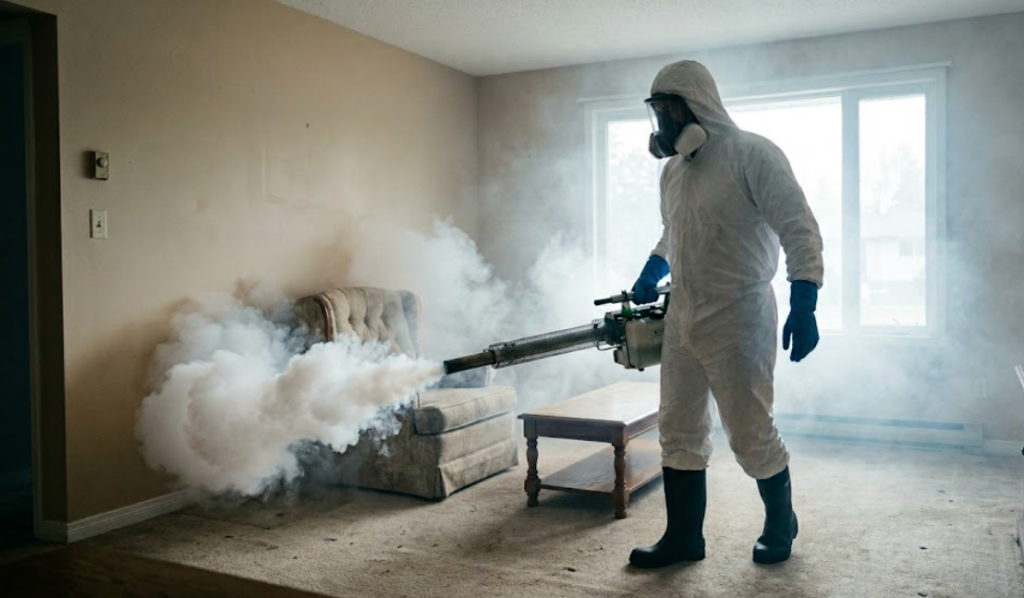
Thermal fogging smoke odor removal is a professional odor remediation technique that uses a specialized fogging machine to heat a liquid deodorizing solution to the point of vaporization, producing an extremely fine aerosol fog of deodorizing particles. This fog behaves in a manner that closely replicates the behavior of smoke itself – the fine particles penetrate porous materials, reach into wall cavities, saturate insulation, and permeate every area of the structure that smoke reached during the fire event.
The deodorizing agents in professional thermal fogging solutions work through chemical reaction rather than masking. They react with and neutralize the odor-producing molecules adsorbed into building materials, permanently eliminating the odor compounds rather than temporarily covering them with a more pleasant scent. This molecular-level interaction is what makes thermal fogging smoke odor removal genuinely effective rather than cosmetically effective.
The thermal component of the process matters beyond simply vaporizing the solution. When the deodorizing fog is generated at elevated temperature, it expands on contact with cooler building materials and is drawn into pores, cavities, and surface irregularities in a process that mirrors the original smoke penetration. This penetration depth is what allows thermal fogging smoke odor removal to reach smoke compounds that surface cleaning cannot access.
When Thermal Fogging Smoke Odor Removal Is the Right Choice
Thermal fogging smoke odor removal is one of several professional odor remediation technologies, and experienced restoration professionals select the appropriate technology – or combination of technologies – based on the specific characteristics of each situation. Thermal fogging is particularly well-suited to the following circumstances.
Whole-Structure Smoke Odor After a Significant Fire
When a fire has distributed smoke throughout a large portion or all of a structure – which is common in any significant fire event given the way smoke travels under pressure through a building – thermal fogging smoke odor removal is effective for treating the entire structural environment simultaneously. A properly conducted thermal fogging treatment fills every accessible space in the structure with deodorizing fog, reaching areas that would be impractical to treat individually through surface application. This whole-structure capability makes thermal fogging particularly valuable in Tacoma homes and commercial properties where smoke odor has spread well beyond the room of fire origin.
Odor in Wall Cavities and Hidden Spaces
Smoke penetrates wall cavities, attic spaces, and other enclosed areas of a structure that cannot be directly accessed without destructive investigation. Thermal fogging smoke odor removal reaches these hidden spaces because the fog behaves like smoke – it travels through gaps, penetrations, and porous materials into enclosed cavities. This penetration capability is one of the most significant advantages of thermal fogging over surface-applied liquid treatments, which are limited to accessible surfaces.
Smoke Odor in HVAC Ductwork
When a home’s HVAC system was operating during or shortly after a fire, smoke compounds have been distributed through the ductwork to every room in the structure. Thermal fogging smoke odor removal can be introduced into the HVAC system under controlled conditions to treat duct surfaces throughout the distribution network – something that physical duct cleaning alone cannot fully achieve for deeply adsorbed odor compounds.
Residual Odor After Structural Cleaning Is Complete
Thermal fogging smoke odor removal is most commonly deployed after structural cleaning is complete – after soot has been removed from surfaces, affected materials have been replaced, and the structure is ready for finishing. Applying thermal fogging at this stage treats any residual odor compounds that survived the cleaning process and were not eliminated by material replacement, providing a final odor elimination treatment before primer, paint, and finish materials are applied.
The Professional Thermal Fogging Smoke Odor Removal Process
Professional thermal fogging smoke odor removal is not a procedure that property owners should attempt with consumer-grade equipment. The process requires professional-grade fogging equipment, specifically formulated deodorizing solutions, strict safety protocols, and technical expertise to achieve effective results safely. Here is what a professional thermal fogging engagement looks like when conducted by an IICRC-certified restoration team.
Pre-Treatment Preparation
Before thermal fogging begins, the structure must be properly prepared. All occupants – people, pets, and plants – must vacate the property entirely before fogging begins and must not re-enter until the treatment is complete and the structure has been properly ventilated. Food items and water sources that cannot be sealed or removed are covered or relocated. HVAC systems are assessed, and fogging of ductwork is coordinated with the overall treatment plan. The restoration team documents the pre-treatment condition of the structure and confirms that all structural cleaning has been completed before fogging is initiated.
Deploying the Thermal Fogger
The thermal fogging machine is moved systematically through the structure, allowing the fog to fill each room and penetrate into every area that smoke reached. The technician works in a controlled sequence – typically starting at the farthest point from the exit and working toward the exit to ensure complete coverage without trapping the technician in a fogged area. In larger structures, multiple fogging passes or multiple fogging machines may be used to ensure even, complete coverage throughout the building.
The thermal fogger operates at temperatures that vaporize the deodorizing solution without combustion risk. Professional fogging solutions used in thermal fogging smoke odor removal are specifically formulated for safety and effectiveness and are very different from the industrial chemicals used in some other fogging applications. The technician wears appropriate respiratory protection throughout the fogging process.
Dwell Time and Penetration
After fogging is complete, the structure is sealed and the deodorizing fog is allowed to dwell for a specified period – typically several hours – during which the fog continues to penetrate porous materials and react with adsorbed odor compounds. This dwell period is critical to the effectiveness of thermal fogging smoke odor removal. Insufficient dwell time reduces the depth of penetration and the completeness of chemical reaction, leaving residual odor compounds that will continue to off-gas after the treatment.
Ventilation and Post-Treatment Assessment
After the required dwell period, the structure is thoroughly ventilated to clear the remaining fog and allow fresh air to circulate. Windows, doors, and HVAC systems are used to achieve complete air exchange. Once the structure has been ventilated, the restoration team conducts a post-treatment odor assessment to evaluate the effectiveness of the thermal fogging smoke odor removal and determine whether additional treatment passes are warranted in any areas.
In some situations – particularly where smoke odor penetration was severe or where the fire involved materials that produce especially persistent odor compounds – two or more thermal fogging treatment passes are required for complete odor elimination. Professional restoration teams plan for this possibility and conduct post-treatment assessment before declaring the odor remediation phase complete.
How Thermal Fogging Compares to Other Smoke Odor Removal Technologies
Thermal fogging smoke odor removal is one of several professional-grade odor elimination technologies. Understanding how it compares to alternatives helps property owners understand why experienced restoration professionals often use thermal fogging in combination with other methods rather than as a standalone solution.
Thermal Fogging vs. Ozone Treatment
Ozone treatment generates ozone gas that reacts with and oxidizes odor-producing compounds throughout the structure. Like thermal fogging, ozone penetrates porous materials and reaches hidden spaces. However, ozone treatment requires the structure to be fully vacated for an extended period and requires careful management of ozone concentrations to avoid generating harmful levels of residual ozone. Thermal fogging smoke odor removal can be conducted more quickly and with a shorter re-entry waiting period than high-concentration ozone treatment. Many professional restoration teams use both technologies in sequence for maximum effectiveness on severe smoke odor situations.
Thermal Fogging vs. Hydroxyl Generation
Hydroxyl generators use UV light to produce hydroxyl radicals that react with VOCs and odor compounds. Unlike ozone treatment and thermal fogging, hydroxyl generation can be conducted in occupied or partially occupied spaces, making it useful in situations where complete evacuation is impractical. However, hydroxyl generation is generally slower and may be less effective than thermal fogging smoke odor removal for severe, deeply penetrated smoke odor situations. It is frequently used as a complementary treatment alongside or following thermal fogging.
Thermal Fogging vs. Surface Sealers
Encapsulating primer sealers applied to smoke-affected surfaces lock residual odor compounds within the substrate, preventing them from off-gassing into the indoor air. This approach is effective for surfaces that can be coated – drywall, wood framing, concrete – but cannot treat porous contents, HVAC systems, or the air volume of the structure. Thermal fogging smoke odor removal and encapsulating sealers are complementary treatments that address different aspects of the smoke odor problem, and most comprehensive fire restoration programs use both.
Thermal Fogging Smoke Odor Removal and Insurance Claims in Tacoma
Thermal fogging smoke odor removal is a standard component of professional fire restoration and is generally covered under the fire damage portion of a homeowners or commercial property insurance policy. Insurers recognize thermal fogging as an established, effective professional technique and include it within the scope of covered restoration services following a fire loss.
Documentation of thermal fogging smoke odor removal – including the areas treated, the products used, the number of treatment passes, and the post-treatment assessment results – is provided by professional restoration companies as part of the project file. This documentation supports your insurance claim and provides a permanent record of the odor remediation work performed as part of the overall fire restoration project.
According to the National Fire Protection Association, home fires cause billions of dollars in property damage annually in the United States, with smoke and odor remediation representing a significant component of the total restoration cost in most fire claims. Working with an experienced restoration company that properly documents all thermal fogging smoke odor removal work ensures that this legitimate cost component is fully captured in your insurance submission.
Top 5 Frequently Asked Questions About Thermal Fogging Smoke Odor Removal
FAQ 1: Is thermal fogging smoke odor removal safe for my home and family?
When performed by trained, certified professionals using appropriate deodorizing solutions and following established safety protocols, thermal fogging smoke odor removal is safe for residential and commercial properties. The critical safety requirement is that all people, pets, and plants must vacate the property completely before fogging begins and must not re-enter until the treatment is complete and the structure has been thoroughly ventilated.
Professional restoration teams communicate the required evacuation and re-entry timeline clearly before treatment begins. The deodorizing solutions used in professional thermal fogging are formulated for use in occupied structures and do not leave harmful residues when applied and ventilated correctly. Consumer-grade fogging equipment and non-professional solutions are a different matter and should not be used by homeowners attempting DIY treatment.
FAQ 2: How long does thermal fogging smoke odor removal take, and when can I return to my property?
The active thermal fogging treatment itself typically takes one to several hours depending on the size of the structure and the number of areas being treated. The dwell period following treatment – during which the fog penetrates porous materials and reacts with odor compounds – generally lasts two to four hours, though this varies based on the severity of the odor situation and the specific products used. After the dwell period, thorough ventilation of the structure is required before re-entry.
In most residential situations, the total time from the start of fogging through ventilation and clearance for re-entry is approximately four to eight hours. Your restoration professional will provide a specific timeline based on the characteristics of your property and the scope of the treatment being performed.
FAQ 3: Will thermal fogging smoke odor removal completely eliminate the smell, or will some odor remain?
Thermal fogging smoke odor removal is highly effective at eliminating smoke odors when applied as part of a comprehensive fire restoration process – one that includes complete removal of fire-damaged and heavily contaminated materials, thorough surface cleaning of remaining structural elements, and application of encapsulating primer sealers to appropriate surfaces. When thermal fogging is used in isolation without these complementary steps, residual odors are more likely.
The severity of the original fire, the types of materials that burned, the duration of smoke exposure before remediation began, and the depth of smoke penetration into building materials all affect how many treatment passes are needed for complete odor elimination. A reputable restoration company will conduct post-treatment assessment after each fogging pass and recommend additional treatment if needed rather than declaring the project complete while residual odor remains.
FAQ 4: Does thermal fogging smoke odor removal also address soot and smoke residue on surfaces?
Thermal fogging smoke odor removal is specifically an odor elimination treatment, not a surface cleaning technique. It does not remove soot or smoke residue from surfaces – that work is accomplished through professional surface cleaning using appropriate cleaning agents and methods tailored to the specific type of soot present.
In a complete fire restoration project, surface cleaning of soot and smoke residues is performed before thermal fogging is applied. The fogging treatment then addresses residual odor compounds that remain after surface cleaning is complete. If you are considering thermal fogging without first completing thorough surface cleaning of all smoke-affected areas, the treatment will be significantly less effective because the soot and residue on surfaces will continue to off-gas odor compounds regardless of the fogging treatment.
FAQ 5: Can I use thermal fogging smoke odor removal for smoke smells from sources other than a fire, such as cigarette smoke or cooking odors?
Yes. While thermal fogging smoke odor removal is most commonly associated with fire restoration, the same penetration and chemical neutralization principles that make it effective for fire smoke make it applicable to other persistent smoke and odor situations. Cigarette smoke odors that have penetrated deeply into walls, ceilings, flooring, and HVAC systems in a home or rental property respond well to professional thermal fogging treatment when it is part of a comprehensive odor remediation approach that also includes surface cleaning and sealing.
Cooking odors, pet odors, and other persistent smell problems that have penetrated porous building materials can also be addressed using thermal fogging as a component of professional odor remediation. The key in all cases is that thermal fogging is most effective as part of a complete remediation strategy rather than as a standalone treatment applied without addressing the contaminated surfaces and materials that are the ultimate source of the odor.
Choose Professional Thermal Fogging Smoke Odor Removal for Lasting Results
Thermal fogging smoke odor removal is one of the most effective tools available to professional fire restoration specialists, and it is the right choice for property owners who want genuine, lasting odor elimination rather than temporary masking. When applied correctly by trained professionals as part of a comprehensive restoration program, thermal fogging penetrates where surface cleaners cannot reach, reacts with smoke compounds at the molecular level, and delivers the kind of complete odor elimination that allows a property to be fully and confidently reoccupied.
If your Tacoma home or business is affected by smoke odor after a fire – or if you are dealing with persistent smoke odor from any source – call PuroClean of Northeast Tacoma at (206) 929-0155 right now. Our certified fire and odor restoration specialists use professional thermal fogging smoke odor removal as part of a complete, systematic restoration process that eliminates odor at its source.
We respond promptly, work with your insurance company, and stand behind the quality of their work. Do not live with smoke odor that does not have to be there. Call PuroClean of Northeast Tacoma today and get the expert help your property deserves.