Water Mitigation Case Study: Kelly Services Building, Troy, Michigan
Overview
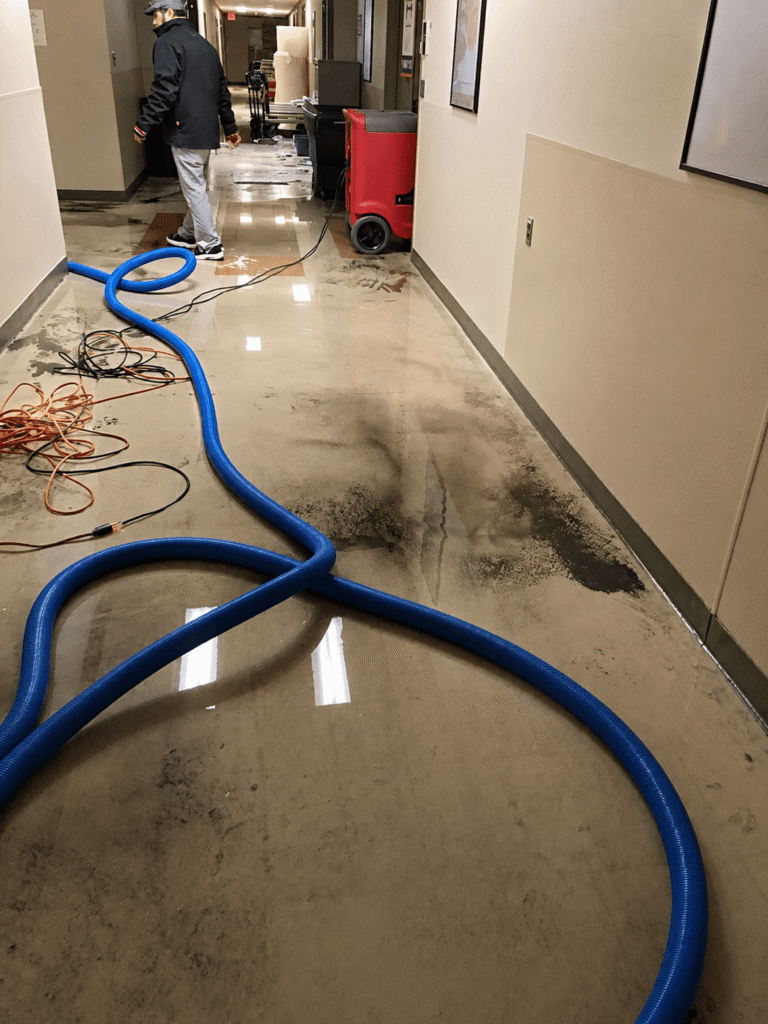
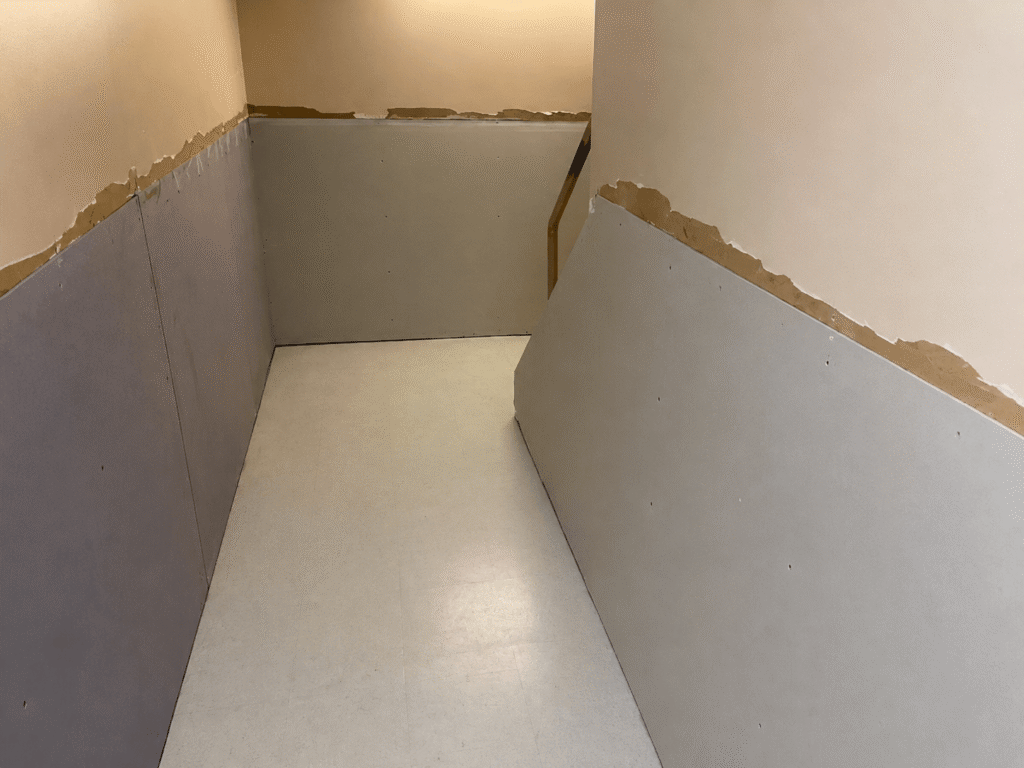
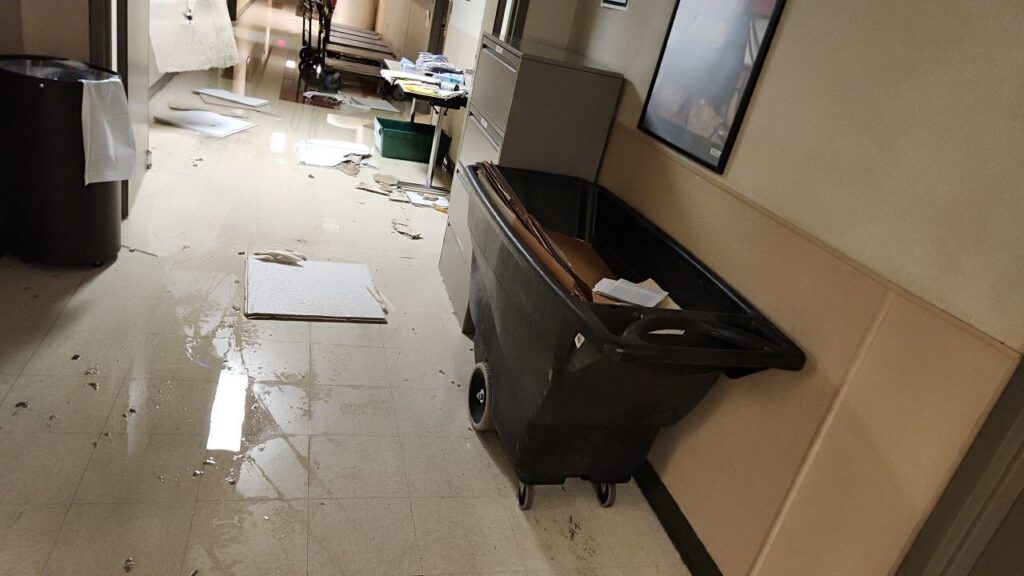
The Kelly Services building in Troy, Michigan, encountered a significant water damage incident across two stories, demanding immediate water mitigation to prevent further deterioration and restore affected areas. The multifaceted restoration effort, including the utilization of a large 5000 CFM desiccant dehumidifier, over 100 fans, and 30 LGR dehumidifiers, faced challenges such as logistical hurdles due to tenant requirements and prolonged demolition timelines in the basement. Despite these obstacles, a comprehensive water mitigation plan was executed, ensuring minimal disruption and timely restoration of the property.
Background
The Kelly Services building in Troy, Michigan, serves as a vital operational center for various tenants and activities. Any water damage poses a significant threat to its operations and integrity. In this instance, a water intrusion incident occurred, affecting the lower level and basement areas, necessitating urgent intervention to mitigate the damage and restore normalcy.
Challenges
Several challenges were encountered during the water mitigation process:
Extent of Damage: The water damage was extensive, impacting multiple areas across two stories, necessitating immediate action to prevent further structural damage and mold growth.
Equipment Requirement: Specialized equipment, including a large 5000 CFM desiccant dehumidifier, over 100 fans, and 30 LGR dehumidifiers, was crucial for effective drying of the affected spaces.
Logistical Constraints: Tenant requirements, particularly in the lower level mailroom, posed logistical challenges, requiring extensive movement of belongings before mitigation efforts could commence. This added extra time and coordination efforts to the overall process.
Utility Disruption: The water damage necessitated the shutdown of utilities, including heating systems. Consequently, arrangements for alternative power sources, such as a generator, were essential to maintain suitable conditions for the mitigation process.
Solution
To address the challenges effectively, a detailed water mitigation plan was devised and implemented:
Assessment and Planning: A thorough assessment of the damage was conducted to determine the extent of the water intrusion and formulate an appropriate mitigation strategy. Critical areas were identified, equipment requirements assessed, and a timeline for restoration established.
Deployment of Equipment: Specialized drying equipment, including the large 5000 CFM desiccant dehumidifier, over 100 fans, and 30 LGR dehumidifiers, was promptly deployed to facilitate rapid drying of the affected areas. Strategic placement of equipment ensured optimal airflow and moisture removal, expediting the drying process.
Coordination with Tenants: Close coordination with tenants, particularly in the lower level mailroom, was essential to facilitate the movement of belongings and expedite the commencement of mitigation efforts in the basement area. Clear communication and cooperation helped minimize delays and streamline the process.
Alternative Power Source: Given the utility disruption, a generator was mobilized to provide power for the desiccant dehumidifier and other essential equipment. This ensured uninterrupted operation and maintained suitable conditions for effective moisture removal.
Outcome
Despite the initial challenges, the water mitigation efforts yielded successful outcomes:
Timely Restoration: Through coordinated efforts and efficient resource utilization, the water mitigation process was completed within the projected timeline. Swift action helped prevent further damage and expedited the restoration of affected areas.
Minimal Disruption: Close collaboration with tenants and strategic planning minimized disruptions to ongoing operations within the building. By addressing logistical constraints proactively, the impact on tenants was mitigated, ensuring continuity of business activities to the extent possible.
Effective Moisture Removal: The deployment of specialized drying equipment, including the desiccant dehumidifier, fans, and LGR dehumidifiers, facilitated thorough moisture removal from the affected spaces. This helped prevent secondary issues such as mold growth and structural deterioration, ensuring the long-term integrity of the building.