Winter Restoration of Prestwick Village Golf Club Outhouses: A Case Study in Efficient Drying and Restoration
Abstract: Prestwick Village Golf Club faced a daunting challenge when their outhouses suffered water damage in the middle of winter. With temperatures dipping to single digits, a comprehensive restoration plan was urgently needed. This case study details the innovative approach utilizing a 50 amp electric heater, 6 mil polyethylene sheeting, sandbags, and dehumidifiers to dry out the structures while minimizing demolition and ensuring minimal disruption to the golf course’s operations.
Introduction: Prestwick Village Golf Club, situated in Inverness Highland, MI, prides itself on providing exceptional facilities for golf enthusiasts. However, when two outhouses on the golf course suffered water damage during the winter months, the club faced a significant restoration challenge. With temperatures plummeting to single digits, traditional drying methods were not feasible, necessitating a creative and efficient approach to restore the facilities.
Challenge: The water damage to the outhouses posed several challenges:
Adverse Weather Conditions: With temperatures in single digits, traditional drying methods such as air circulation were ineffective and risked further damage.
Minimizing Disruption: The restoration process needed to minimize disruption to the golf course’s operations and ensure that facilities were quickly restored for members and visitors.
Preserving Structural Integrity: It was imperative to preserve the structural integrity of the outhouses while expediting the drying process to prevent mold and further deterioration.
Solution: To address the challenges posed by the winter water damage, Prestwick Village Golf Club implemented an innovative restoration plan:
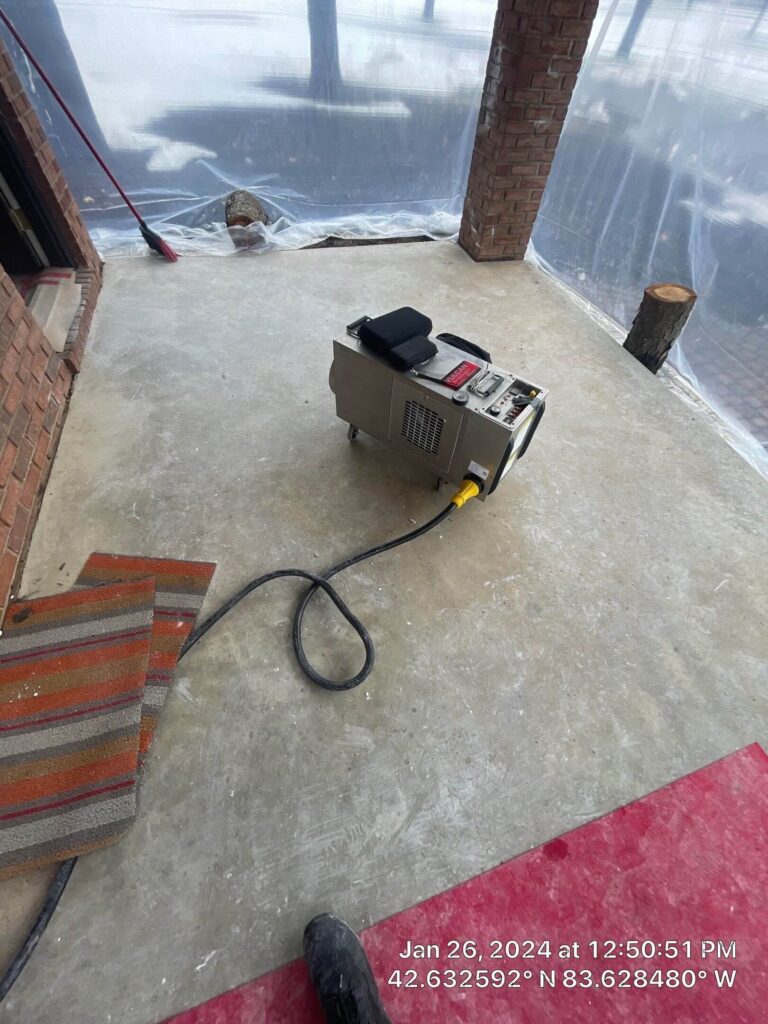
Heat Generation: A 50 amp electric heater was installed inside each outhouse to generate sufficient heat for drying. The heaters were strategically positioned to ensure even distribution of warmth throughout the structures.
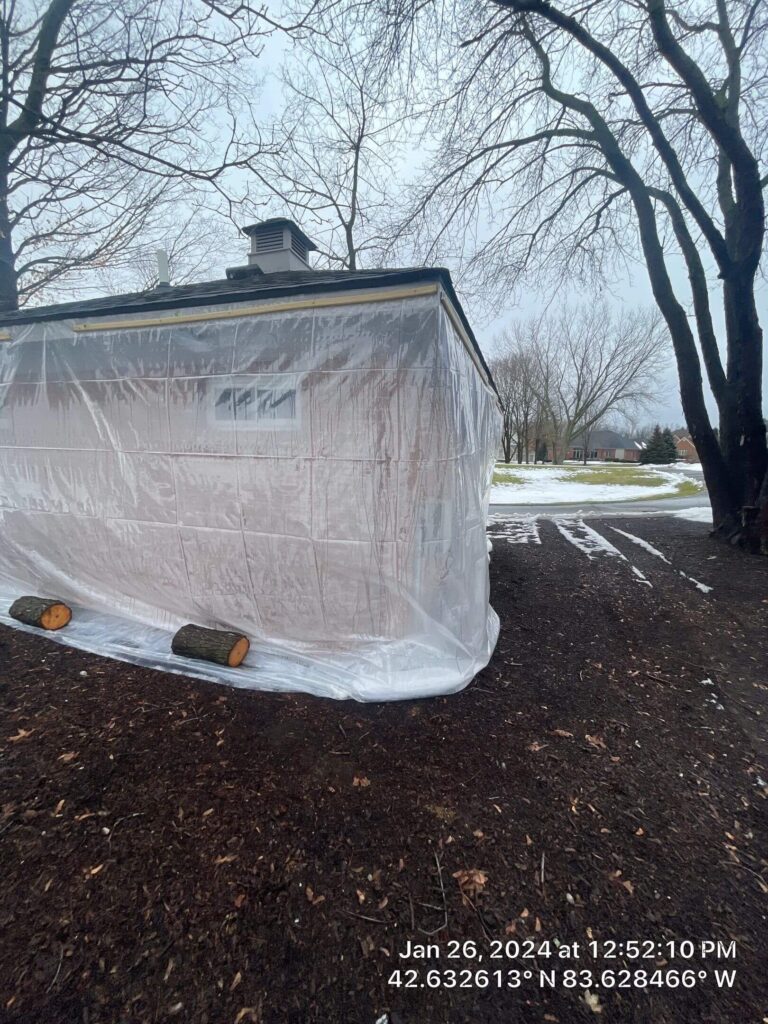
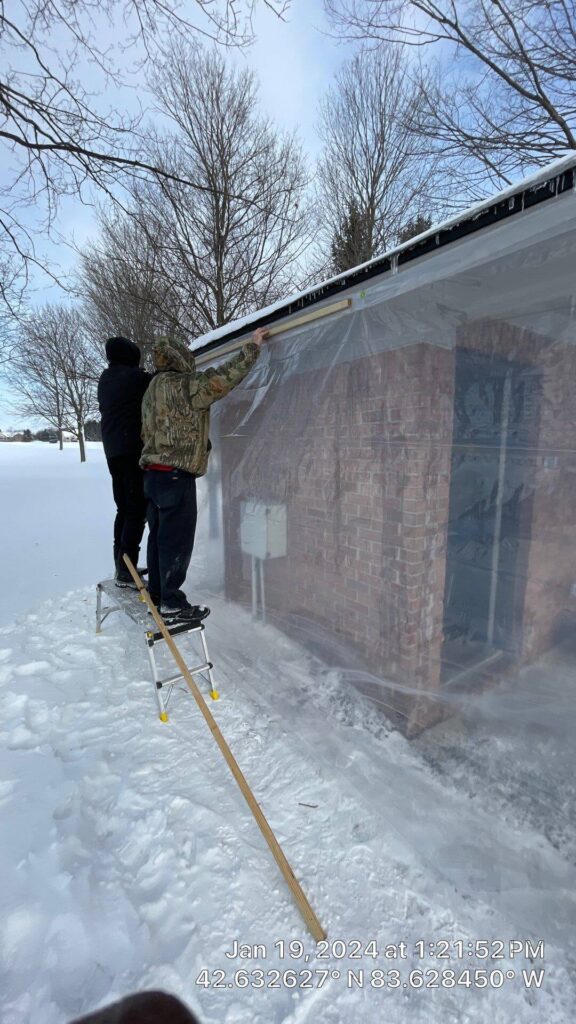
Encapsulation with Polyethylene Sheeting: To create a controlled drying environment, the outhouses were wrapped in 6 mil polyethylene sheeting. The sheeting served as a barrier to retain heat and prevent moisture from entering or escaping.
Securing with Sandbags: Sandbags were used to secure the polyethylene sheeting around the outhouses, ensuring a tight seal to maximize heat retention and prevent drafts.
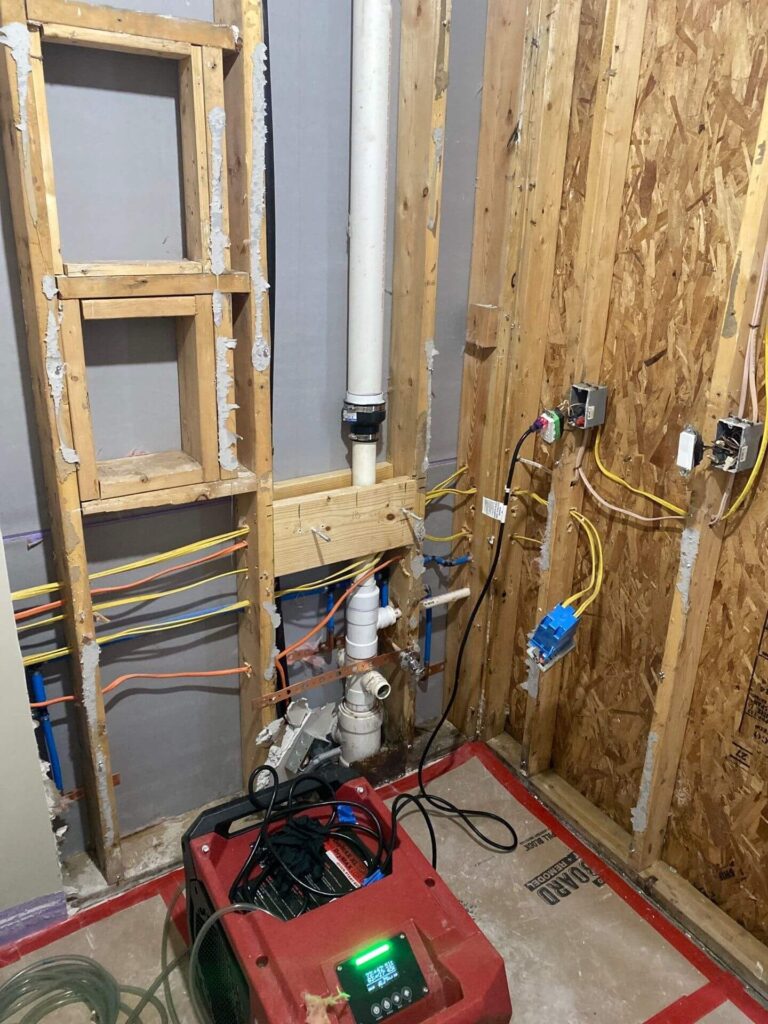
Dehumidification: Industrial-grade dehumidifiers were placed inside the outhouses to extract moisture from the air and accelerate the drying process. The dehumidifiers were equipped with sensors to monitor humidity levels and adjust settings accordingly.
Minimal Demolition: To minimize disruption and preserve the structural integrity of the outhouses, only necessary demolition was performed, targeting areas with severe water damage such as drywall, insulation, and finish hardware.
Results: Through the implementation of the innovative restoration plan, Prestwick Village Golf Club achieved the following results:
Efficient Drying: Despite the harsh winter conditions, the combination of heat generation, encapsulation with polyethylene sheeting, and dehumidification facilitated efficient drying of the outhouses.
Minimal Disruption: The restoration process was completed with minimal disruption to the golf course’s operations, ensuring that facilities were quickly restored for members and visitors.
Structural Preservation: By minimizing demolition and employing targeted restoration techniques, the structural integrity of the outhouses was preserved, mitigating the risk of further damage and ensuring longevity.
Conclusion: The successful restoration of Prestwick Village Golf Club’s outhouses in the middle of winter demonstrates the effectiveness of innovative techniques in mitigating water damage and preserving structural integrity. By leveraging a combination of heat generation, polyethylene sheeting encapsulation, sandbag securing, dehumidification, and minimal demolition, the club was able to expedite the drying process and minimize disruption to operations. This case study highlights the importance of adaptability and creative problem-solving in overcoming restoration challenges, particularly in adverse weather conditions.