


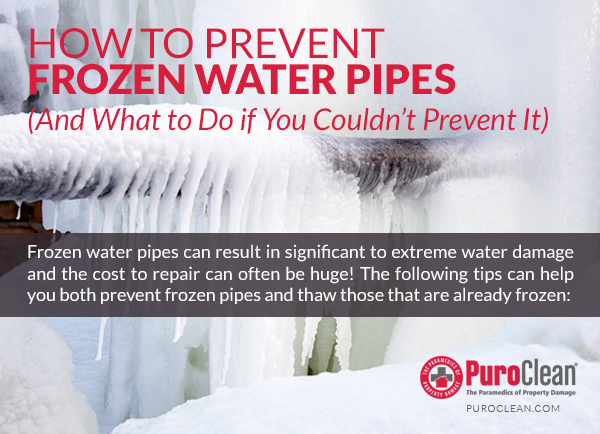
 All materials contract as they get colder and colder, and become more dense until the point where they freeze. Water is very unique. When it freezes, it actually expands and becomes less dense! That is why ice floats on top of water – it is less dense. This is truly a force of nature – nothing can stop the 11% expansion. When the water is contained, as it is inside a pipe, this expansion will rupture the pipe (or any other container – consider a frozen can of soda or bottle of wine)!
Pipes that freeze most frequently are those that are exposed to the cold, such as outdoor hose bibs, swimming pool supply lines, water sprinkler lines, and water supply pipes in unheated interior areas like attics and crawl spaces, garages, or cabinets on exterior walls. Pipes that run against exterior walls that have insufficient or no insulation are also subject to freezing. Frozen water pipes can result in significant to extreme water damage, and the cost to repair is often huge! The following tips can help you both prevent frozen pipes and thaw those that are already frozen:
- Drain water from swimming pool and water sprinkler supply lines following manufacturer’s or installer’s directions. Avoid putting antifreeze in these lines if possible (keeping in mind that antifreeze is environmentally harmful, and is very dangerous to humans, pets, wildlife, and landscaping). Disconnect, drain, and store hoses used outdoors. Close inside valves supplying outdoor hose bibs. Open the outside hose bibs to allow water to drain. Remember to keep the outside valve open so that any water remaining in the pipe can expand without causing the pipe to break.
- Check in the basement, crawl space, attic, garage, and under kitchen and bathroom cabinets where water supply lines are located in unheated areas and insulate both hot and cold water pipes in these areas to help prevent freezing.
- Consider installing specific products made to insulate water pipes like a “pipe sleeve” or installing UL-listed “heat tape,” “heat cable,” or similar materials on exposed water pipes. If you plan to be away from home for an extended period of time during cold weather, leave the heat on in your home, set to a temperature no lower than 50° F and shut off the Master Valve to the home. Leave all taps “open.” If the home loses power, the open valves will help prevent pipes from bursting, and the “shut-off” Master Valve will ensure that even if there is a break, the result will be minor, compared to an open line running wild! Even if you do all of the above, arrange for a neighbor to walk through your home once each day – just to help monitor against unforeseen events.
- Monitor Freezing Pipe Conditions and allow a faucet to drip slightly. Moving water (even a drip) will help prevent pipes from freezing.
- During cold winter weather, keep garage doors closed if there are water supply lines in the garage.
- Open kitchen and bathroom cabinet doors to allow warmer air to circulate around the plumbing. Be sure to move any harmful cleaners and household chemicals out of the reach of children.
What can you do if you suspect a pipe being frozen?
- Check the water flow from a faucet, if it is reduced – this is the first sign of freezing. The most likely places for frozen pipes include against exterior walls or where your water service enters your home through the foundation.
- Running water through the pipe will help melt the ice in the pipe as water flows through the pipe.
- Apply heat to the section of pipe using an electric heating pad wrapped around the pipe, an electric hair dryer, a portable space heater (kept away from flammable materials), or by wrapping pipes with towels soaked in hot water. Do not use a blowtorch, kerosene or propane heater, charcoal stove, or other open flame device.
- IT IS ESSENTIAL THAT YOU OPEN THE FAUCET AND BEGIN TO THAW ON THE FAUCET SIDE. If you place the heat in the “middle” of a frozen section that section will melt. Since both sides are still frozen, that water may turn to steam and could cause the pipe to explode! When you start next to the faucet, any water (or steam) can escape through that faucet and help prevent damage/harm.
- Apply heat until full water pressure is restored. If you are unable to locate the frozen area, if the frozen area is not accessible, or if you cannot thaw the pipe, call a licensed plumber.
- Check all other faucets in your home to find out if you have additional frozen pipes. If one pipe freezes, others may freeze, too.
- After pipes have thawed, turn off all water to faucets and the icemaker, and monitor the water meter for any unseen leaks.
- If a pipe bursts, shut off water at the main valve. Call a plumber (keep an emergency number nearby for quick access). Then call PuroClean to evaluate and remediate any water damage that could have resulted.
Regardless of the circumstances — dealing with broken pipes or other water damage, puff-backs or other fire/smoke damage, odors, mold remediation, or even biohazard remediation – call your local PuroClean office, the Paramedics of Property Damage. For all property damage situations, these professionals are standing by. They will mitigate the loss to prevent further damage and will then provide restoration services to return the property to a pre-loss condition as quickly as possible. All PuroClean offices have well-trained professional technicians who provide the latest state-of-the-science services to all property damaged from water, fire, smoke, mold, and other disasters.
Check back with us for more safety tips and don’t forget to like us on Facebook to get our notifications!