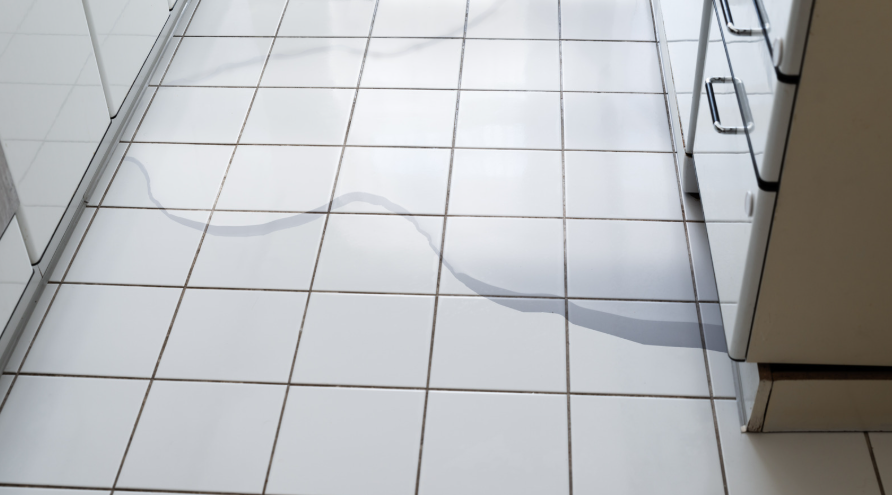
A Dishwasher Leak Does Not Automatically Mean a New Floor
A dishwasher line can release water below cabinets while the exposed kitchen floor looks almost normal. The right response is to stop the leak, identify where the water reached, and decide whether the finish, underlayment and subfloor can be dried without trapping moisture. Some materials tolerate a prompt, limited wetting; others swell, separate or hold water beneath an impermeable surface. In a Leawood home, the answer should come from a moisture map and the floor’s construction, not from a rule that all wet flooring must be ripped out or always saved.
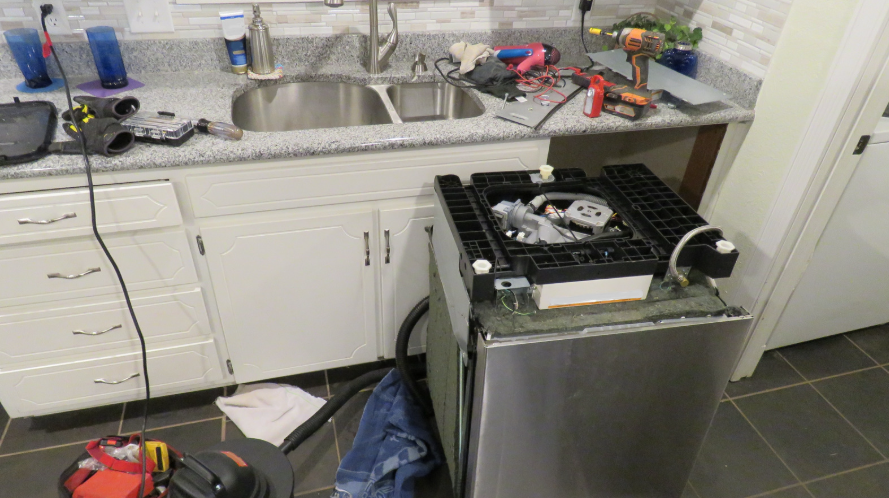
For example, a supply hose drips behind a dishwasher over a weekend. A narrow strip of plank flooring may appear cupped near the toe kick, but water could have run beneath the base cabinet and into the adjoining room. A second incident, a brief overflow noticed while the homeowner is standing nearby, may have a much smaller footprint. Before moving the appliance, turn off its supply and electricity where it is safe to do so and consider a plumber or appliance professional. Pulling a connected appliance across wet flooring can worsen damage or create an electrical hazard.
Trace the Leak Around Fixed Cabinets
Look for water at the toe kick, cabinet sides, wall base and seams between floorboards. Photograph conditions before wiping up accessible surface water. Remove movable rugs and dry items from affected cabinets if it is safe. Do not pry off permanent trim or disconnect electrical wiring to look underneath. A technician may take readings at the cabinet base, floor edges and adjacent room, then compare them with unaffected areas of the same material. The comparison matters: a single high reading can reflect a different layer or meter response rather than a precise quantity of water.
The water may be from a clean supply connection, a drain hose carrying used wash water, or a sink backup that entered the machine. Those sources call for different questions about contamination and material handling. Ask for the actual source to be recorded instead of simply calling every dishwasher event a clean-water leak. A plumber or appliance technician can repair the cause; a restoration crew can assess where water traveled and whether the building materials require drying or removal. Restart the appliance only after the failure and electrical safety are addressed.
The EPA’s guide to moisture control emphasizes fixing water problems and drying wet areas promptly. Its 24 to 48 hour guidance supports quick assessment, but time alone cannot establish whether moisture remains beneath a kitchen finish. A leak discovered late may have begun earlier than the last wash cycle. Write down the last time the cabinet or floor was known dry, any prior swelling, and whether water reappears when the sink is used.
Understand What the Finish May Be Hiding
Solid wood, engineered wood, laminate, sheet vinyl and tile have different constructions; none should be judged only by its top surface. Planks may cup when one side takes on more moisture. Laminate cores and some underlayments can swell or break down. Water beneath sheet flooring may have few places to evaporate. Tile can remain intact while an underlayment or cabinet base is wet. The relevant assembly includes finish, adhesive, pad or underlayment, subfloor and any cavity below. Ask what each layer is and where evidence indicates water entered.
A lower-level ceiling or unfinished basement can sometimes reveal a path below the kitchen. But seeing a dry underside at one location does not rule out moisture above it. A technician should distinguish surface moisture, an affected layer and a material that has physically failed. A swollen edge, delamination, softened cabinet panel or persistent odor may change the salvage decision. So may the need to access hidden areas. Selective removal can expose the actual wet boundary and preserve unaffected floor, though matching a discontinued finish afterward may be difficult.
There is a tradeoff between saving finish material and drying the structure. An intact, low-permeability floor can slow evaporation from below. Drying equipment and access may help where the assembly permits it; sometimes the finish must be lifted to reach the underlayment. Ask what method is proposed, how progress will be measured, and what would trigger a change of plan. A statement that a fan ran for three days is not proof that the subfloor reached a suitable condition for repair.
Separate Drying From Replacement Decisions
The first service decision is usually how to stabilize the loss, extract accessible water and expose or monitor affected materials. A finish carpenter or flooring installer later determines what can be repaired and how to match it. Drying and cosmetic restoration can be priced separately, which helps a homeowner see whether a proposal skips diagnostic work or includes unnecessary replacement. A drying record should state locations and trends; a repair estimate should state affected square footage, material and transitions. Neither should promise a seamless match before the product is identified.
If a refrigerator water line also runs through the wall, or the sink cabinet is damp, do not assume the dishwasher caused all observed damage. Confirm the source before finalizing the scope. The same applies to a moisture reading near an exterior door or an old dishwasher leak. A good site visit identifies plausible alternatives and explains how they were tested. That is more useful than a large estimate that treats every kitchen surface as one uniform loss.
A family deciding on water damage services in Leawood can ask for a floor-by-floor explanation: what is wet, what is physically damaged, what can be monitored and what must be opened. The city service page is a relevant next step when the leak is beyond a small surface spill. Tell the team which flooring product you have, when the leak was discovered and whether the room below shows staining; those details help make the first visit productive.
Make the Kitchen Usable Without Hiding a Problem
Keep family members from walking on loose or raised boards, and avoid placing heavy equipment on a compromised floor. Discuss whether unaffected parts of the kitchen can remain usable while the wet area is isolated. Do not reinstall a dishwasher or baseboard over damp material for convenience. If cabinets are removed, photograph how they were supported and identify any damaged toe kicks or backs before repair. A moisture-free subfloor does not by itself repair a warped finish, just as a flat-looking finish does not prove the layer beneath is dry.
At completion, request the final material readings and a list of replaced components. Check the plumbing repair under a supervised normal cycle and recheck cabinet bases later for new moisture. If a claim is involved, keep separate documentation of the appliance failure, mitigation and finish replacement; coverage and reimbursement are determined by the policy and carrier, not by the restoration crew. The goal is a kitchen with a corrected source and a verified dry assembly before new finish conceals it.
If the appliance was moved to dry the cavity, confirm that the water and drain connections are tested before the toe kick is closed. A repaired floor cannot compensate for a connection that still seeps behind the cabinet.
Frequently Asked Questions
Can cupped wood planks flatten after drying?
They sometimes change as moisture equalizes, but permanent deformation or finish damage is possible. Assess the material after monitored drying before deciding on replacement.
Is tile safe to leave because it does not absorb much water?
An intact tile face says little about grout joints, underlayment or cabinet bases. The assembly and adjacent materials should be checked.
Who fixes the dishwasher itself?
A plumber or qualified appliance professional should repair and test the failed supply, drain or machine component. Restoration addresses the resulting wet building materials.
Need help now? Reach out to PuroClean online or call us 24/7 at (913) 353-8300. We help homeowners. We help business owners. We help people get their lives back after disaster strikes.
We listen. We act fast. We deliver property restoration after a disaster. We’re here to help you recover from water, fire, mold, and biohazard damage, quickly and with care.
Follow us on Facebook for updates and recovery tips.