


Compare the Plan You Will Receive
Choosing among Overland Park water damage companies is difficult when water is still spreading. Begin with safety and source control, then compare how each provider will assess the loss, document it, communicate changes and verify that materials are dry. A company name or claim of fast arrival cannot tell you whether an inaccessible wall will be checked or a soaked underlayment will be handled correctly. Even a brief call can clarify who is responding, what the first visit includes and how decisions will be approved.
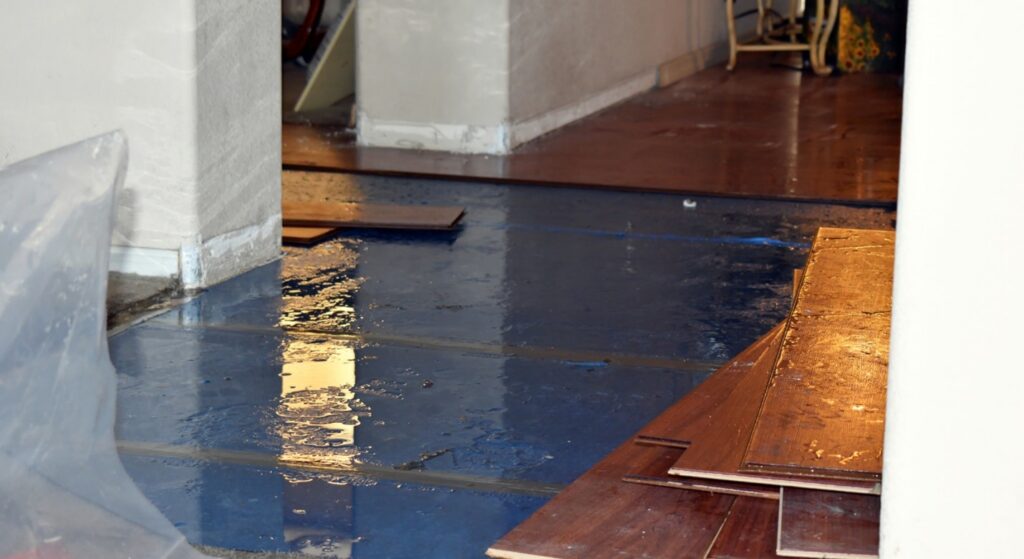
Imagine water from a refrigerator line reaches a kitchen and dining room. One provider quotes a price by phone for “three days of drying.” Another explains that it must identify the wet boundary, floor assembly and source before pricing removal and monitoring. The second approach leaves uncertainty, but it names the work needed to resolve it. You can ask both providers the same questions without delaying emergency steps: what happens today, who assesses the adjoining room, and what evidence closes the drying phase?
Ask Who Is Actually Serving the Property
PuroClean is a chain with locally operated service areas. A homeowner should identify the actual franchise or company receiving the call, its service area and the contact responsible for this job. Ask whether the responder is available now, how scheduling is confirmed and what happens if another visit is needed. Do not assume that a national description, a map listing or a blog post reflects the staffing or capacity for your address on a particular day. The estimate and work order should show the business that will perform or coordinate the work.
Check out the Overland Park water restoration service page for descriptions of the source and affected rooms rather than asking only whether they “do water damage.” Ask whether the franchise handles residential or commercial work for the situation you have, and which parts might go to a plumber, electrician or rebuild contractor. A clear handoff is especially useful when the source repair and restoration are separate contracts.
If someone promises arrival or completion by a specific time, ask for that detail in writing and what could change it. Water losses differ in accessibility, affected material and contamination. A company should be able to describe its response process without claiming that every floor will be saved or every claim paid. Be cautious about unexplained urgency to sign a broad authorization beyond immediate stabilization. Request the scope and change-approval method while the event is still being documented.
Compare Inspection Questions Side by Side
Ask how the assessor will locate moisture beyond visible puddles. Will it check baseboards, adjoining rooms and layers below the finish? Will readings be compared with unaffected reference materials? Will a limited opening be proposed only when it answers a specific question? These details matter more than a list of impressive equipment names. A thermal camera can be useful for screening but does not identify every wet material; extraction equipment removes accessible water but not moisture trapped in a wall.
Ask how the crew classifies the water source and determines whether a material can be cleaned or dried. A fresh supply-line leak and sewer backup require different handling. The EPA moisture and mold guide urges prompt drying and calls for experienced professionals when sewage or other contaminated water has caused the damage. A provider should ask about the source and exposure history, not make the same blanket recommendation in every case. If you see electrical hazards or structural sagging, mention them before anyone enters.
What will the team measure again on subsequent visits? Ask for a written moisture map, progress readings, final readings and a note about inaccessible areas. A three-day schedule may be reasonable in one assembly and inadequate in another. The completion decision should connect to the actual materials. Also ask who decides when material should be removed, how the proposal is revised, and how photographs are retained. A provider that explains uncertainty clearly makes it easier to judge additions to the scope.

Read the Contract and the Estimate
Distinguish the authorization for emergency stabilization from a contract for all repairs. Ask what is included: extraction, drying, removal, cleaning, equipment monitoring, contents handling and reconstruction. Identify exclusions such as plumbing, electrical inspection and finish matching. Ask whether a deposit or direct insurer payment is expected and what happens if coverage is disputed. Neither a restoration company nor a blog can establish what your policy covers. Keep the insurer informed, but obtain terms you understand from the contractor as well.
Compare written proposals on the same loss facts. An estimate for only visible water can be less expensive because it omits a hidden wall or underlayment; a larger estimate can also contain work that testing does not support. Ask each company to explain its boundaries. Photographs, a diagram and material readings make that conversation concrete. If one contractor proposes demolition of an entire room, ask which measured or visible conditions justify that extent and whether an initial selective opening could narrow the decision.
Qualifications and references can inform the choice, but check specific claims instead of treating a badge or brand as a substitute for a plan. Ask who supervises the work and whether specialty subcontractors are used. Get a contact for questions about equipment, safety and schedule. The best first-day conversation ends with an agreed next step and a record of assumptions, not merely a broad claim that a crew will “take care of everything.”
Judge the Handoff as Well as the Response
At the end of mitigation, collect the work record and list of damaged materials for the repair phase. Ask whether the source is confirmed repaired and whether anyone needs to inspect electrical equipment or the building structure. A provider should be able to identify what remains to be done and by whom. If the room looks dry but a cavity could not be tested, that uncertainty should appear in the handoff.
Later, check the repaired source under ordinary use and keep the photos and reports with the property file. That record is useful if a new stain develops or a flooring warranty question arises. The homeowner’s comparison is therefore practical: who will answer a question today, who will document the cause and drying progress, and who will explain the finished condition? Those questions make a service choice more defensible during a rushed situation.
If You Have Only Ten Minutes to Call
Give each company the same short description: the water source, whether it is stopped, affected rooms, estimated discovery time, and any safety concern. Then ask who will arrive, whether that person can assess concealed moisture, how changes are authorized, and when a written record will be available. Write down the answers. If an employee answers on behalf of a franchise, confirm the name on the work order and the contact for the next day. A conversation that takes a few minutes can expose a mismatch in service scope before you agree to reconstruction or contents handling. It also gives the responding crew a better picture of the job.
Frequently Asked Questions
Is the lowest water-damage quote the best value?
Only if the scopes cover the same affected materials, monitoring and repairs. Compare assumptions and exclusions as well as the total price.
Should I wait for my insurer before stopping damage?
Address safety and stop an active source promptly. Contact the insurer for claim instructions, preserve documentation and understand the contractor’s terms.
Can a national chain send a different local operator?
Service structures vary. Confirm the specific company, contact and work order for your address instead of relying on a general brand page.
Need help now? Reach out to PuroClean online or call us 24/7 at (913) 353-8300. We help homeowners. We help business owners. We help people get their lives back after disaster strikes.
We listen. We act fast. We deliver property restoration after a disaster. We’re here to help you recover from water, fire, mold, and biohazard damage, quickly and with care.
Follow us on Facebook for updates and recovery tips.