


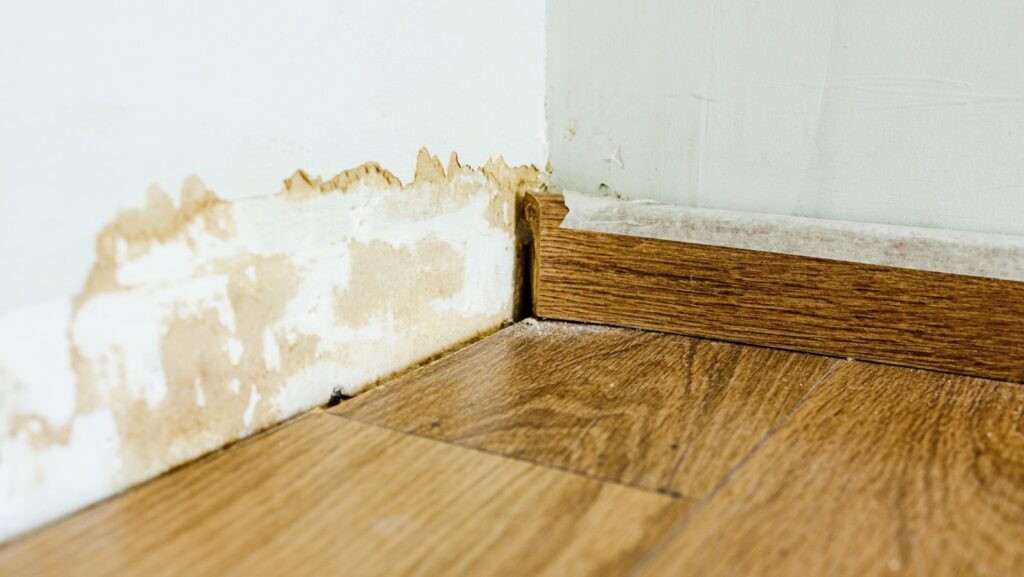
Most people hope water damage ends with drying the carpet and setting up a few fans. Sometimes that’s enough. Other times, the biggest problem is hiding inside the walls. At PuroClean, we’ve found that drywall isn’t always damaged beyond repair, but there are situations where removing part of it is the safest choice. That’s why an Overland Park water damage restoration company spends time inspecting before deciding what stays and what goes.
.
.
A Wet Wall Doesn’t Always Look Wet
One of the more frustrating things about water damage is how ordinary it can look. We’ve walked through homes where the walls appeared perfectly fine. No stains. No bubbling paint. Nothing that would make a homeowner think there was still a problem. Then we checked the moisture levels. The drywall was still holding water long after the original leak had been repaired.
That surprises people, but drywall acts a bit like a sponge. It absorbs moisture quickly, especially around the lower portion of the wall. Depending on how much water entered the home and how long it remained there, drying alone isn’t always enough. That’s one reason water damage restoration in Overland Park begins with understanding what happened before anyone starts talking about repairs.
The Type of Water Matters
Not every water loss is treated the same. A clean supply line leaking behind a bathroom wall creates a different situation than water entering the home from outside or a sewer backup. If clean water is discovered quickly, there’s often a good chance the drywall can remain in place while the area dries. Other situations are different. Once contaminated water becomes involved, replacing affected drywall may be the safer option because of what the material has absorbed. That’s why inspections come first. We don’t assume every wall needs to come out, but we don’t assume every wall can stay either.
Sometimes the Damage Is Behind the Drywall
One homeowner called us after a pipe burst in a hallway wall during the winter. The drywall didn’t look terrible. There was a little staining near the baseboard, but nothing dramatic. After checking inside the wall cavity, we found insulation that was still damp several days after the leak had been repaired. If the wall had simply been painted and left alone, that hidden moisture would have remained trapped where nobody could see it. Situations like that remind us that the visible damage isn’t always the most important part. That’s one reason an Overland Park water damage mitigation company spends so much time checking areas homeowners can’t easily inspect themselves.

.
.
Drywall Can Lose Its Strength
People often think drywall either looks damaged or it doesn’t. In reality, moisture changes the material before those changes become obvious. As drywall absorbs water, it can begin losing its structural strength. It may soften around fasteners, weaken along seams, or start separating from the paper facing. Sometimes those changes are minor. Sometimes they aren’t. The challenge is that you can’t always judge the condition by appearance alone. We’ve seen walls that looked surprisingly good until a closer inspection showed they simply weren’t stable anymore.
Why Small Openings Are Sometimes Made
This is another part of the process that catches homeowners off guard. Occasionally, removing an entire wall isn’t necessary. Instead, small sections of drywall may be opened to inspect inside the cavity or improve airflow during drying. Those openings give us a better understanding of what’s happening where moisture likes to hide. If everything inside is dry, great. If it isn’t, we know before repairs begin instead of months afterward. That’s one reason many Overland Park water restoration companies focus so heavily on inspection before discussing reconstruction.
Waiting Doesn’t Usually Help
A lot of homeowners hope things will improve if they give the wall another week. Sometimes they do. Sometimes they don’t. We’ve revisited homes where the leak had stopped long ago, but moisture remained inside the wall because it never had a chance to escape. The homeowner thought waiting would solve the problem. Instead, it delayed the drying process. The earlier moisture is identified, the more options usually remain available.
Drying Comes Before Repairs
People are naturally eager to put their home back together. We understand that. Nobody enjoys looking at drying equipment or sections of exposed framing. Still, replacing drywall before the surrounding materials have completely dried can create another round of repairs later. That’s why we monitor moisture levels throughout the drying process. Once the structure reaches acceptable drying goals, repairs can move forward with much more confidence. As water damage experts in Overland Park, we’ve learned that patience during drying often prevents frustration later.
Every Home Responds Differently
No two houses react exactly the same way. Construction methods vary. Insulation varies. Humidity levels vary. Even two homes with nearly identical leaks may require different restoration plans because the moisture travels differently. That’s why we avoid one-size-fits-all recommendations. Instead, we inspect each property individually and build the restoration plan around what we actually find.
Why Homeowners Trust PuroClean
At PuroClean, we know hearing that drywall might need to be removed isn’t something anyone wants. Our goal isn’t to remove more materials than necessary. It’s to make informed decisions based on moisture readings, careful inspections, and years of restoration experience. Every PuroClean location is independently owned and operated, allowing us to provide local service backed by national restoration standards, professional training, and proven restoration procedures.
You might need an Overland Park water damage restoration company after a burst pipe. You may need assistance from Overland Park water damage mitigation services following a larger water loss. Whatever your situation, we focus on protecting your home for the long term.
.
.
Frequently Asked Questions
Does every wet wall need to be removed?
No. Many walls can be dried successfully. The decision depends on the amount of moisture, how long it has been present, the type of water involved, and the condition of the drywall.
Why can’t you just dry the wall from the outside?
Sometimes you can. Other times, moisture becomes trapped inside the wall cavity, making additional access necessary for proper drying.
How do professionals know if drywall is still wet?
Moisture meters and other professional equipment help measure moisture levels inside building materials that may appear dry on the surface.
Is removing drywall always a bad sign?
Not necessarily. In many cases, removing a small section allows the rest of the structure to dry properly and helps prevent larger repairs later.
Final Thoughts
Removing drywall is never the goal. Saving as much of the home as possible is. But when moisture remains trapped inside a wall, removing part of the drywall may be the best way to protect the structure and avoid bigger problems down the road. An experienced Overland Park water damage restoration company knows the difference between a wall that can be saved and one that needs a little more attention before your home is truly dry again.

Need help now? Reach out to PuroClean online or call us 24/7 at (913) 353-8300. We help homeowners. We help business owners. We help people get their lives back after disaster strikes. We listen. We act fast. We deliver property restoration after a disaster. We’re here to help you recover from water, fire, mold, and biohazard damage, quickly and with care. Follow us on Facebook for updates and recovery tips.