 PuroClean of Ormond Beach
Why Florida’s Daily Afternoon Storms Are Doing More Damage to Your Home Than You Realize
June through September in Ormond Beach runs on a schedule. By early afternoon, clouds build over the peninsula. By 3pm, the thunderstorm arrives. By 4pm, it is gone. The sun comes back out, the streets steam dry within the hour, and most homeowners give it no further thought.
The problem is what happened inside the wall while the storm was doing its thing outside.
Repetitive, low-volume water intrusion from seasonal thunderstorms is one of the most consistently underestimated water damage sources our team encounters in Volusia County. Each individual event seems minor. The cumulative effect of sixty or seventy of them across a single Florida summer is anything but.
How Repetitive Storm Intrusion Differs From a Single Water Event
A burst pipe creates an acute event. The damage is visible, the source is identifiable, and the response is immediate. Professional water mitigation addresses it and the job is done.
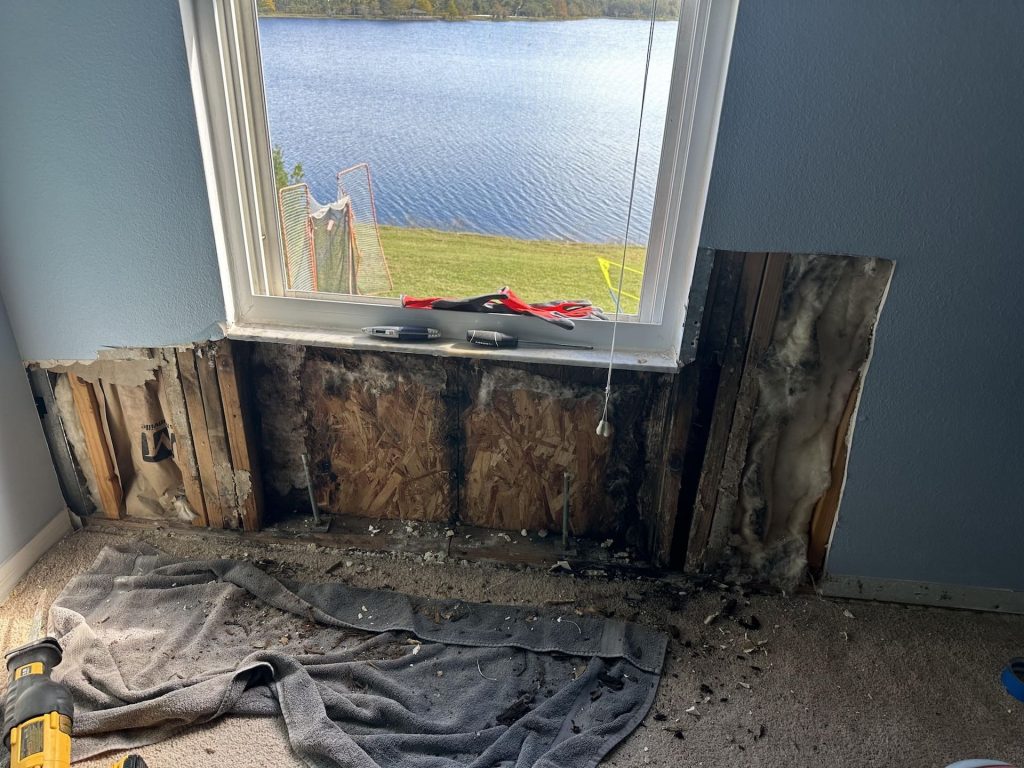
Repetitive storm intrusion works completely differently. Each event introduces a small volume of water through the same entry point, typically a failing window seal, a deteriorated roof valley, a gap in soffit flashing, or a poorly sealed door threshold. The material absorbs the moisture, partially dries between events, then absorbs again with the next storm.
Over a season, this cycle produces something that a single acute event rarely does: deep, chronic saturation of structural materials that have been repeatedly wet and partially dried without ever reaching true dry-out. Wood framing in this condition loses structural integrity gradually. Insulation compresses and loses thermal value. And the repeated moisture cycling creates ideal conditions for mold to establish itself in the wall cavity long before any surface indication appears.
The Entry Points Most Ormond Beach Homes Are Not Protecting
Florida’s summer storms are not gentle. They deliver high-volume rainfall in short bursts, often with significant wind that drives water horizontally against the building envelope rather than straight down. Standard construction details designed for vertical rainfall are frequently inadequate for wind-driven rain at the intensity Volusia County receives.
The most common repetitive intrusion points our team identifies in Ormond Beach homes include:
- Window frame perimeter seals that have degraded in Florida’s UV exposure and temperature cycling, allowing wind-driven rain to track into the wall cavity at the frame edge
- Roof-to-wall transitions at dormers, additions, and second-story setbacks where flashing has shifted or deteriorated
- Sliding glass door thresholds, which are ubiquitous in Ormond Beach homes and frequently allow water entry under the track during heavy wind-driven rain
- Soffit and fascia gaps where original caulk has failed and wind-driven rain enters the attic assembly horizontally
- Stucco cracks on CBS construction homes, where hairline cracks that appear cosmetic become active water entry points under wind-driven storm pressure
What Water Mitigation After Seasonal Storm Damage Actually Involves
Water mitigation for cumulative storm intrusion is a different scope of work than responding to an acute flooding event. The focus shifts from extraction to assessment and targeted drying of materials that have been repeatedly saturated:
- Thermal imaging survey of all exterior-facing walls and ceiling planes to map moisture that has accumulated through the season
- Material moisture content readings at multiple depths to determine whether structural wood has reached a level requiring intervention
- Targeted drying equipment placement focused on the specific wall and ceiling assemblies where chronic intrusion has occurred
- Mold assessment of any wall cavity that shows elevated moisture combined with organic material, given the repeated wet-dry cycling
- Entry point identification and documentation to support repair decisions and any related insurance inquiry
- Monitoring through full dry-out to confirm structural materials return to acceptable moisture content before the next storm season begins
The Best Time to Address This Is Before the Season Ends
Summer storm season in Ormond Beach winds down in October. The window between the last significant storm and the arrival of drier fall conditions is the ideal time to assess whether the season has left cumulative moisture behind in your home’s structure.
Waiting until visible damage appears, a stain on the ceiling, a soft spot in the wall, a mold smell from a closet on an exterior wall, means the structural materials have been in a compromised state for months longer than necessary.
A water mitigation assessment at the end of storm season costs far less than the remediation a full season of undetected moisture accumulation typically requires.
Storm Season Is Almost Over. Find Out What It Left Behind.
If your Ormond Beach home has been through another Florida summer, there is a reasonable chance something in the building envelope let water in somewhere it should not have gone. Most of the time it is invisible until it is not.
PuroClean of Ormond Beach provides water mitigation assessments and emergency response across Ormond Beach, Daytona Beach, Port Orange, Holly Hill, and throughout Volusia County. Call (386) 777-4770 or reach out online and we will take a look before next season picks up where this one left off.


 PuroClean of Ormond Beach