 PuroClean of Pasadena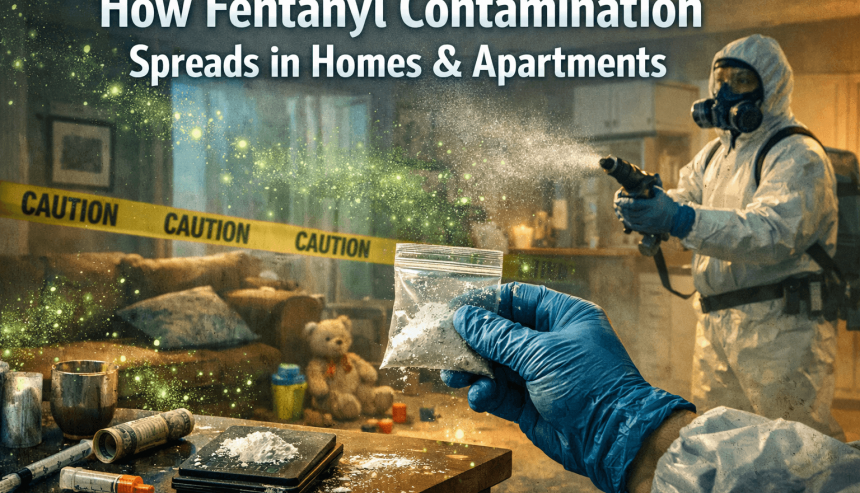
In this article:
Fentanyl contamination is no longer a hypothetical risk confined to law enforcement or emergency medicine. It is now a real, documented environmental hazard affecting homes, vehicles, hotels, short-term rentals, correctional facilities, rehabilitation centers, and luxury assets that were never designed to withstand exposure to synthetic opioids.
What makes fentanyl uniquely dangerous is not just its potency—it is the false sense of safety surrounding cleanup. Too many property owners, managers, and even cleaning vendors believe fentanyl can be “wiped away,” neutralized with a disinfectant spray, or safely handled with gloves and hand sanitizer.
That belief is wrong—and increasingly, it is legally indefensible.
This article explains:
Table of Contents
- How fentanyl contamination actually behaves in real environments
- Why alcohol-based hand sanitizers increase skin absorption risk
- Why DIY or “spray and pray” cleanup methods fail
- Where fentanyl contamination is now being discovered
- The legal, health, and liability exposure tied to improper remediation
- Why physician-led fentanyl decontamination is rapidly becoming the standard
What Makes Fentanyl an Environmental Hazard—Not Just a Drug
Fentanyl is a highly lipophilic synthetic opioid, meaning it readily binds to fats, oils, plastics, and porous materials. Unlike many drugs that degrade quickly or remain localized, fentanyl:
- Transfers easily between surfaces
- Absorbs into fabrics, foams, plastics, and vehicle interiors
- Persists on surfaces long after visible residue is gone
- Can re-aerosolize through agitation, heat, or improper cleaning
This makes fentanyl fundamentally different from common biological contaminants or household chemicals.
Once introduced into an environment, fentanyl does not simply “sit on top” of a surface. It embeds.
The Hidden Danger of Alcohol-Based Hand Sanitizers and Fentanyl Exposure
One of the most overlooked—and medically significant—risks during fentanyl exposure involves alcohol-based hand sanitizers.
Why This Matters
Alcohol is a powerful solvent. When alcohol comes into contact with fentanyl residue on the skin, it can:
- Increase fentanyl solubility
- Enhance transdermal absorption
- Accelerate systemic uptake through the skin
In practical terms, this means that using alcohol-based hand sanitizer after contacting fentanyl-contaminated surfaces can increase the amount of fentanyl absorbed into the bloodstream, not reduce it.
This phenomenon is well understood in medicine and pharmacology, yet it is almost never discussed in consumer or janitorial cleaning guidance.
For individuals attempting DIY cleanup—especially without proper PPE—this creates a false sense of protection that actually raises overdose risk.
Why “Spray and Pray” Cleanup Methods Fail
“Spray and pray” cleanup refers to any method that relies on:
- Surface spraying disinfectants
- Generic cleaners or degreasers
- Odor masking
- Wiping without verification testing
- No controlled waste handling
- No post-remediation validation
These approaches fail for several reasons.
1. Fentanyl Is Not Neutralized by Most Disinfectants
Most cleaning agents are designed to:
- Kill bacteria or viruses
- Remove visible soil
- Break down organic material
They are not designed to chemically neutralize synthetic opioids.
Spraying disinfectant over fentanyl residue may spread contamination, drive it deeper into porous materials, or aerosolize particles.
2. Improper Cleaning Increases Cross-Contamination
Wiping surfaces without containment protocols can transfer fentanyl to:
- Adjacent rooms
- HVAC systems
- Cleaning equipment
- Clothing and skin
This is how single-site exposure becomes multi-site contamination.
3. No Verification = No Proof of Safety
Without analytical verification, there is no evidence the environment is safe for re-occupancy.
From a liability standpoint, that means:
- No defensible documentation
- No clearance standard
- No protection if someone is harmed later
The Legal and Liability Risks of Improper Fentanyl Cleanup
Fentanyl contamination is no longer treated as a cosmetic issue. It is increasingly viewed through the lens of foreseeable harm.
That matters legally.
Property owners, operators, and managers may be exposed to liability for:
- Failure to remediate known contamination
- Inadequate cleanup methods
- Allowing re-occupancy without clearance
- Injury or overdose linked to environmental exposure
This applies to:
- Short-term rentals and Airbnbs
- Hotels and hospitality properties
- Rental vehicles and fleet assets
- Luxury or exotic vehicles
- Private aviation assets
- Correctional facilities
- Rehab and treatment centers
- Private residences
Once fentanyl exposure is suspected or documented, doing nothing—or doing it incorrectly—can be worse than not knowing at all.
Where Fentanyl Contamination Is Being Found Today
The scope of fentanyl contamination has expanded dramatically in recent years.
We are now called to decontaminate:
Vehicles
- Luxury and exotic cars
- Rental vehicles including exotic rentals
- Ride-share vehicles
- Fleet and government vehicles
Vehicle interiors are especially vulnerable due to:
- Porous upholstery
- Foam padding
- Plastic trim
- Enclosed air circulation
Aviation Assets
- Private jets
- Turboprop aircraft
- Private planes
These environments demand precision decontamination due to:
- Sensitive avionics
- Tight tolerances
- High asset value
Hospitality & Short-Term Rentals
- Airbnbs
- Hotels
- Motels
These properties face severe liability exposure due to rapid guest turnover and implied safety expectations.
Institutional & High-Risk Facilities
- Jail cells and detention facilities
- Rehabilitation centers
- Medical and behavioral health environments
Private Homes
- Owner-occupied residences
- Estates
- Multi-family units
In many cases, contamination is discovered after an overdose, arrest, eviction, or unattended death—but sometimes it’s found only after unexplained illness or testing.
Why Self-Cleanup Is a Serious Medical Risk
Attempting to clean fentanyl contamination without professional controls exposes individuals to:
- Dermal absorption
- Inhalation of aerosolized particles
- Secondary exposure through clothing
- Delayed symptoms after exposure
Unlike many toxins, fentanyl does not always cause immediate symptoms. That delay creates dangerous overconfidence.
People assume:
“I feel fine. It must be okay.”
That assumption has resulted in documented exposures requiring medical intervention.
The Difference a Physician-Led Decontamination Model Makes
This is where our approach is fundamentally different.
We are the only physician-owned and physician-led fentanyl cleanup and decontamination company providing this service.
That matters because fentanyl is not just an environmental contaminant—it is a pharmacologically active compound.
Our protocols are built around:
- Medical risk modeling
- Exposure pathway analysis
- Human physiology
- Controlled neutralization methods
- Verification and clearance standards
This is not janitorial cleaning. It is hazardous drug decontamination.
Training Under Jeff Jones, “The Microbial Warrior”
Our team is trained under Jeff Jones, widely known as The Microbial Warrior, one of the most respected authorities in advanced contamination remediation.
Jeff Jones has spent decades:
- Training elite remediation teams
- Developing protocols for complex contaminants
- Teaching verification-based cleanup standards
You can learn more about his work at:
This training is not theoretical. It is operational, field-tested, and continuously updated as fentanyl contamination evolves.
Why Verification-Based Decontamination Is Non-Negotiable
True fentanyl decontamination requires:
- Controlled containment
- Appropriate PPE and protocols
- Targeted neutralization
- Proper waste handling
- Post-remediation verification testing
- Clear documentation
Anything less is guesswork—and guesswork has no place where overdose risk exists.
Why High-Value Assets Demand Specialized Handling
Luxury vehicles, exotic cars, and private aircraft require:
- Material-specific protocols
- Non-destructive methods
- Discreet execution
- Zero tolerance for collateral damage
A “one-size-fits-all” cleaning approach can permanently damage interiors while still failing to remove fentanyl contamination.
We design asset-specific remediation plans that protect both human safety and asset value.
The Cost of Doing It Wrong
The real cost of improper fentanyl cleanup is not just remediation—it’s what comes after:
- Medical emergencies
- Lawsuits
- Insurance denials
- Reputational damage
- Loss of use of high-value assets
In contrast, professional, physician-led decontamination provides:
- Risk reduction
- Defensible documentation
- Safe re-occupancy
- Peace of mind
Final Thoughts: Fentanyl Is Not a Cleaning Problem—It’s a Medical and Legal One
Fentanyl contamination demands a higher standard of care.
If you are responsible for:
- People
- Properties
- Vehicles
- Guests
- Tenants
- Clients
- High-value assets
Then fentanyl cleanup is not optional—and cutting corners is not a strategy.
Spray and pray is not decontamination.
DIY is not protection.
And alcohol-based hand sanitizer is not safety.
This is a domain where medical leadership, advanced training, and verification-based protocols are the difference between safety and serious harm.
Frequently Asked Questions About Fentanyl Cleanup & Decontamination
Can fentanyl be absorbed through the skin?
Yes. Fentanyl is a lipophilic synthetic opioid, meaning it can be absorbed through the skin, especially with prolonged contact or when solvents are present. While intact skin provides some protection, environmental exposure—particularly during cleanup—creates a real absorption risk, especially without proper PPE and protocols.
Does hand sanitizer increase the risk of fentanyl exposure?
Yes. Alcohol-based hand sanitizers can increase fentanyl absorption through the skin. Alcohol acts as a solvent and can enhance transdermal penetration, potentially increasing systemic exposure rather than reducing it. This is one of the most dangerous misconceptions surrounding fentanyl cleanup.
Can fentanyl become airborne during cleaning?
Yes. Improper cleaning methods—such as spraying, wiping, vacuuming, or agitating contaminated surfaces—can aerosolize fentanyl particles, increasing inhalation risk. This is why controlled containment and professional decontamination protocols are essential.
Is it safe to clean fentanyl contamination yourself?
No. Self-cleanup dramatically increases the risk of dermal absorption, inhalation, and secondary contamination. Most people lack the PPE, training, neutralization agents, and verification testing required to make an environment safe. DIY fentanyl cleanup is a medical and legal risk, not a cost-saving measure.
Do regular disinfectants or bleach neutralize fentanyl?
No. Most household disinfectants, bleach, and janitorial cleaners do not neutralize fentanyl. They may spread contamination, drive it deeper into porous materials, or give a false sense of safety without actually reducing risk.
How long does fentanyl remain on surfaces?
Fentanyl can persist on surfaces for extended periods, especially on porous materials like fabric, foam, plastics, and vehicle interiors. Without proper decontamination, contamination can remain long after visible residue is gone.
Is fentanyl contamination dangerous even if no powder is visible?
Yes. Visible powder is not required for exposure risk. Fentanyl residue can remain invisible while still being pharmacologically active and transferable through contact.
Can fentanyl contamination affect vehicles?
Yes. Vehicles are one of the highest-risk environments due to enclosed air space, porous upholstery, foam padding, and plastic surfaces. We decontaminate luxury vehicles, exotic cars, rental cars, fleet vehicles, and ride-share vehiclesusing asset-specific protocols.
Can fentanyl contaminate private jets or airplanes?
Yes. Fentanyl contamination has been identified in private jets, turboprops, and private aircraft. Aviation assets require specialized handling due to sensitive materials, avionics, and the high value of interiors.
Is fentanyl cleanup required by law?
While regulations vary, once fentanyl contamination is known or suspected, failure to remediate properly may create liability exposure. Property owners and operators may be held responsible for foreseeable harm if re-occupancy occurs without proper decontamination and verification.
Who is responsible for fentanyl cleanup in rental properties or Airbnbs?
Responsibility often falls on the property owner or operator, especially once contamination is identified. Inadequate cleanup or allowing re-occupancy without verification can expose owners to significant legal and financial risk.
Can fentanyl exposure happen days or weeks after an incident?
Yes. Because fentanyl can persist on surfaces and re-transfer through contact, exposure can occur well after the original incident, particularly if improper cleanup methods were used.
Is fentanyl cleanup the same as biohazard cleanup?
No. Fentanyl cleanup is fundamentally different. It involves hazardous drug decontamination, not just biological material removal. The chemistry, exposure pathways, and neutralization requirements are entirely different.
Why does physician-led fentanyl cleanup matter?
Fentanyl is a pharmacologically active drug, not just a contaminant. A physician-led model ensures cleanup protocols are based on human physiology, exposure risk, and medical science, not just surface cleaning assumptions.
Are you really the only physician-owned fentanyl cleanup company?
Yes. We are the only physician-owned and physician-led company providing fentanyl cleanup and decontamination services, bringing medical oversight to a space where mistakes can have life-threatening consequences.
What happens if fentanyl cleanup is done incorrectly?
Improper cleanup can result in:
- Continued exposure risk
- Medical emergencies
- Legal liability
- Insurance disputes
- Repeat contamination
- Loss of use of high-value assets
Inadequate remediation often costs far more than professional decontamination.
How do you confirm an area is safe after fentanyl cleanup?
We use verification-based protocols, including controlled processes and documentation, to confirm decontamination effectiveness. Safety is not assumed—it is verified.
Can you decontaminate luxury or high-profile environments discreetly?
Yes. We regularly decontaminate luxury homes, estates, exotic vehicles, private aircraft, hotels, and high-profile properties with strict discretion, confidentiality, and minimal disruption.
How quickly should fentanyl contamination be addressed?
Immediately. Delays increase exposure risk, cross-contamination, and liability. The sooner professional decontamination begins, the safer and more controlled the outcome.
Read More Here:



 PuroClean of Pasadena