


Understanding the Hidden Dangers of Cold Storage Fire Smoke in Pasadena, Los Angeles, and Surrounding Communities after the Boyle Heights Warehouse Fire.
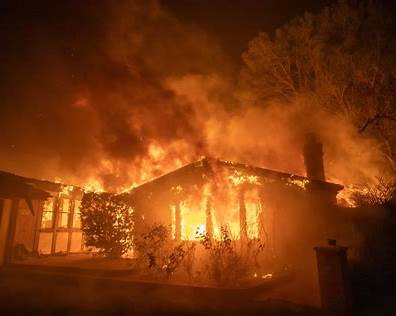
When most people think about a structure fire, they imagine smoke generated from wood, drywall, furniture, or household belongings. While those fires certainly create significant contamination concerns, fires involving cold storage warehouses and refrigerated facilities present an entirely different level of complexity.
Recent cold storage fires across the United States have demonstrated how these facilities can burn for days or even weeks due to the enormous quantities of insulation, refrigeration equipment, plastics, packaging materials, and synthetic building components used in their construction. The resulting smoke can travel for miles, impacting homes and businesses far beyond the immediate fire zone.
For homeowners in Pasadena, South Pasadena, Alhambra, Highland Park, Mount Washington, Boyle Heights, Eagle Rock, DTLA, San Marino, San Gabriel, and surrounding communities, understanding the risks associated with cold storage fire smoke is critical.
The reality is that smoke from a cold storage facility fire may contain combustion byproducts that are substantially different from those generated by a typical residential fire. These contaminants can infiltrate homes, settle on surfaces, enter HVAC systems, and affect indoor air quality long after visible smoke has disappeared.
Below are the top ten reasons why smoke from a cold storage facility fire should never be ignored.
1. Cold Storage Facilities Contain Massive Amounts of Foam Insulation
One of the defining features of a refrigerated warehouse is the extensive use of foam insulation.
Cold storage facilities commonly utilize:
- Polyurethane foam
- Polyisocyanurate foam
- Expanded polystyrene
- Extruded polystyrene
- Composite insulated wall panels
These materials are highly effective at maintaining temperature control, but they present significant challenges during a fire.
When foam insulation burns, it can release:
- Carbon monoxide
- Hydrogen cyanide
- Nitrogen oxides
- Isocyanates
- Volatile organic compounds (VOCs)
- Dense soot particles
Unlike ordinary wood smoke, combustion products from synthetic foam insulation may be more persistent, more corrosive, and more difficult to remove from indoor environments.
Because cold storage facilities contain enormous quantities of these materials, the volume of smoke generated can be substantial.
2. Refrigerant Combustion Can Produce Highly Toxic Gases
One of the most concerning aspects of a cold storage facility fire involves the refrigeration systems themselves.
Modern refrigerated warehouses often contain:
- R-134a
- R-410A
- R-32
- R-454B
- Other fluorinated refrigerants
When exposed to extreme heat and flame, refrigerants can decompose into highly toxic compounds.
Potential combustion byproducts include:
Hydrogen Fluoride (HF)
Hydrogen fluoride is an extremely corrosive gas capable of causing serious respiratory irritation, pulmonary edema and chemical injury.
Carbonyl Fluoride (COF₂)
Carbonyl fluoride is highly toxic and can convert into hydrogen fluoride when exposed to moisture.
Hydrogen Chloride (HCl)
Older refrigeration systems may generate hydrogen chloride when chlorine-containing refrigerants decompose.
Phosgene
Certain refrigerants and chlorinated compounds can generate phosgene under combustion conditions. Phosgene is a highly toxic pulmonary irritant historically used as a chemical warfare agent.
Even if exposure levels outside the fire zone are significantly diluted, these compounds contribute to the overall complexity of contamination resulting from a cold storage facility fire.
3. Smoke Particles Can Travel Miles Beyond the Fire
Many homeowners assume that if they are several miles from the fire, they are unaffected.
Unfortunately, smoke does not respect neighborhood boundaries.
Depending on:
- Wind direction
- Atmospheric stability
- Topography
- Temperature inversions
- Fire intensity
Smoke particles may travel many miles from the source.
Communities such as:
- Pasadena
- South Pasadena
- Highland Park
- Mount Washington
- Alhambra
- Eagle Rock
- San Gabriel
- DTLA
- Monterey Park
may experience smoke impacts even when no flames are visible.
If you can smell smoke inside your home, contamination has already entered the structure.
4. Smoke Can Penetrate Homes Even With Doors and Windows Closed
A common misconception is that keeping a home sealed prevents contamination.
Modern homes constantly exchange air with the outdoors through:
- HVAC systems
- Bathroom exhaust fans
- Attic vents
- Crawlspace vents
- Door gaps
- Window gaps
- Utility penetrations
Microscopic smoke particles can easily infiltrate these pathways.
Once inside, contaminants settle onto:
- Walls
- Ceilings
- Flooring
- Furniture
- Bedding
- Clothing
- Electronics
- HVAC components
Many homeowners are surprised to discover significant contamination despite never opening a window during the event.
5. HVAC Systems Can Become Long-Term Sources of Contamination
Your HVAC system acts like the respiratory system of your home.
As smoke enters return air pathways, contaminants can accumulate within:
- Air filters
- Blower assemblies
- Evaporator coils
- Air handlers
- Supply ducts
- Return ducts
Without proper evaluation, these systems may continue redistributing smoke particles throughout the home.
This is one reason why some homeowners continue smelling smoke weeks after outdoor air quality has improved.
The odor is often not coming from outside anymore.
It is coming from within the building itself.
6. Cold Storage Fire Smoke Often Contains Corrosive Residues
One of the least understood aspects of cold storage fire contamination is corrosion.
Combustion byproducts associated with refrigerants and synthetic materials can create acidic residues.
These residues may settle on:
- Electrical panels
- Circuit boards
- Appliances
- HVAC components
- Security systems
- Computers
- Smart home devices
Over time, corrosion may contribute to:
- Premature equipment failure
- Electronic malfunctions
- Reduced system lifespan
This is especially concerning for homes and businesses containing sensitive electronics.
7. Smoke Odors Are Often a Sign of Hidden Contamination
Smoke odor is not merely a nuisance.
Odors indicate the presence of residual combustion compounds.
Many homeowners attempt to solve smoke odor issues with:
- Air fresheners
- Scented candles
- Essential oils
- Household cleaning products
These approaches rarely address the source.
The contamination itself remains embedded within porous materials such as:
- Carpet
- Upholstery
- Insulation
- Drywall
- Wood framing
Professional smoke remediation focuses on removing contamination rather than masking it.
8. Health Concerns Extend Beyond the Active Fire Event
Many people assume that health concerns end once the smoke plume dissipates.
In reality, residual contamination may continue affecting indoor environments.
Potential symptoms associated with smoke-contaminated environments can include:
- Eye irritation
- Throat irritation
- Headaches
- Coughing
- Respiratory distress
- Increased sensitivity among children
- Increased sensitivity among elderly individuals
Individuals with asthma or other respiratory conditions may be particularly vulnerable.
For this reason, evaluating indoor conditions following significant smoke exposure is often prudent.
9. Not All Smoke Damage Is Visible
One of the biggest mistakes property owners make is relying solely on visual evidence.
Smoke contamination can exist without:
- Visible soot
- Surface discoloration
- Burn marks
- Obvious residue
Microscopic particles can remain present despite a home appearing perfectly clean.
Professional assessment often includes evaluating:
- Surface contamination
- HVAC contamination
- Odor migration
- Indoor air quality indicators
Because contamination may be invisible, testing frequently plays a critical role in determining the scope of remediation.
10. Verification Testing Helps Ensure a Safe Return to Occupancy
Perhaps the most important reason to take cold storage fire smoke seriously is the need for objective verification.
At PuroClean of Pasadena, the only physician lead restoration company in Souther California, we believe homeowners deserve more than promises.
They deserve data.
That is why we often recommend independent environmental testing before and after remediation when significant smoke events occur.
Pre-Remediation Assessment
Before work begins, qualified environmental professionals may perform testing to establish baseline conditions.
This can include:
- Indoor air quality evaluation
- Particulate assessment
- Surface sampling
- HVAC evaluation
- Smoke contamination investigation
These findings help determine whether contamination exists and where remediation efforts should be focused.
Post-Remediation Clearance Testing
After remediation is completed, independent testing can be performed to verify that remediation goals have been achieved.
Post-remediation clearance testing may include:
- Visual inspection
- Air quality assessment
- Surface cleanliness verification
- Particulate measurements
- Comparative analysis against pre-remediation findings
The purpose is simple:
To provide confidence that the environment has been properly restored.
Rather than relying on subjective opinions, property owners receive objective information regarding the effectiveness of remediation efforts.
Why PuroClean of Pasadena Takes Smoke Damage Seriously
Cold storage facility fires are fundamentally different from ordinary structure fires.
The combination of:
- Foam insulation
- Synthetic materials
- Plastics
- Refrigerants
- Extended burn durations
- Complex combustion chemistry
creates unique contamination concerns that should not be overlooked.
Whether your property is located in Pasadena, South Pasadena, Highland Park, Mount Washington, Alhambra, Eagle Rock, San Gabriel, DTLA, Boyle Heights, or another nearby community, smoke intrusion deserves careful evaluation.
If your home smells like smoke, if your HVAC system is circulating odors, or if you are concerned about contamination following a nearby fire, professional assessment may help determine whether remediation is warranted.
At PuroClean of Pasadena, our goal is not simply to remove odors. Our goal is to help restore healthy indoor environments through a science-based approach that includes proper assessment, professional remediation, and independent verification whenever appropriate.
Contact PuroClean of Pasadena
If you are experiencing smoke odors or concerns about indoor air quality following a cold storage facility fire or other major fire event, contact PuroClean of Pasadena today for a FREE inspection.
PuroClean of Pasadena
626-514-1400
Our team proudly serves Pasadena, South Pasadena, Alhambra, Highland Park, Mount Washington, San Marino, San Gabriel, DTLA, Eagle Rock, Boyle Heights, and surrounding Los Angeles communities.
When it comes to smoke damage, what you cannot see can still affect your home. Let our team help you determine whether your property has been impacted and what steps may be necessary to restore peace of mind.


