If you’re a homeowner in Bellevue, IL, you already know that water damage can strike fast and quietly, often long before you notice a single stain on the ceiling or a warped floorboard. The causes of water damage in Bellevue range from aging plumbing and brutal Midwest winters to sump pump failures and storm flooding, and knowing what to look for is your first line of defense. In this guide, we at PuroClean of Peoria walk you through the most common causes, proven prevention steps, and exactly when to call in a certified restoration professional before a small leak turns into a costly disaster.
Table of Contents
1. Aging or Burst Pipes: The Most Common Cause of Water Damage in Bellevue, IL
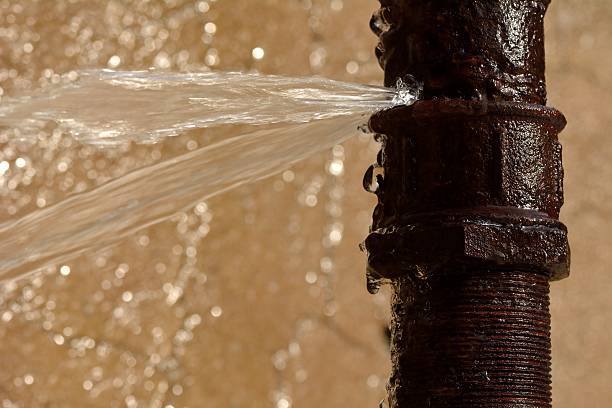
Bellevue’s freeze-thaw cycle is hard on pipes. When temperatures drop below freezing in January and February, water inside pipes can expand, crack the pipe wall, and release hundreds of gallons into your walls or floors in minutes. Older homes in neighborhoods like Moss-Bradley and Richwoods are especially vulnerable because they often have galvanized steel or copper pipes that have been quietly corroding for decades.
- Insulate pipes in unheated spaces like the garage, basement, and crawl space before winter arrives each year.
- Keep your thermostat set to at least 55 degrees Fahrenheit even when you travel, to prevent freezing in vacant rooms.
- Schedule a plumbing inspection every three to five years to catch hairline cracks or corrosion before they become a burst.
- Know where your main water shutoff valve is and test it at least once a year to confirm it still works.
Frozen and aging pipes are responsible for a significant share of the water damage restoration calls we receive every winter in central Illinois, and the repairs are almost always more expensive than simple prevention.
2. Roof Leaks and Damaged Gutters: How Storm Water Gets Inside Your Home
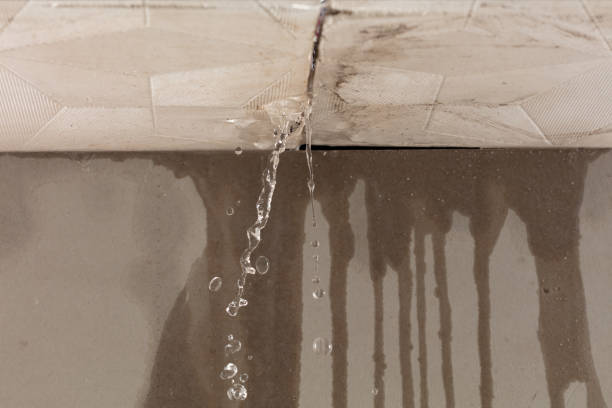
A roof that looks fine from the street may be quietly funneling water into your attic every time it rains. Peoria averages about 37 inches of rainfall a year, and storm events can be intense. Missing or curled shingles, cracked flashing around chimneys, and clogged gutters are the top entry points for rainwater that leads to ceiling stains, mold growth, and rotted roof decking.
- Inspect your roof visually each spring and fall, and hire a licensed roofer for a close-up inspection after any hail event.
- Clean gutters and downspouts at least twice a year, and extend downspouts at least six feet away from your foundation.
- Check the flashing around vents, skylights, and chimneys for gaps or rust, since these are where leaks almost always begin.
- Replace any damaged shingles promptly, because a single missing shingle can allow water to travel laterally under adjacent shingles.
Roof-related water intrusion is one of the sneakiest causes of water damage in Bellevue, IL because the leak point and the stain on your ceiling may be several feet apart, making it hard to trace without professional help.
3. Sump Pump Failure: Why Bellevue Basements Flood During Heavy Rain
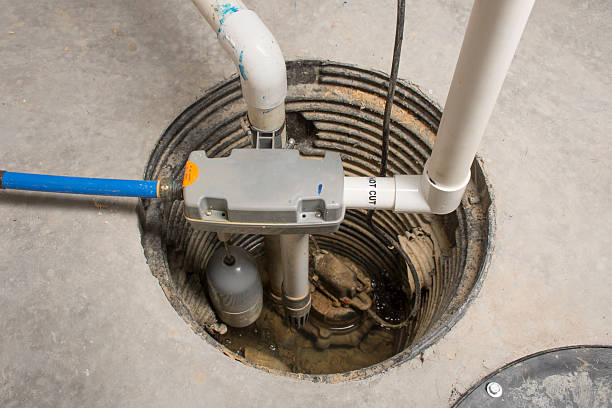
Peoria sits along the Illinois River, and large portions of the city have high water tables, especially in areas near the riverfront and lower-lying neighborhoods. Most Bellevue, IL homes with basements rely on a sump pump to channel groundwater away from the foundation. When that pump fails during a heavy rain event, water can back up into the basement within minutes.
- Test your sump pump every spring by slowly pouring a bucket of water into the pit until the float triggers the pump motor.
- Install a battery backup system so the pump still operates during power outages, which often coincide with the same storms that cause flooding.
- Replace the primary pump every seven to ten years even if it still appears to be working, since motors degrade silently over time.
- Consider a water alarm in the sump pit that alerts you by phone if water rises above a set level while you are away.
If your basement has already taken on water, do not delay in calling a restoration professional. Standing water promotes mold growth within 24 to 48 hours, and the cleanup cost rises sharply once mold takes hold.
4. Appliance Leaks and Plumbing Connections: Slow Leaks That Cause Big Damage
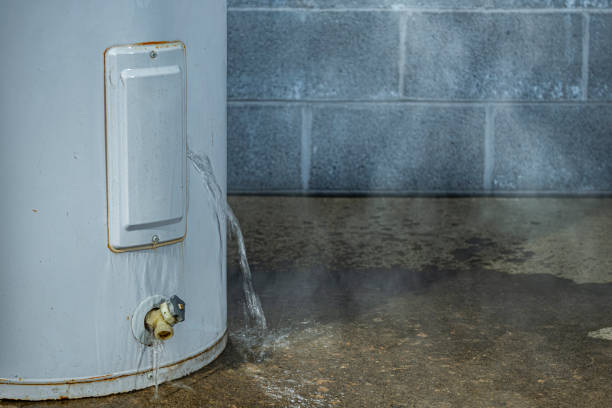
Washing machines, dishwashers, refrigerators with ice makers, and water heaters are among the leading sources of water damage inside Bellevue homes. The hoses and supply lines that connect these appliances to your plumbing wear out gradually, and a slow drip behind a washing machine can soak the subfloor for months before you notice it.
- Replace rubber washing machine hoses with braided stainless steel hoses every five years or according to the manufacturer’s recommendation.
- Pull your appliances out from the wall once a year to check for moisture, staining, or discoloration on the floor or baseboards behind them.
- Install a leak sensor behind the refrigerator and under the dishwasher so you get an immediate alert when moisture is detected.
- Flush your water heater annually to remove sediment buildup, which can erode the tank lining and eventually cause a leak.
Appliance-related water damage in Bellevue homes is common precisely because these leaks hide in plain sight, tucked behind cabinetry or under flooring where no one thinks to look.
5. Foundation Cracks and Poor Drainage: When Outside Water Gets In
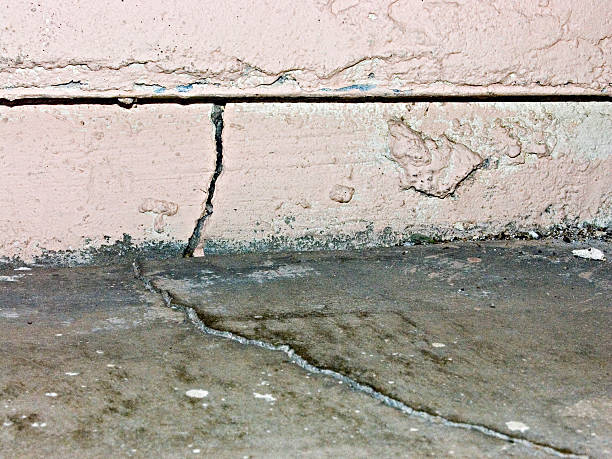
If the soil around your home’s foundation slopes toward the house rather than away from it, every rain event pushes water against your basement walls. Over time, that hydrostatic pressure opens hairline cracks in poured concrete or causes the mortar joints in block foundations to erode. This is one of the primary causes of water damage in Bellevue homes that have never had a major plumbing failure but still deal with a persistently damp basement.
- Grade the soil around your foundation so it slopes away from the house by at least one inch per foot for the first six feet.
- Seal visible cracks in your foundation walls with hydraulic cement or a polyurethane injection, and have a waterproofing professional evaluate any cracks wider than a quarter inch.
- Install window well covers on basement windows to prevent rainwater from pooling against the glass and seeping through the frame.
- Consider an interior drain tile system if your basement takes on water despite good exterior drainage, especially in Bellevue’s older housing stock.
Foundation water intrusion is closely connected to mold removal needs, since block and poured concrete walls that stay damp become ideal surfaces for mold colonies to develop.
6. HVAC Systems and Condensate Lines: The Hidden Water Source Inside Your Walls
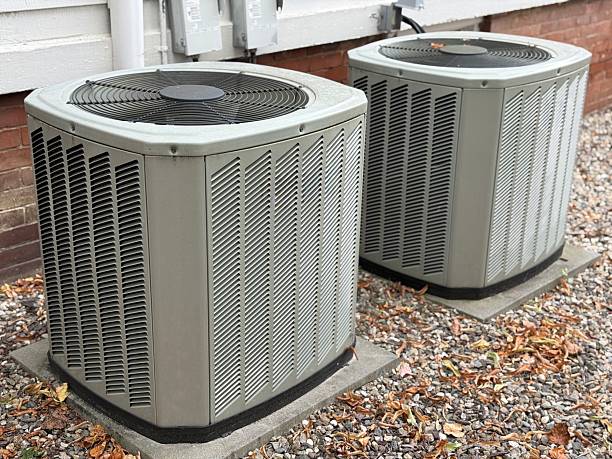
Your air conditioning unit removes humidity from the air inside your home and channels that moisture out through a condensate drain line. In Bellevue summers, when humidity levels regularly climb above 70 percent, that line carries a meaningful volume of water every day. A clogged condensate line, a cracked drain pan, or a poorly connected fitting can drip water continuously into your ceiling, attic, or wall cavity without triggering any alarm.
- Pour a cup of distilled white vinegar into the condensate drain line access point every two months during cooling season to prevent algae and slime buildup.
- Check the drain pan beneath your indoor air handler at least once a season for standing water or rust staining, both of which indicate a drainage problem.
- Schedule a professional HVAC tune-up each spring that includes inspection and clearing of the condensate line.
- Know where your system’s emergency shutoff float switch is and verify it is properly installed to cut power when the pan fills up.
HVAC-related water damage is frequently misdiagnosed as a roof leak or plumbing problem because the drip point is often far removed from where you actually see the moisture.
7. Sewage Backups and Drain Overflows: A Water Damage and Health Emergency
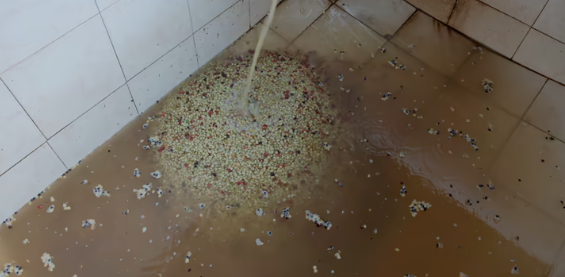
Sewage backups are among the most serious causes of water damage in Bellevue because they combine structural damage with a significant health hazard. Tree roots growing into aging clay sewer lines are a persistent problem in Peoria’s older established neighborhoods, and combined sewer systems in some parts of the city can back up during heavy rain events when the municipal system is overwhelmed.
- Have your sewer line scoped with a camera every three to five years if your home is more than 40 years old or if you have mature trees in the yard.
- Install a backwater prevention valve on your sewer lateral to stop sewage from flowing backward into your basement during municipal surges.
- Never flush items like wipes, paper towels, or hygiene products, even those labeled flushable, since they accumulate in older sewer lines.
- If a sewage backup occurs, do not attempt to clean it yourself. Category 3 water, which includes sewage, requires professional biohazard cleanup equipment and protective protocols.
If you’re already dealing with sewage backup or significant flooding, call PuroClean of Peoria at (309) 431-4003 for a fast, certified response before the damage compounds.
8. Storm and Flood Damage: When Bellevue Weather Becomes a Water Damage Risk
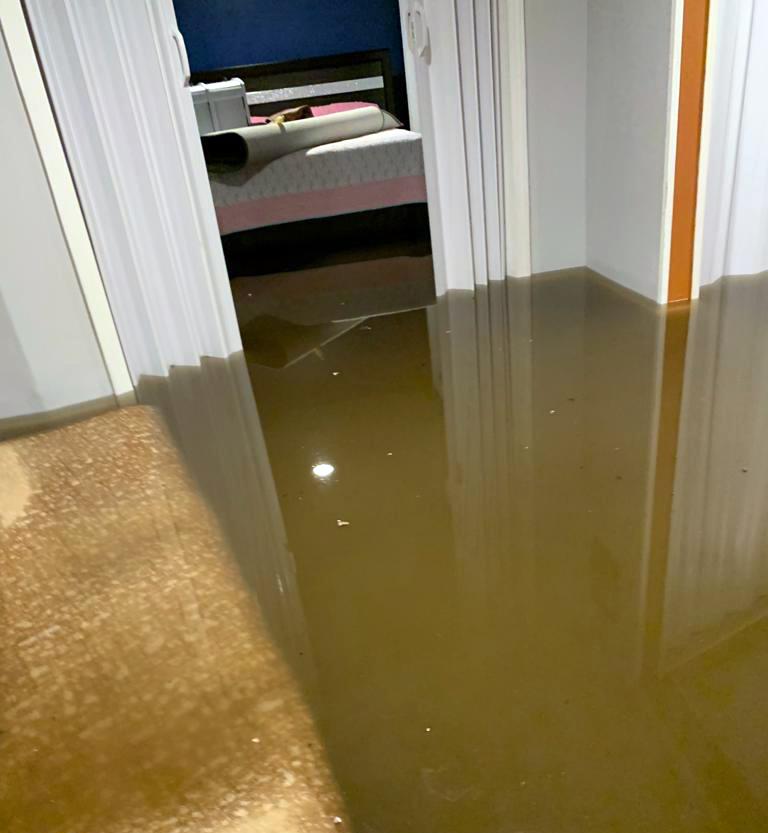
Bellevue experiences significant weather events throughout the year, including heavy spring thunderstorms, flash flooding near creek corridors, and periodic overland flooding when saturated soil can no longer absorb rainfall. The Federal Emergency Management Agency has designated portions of Peoria County as Special Flood Hazard Areas, and even homes outside those zones can sustain water intrusion during major events.
- Review your homeowner’s insurance policy now to understand whether flood damage is covered, since standard policies exclude it. Separate flood insurance through the National Flood Insurance Program (NFIP) is available to Bellevue residents.
- Elevate critical mechanical systems like water heaters, electrical panels, and HVAC equipment in finished basements, even if your home has never flooded.
- Keep sandbags or water-activated flood barriers on hand if your property sits near a creek or drainage channel.
- After any flood event, document all damage with photos before beginning any cleanup, so your insurance claim is fully supported.
Storm-related water damage restoration in Peoria requires rapid drying and structural assessment, since floodwater carries contaminants that penetrate porous materials quickly and silently.
9. When to Call a Water Damage Restoration Professional in Bellevue
Not every water problem is a DIY fix. Homeowners often underestimate the depth of water intrusion because moisture travels through walls, under flooring, and into insulation long before it is visible. Attempting to dry out a water-damaged area with household fans and dehumidifiers frequently leaves moisture behind in wall cavities, which then becomes the foundation for mold growth within days.
PuroClean of Peoria uses professional-grade moisture meters, thermal imaging cameras, and commercial drying equipment to locate and eliminate moisture in areas you cannot see. Our certified technicians follow the Institute of Inspection, Cleaning and Restoration Certification (IICRC) standards for water damage mitigation, and we work directly with most major insurance carriers to streamline your claim.
- Call a restoration professional immediately if water has been present for more than 24 hours, since mold can begin developing within that window.
- Seek professional help any time sewage or floodwater is involved, since these categories of water require specialized protective equipment and disposal protocols.
- Contact a restoration company before attempting to remove saturated drywall, flooring, or insulation yourself, since improper removal can spread contamination and void insurance coverage.
- If you see or smell mold after a water event, do not run fans over the affected area. This can spread spores. Call for professional mold removal evaluation first.
If water damage events are not mitigated in a timely manner, fungal contaminants will grow and amplify, quickly posing an allergic, toxic, and infectious disease health risk to both occupants and restoration personnel. – Ken Larsen (C&R Magazine)
Our team at PuroClean of Peoria is available around the clock for emergency water damage restoration response. Call us at (309) 431-4003 any time.
FAQs About Water Damage in Peoria
What are the most common causes of water damage in Bellevue, IL? The most common causes include frozen or burst pipes during winter, sump pump failures during heavy rain events, roof leaks from storm damage, appliance supply line failures, and foundation seepage. Bellevue’s climate and aging housing stock make all of these especially common.
How quickly does mold grow after water damage? Mold can begin growing on wet building materials within 24 to 48 hours under typical indoor conditions. High humidity and warm temperatures, both common in Bellevue summers, accelerate that timeline. Professional drying within the first 24 hours dramatically reduces the risk of mold developing after a water event.
Does homeowner’s insurance cover water damage in Bellevue homes? Most standard homeowner’s policies cover sudden and accidental water damage from sources like burst pipes or appliance failures, but they typically exclude flood damage and gradual leaks caused by neglected maintenance. Review your specific policy and consider purchasing separate flood insurance through the NFIP if your property is in a flood-prone area.
How much does water damage restoration cost in Bellevue? Costs vary widely based on the source of water, how long the damage has been present, and how many materials need to be removed or dried. Minor water damage affecting a single room may run a few hundred dollars, while major flooding involving finished basement areas or structural materials can range into the thousands. Prompt response almost always reduces the final cost significantly.
Can I dry out water damage myself without calling a professional? Small surface spills on non-porous materials can often be dried without professional help. However, any water intrusion that has reached drywall, wood framing, insulation, or flooring almost always requires professional drying equipment to fully eliminate moisture. Incomplete drying is the number one cause of post-water-damage mold growth in Bellevue homes.
Final Thoughts: Protecting Your Bellevue Home From Water Damage Starts Now
The causes of water damage in Bellevue are well-documented and, in most cases, preventable with consistent attention to your plumbing, roof, drainage, and appliances. Acting early on warning signs like water stains, musty smells, or soft spots in floors and walls is always far less costly than waiting for a crisis to develop. And when damage does occur, the speed of your response determines whether you’re dealing with a manageable restoration or a full-scale reconstruction.
At PuroClean of Peoria, we are your local certified restoration experts for water damage, mold, fire, biohazard, and reconstruction services. We live and work in this community, and we are committed to helping Peoria homeowners recover quickly and completely.
📞 Call PuroClean of Peoria for water damage restoration and causes of water damage in Bellevue guidance today at (309) 431-4003 or visit our website. Don’t let water damage ruin your home, your belongings, or your family’s health. Get trusted, local professional help today.