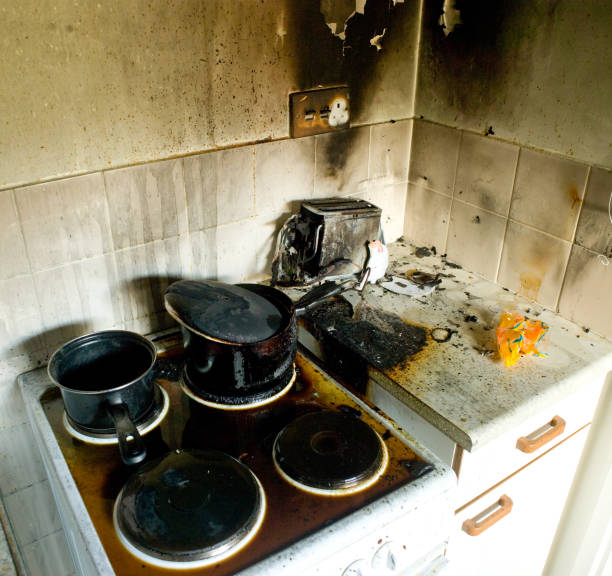
After a fire, the visible flames may be gone, but smoke damage can continue affecting your home or business. Soot may coat walls and ceilings, dark residue can settle on furniture, and persistent odors can linger long after the fire is extinguished. Understanding the types of smoke damage is an important first step toward choosing the right cleaning and restoration approach.
Not all smoke residue behaves the same way. The types of smoke damage covered in this guide, which are wet smoke, dry smoke, and protein residue, have different characteristics and can affect building materials, furniture, and personal belongings in different ways. Using the wrong cleaning method may spread residue, push it deeper into porous surfaces, or make stains more difficult to remove.
For property owners in Peoria, Illinois, knowing the types of smoke damage can help you respond appropriately after a kitchen fire, an electrical fire, or a larger property fire. PuroClean of Peoria provides fire and smoke damage restoration to help property owners address visible residue, lingering odors, and damage left behind after a fire.
1. What Are the Main Types of Smoke Damage?
The main types of smoke damage describe how smoke, soot, and combustion byproducts affect surfaces and materials during or after a fire. The specific residue depends on what burned, how hot the fire became, and how much oxygen was available.
Restoration professionals commonly distinguish between several types of smoke damage, including wet smoke, dry smoke, and protein residue. These categories help guide the cleaning process, but actual fire damage can involve a mixture of residue types throughout the property.
The three main types of smoke damage have different characteristics:
- Wet smoke residue: Often associated with smoldering fires and lower-temperature combustion, it can be sticky, thick, and difficult to clean.
- Dry smoke residue: Often associated with fast-burning, high-temperature fires involving materials that produce fine, powdery soot.
- Protein residue: Commonly associated with overheated or burned food, it can leave a thin, difficult-to-see film and a strong lingering odor.
These are useful restoration categories rather than rigid rules. A single fire may produce multiple types of smoke damage, especially when different materials burn in different rooms.
Identifying the residue correctly helps determine how to clean affected surfaces without causing unnecessary damage. The U.S. government’s Ready.gov home fires guide explains how common household fires start, which helps explain why residue differs from one fire to the next.
2. Wet Smoke Damage: Sticky Residue That Smears Easily
Wet smoke is one of the most stubborn types of smoke damage. The residue is typically dark, thick, and sticky, and it is often associated with slow-burning or smoldering fires, where combustion conditions produce heavier residue.
Because wet smoke residue can smear when disturbed, wiping a surface with an ordinary cloth may spread the contamination instead of removing it. The residue can cling to walls, ceilings, cabinets, furniture, and other surfaces, making cleanup challenging.
Common signs of wet smoke damage
You may notice:
- Thick, dark soot deposits
- Sticky or greasy residue on surfaces
- Black marks that smear when wiped
- Strong smoke odors
- Residue around doorways, ceilings, and other areas smoke reached
- Contamination on furniture and household belongings
Wet smoke damage may occur in rooms affected by a smoldering fire, including areas where upholstered furniture or other materials have burned. However, the appearance of the residue alone cannot reliably identify its source.
Why this type of smoke damage is difficult to remove
The sticky nature of wet smoke residue makes it easy to spread. Incorrect cleaning products or excessive moisture can smear soot across a larger area and may drive residue into porous materials.
Painted walls, unfinished wood, textiles, and textured surfaces may require different cleaning methods. Some materials may be salvageable with appropriate treatment, while others may need refinishing or replacement.
How wet smoke damage is cleaned
The correct approach depends on the material and the severity of contamination. Restoration may involve controlled soot removal, specialized cleaning agents, surface testing, and odor treatment.
Homeowners should avoid scrubbing heavily contaminated surfaces or using random household cleaners. If residue smears, stop cleaning and have the affected material assessed.
For Peoria property owners, professional evaluation can be especially useful when smoke has spread beyond the room where the fire started. Residue may have reached adjoining rooms, cabinets, and concealed areas through air movement.
3. Dry Smoke Damage: Fine Soot That Spreads Easily
Dry smoke is another of the common types of smoke damage. The residue is generally fine, powdery, and less sticky than wet smoke residue. It is often associated with fast-burning fires that generate high temperatures and produce small soot particles.
Although dry soot may appear easier to clean, it can be difficult to control. Loose particles can become airborne or spread across surfaces when disturbed.
Common signs of dry smoke damage
Look for:
- Fine, powdery soot on surfaces
- Dark deposits around walls and ceilings
- Residue on shelving and furniture
- Soot inside drawers or cabinets
- Smoke deposits around vents and openings
- A persistent smoky odor
Dry smoke residue can settle far from the fire’s point of origin. Air movement may carry fine particles into bedrooms, hallways, offices, and other areas that do not appear visibly damaged.
Why dry smoke needs careful handling
Wiping dry soot with a wet cloth can create streaks and make the residue harder to remove. Brushing it aggressively can spread particles or push them into porous surfaces.
Even when soot looks like a thin layer of dust, it should not be treated as ordinary household dirt. Fire residue can contain substances that require careful handling, depending on what burned. The EPA’s indoor air quality resources explain why airborne particles inside a building deserve attention.
How dry smoke damage is cleaned
Professional cleaning may begin with appropriate dry-removal techniques, followed by surface-specific cleaning. Restoration teams determine which methods are suitable for walls, ceilings, flooring, furniture, and other materials.
The goal is to remove residue without spreading it or damaging the surface underneath. Smoke odor removal may also be needed if smoke has penetrated porous materials.
If a fire affects a Peoria home or commercial property, avoid running fans or handling soot-covered belongings before the affected area has been assessed. Uncontrolled airflow can move residue into areas that were previously unaffected.
4. Protein Residue: The Types of Smoke Damage You Can’t Always See
Protein residue is the type of smoke damage most often linked to cooking fires. When food or other organic cooking materials overheat or burn, the resulting residue can deposit a thin film on nearby surfaces.
Unlike the dark soot associated with many fires, protein residue may be nearly invisible. You may notice the odor before you notice any discoloration.
This makes protein residue particularly challenging in kitchens, where cabinets, appliances, ceilings, walls, and nearby rooms may be affected. The National Fire Protection Association’s cooking fire safety tips show how most of these fires begin.
Common signs of protein residue
Possible indicators include:
- A persistent burnt-food or cooking-related odor
- A thin film on kitchen surfaces
- Discoloration that becomes more noticeable over time
- Residue on cabinet doors and appliance surfaces
- Smoke odor in nearby rooms
- Contamination on ceilings or walls above the cooking area
The lack of obvious black soot does not mean the property is free from smoke damage. Residue can settle on surfaces even when they look relatively clean.
Why protein residue can be challenging
Protein residue can bond to surfaces and become more difficult to remove if it is not treated appropriately. Painting over the affected area or using a general-purpose cleaner may fail to address the underlying contamination and odor.
Because the residue may be difficult to see, property owners can overlook affected areas such as cabinet tops, light fixtures, ventilation components, and the undersides of shelves.
How protein residue is cleaned
The cleaning process depends on the affected material and the amount of contamination. It may involve specialized cleaning products, careful surface testing, detailed cleaning of kitchen fixtures, and odor treatment.
If a cooking fire has affected your Peoria home, do not assume that opening a window and wiping visible surfaces will resolve the problem. A professional assessment can help identify residue that has spread beyond the immediate cooking area.
5. How the Types of Smoke Damage Compare
Understanding the differences between the types of smoke damage helps explain why restoration methods vary. However, the categories can overlap, and a restoration professional may need to assess the residue directly before selecting a cleaning method.
| Feature | Wet Smoke | Dry Smoke | Protein Residue |
|---|---|---|---|
| Typical appearance | Dark, thick, sticky | Fine, powdery soot | Often thin or nearly invisible |
| Common source pattern | Smoldering or lower-temperature combustion | Fast-burning, higher-temperature fires | Overheated or burned food |
| Main cleaning challenge | Smears easily | Spreads easily when disturbed | Difficult to see and may leave persistent odor |
| Commonly affected areas | Walls, ceilings, furniture, belongings | Surfaces throughout affected rooms | Kitchens, cabinets, appliances, nearby rooms |
| Cleaning approach | Controlled residue removal and specialized cleaning | Appropriate dry removal followed by surface-specific cleaning | Detailed surface cleaning and odor treatment |
These descriptions are general guides, not a way to identify every type of fire residue at home. Materials burned, ventilation, fire duration, and airflow all influence the final pattern of contamination.
When multiple types of smoke damage are present, restoration may require several cleaning methods rather than one treatment applied throughout the property.
6. Other Types of Smoke Damage and Soot Residue to Know
Wet smoke, dry smoke, and protein residue are the best-known types of smoke damage, but they do not describe every condition that can occur after a fire. Smoke can contain a complex mixture of gases and particles, and the residue left behind depends on the materials involved.
Fuel-oil residue
Fires involving heating oil or other petroleum-based fuels may leave oily or greasy deposits. These residues can cling to surfaces and create persistent odors.
The cleanup approach depends on the fuel involved, the surfaces affected, and the extent of contamination. Significant fuel-related residue should be assessed by qualified restoration professionals.
Synthetic-material smoke residue
Modern homes and commercial buildings contain plastics, foams, insulation, electronics, and synthetic furnishings. When these materials burn, they can produce complex smoke residues and potentially hazardous combustion byproducts.
The risk depends on the materials involved and the conditions of the fire. Do not assume residue is safe to handle because it resembles ordinary soot.
Corrosive residue and secondary damage
Some fire residues can contribute to corrosion or discoloration on metal fixtures, appliances, electronics, and other surfaces. Smoke particles and chemical byproducts may continue affecting materials after the flames are out.
Prompt assessment is important when smoke has reached electrical equipment, sensitive machinery, or valuable belongings. Do not power on electronics that may have been contaminated by soot or firefighting water until they have been evaluated appropriately. If firefighting water soaked the property, you may also need water damage restoration.
7. What to Do After Discovering Any of the Types of Smoke Damage
After a fire, it is natural to want to begin cleaning immediately. However, the wrong approach can spread soot, damage finishes, or expose you to contaminated residue. The American Red Cross also offers fire recovery guidance for the days after a fire.
Take these steps to protect yourself and your property.
Step 1: Make Sure the Property Is Safe
Do not re-enter a building until emergency responders have confirmed it is safe to do so. Fire-damaged structures may have weakened materials, electrical hazards, or lingering smoke and combustion byproducts.
If anyone has difficulty breathing, chest pain, confusion, or other severe symptoms after smoke exposure, seek emergency medical care.
Step 2: Avoid Touching or Wiping Soot
Do not scrub smoke-stained walls, furniture, or ceilings before the residue has been assessed. Avoid using wet cloths on powdery soot or applying cleaning chemicals without knowing whether they are suitable for the material.
Uncontrolled cleaning can spread residue and make restoration more difficult.
Step 3: Limit Movement Through Affected Areas
Walking through a soot-contaminated room can transfer residue to carpets, flooring, and other surfaces. Keep children and pets away from affected areas, and avoid carrying contaminated belongings through clean parts of the property.
Do not use household fans to circulate air through soot-covered rooms unless a qualified professional has advised that it is appropriate.
Step 4: Document the Damage
When the property is safe to enter, take photos or videos of affected rooms, surfaces, furniture, appliances, and personal belongings. Keep records of visible damage and contact your insurance company to ask about the documentation required for your claim.
Avoid discarding damaged belongings unless they pose an immediate safety risk or your insurer advises you on how to proceed.
Step 5: Arrange a Professional Assessment
A restoration professional can evaluate the types of smoke damage present, identify affected materials, and determine the appropriate cleaning and odor-control methods.
For property owners in Peoria, this can help prevent missed contamination in adjoining rooms, cabinets, ventilation pathways, and other less-visible areas.
If your home or business has smoke damage after a fire, contact PuroClean of Peoria at (309) 431-4003 to discuss the situation and available restoration services.
8. Why Professional Restoration Matters for Every Type of Smoke Damage
Smoke cleanup is not simply a matter of removing visible black marks. The residue may be difficult to see, odors can penetrate porous materials, and some cleaning methods can damage surfaces if they are not appropriate for the contamination.
Professional restoration focuses on identifying the types of smoke damage in the property and selecting methods suited to the residue and the material being cleaned.
Depending on the situation, restoration may include:
- Assessing visible and hidden smoke contamination
- Identifying residue patterns and affected materials
- Removing soot using appropriate methods
- Cleaning walls, ceilings, floors, and other surfaces
- Cleaning salvageable furniture and belongings
- Addressing persistent smoke odors
- Coordinating repairs or replacement of damaged materials
- Reassessing affected areas as restoration progresses
Not every item can be restored, and not every surface needs to be replaced. The decision depends on the extent of contamination, the material involved, and whether cleaning can achieve an appropriate result.
Odor treatment also needs to match the problem. Masking a smoky smell with fragrance does not remove the residue causing it. Depending on the circumstances, a restoration plan may need to address both surface contamination and odor absorbed into porous materials.
For Peoria homeowners, landlords, and business owners, a professional assessment can help establish the scope of work and determine which materials may be salvageable.
9. How Different Types of Smoke Damage Affect Your Home or Business
Smoke can travel beyond the room where a fire begins. Depending on airflow and the building layout, residue may reach hallways, bedrooms, offices, storage areas, and other spaces. This can make the cleanup more extensive than the visible fire damage suggests.
Walls and ceilings
Smoke residue can discolor painted surfaces, collect in corners, and leave odors behind. Whether a surface can be cleaned or needs repainting depends on the residue, the finish, and the condition of the underlying material.
Furniture and personal belongings
Upholstered furniture, clothing, curtains, books, and other porous items can absorb smoke odors. Some belongings can be professionally cleaned, while others may be too heavily damaged or difficult to restore.
Kitchens and appliances
Cooking fires can leave residue on cabinets, countertops, appliances, and nearby walls. Protein residue may be particularly hard to identify because it can leave little visible discoloration.
Appliances and electronics exposed to soot should be assessed before use, particularly if residue may have entered internal components.
HVAC systems and ventilation
Smoke particles may travel through ventilation pathways and deposit in other areas. Whether HVAC cleaning is necessary depends on the fire, the system, and the evidence of contamination. Have the system assessed rather than assuming it is either unaffected or automatically needs complete cleaning.
Commercial properties
For Peoria businesses, smoke damage may affect customer areas, stockrooms, offices, equipment, and inventory. A restoration plan needs to consider not only cleaning but also safety, the condition of business equipment, and the steps required before normal operations resume.
Addressing the full extent of smoke contamination helps avoid leaving affected areas untreated.
10. Get Help With the Types of Smoke Damage in Peoria
Smoke damage can be frustrating because it is not always obvious how far the residue has traveled or which cleaning method will work. The different types of smoke damage each present different challenges, and a single fire can leave several forms of contamination behind.
If a fire has affected your home or business in Peoria, East Peoria, Pekin, Washington, or nearby communities, do not rely on appearance alone to judge the damage. A room that looks relatively clean may still contain smoke residue or persistent odors.
PuroClean of Peoria provides fire and smoke damage restoration to help property owners assess affected areas, clean salvageable materials, address smoke odors, and determine what repairs may be needed.
For help after a fire, call PuroClean of Peoria at (309) 431-4003.
Frequently Asked Questions About the Types of Smoke Damage
1. What are the three main types of smoke damage?
The three main types of smoke damage are wet smoke residue, dry smoke residue, and protein residue. Wet smoke is often sticky and dark, dry smoke is generally powdery, and protein residue from cooking fires can be difficult to see. A single fire may produce more than one type.
2. Which of the types of smoke damage is hardest to clean?
There is no single answer because cleanup difficulty depends on the residue, the surface, and how far contamination has spread. Wet smoke can smear, dry soot can spread easily, and protein residue may be difficult to detect. Correctly identifying the contamination helps determine the best cleaning approach.
3. Can smoke damage occur without visible soot?
Yes. Protein residue from a cooking fire can be nearly invisible, and smoke odors may remain even when obvious discoloration is absent. A professional assessment can help identify contamination that ordinary visual inspection may miss.
4. Can I clean smoke damage myself?
Minor residue on a suitable surface may sometimes be cleaned safely, but widespread smoke damage, sticky soot, persistent odors, or residue from burned synthetic materials should be assessed carefully. Improper wiping and unsuitable cleaning products can spread residue or damage surfaces. Avoid entering unsafe buildings or handling potentially hazardous contamination.
5. How much does smoke damage restoration cost in Peoria, IL?
Costs vary according to the size of the affected area, the type of residue, the materials involved, odor severity, and the amount of cleaning or repair required. A professional assessment is the best way to determine the scope of restoration for a specific property. For assistance, contact PuroClean of Peoria at (309) 431-4003.
Final Thoughts on the Types of Smoke Damage
Understanding the types of smoke damage can help you make better decisions after a fire. Wet smoke often leaves sticky residue, dry smoke produces fine soot that can spread easily, and protein residue may be difficult to see despite leaving a persistent odor.
The right restoration approach depends on the residue, the affected materials, and how far smoke has traveled through the property. Avoid aggressive DIY cleaning, make sure the building is safe, document the damage, and arrange a professional assessment when contamination is widespread or difficult to identify.
If smoke has affected your Peoria home or business, contact PuroClean of Peoria at (309) 431-4003 to discuss fire and smoke damage restoration.