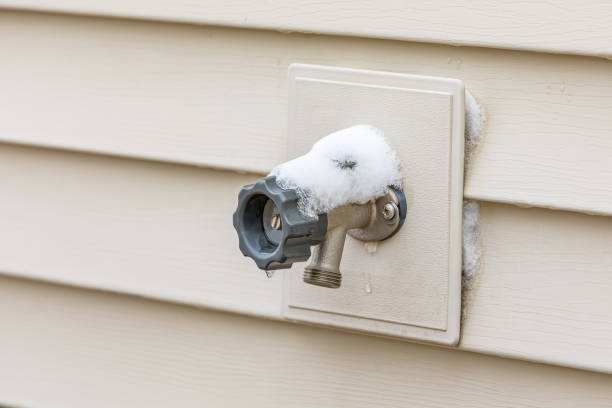
Outdoor faucets connect straight to the plumbing inside your walls. When trapped water freezes, it expands and can crack the pipe where you cannot see it. The leak often shows up later, in a basement ceiling or a finished wall. If a frozen pipe has already caused a leak, PuroClean of Peoria offers 24/7 water damage restoration.
The good news is that the job is quick. Most homes need only a few minutes per faucet and no special tools. This guide shows you how to winterize outdoor faucets of every common type.
Quick answer: Disconnect and drain every hose. For a standard faucet, close the indoor shutoff valve, then open the outdoor faucet to drain it. For a frost-free faucet, remove the hose and close the handle. Add an insulated cover for extra protection.
Why This Weekend Matters in Peoria
The forecast warms up early next week, with afternoon highs in the 60s. Those mild days are the perfect window to winterize outdoor faucets before colder nights settle in. Waiting until the first hard freeze means working in the cold, or finding a leak too late.
You do not have to guess at the steps. The American Red Cross lists outdoor hoses and hose bibs among the first things to protect. It advises removing hoses, closing the inside valves that feed them, and leaving the outside valve open.
Know Your Faucet Type First
Not every outdoor faucet works the same way. The right way to winterize outdoor faucets depends on which type you have:
| Faucet type | How to spot it | How it drains | What to do |
| Standard hose bib | A short pipe inside, often with a separate shutoff valve nearby | Only after you close the indoor valve | Close the indoor valve and open the outdoor faucet |
| Frost-free faucet | A long pipe body that reaches well inside the wall | On its own when the hose is off | Remove the hose and close the handle |
| Standard faucet with no shutoff | No valve on the line leading to the faucet | It cannot drain without shutting off the main | Cover it, insulate the pipe, and call a plumber |
To check, look in the basement or crawlspace right behind the faucet. A frost-free faucet has a long body, often several inches to a foot or more. Its valve sits inside the warm part of the house. Once you know the type, it is easy to winterize outdoor faucets correctly.
Winterize Outdoor Faucets in 5 Steps
Work through these steps for each faucet on your home. Start with the side that gets the most wind.
Step 1: Disconnect and Drain Every Hose
A hose left attached traps water inside the faucet. On a frost-free faucet, that trapped water can freeze and split the pipe inside your wall. That kind of leak often goes unnoticed until you use the hose in spring. Removing hoses is the first rule when you winterize outdoor faucets.
- Unscrew every hose, even the ones you rarely use.
- Remove splitters, hose timers, and quick-connect fittings.
- Stretch hoses on a slope so the water runs out.
- Coil and store them in a garage, shed, or basement.
Step 2: Find the Indoor Shutoff Valve
Standard faucets usually have a shutoff valve inside the house. Follow the pipe from the faucet back into the basement, crawlspace, or utility room. It often sits near the basement ceiling.
Tag the valve so you can find it again in spring. Illinois American Water suggests tagging your main shutoff, too. Knowing both valves can save precious minutes if a pipe ever bursts.
Step 3: Close the Valve and Open the Faucet
Turn a round handle clockwise until it stops. A lever handle on a ball valve usually needs only a quarter turn. Do not force a stiff valve, since it may need service.
Next, go outside and open the faucet all the way. Any water left in the line will drain out. The Red Cross advises keeping the outside valve open so leftover water has room to expand.
Some indoor valves have a small drain cap on the side. Hold a bucket under it and loosen the cap to release the last bit of water. Replace the cap once the water stops.
Step 4: Check Every Frost-Free Faucet
A frost-free faucet shuts off inside the warm wall, so the outside part drains on its own. That only works when the hose is off and the handle is closed. Leaving it open would let water run, because its supply stays on.
- Remove the hose before you close the handle.
- Close the handle snug, but do not force it.
- Watch for drips over the next few minutes.
- Fix a dripping faucet before a hard freeze, since drips can still freeze.
Step 5: Add an Insulated Cover
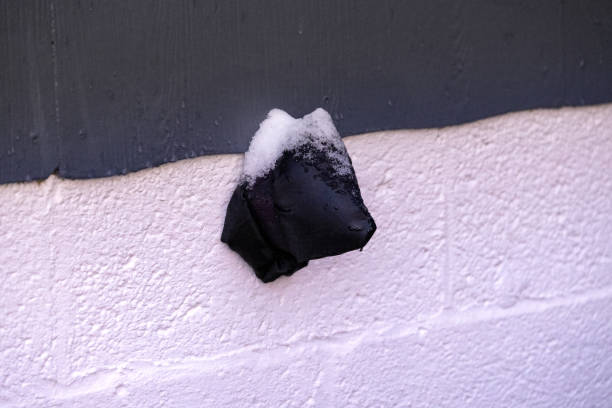
A foam faucet cover adds one more layer of protection. It holds in some of the heat that escapes from the house around the pipe. Covers are inexpensive and sold at most hardware stores.
A cover is a backup, not a replacement for draining. It works best on a faucet you have already drained. Fit it tight against the siding so cold air cannot sneak underneath. It makes a smart final step when you winterize outdoor faucets.
Should You Leave the Faucet Open or Closed?
This is one of the most common questions when people winterize outdoor faucets. The answer depends on your faucet type:
- Standard faucet with an indoor shutoff: Close the inside valve and leave the outside faucet open.
- Frost-free faucet: Remove the hose and close the handle.
- Standard faucet with no shutoff: Keep it closed, cover it, and call a plumber.
If you are not sure which type you have, check the pipe inside before you decide. Guessing wrong can leave water in the line or a faucet running all winter.
What If Your Faucet Has No Shutoff?
Some older homes have outdoor faucets with no separate valve inside. You cannot fully drain these without shutting off water to the whole house. That leaves you with a few options:
- Add an insulated cover and wrap the pipe inside the basement.
- Ask a licensed plumber to add a shutoff valve on the line.
- Replace the faucet with a frost-free model.
- Use the faucet as little as possible once nights turn cold.
A new shutoff valve or a frost-free faucet is usually a small plumbing job. It can prevent a much larger water damage repair later. It also makes it simple to winterize outdoor faucets every fall.
Protect the Pipe Behind the Faucet
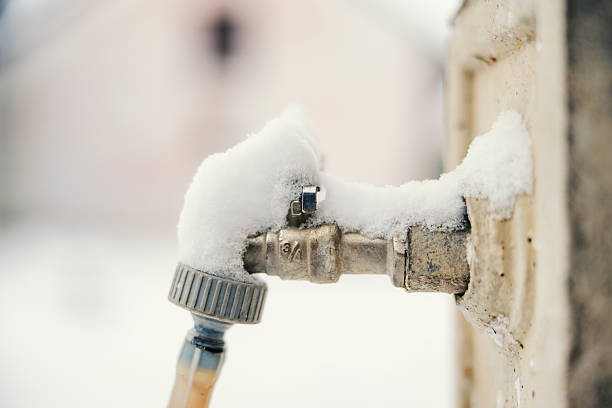
The faucet is only part of the line. The pipe behind it often runs through a cold rim joist, crawlspace, or garage wall. When you winterize outdoor faucets, protect that hidden pipe as well. The Red Cross and Illinois American Water both stress protecting these cold spots:
- Wrap exposed pipes with foam pipe sleeves.
- Use UL-listed heat tape on pipes in very cold spaces.
- Seal drafts where the pipe passes through the wall.
- Keep garage doors closed if water lines run through the garage.
- Add insulation to basements and crawlspaces where you can.
Our guide with 7 steps to prevent frozen pipes covers the pipes inside your home, too.
Signs a Faucet or Pipe Has Frozen
Even after you winterize outdoor faucets, check them during a cold snap. Watch for these warning signs:
- Only a trickle comes out when you open a faucet.
- Frost or a bulge forms on an exposed pipe.
- Water stains appear on the wall or ceiling near the faucet.
- You hear dripping inside a wall.
- Your water bill jumps for no clear reason.
- Water sprays inside the wall the first time you use the hose in spring.
What to Do If a Pipe Freezes or Bursts
Act quickly if you suspect a frozen pipe. Follow these steps from the Red Cross and Illinois American Water:
- Shut off the main water valve before you try to thaw the pipe.
- Open the faucet so water can flow as the ice melts.
- Warm the pipe with a hair dryer, heating pad, or towels soaked in hot water.
- Never use an open flame, a blowtorch, or a kerosene or propane heater.
- Call a licensed plumber if you cannot find or thaw the frozen section.
If a pipe has already burst, shut off the main right away. Move belongings out of the wet area. Take photos for your insurance company before you clean up.
Water that soaks into drywall, insulation, and framing needs professional drying. Waiting can lead to mold and bigger repairs.
- Commercial extraction removes standing water quickly.
- Thermal imaging finds moisture hidden in walls and ceilings.
- Industrial dehumidifiers dry framing and drywall.
- Hospital-grade antimicrobials treat damp areas to help prevent mold.
PuroClean of Peoria Is Ready 24/7
PuroClean of Peoria helps homeowners across the Peoria area after frozen and burst pipes. We extract water, dry your home, and document everything for your insurance claim. Call (309) 431-4003 day or night.
Frequently Asked Questions on How to Winterize Outdoor Faucets
When should I winterize outdoor faucets?
Before the first hard freeze of the season. With nights near 31 degrees in the Peoria forecast, now is a good time.
Do frost-free faucets need to be winterized?
Yes, in part. Remove the hose and check for drips, since a hose left on can trap water.
Should I leave my outdoor faucet open in winter?
Leave a standard faucet open after you close its indoor valve. Close a frost-free faucet after you remove the hose.
Can I winterize outdoor faucets with no inside shutoff?
You can cover the faucet and insulate the pipe. A plumber can add a shutoff valve for the best protection.
How do I know if my outdoor faucet pipe split?
Turn on the hose in spring and check inside for water. Leaks often show up on basement walls or ceilings.
Final Thoughts on How to Winterize Outdoor Faucets
Freezing nights are on the way, and outdoor faucets are often the first pipes at risk. Take a few minutes this weekend to winterize outdoor faucets on every side of your home. Remove hoses, close indoor valves, check frost-free faucets, and add covers.
If a frozen pipe floods your home, call PuroClean of Peoria at (309) 431-4003. We are ready 24/7.