


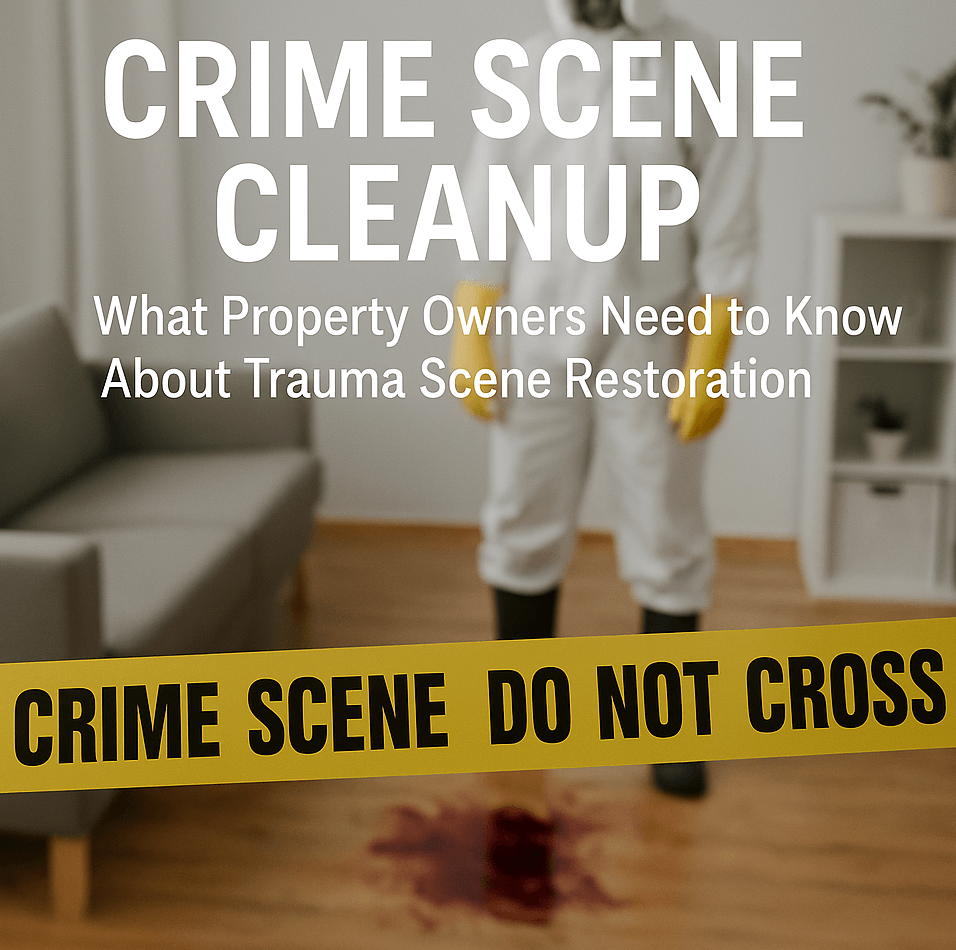
When Detective Martinez finished processing the scene and removed the yellow tape from Maria’s rental property, she thought the worst was behind her. The investigation was complete, the perpetrator caught, but as she stepped inside, the reality hit her: dried blood covered the hardwood floors, walls bore evidence of the struggle, and an overwhelming odor filled the air. The police had done their job, but now Maria faced a question she’d never imagined asking: “Who cleans up after a crime?”
Like thousands of property owners each year, Maria discovered that law enforcement agencies investigate crimes but don’t handle the cleanup afterward. This responsibility falls to the property owner, creating an unexpected burden during an already traumatic time. Whether you’re a homeowner, landlord, business owner, or family member dealing with the aftermath of violence, understanding crime scene cleanup is crucial for protecting both your health and your property value.
The aftermath of criminal activity, accidents, or traumatic events creates complex restoration challenges that go far beyond regular cleaning. These situations require specialized knowledge, equipment, and sensitivity that only trained professionals can provide.
Understanding Crime Scene Cleanup and Trauma Restoration
What Constitutes a Crime Scene Cleanup
Crime scene cleanup, also known as trauma scene restoration or forensic cleanup, involves the complete decontamination and restoration of properties affected by violent crimes, accidents, suicides, or other traumatic events. This specialized service addresses:
Physical Evidence Removal:
- Blood and bodily fluid cleanup
- Tissue and biological matter removal
- Fingerprint powder and chemical residue elimination
- Tear gas and pepper spray decontamination
Structural Restoration:
- Damaged drywall and flooring replacement
- Carpet and upholstery removal or restoration
- Ventilation system cleaning and deodorization
- Complete sanitization of affected areas
Biohazard Remediation:
- Pathogen elimination and disinfection
- Proper disposal of contaminated materials
- Air quality restoration
- Cross-contamination prevention
The Legal and Regulatory Landscape
Crime scene cleanup operates under strict federal, state, and local regulations:
OSHA Compliance: The Occupational Safety and Health Administration requires specific protocols for bloodborne pathogen handling, including specialized training, personal protective equipment, and disposal procedures.
EPA Regulations: Environmental Protection Agency guidelines govern the treatment and disposal of potentially hazardous biological materials, ensuring public health protection.
DOT Requirements: Department of Transportation regulations control the transport of biohazardous waste from crime scenes to approved disposal facilities.
State Licensing: Many states require specific licensing for companies performing trauma cleanup services, ensuring technicians meet minimum training and certification standards.
Types of Crime Scene Cleanup Situations
Violent Crime Scenes
Homicides, assaults, and other violent crimes often leave extensive biological contamination requiring comprehensive restoration. Consider the case of James, a small business owner whose store became a crime scene after an armed robbery turned violent. Beyond the emotional trauma, he faced:
- Extensive blood contamination across multiple surfaces
- Damaged merchandise requiring specialized disposal
- Contaminated HVAC systems spreading odors throughout the building
- Structural damage from the investigation process
- Business interruption costing thousands in lost revenue
Professional crime scene cleanup restored his property safely and efficiently, allowing him to reopen within a week rather than the months it might have taken with conventional contractors.
Suicide and Unattended Death Cleanup
These tragic situations require extraordinary sensitivity combined with technical expertise. The decomposition process creates complex contamination that can affect:
Structural Materials:
- Subflooring and support beams
- Wall cavities and insulation
- Ductwork and ventilation systems
- Adjacent rooms and levels
Long-term Consequences:
- Persistent odors without proper treatment
- Structural damage from bodily fluids
- Insect infestations attracted to decomposition
- Potential disease transmission to future occupants
Accident and Trauma Scenes
Industrial accidents, vehicle crashes involving buildings, and other traumatic incidents can create crime scene-level contamination requiring professional intervention. These situations often involve:
- Multiple types of contamination from various sources
- Hazardous material exposure beyond biological substances
- Insurance complications involving multiple policies
- Regulatory compliance across different agencies
Drug Lab Contamination
Illegal drug manufacturing creates unique cleanup challenges combining chemical hazards with criminal investigation evidence:
Chemical Contamination:
- Toxic residue on all surfaces
- Contaminated ventilation systems
- Soil and groundwater contamination
- Dangerous chemical reactions from mixing cleaning products
Health Hazards:
- Respiratory damage from chemical exposure
- Skin irritation and burns
- Long-term health effects from chronic exposure
- Risk to children and sensitive individuals
Why Professional Crime Scene Cleanup Is Essential
Health and Safety Considerations
Crime scenes pose serious health risks that untrained individuals cannot safely manage:
Bloodborne Pathogen Exposure: Criminal activities often involve blood loss, creating risk of transmission for:
- Hepatitis B and C
- HIV/AIDS
- Methicillin-resistant Staphylococcus aureus (MRSA)
- Various bacterial and viral infections
Chemical Hazards: Investigation processes may introduce additional contaminants:
- Fingerprint powders containing toxic metals
- Chemical enhancement agents for evidence collection
- Tear gas residues requiring specialized neutralization
- Pepper spray particles causing respiratory irritation
Structural Hazards: Violence and investigation activities can create:
- Weakened structural elements
- Sharp glass and metal fragments
- Electrical hazards from damaged systems
- Unstable furniture and fixtures
Emotional and Psychological Protection
Professional crime scene cleanup provides crucial emotional benefits:
Trauma Reduction: Trained technicians handle disturbing scenes with appropriate sensitivity, protecting family members and property owners from additional psychological trauma.
Faster Recovery: Professional restoration allows faster return to normalcy, reducing the prolonged stress of dealing with contaminated environments.
Respectful Service: Experienced crime scene cleaners understand the emotional weight of their work and approach each situation with dignity and compassion.
Legal and Insurance Compliance
Professional services ensure proper handling of legal and insurance requirements:
Evidence Preservation: Trained technicians know how to clean thoroughly while preserving any remaining evidence that investigators might need.
Documentation: Professional companies provide detailed documentation required by insurance companies and legal proceedings.
Regulatory Compliance: Expert knowledge ensures all cleanup activities meet federal, state, and local requirements, protecting property owners from liability.
The Professional Crime Scene Cleanup Process
Initial Assessment and Planning
Every crime scene restoration begins with comprehensive evaluation:
Scene Documentation:
- Photographic evidence of contamination extent
- Detailed damage assessment for insurance purposes
- Identification of all affected areas and materials
- Development of comprehensive restoration plan
Safety Planning:
- Risk assessment for technician and occupant safety
- Personal protective equipment selection
- Containment strategies to prevent cross-contamination
- Air quality monitoring throughout the process
Regulatory Compliance:
- Permit acquisition for specialized disposal
- Notification of appropriate regulatory agencies
- Coordination with ongoing legal investigations
- Insurance company communication and documentation
Containment and Preparation
Before beginning cleanup, technicians establish:
Physical Containment:
- Plastic sheeting barriers to isolate affected areas
- Negative air pressure systems preventing contamination spread
- HEPA filtration for continuous air cleaning
- Controlled access points with decontamination stations
Equipment Staging:
- Specialized cleaning equipment and chemicals
- Personal protective equipment for all technicians
- Waste containers meeting regulatory requirements
- Testing equipment for verification of completion
Decontamination and Restoration
The cleanup process follows strict protocols:
Stage 1: Gross Contamination Removal
- Safe removal of visible biological materials
- Proper packaging of contaminated evidence
- Initial surface decontamination with hospital-grade disinfectants
Stage 2: Deep Cleaning and Disinfection
- Application of specialized antimicrobial treatments
- Detailed cleaning of all surfaces and crevices
- Treatment of porous materials that harbor contaminants
Stage 3: Odor Elimination
- Ozone treatment for persistent odors
- Hydroxyl radical generation for safe, effective deodorization
- HVAC system cleaning and sanitization
- Air quality testing to ensure complete odor elimination
Stage 4: Structural Restoration
- Removal and replacement of damaged materials
- Reconstruction of affected structural elements
- Installation of new flooring, drywall, and fixtures
- Final inspection and quality assurance testing
Verification and Documentation
Upon completion, professional companies provide:
- Clearance testing confirming safe biological levels
- Certificates of completion for insurance and legal purposes
- Before and after documentation showing restoration quality
- Disposal certificates proving proper waste handling
- Warranty coverage for completed work quality
Working with Insurance for Crime Scene Cleanup
Understanding Coverage Options
Insurance coverage for crime scene cleanup varies significantly:
Homeowner’s Insurance:
- Often covers sudden and accidental contamination
- May include crime victim coverage for certain situations
- Typically requires prompt notification and professional service
- Coverage limits may apply to biological contamination cleanup
Commercial Property Insurance:
- Business interruption coverage for lost income during cleanup
- Property damage coverage for contaminated materials
- Liability coverage for potential third-party exposure
- Equipment and inventory replacement coverage
Specialized Coverage:
- Crime victim assistance programs in some states
- Landlord insurance for rental property incidents
- Umbrella policies providing additional liability protection
Maximizing Insurance Benefits
Professional restoration companies help by:
Comprehensive Documentation:
- Detailed damage assessments with photographic evidence
- Written reports explaining necessity of all services
- Itemized estimates breaking down all restoration costs
- Progress reports throughout the cleanup process
Direct Insurance Communication:
- Direct billing arrangements minimizing out-of-pocket costs
- Regular updates to insurance adjusters
- Compliance with all insurance company requirements
- Negotiation of coverage disputes when necessary
Choosing the Right Crime Scene Cleanup Company
Essential Qualifications and Certifications
When selecting a crime scene cleanup company, verify:
Industry Certifications:
- IICRC (Institute of Inspection, Cleaning and Restoration Certification) training
- ABRA (American Bio Recovery Association) membership
- OSHA bloodborne pathogen certification
- State-specific licensing requirements
Insurance and Bonding:
- General liability coverage protecting property owners
- Workers’ compensation for employee safety
- Professional liability for service quality assurance
- Surety bonding protecting against contractor fraud
Experience and References:
- Documented experience with similar cleanup situations
- References from recent crime scene restoration projects
- Law enforcement agency relationships and recommendations
- Insurance company preferred vendor status
Red Flags to Avoid
Be cautious of companies that:
- Solicit door-to-door immediately after incidents
- Demand full payment upfront before beginning work
- Lack proper licensing or insurance documentation
- Cannot provide references from recent similar projects
- Offer prices significantly below other qualified contractors
- Pressure immediate decisions without allowing time for consideration
The Emotional Aspects of Crime Scene Recovery
Supporting Affected Individuals
Crime scene cleanup involves more than technical restoration—it requires understanding and sensitivity:
Family Considerations: Professional cleaners work around memorial items, personal belongings, and family schedules, showing respect for grieving processes.
Privacy Protection: Experienced technicians maintain discretion, using unmarked vehicles and coordinating work to minimize neighborhood attention.
Flexible Scheduling: Understanding that families need time to process events, professional companies offer flexible scheduling around funeral services and family gatherings.
Community Resources and Support
Professional crime scene cleanup companies often maintain relationships with:
- Victim advocacy groups providing emotional support
- Counseling services specializing in trauma recovery
- Legal aid organizations offering guidance through legal processes
- Community support groups connecting affected individuals with others who understand their experience
Prevention and Preparedness
Security Measures for Property Owners
While crime cannot always be prevented, property owners can take steps to reduce risks:
Residential Security:
- Professional security system installation and monitoring
- Adequate lighting for all property areas
- Secure locks and reinforced entry points
- Neighborhood watch program participation
Commercial Security:
- Employee safety training and emergency procedures
- Cash management policies minimizing robbery targets
- Regular security system maintenance and updates
- Professional security assessments identifying vulnerabilities
Emergency Planning
Being prepared for potential crime scene situations includes:
Important Contacts:
- Emergency contact information for professional cleanup services
- Insurance agent contact information and policy numbers
- Local victim advocacy resources
- Legal counsel specializing in property crimes
Documentation:
- Current insurance policies with coverage details
- Property photographs for comparison purposes
- Inventory of valuable items with serial numbers
- Emergency fund access for immediate expenses
The Role of Technology in Modern Crime Scene Cleanup
Advanced Cleaning Technologies
Modern crime scene cleanup utilizes cutting-edge technologies:
ATP Bioluminescence Testing: Measures biological contamination levels in real-time, ensuring complete decontamination before project completion.
Thermal Imaging: Identifies hidden contamination behind walls, under flooring, and in other concealed areas not visible to the naked eye.
Hydroxyl Radical Generation: Provides safe, effective odor elimination without requiring property evacuation during treatment.
HEPA Filtration Systems: Continuously clean air during restoration, preventing airborne contaminant circulation.
Digital Documentation and Communication
Professional companies increasingly use:
- Digital photography with timestamp and GPS documentation
- Cloud-based project management for real-time updates
- Electronic reporting for insurance and legal requirements
- Video documentation showing restoration progress and completion
Conclusion
The aftermath of criminal activity or traumatic events creates challenges that no property owner should face alone. From Maria’s rental property to James’ business, the stories we’ve shared illustrate how quickly life can present us with situations requiring specialized knowledge, equipment, and sensitivity that only professional crime scene cleanup companies provide.
Crime scene restoration goes beyond simple cleaning—it’s about restoring safety, health, and peace of mind during some of life’s most difficult moments. The complex interplay of health risks, legal requirements, insurance considerations, and emotional needs makes professional intervention not just advisable, but essential.
Professional crime scene cleanup protects your health, ensures regulatory compliance, maximizes insurance benefits, and allows you to focus on healing rather than hazardous cleanup details. The specialized equipment, rigorous training, and compassionate approach that companies like PuroClean provide aren’t luxuries—they’re necessities for safely navigating the aftermath of traumatic events.
Don’t face crime scene cleanup alone. When criminal activity, accidents, or traumatic events affect your property, immediate professional intervention protects both your safety and your investment.
Contact PuroClean immediately for professional crime scene cleanup services. Our certified trauma restoration specialists are available 24/7 to respond to crime scene emergencies with the expertise, equipment, and sensitivity these situations demand. We work directly with insurance companies, maintain all required certifications, and approach every project with the dignity and discretion you deserve. Call us now for immediate assistance because when crime affects your property, professional restoration is your path back to safety and normalcy.
Frequently Asked Questions (FAQs)
Who is responsible for cleaning up after a crime scene?
Property owners are responsible for crime scene cleanup after police complete their investigation. Law enforcement agencies process evidence but don’t perform decontamination services. Whether you’re a homeowner, landlord, or business owner, you must arrange professional cleanup to safely restore your property and protect future occupants from health risks.
How much does crime scene cleanup cost?
Crime scene cleanup costs vary widely based on contamination extent, affected materials, and restoration requirements. Simple blood cleanup might cost $1,000-$5,000, while extensive violent crime scenes can reach $25,000-$50,000 or more. Many insurance policies cover these costs, and professional companies work directly with insurers to minimize your out-of-pocket expenses.
Does insurance cover crime scene cleanup costs?
Most homeowner’s and commercial property insurance policies include coverage for sudden and accidental biological contamination, including crime scenes. Some states also provide victim assistance funds for crime-related cleanup costs. Professional restoration companies help navigate insurance claims and often bill insurance companies directly to minimize immediate expenses.
How long does crime scene cleanup take?
Crime scene cleanup duration depends on contamination severity, affected area size, and required restoration work. Simple scenes might be completed in one day, while complex situations involving multiple rooms or structural damage can take several days to weeks. Professional companies provide realistic timelines during initial assessments.
Is crime scene cleanup dangerous for untrained people?
Yes, crime scenes pose serious health risks including bloodborne pathogen exposure, chemical contamination from investigation processes, and structural hazards from violence. Attempting DIY cleanup can spread contamination, create long-term health problems, and violate regulatory requirements. Professional training, equipment, and experience are essential for safe restoration.
When should I call professional crime scene cleaners?
Contact professional crime scene cleaners immediately after law enforcement releases the scene. Prompt professional intervention prevents contamination spread, reduces health risks, and begins insurance claim processes quickly. Many companies offer 24/7 emergency response to begin restoration as soon as investigations conclude, minimizing property damage and emotional trauma.


