 PuroClean of Plymouth Meeting
 The Shock of Unexpected Water Damage from Water heater leak
Imagine waking up on a quiet Wednesday morning, brewing your coffee, and heading downstairs to grab something from your basement only to discover your feet are met with cold, standing water. Your heart sinks. Where is this coming from? How long has it been here? What do I do first?
This nightmare became reality for a Doylestown homeowner who discovered their basement partially flooded on November 13, 2025. What started as a typical morning quickly transformed into an emergency restoration situation that would test their patience, resources, and decision-making abilities.
If you’re reading this, you might be facing a similar crisis right now or you’re wisely preparing yourself for what to do if it happens. Either way, this comprehensive guide will walk you through everything you need to know about basement water damage, emergency response, and professional restoration, using this real Doylestown experience as a roadmap for your own preparedness.
The Hidden Culprit: When Water Heater Leak Become Water Disasters
Understanding Temperature and Pressure Relief Valve Failures
This homeowner’s water damage wasn’t caused by a burst pipe or heavy rainfall it was their water heater’s Temperature and Pressure Relief (TPR) valve that had been silently leaking. This small component, designed as a safety mechanism to prevent tank explosions, had malfunctioned and turned into the very problem it was meant to prevent.
TPR valve failures are more common than most homeowners realize. These valves are designed to open when:
- Water temperature exceeds 210°F
- Tank pressure exceeds 150 psi
- The valve itself becomes corroded or defective
When a TPR valve starts leaking, it often happens gradually. You might not notice it immediately, especially if your water heater is tucked away in a corner of your basement or utility room. By the time the water becomes visible, significant damage may have already occurred to flooring, walls, and building materials.
The Timeline of Destruction: How Fast Water Damage Spreads
Water doesn’t wait for permission to wreak havoc on your property. Within the first 24 hours of exposure:
- Carpet and padding begin absorbing moisture
- Drywall starts to swell and weaken
- Wooden baseboards absorb water and may warp
- Mold spores find the perfect environment to germinate
In this Doylestown case, the affected areas included approximately 357 square feet of carpet and padding across multiple basement rooms, along with 33 linear feet of baseboard, drywall, and insulation. The water had migrated across the basement, affecting the utility room and adjacent living spaces.
The Emergency Response: What PuroClean Did in the First 24 Hours
Immediate Assessment and Containment (Hour 1)
When PuroClean’s technician arrived at the Doylestown home just 20 minutes after the initial call, the clock was already ticking. Professional water damage restoration follows a strict protocol designed to minimize damage and prevent secondary issues like mold growth.
The first step involved a thorough inspection to:
- Identify the water source and stop active leaking
- Assess the extent of water migration
- Determine what materials were affected
- Create containment zones to prevent cross-contamination
- Document everything for insurance purposes
Pro Tip: If you discover water damage, your first action should be to stop the water source if possible. Shut off your main water valve if you can’t identify the leak source. Then, call professionals immediately every minute counts.
Strategic Demolition and Material Removal (Hours 2-6)
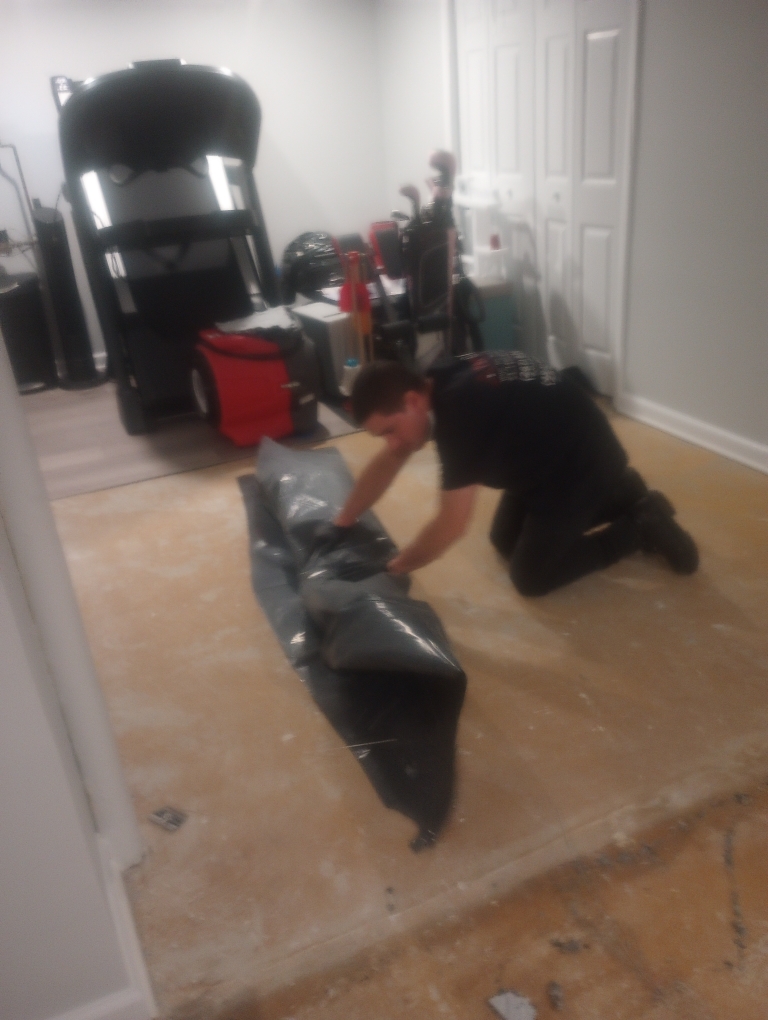
Not all water damage requires demolition, but when carpet padding, drywall, and insulation become saturated, removal is often the most effective solution. Here’s what the PuroClean team removed from this Doylestown basement:
Flooring Materials:
- 357 square feet of carpet and padding
- Tack strips along affected perimeters
- Contaminated floor protection materials
Wall Components:
- 33 linear feet of baseboard trim
- Approximately 10 feet of drywall (lower 2 feet where saturation occurred)
- Wet insulation behind affected drywall sections
The demolition process isn’t about gutting your entire basement it’s surgical and strategic. Professionals use moisture meters to determine exactly where water has penetrated, removing only what’s necessary to achieve proper drying.
Professional Drying Equipment Deployment (Hour 6 Onward)
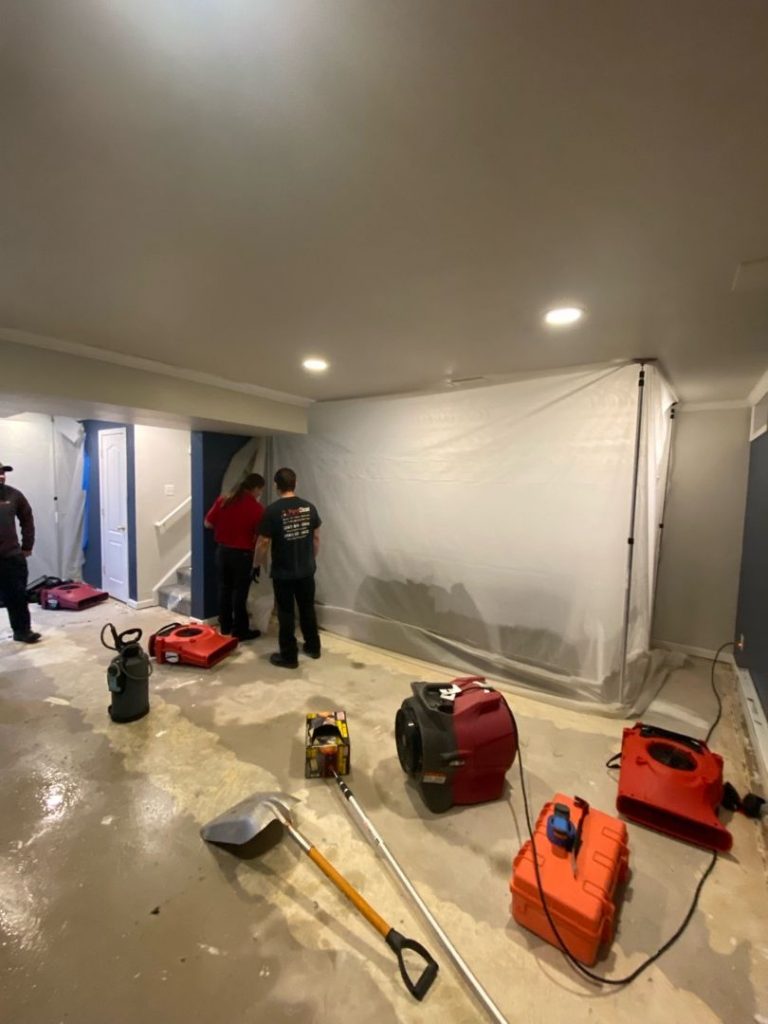
Once affected materials were removed, the PuroClean team deployed an arsenal of professional-grade drying equipment:
- 2 Commercial Dehumidifiers: These industrial units remove moisture from the air at rates far exceeding residential models often extracting 150+ pints of water per day.
- 11 Air Movers: Strategically positioned fans create airflow patterns that promote evaporation from surfaces and materials. This isn’t just pointing fans at wet spots it’s creating a scientifically designed air circulation system.
- 1 Air Scrubber: This device filters airborne particles and potential contaminants, ensuring the indoor air quality remains safe during the drying process.
The equipment ran continuously, with technicians monitoring progress through daily moisture readings.
The Restoration Journey: What Happens After Emergency Services
Days 1-3: The Waiting Game (With Professional Monitoring)
After initial equipment placement, restoration becomes a monitoring process. In this Doylestown case:
Day 2 (November 14): Technicians returned to find areas making progress but still registering moisture. During this visit, they discovered the TPR valve was still leaking intermittently. A quick call coordinated emergency plumbing services to permanently fix the valve that afternoon.
Day 3 (November 15-17): Continued monitoring showed steady drying progress, though the utility room closest to the water heater remained stubbornly damp. This isn’t unusual; concrete foundations and enclosed spaces take longer to dry completely.
The Equipment Setback: During one monitoring visit, technicians discovered the equipment had been unplugged and shut off. The plumber who fixed the valve hadn’t reset it as requested. This setback added an extra day to the drying timeline, emphasizing why maintaining continuous operation is critical.
Day 4-5: Achieving Dry Standard
By November 19, moisture readings across all affected areas finally registered as “dry” according to industry standards. This determination isn’t subjective professionals use calibrated moisture meters that measure moisture content in materials, comparing them to unaffected areas of your home.
What “Dry” Really Means:
- Wood moisture content below 15%
- Concrete moisture content within normal range
- No visible moisture or dampness
- Relative humidity stabilized at appropriate levels
The Final Steps: Cleanup and Customer Handoff
Once drying was confirmed, the team performed:
- Final cleaning of all affected areas
- Equipment removal and site restoration
- Documentation of work completed
- ESE (Equipment Service Estimate) signing
The journey from discovery to dry took approximately one week a typical timeline for basement water damage of this scope when handled professionally.
Insurance Claims: Navigating the Financial Side of Water Damage
Understanding Your Coverage
This situation involved Allstate Insurance, and the PuroClean team immediately began coordinating with the insurance carrier. Here’s what Doylestown homeowners should know:
Most Homeowners Policies Cover:
- Sudden and accidental water damage (like TPR valve failures)
- Emergency mitigation and restoration services
- Necessary demolition and repairs
- Contents affected by covered water damage
Most Policies DO NOT Cover:
- Long-term neglect or maintenance issues
- Gradual leaks that developed over time
- Flooding from external sources (requires separate flood insurance)
- Preventable damage from lack of repairs
The Documentation Process
Professional restoration companies like PuroClean serve as your advocate during insurance claims by:
- Photographic Documentation: Taking detailed photos and videos at initial assessment, after demo, during drying, and at completion
- Detailed Estimates: Creating preliminary and final estimates with line-item breakdowns
- Direct Communication: Coordinating directly with insurance adjusters and claim representatives
- Progress Reports: Providing regular updates that become part of the claim file
In this case, the team maintained constant communication with the PuroClean office coordinator and insurance contacts, ensuring all parties remained informed throughout the process.
Prevention: How to Protect Your Doylestown Home from Water Heater Disasters
Regular Maintenance is Your Best Defense
Quarterly Checks:
- Inspect the area around your water heater for moisture, rust, or corrosion
- Test the TPR valve by lifting the lever slightly (be careful hot water will discharge)
- Look for signs of leaking at pipe connections
- Check the drain pan beneath the tank for standing water
Annual Professional Inspection:
- Have a licensed plumber inspect your water heater system
- Flush sediment from the tank (extends life and improves efficiency)
- Replace the anode rod if necessary (protects against tank corrosion)
- Test all safety mechanisms and replace worn components
Know Your Water Heater’s Age: Traditional tank water heaters typically last 8-12 years. If yours is approaching or exceeding this age, consider proactive replacement before a catastrophic failure occurs.
Early Warning Signs You Shouldn’t Ignore
Visual Indicators:
- Rust-colored water from hot water taps
- Moisture or small puddles near the water heater
- Corrosion on the tank exterior or connections
- Water stains on nearby walls or floor
Performance Changes:
- Inconsistent water temperature
- Unusual noises (popping, rumbling, or hissing)
- Reduced hot water supply
- Visible mineral buildup around valve openings
If you notice any of these warning signs, don’t wait for a full leak to develop. A small investment in repairs or replacement now can save you thousands in water damage restoration later.
Why Professional Restoration Matters: The DIY Trap
The Hidden Dangers of DIY Water Damage Cleanup
When water damage occurs, the temptation to handle it yourself is understandable. You might think, “I’ll just run some fans and wet-dry vac the water how hard can it be?” Unfortunately, this approach almost always leads to bigger problems.
What DIY Efforts Miss:
- Hidden Moisture: Professional moisture meters detect water trapped behind walls, under flooring, and in structural materials places you can’t see or feel.
- Inadequate Drying: Residential fans and dehumidifiers lack the power to properly dry structural materials before mold growth begins (typically within 24-48 hours).
- Cross-Contamination: Water from plumbing failures can contain bacteria and contaminants that require proper treatment and disposal.
- Secondary Damage: Incomplete drying leads to mold growth, wood rot, structural weakening, and eventually, more expensive repairs.
- Insurance Complications: Many insurance policies require professional mitigation to maintain coverage. DIY attempts can jeopardize your claim.
The PuroClean Difference: Certified Expertise
Professional restoration companies like PuroClean bring:
- IICRC Certification: Industry-standard training in water damage restoration
- Advanced Equipment: Commercial-grade dehumidifiers, air movers, and monitoring technology
- Insurance Expertise: Direct billing, proper documentation, and claims coordination
- Rapid Response: 24/7 availability with technicians arriving within hours
- Comprehensive Service: From emergency mitigation through final restoration and rebuild
The decision to call professionals immediately saved this Doylestown homeowner from weeks of DIY frustration and potential mold remediation costs that could have exceeded the original restoration expenses.
From Disaster to Opportunity: Considering the Rebuild
When Restoration Becomes Renovation
An interesting footnote to this story: after seeing the quality of Preclean’s work during the emergency restoration, the homeowner expressed interest in a rebuild estimate. This isn’t uncommon water damage restoration often provides homeowners with an unexpected opportunity to improve their basements.
Considerations for Post-Damage Upgrades:
- Upgrading to water-resistant flooring materials
- Improving basement drainage and waterproofing
- Modernizing utility spaces and layout
- Adding moisture-resistant drywall in flood-prone areas
- Installing water leak detection systems and automatic shutoffs
Working with a restoration company that also offers reconstruction services streamlines the entire process, maintaining continuity from emergency response through final rebuild.
Conclusion: Be Prepared, Act Fast, Choose Professionals
This Doylestown homeowner’s experience demonstrates both the chaos of unexpected water damage and the peace of mind that comes from professional restoration services. What could have become a months-long nightmare of mold, structural damage, and insurance battles instead became a one-week restoration success story.
The key takeaways for every Doylestown area homeowner:
- Prevention is Possible: Regular water heater maintenance catches problems before they become disasters
- Speed Matters: The faster you respond, the less damage occurs and the lower your restoration costs
- Professional Help Pays Off: Certified restoration experts have the equipment, knowledge, and insurance coordination skills to handle the job right
- Documentation Protects You: Photos, videos, and detailed estimates support your insurance claim
- Don’t Wait: Water damage worsens with every passing hour
Your Action Plan for Water Emergencies
If You Discover Water Damage Right Now:
- Stop the water source if safely possible
- Call PuroClean immediately at [your local number]
- Document the damage with photos and videos
- Move valuable items to dry areas
- Do NOT use regular household vacuums on standing water (electrical hazard)
- Avoid entering areas with significant water if electrical outlets are present
For Prevention and Preparedness:
- Schedule annual water heater inspections
- Know the location of your main water shutoff valve
- Keep PuroClean’s 24/7 emergency number saved in your phone
- Review your homeowner’s insurance policy to understand water damage coverage
- Consider installing a water leak detection system with automatic shutoff
Don’t Wait for Disaster to Strike Contact PuroClean Doylestown Today
Whether you’re facing an active water emergency or want to schedule a property risk assessment, PuroClean’s certified technicians are ready to help. We offer 24/7 emergency response throughout Doylestown, Bucks County, and the surrounding Pennsylvania areas, with rapid deployment teams equipped to handle any size disaster.
Remember: Every minute counts when water damage occurs. Our average response time is under 2 hours, and our first priority is always stopping damage progression and protecting your property.
Call us now or visit our website to learn more about our comprehensive restoration services. Because when disaster strikes, you need more than a cleanup crew you need certified restoration experts who treat your home like their own.
Frequently Asked Questions About Water Heater Leaks and Water Damage
How quickly can water damage lead to mold growth?
Mold can begin growing within 24-48 hours of water exposure when conditions are right (moisture, organic materials, and temperatures between 77-86°F). This is why immediate professional response is critical every hour you wait increases the likelihood of mold development, which requires separate remediation and significantly increases restoration costs.
Will my homeowners insurance cover water damage from a leaking water heater?
Most homeowners insurance policies cover sudden and accidental water damage, including TPR valve failures and water heater leaks. However, coverage may be denied if the damage resulted from long-term neglect or lack of maintenance. The best approach is to call both a restoration company and your insurance provider immediately to ensure proper documentation and claim processing.
How long does professional water damage restoration typically take?
The timeline varies based on the extent of damage, but most residential water damage projects follow this general schedule: Emergency response and mitigation (Day 1), Monitoring and drying (3-7 days), Final cleanup and equipment removal (1 day), and Reconstruction if needed (1-3 weeks). Basements with concrete foundations typically take longer to dry than upper floors with wooden subfloors.
Can I stay in my home during water damage restoration?
In most cases, yes especially if the damage is confined to a basement or single area. However, factors that might require temporary relocation include extensive mold growth, sewage contamination, structural safety concerns, or the need for whole-house drying. Your restoration technician will assess the situation and advise you on the safest approach.
How much does professional water damage restoration cost?
Costs vary widely based on the affected area size, severity of damage, and necessary services. A typical basement water damage project might range from $3,000-$10,000, including emergency mitigation, equipment rental, demolition, drying, and cleanup. However, insurance typically covers most or all of these costs when the damage results from a covered peril like plumbing failure.
What’s the difference between water damage restoration and mold remediation?
Water damage restoration addresses the immediate water intrusion removing water, drying materials, and restoring your property to pre-loss condition. Mold remediation is a separate process required when mold growth has occurred, involving containment, specialized cleaning, air filtration, and removal of mold-contaminated materials. Quick water damage response prevents the need for mold remediation, saving time and money.
Protect Your Investment & Restore Your Peace of Mind
Don’t let water damage and potential mold growth overwhelm you. Contact PuroClean of Plymouth Meeting today at (484) 412-4422 for a free consultation. We’ll be there to guide you through the restoration process and ensure your property is restored quickly, safely, and efficiently.

 PuroClean of Plymouth Meeting