 PuroClean of Plymouth Meeting
 Why Plymouth Meeting Homeowners Need Professional Flood Restoration
Plymouth Meeting, Pennsylvania faces significant flood risks due to its location in Montgomery County’s complex watershed system. Whether you’re dealing with Schuylkill River flooding, Plymouth Creek overflow, or basement water damage from heavy rainfall, understanding when to call professional flood restoration services can save you thousands of dollars in repairs and prevent dangerous mold growth.
As IICRC-certified flood restoration specialists serving Montgomery County for over a decade, PuroClean of Plymouth Meeting has responded to hundreds of water damage emergencies. This comprehensive guide provides Plymouth Meeting residents with the critical knowledge needed to protect your property when flooding strikes.
Key Takeaway
The first 24-48 hours after water intrusion are critical. Professional water damage restoration during this window can prevent mold growth, structural damage, and insurance claim complications.
Understanding Flood Risks in Plymouth Meeting, PA
Why Plymouth Meeting Experiences Flooding
Plymouth Meeting’s geographic position creates unique flood vulnerabilities that every homeowner should understand:
Primary Flood Risk Factors
1. Proximity to Major Waterways
- Schuylkill River flooding affects neighborhoods along Route 476 and Colonial Commons
- Plymouth Creek can transform from stream to torrent within hours
- Wissahickon Creek impacts Whitemarsh Township borders
- Stony Creek affects areas near Norristown
2. Urban Development Impact The transformation of farmland into Plymouth Meeting Mall, Metroplex shopping centers, and residential developments has:
- Reduced water absorption capacity by over 60%
- Overwhelmed drainage systems designed in the 1950s-1970s
- Created impervious surfaces that channel runoff into storm drains
3. Topography & Elevation Properties on lower elevations near Germantown Pike and Chemical Road face particular flood risk as water flows downhill from surrounding communities.
4. Climate Change & Precipitation Patterns Montgomery County now experiences:
- 40% more high-intensity rainfall events than 30 years ago
- “100-year floods” occurring every 5-7 years
- Flash flooding during sudden summer storms
Plymouth Meeting’s Most Flood-Prone Areas (2024 Risk Assessment)
Understanding your neighborhood’s specific flood vulnerability is essential for emergency preparedness:
High-Risk Flood Zones in Plymouth Meeting
| Location | Primary Risk Factor | Flood Trigger | Risk Level |
|---|---|---|---|
| Plymouth Meeting Center | Plymouth Creek overflow | 2+ inches rain in 24 hours | HIGH |
| Conshohocken Border | Schuylkill River flooding | River above 10 feet | HIGH |
| Germantown Pike Corridor | Storm drain backup | Heavy sustained rainfall | MODERATE-HIGH |
| Chemical Road Area | Surface runoff | 3+ inches rapid rainfall | MODERATE-HIGH |
| Whitemarsh Township Border | Wissahickon Creek | Upstream accumulation | MODERATE |
| Colonial Commons Area | Combined drainage issues | 2+ inches rain | MODERATE |
| Butler Pike | Flash flooding | Intense storms | MODERATE |
Important FEMA Flood Zone Information
Critical Fact: Even properties outside FEMA-designated flood zones (Zones A, AE, AH) can experience severe flooding. Our emergency response team has handled major water damage in areas classified as “low risk” when:
- Storm drains become overwhelmed
- Soil reaches complete saturation
- Multiple waterways peak simultaneously
- Aging infrastructure fails
Recognizing Water Damage Severity: 3 Critical Stages
Stage 1: Minor Water Seepage (Potentially DIY-Manageable)
What You’ll See:
- Small amounts of water through foundation cracks
- Damp spots on basement walls
- Minor puddles near foundation perimeter
- Water stains appearing on concrete
Timeline Risk: Low immediate risk, but requires close monitoring
Recommended Action:
- Document the water source with photos/video
- Use shop vacuums and dehumidifiers
- Monitor for worsening conditions
- Consider professional inspection if source is unclear
When to Escalate: If seepage increases, spreads, or persists beyond 6 hours
Stage 2: Significant Water Accumulation (Professional Help Recommended)
What You’ll See:
- Standing water covering portions of basement floor
- Water actively flowing through multiple entry points
- Water depth between 2-6 inches
- Belongings in contact with water
- Musty odor developing
Timeline Risk: Moderate to high – threatening property and foundation
Recommended Action: This is the critical decision point for Plymouth Meeting homeowners. While DIY extraction is possible, professional water damage restoration ensures:
- Complete moisture removal (including hidden areas)
- Prevention of mold growth (begins in 24-48 hours)
- Proper documentation for insurance claims
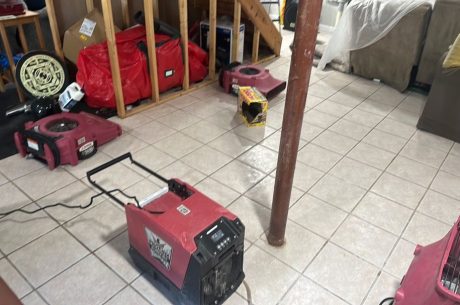
- Industrial-grade drying equipment
- Structural integrity verification
Professional Service Value: Prevents $10,000-$50,000 in potential mold remediation costs
Stage 3: Major Flooding (Emergency Professional Response Required)
What You’ll See:
- Water depth exceeding 6 inches
- Water on first floor living spaces
- Sewage backup or contaminated water (blackwater/greywater)
- Water approaching electrical panels or outlets
- Visible structural damage (cracks, sagging, shifting)
Timeline Risk: CRITICAL – Immediate action required
Required Action: Call PuroClean of Plymouth Meeting immediately at (267) 334-5555
Safety Hazards Present:
- Electrocution risk from submerged outlets/appliances
- Contaminated water exposure (bacteria, sewage, chemicals)
- Structural collapse potential
- Gas line compromise
- Rapid mold colonization
This severity level is beyond DIY capability and poses serious health and safety risks requiring immediate professional emergency flood restoration services.
The Critical 24-48 Hour Window for Water Damage Response
Why Speed Matters in Flood Restoration
Most Plymouth Meeting homeowners don’t realize that the real race against time isn’t just about removing water – it’s about preventing secondary damage that begins within hours of water intrusion.
Hour-by-Hour Water Damage Timeline
0-2 Hours: Initial Water Intrusion
- Water spreads rapidly across floors (up to 5 feet per hour)
- Porous materials begin absorption (drywall, wood, insulation, carpet)
- Paper products and photographs start degrading
- Furniture wood begins swelling
2-12 Hours: Material Degradation Begins
- Wood flooring begins buckling and warping
- Drywall softens and loses structural integrity
- Metal surfaces start tarnishing and corroding
- Furniture finishes begin bleeding and staining
- Electrical components at risk of short-circuiting
12-24 Hours: Biological Growth Initiation
- Dyes from carpets and fabrics begin bleeding
- Musty odor becomes noticeable (volatile organic compounds)
- Microbial growth begins at microscopic level
- Contaminated water breeds bacteria
- Wood warping becomes permanent
24-48 Hours: MOLD GROWTH CRITICAL PERIOD
This is the most critical window for professional intervention
- Visible mold colonies begin forming
- Spores spread through HVAC systems
- Health risks increase (respiratory issues, allergic reactions)
- Mold remediation becomes separate, expensive project ($10,000-$50,000+)
- Insurance claim complications may arise
- Structural wood rot initiates
Professional Restoration Advantage
IICRC-certified water damage restoration technicians like our PuroClean of Plymouth Meeting team understand this timeline intimately. Our rapid response protocol and industrial-grade equipment are specifically engineered to:
✓ Extract water within 2-4 hours of your call
✓ Deploy commercial dehumidifiers (10x more powerful than consumer units)
✓ Position strategic air movers for optimal drying
✓ Monitor moisture levels with thermal imaging and hygrometers
✓ Prevent mold colonization with antimicrobial treatments
✓ Document everything for insurance claims
Result: Complete restoration without mold growth or structural damage
When to Call Professional Flood Restoration: Decision Matrix
Critical Emergency Situations (Requires Immediate Professional Response)
✓ Water depth exceeds 2 inches anywhere in your home
✓ Water still actively entering and you cannot stop the source
✓ Sewage or contaminated water present (greywater from appliances or blackwater from sewage systems)
✓ Electrical systems compromised – water near panels, outlets, or appliances
✓ Health vulnerabilities present – elderly residents, immune-compromised individuals, young children, pets
✓ Structural concerns visible – wall cracks, sagging ceilings, foundation shifting
✓ Affected area exceeds 500 square feet
✓ Water in walls, ceilings, or crawl spaces (hidden water intrusion)
✓ Lack of commercial-grade equipment – industrial dehumidifiers, air movers, moisture meters
✓ Time sensitivity – need to travel, work commitments, cannot dedicate 3-7 days to drying
Strongly Consider Professional Water Damage Restoration If:
Situations Where Professional Service Provides Significant Value
✓ Water has been present more than 12 hours without complete extraction
✓ Finished living spaces affected (not just utility/storage areas)
✓ Valuable belongings threatened – family heirlooms, important documents, electronics, artwork
✓ Hidden water intrusion suspected – moisture in walls, under flooring, in insulation
✓ Insurance coverage likely – we work directly with all major carriers and maximize claims
✓ Mold history in your property (increased vulnerability)
✓ Previous water damage in the same area
✓ Lack of time or physical ability for intensive 3-7 day cleanup process
✓ Hardwood flooring or specialty materials requiring expert drying techniques
✓ Uncertainty about completeness of DIY drying efforts
You Might Manage DIY Water Removal If:
Limited Situations Appropriate for Homeowner Response
✓ Water depth is under 1 inch in unfinished space only
✓ You can completely remove water within 2-3 hours
✓ You have adequate extraction and drying equipment (commercial-grade)
✓ Water is clean (from rain only, not sewage or floodwater)
✓ Nothing of significant value is affected
✓ You can dedicate 5-7 days to continuous monitoring and drying
✓ You have moisture meters to verify complete drying
✓ No signs of hidden water in walls, subfloors, or crawl spaces
Important Note: Even in DIY-appropriate situations, a professional inspection and moisture assessment is recommended to ensure complete drying and prevent future mold issues. Many restoration companies, including PuroClean of Plymouth Meeting, offer free inspections.
Professional Flood Restoration Process: What to Expect from PuroClean
Understanding Modern Water Damage Restoration
Many Plymouth Meeting homeowners hesitate to call professional flood restoration services because they assume it’s just “guys with shop vacs.” Modern water damage restoration is a sophisticated, science-based process utilizing advanced technology and IICRC-certified techniques.
Our 6-Step Emergency Flood Restoration Process
Step 1: Emergency Response & Initial Assessment (0-2 Hours)
What Happens:
- Rapid dispatch – typically arrive within 2-4 hours of your call
- IICRC-certified technicians conduct comprehensive property assessment
- Thermal imaging cameras detect hidden water in walls, ceilings, subfloors
- Moisture meters measure water content in structural materials
- Photo/video documentation for insurance claims (required by most carriers)
- Scope of work development with detailed timeline and cost estimate
- Safety hazard identification – electrical, structural, contamination
Technology Used:
- Infrared thermal imaging cameras
- Penetrating and non-penetrating moisture meters
- Thermo-hygrometers (temperature and humidity measurement)
- Digital documentation systems
Your Benefit: Complete understanding of damage extent, including hidden water you can’t see
Step 2: Emergency Water Extraction (2-6 Hours)
What Happens:
- Industrial truck-mounted extractors remove standing water at 400+ gallons per hour
- Portable extractors for hard-to-reach areas
- Submersible pumps for deep water situations
- Complete water removal from all affected areas
- Furniture and contents protection or removal to dry areas
Equipment Power Comparison:
- Consumer shop vac: 5-6 gallons per hour
- Professional portable extractor: 80-120 gallons per hour
- Truck-mounted extractor: 400+ gallons per hour
Your Benefit: Water removal in hours (not days), minimizing damage progression
Step 3: Structural Drying & Dehumidification (3-7 Days)
What Happens:
- Commercial air movers (20+ units depending on size) create optimal airflow patterns
- Industrial dehumidifiers remove moisture from air (150+ pints per day capacity)
- Continuous moisture monitoring with daily readings
- Equipment adjustment based on drying progress
- Wall cavity drying using specialized injection systems
- Hardwood floor drying systems for specialty materials
- HVAC coordination to enhance drying without spreading contamination
Daily Monitoring Includes:
- Moisture content readings in walls, floors, ceilings
- Relative humidity measurements
- Temperature optimization
- Air movement verification
- Mold risk assessment
Your Benefit: Scientifically-proven complete drying, preventing mold growth and structural damage
Step 4: Antimicrobial Treatment & Sanitization
What Happens:
- EPA-registered antimicrobials applied to all affected surfaces
- Bacterial disinfection (critical with contaminated water)
- Mold prevention treatment on vulnerable materials
- Odor elimination using hydroxyl generators or thermal fogging
- HVAC system cleaning if water contamination spread through ducts
When This Step is Critical:
- Any sewage or blackwater exposure
- Greywater from appliances (washing machines, dishwashers)
- Floodwater from outdoors (carries contaminants)
- Extended water exposure (24+ hours before extraction)
- Properties with previous mold issues
Your Benefit: Safe, healthy environment; mold prevention; elimination of bacteria and pathogens
Step 5: Content Restoration & Pack-Out Services
What Happens:
- Complete inventory of affected belongings with photos
- On-site cleaning for items that can be immediately restored
- Pack-out services – contents moved to climate-controlled facility
- Specialized cleaning techniques:
- Document drying and restoration
- Electronics restoration
- Textile and upholstery cleaning
- Artwork and antique restoration
- Hardwood furniture refinishing
- Secure storage during structural drying period
- Pack-back services once property is restored
Items We Commonly Restore:
- Important documents and photographs
- Electronics and computers
- Furniture and upholstery
- Clothing and textiles
- Books and paper goods
- Artwork and collectibles
Your Benefit: Preservation of irreplaceable items; maximized insurance recovery
Step 6: Final Verification & Clearance Testing
What Happens:
- Comprehensive moisture testing throughout all affected areas
- Comparison to baseline dry standards (verified with meters)
- Thermal imaging verification – no hidden moisture remains
- Relative humidity confirmation – below 60% (mold growth threshold)
- Photo documentation of restored conditions
- Certificate of completion for insurance and property records
- Mold prevention verification – all antimicrobial treatments effective
Industry Standards Met:
- IICRC S500 Standard for Water Damage Restoration
- EPA Mold Remediation Guidelines
- OSHA safety standards
- Insurance carrier requirements
Your Benefit: Guaranteed complete restoration with documentation; peace of mind; insurance claim support
Understanding Professional Flood Restoration Costs in Plymouth Meeting
Transparent Pricing for Montgomery County Residents
At PuroClean of Plymouth Meeting, we believe in complete transparency about restoration costs. Here’s what homeowners can typically expect:
Minor Flood Cleanup
- Scope: Under 500 square feet, clean water only
- Services: Water extraction, basic drying, monitoring
- Timeline: 3-5 days
- Cost Range: $1,500 – $4,000
Moderate Water Damage Restoration
- Scope: 500-1,500 square feet, some content damage
- Services: Full extraction, structural drying, antimicrobial treatment, content restoration
- Timeline: 5-7 days
- Cost Range: $4,000 – $12,000
Major Flood Restoration
- Scope: Extensive area, contaminated water, structural concerns
- Services: Emergency extraction, complete structural drying, antimicrobial treatment, content pack-out, reconstruction coordination
- Timeline: 7-14+ days
- Cost Range: $12,000 – $30,000+
The True Cost of Inadequate Water Damage Response
Consider these potential costs of DIY attempts or delayed professional response:
| Secondary Damage Type | Typical Cost | Prevention |
|---|---|---|
| Mold remediation | $10,000 – $50,000 | Professional drying within 48 hours |
| Structural wood rot | $15,000 – $75,000 | Complete moisture extraction & monitoring |
| Foundation damage | $20,000 – $100,000+ | Immediate water removal & drying |
| HVAC contamination | $5,000 – $25,000 | Antimicrobial treatment & duct cleaning |
| Hardwood floor replacement | $8,000 – $30,000 | Specialized floor drying systems |
| Drywall & insulation replacement | $6,000 – $25,000 | Rapid extraction & air movement |
Important Insurance Information: Most homeowners insurance policies REQUIRE timely mitigation to prevent further damage. Delays in professional response can result in:
- Partial or complete claim denial
- Out-of-pocket costs for secondary damage
- Increased premiums
- Policy cancellation risk
PuroClean Works Directly With Your Insurance: ✓ Direct billing to insurance companies
✓ Claims advocacy and documentation
✓ Maximize coverage and minimize out-of-pocket costs
✓ Communication with adjusters throughout process
✓ Experience with all major carriers (State Farm, Allstate, Liberty Mutual, USAA, etc.)
Many Plymouth Meeting homeowners are surprised to learn that professional flood restoration is often fully covered by their homeowners or flood insurance policies, with minimal or zero deductible payment.
Immediate Actions While Waiting for Our Emergency Response Team
Safety & Damage Control Steps for Plymouth Meeting Homeowners
If you’ve called (267) 334-5555 for emergency flood restoration services, there are critical actions you can take immediately to minimize damage and protect your family:
Step 1: Safety First – Electrical Hazards ⚡
CRITICAL SAFETY ACTIONS:
✓ Turn off electricity to affected areas at the breaker panel (if safe to access)
✓ Never enter standing water if electrical outlets or appliances are submerged
✓ Assume all water is energized if you cannot safely shut off power
✓ Call utility company if main electrical panel is in flooded area
✓ Wait for professional clearance before re-entering severely flooded spaces
Electrocution Risk Indicators:
- Water within 6 feet of electrical outlets
- Submerged appliances still plugged in
- Visible sparking or burning smell
- Humming or buzzing sounds
- Tingling sensation when touching water
When in Doubt: Wait for PuroClean’s emergency response team to assess electrical safety
Step 2: Stop the Water Source
For Broken Pipes/Plumbing Failures:
- Locate and shut off main water valve (usually in basement or utility room)
- Turn off water heater (gas and electric)
- Open faucets to drain remaining water from pipes
For Rainfall/External Water:
- Apply temporary tarps or plastic sheeting over entry points
- Use sandbags around doors and vulnerable areas (if available)
- Clear gutters and downspouts if safe to access
- Redirect drainage away from foundation if possible
For Sewer Backup:
- Do not attempt to stop sewage flow – contamination risk
- Avoid all contact with contaminated water
- Wait for professional hazmat handling
Step 3: Remove Valuable Items & Contents
Priority Removal Order:
Immediate (If Safe):
- Important documents (birth certificates, passports, deeds)
- Prescription medications
- Electronic devices (computers, phones, tablets)
- Family photos and irreplaceable memorabilia
- Jewelry and valuables
Secondary:
- Movable furniture (place aluminum foil or plastic under legs if must stay)
- Clothing and personal items
- Non-perishable food items
- Children’s toys and belongings
Leave in Place:
- Heavy furniture that cannot be safely moved
- Built-in cabinetry
- Appliances (unless easily disconnected)
Elevation Technique: If items cannot be removed, elevate on blocks, cinder blocks, or moisture-resistant materials.
Step 4: Begin Water Removal (If Safe)
Appropriate DIY Water Removal:
✓ Use mops, towels, and buckets for surface water
✓ Use wet/dry shop vacuum rated for water extraction
✓ Empty water frequently and dispose properly
✓ Work from highest concentration to edges
✓ Every gallon removed reduces drying time and damage
NEVER DO: ✗ Use regular household vacuum (electrocution/fire risk)
✗ Attempt extraction near electrical sources
✗ Use towels in electrical outlets
✗ Extract water in sewage-contaminated areas without PPE
Reality Check: Even with aggressive DIY extraction, you’re removing surface water only. Hidden moisture in walls, subfloors, and insulation requires professional equipment to detect and extract.
Step 5: Increase Airflow & Ventilation
Effective Ventilation Techniques:
✓ Open windows and doors (if weather permits and not raining)
✓ Run HVAC system on fan mode (if not contaminated)
✓ Position household fans to create cross-ventilation
✓ Open cabinet doors and closets for air circulation
✓ Remove area rugs to allow floor drying
Weather Considerations:
- Humid conditions: Keep windows closed, run AC or dehumidifier
- Dry conditions: Maximize natural ventilation
- Cold weather: Maintain heat to prevent freezing pipes
Consumer Dehumidifier Limitations: Standard home dehumidifiers (30-50 pint capacity) are insufficient for flood restoration. Professional units extract 150+ pints per day and are specifically designed for structural drying.
Step 6: Document Everything for Insurance
Critical Documentation Steps:
✓ Photos and videos of all damage from multiple angles
✓ Close-up shots of water level marks on walls
✓ Panoramic views showing extent of flooding
✓ Before damage photos if available (for comparison)
✓ Water source documentation
✓ Date and timestamp all documentation
✓ Itemized list of damaged belongings
✓ Receipts or proof of value for significant items
Insurance Claim Tip: PuroClean provides professional documentation services as part of our restoration process, which insurance companies prefer for claims processing.
What NOT to Do During Water Damage Emergency
Common Mistakes That Worsen Damage:
✗ Don’t use regular household vacuum on standing water (electrocution/equipment damage)
✗ Don’t lift tacked-down carpeting yourself (can cause permanent damage/delamination)
✗ Don’t drill holes in walls without knowing what’s inside (electrical/plumbing hazards)
✗ Don’t delay hoping things dry on their own (they won’t – safely)
✗ Don’t use space heaters near wet materials (fire hazard)
✗ Don’t enter attic/crawl spaces with water present (collapse risk)
✗ Don’t attempt sewage cleanup without professional PPE
✗ Don’t ignore musty odors (indicates mold growth beginning)
Flood Prevention Strategies for Plymouth Meeting Properties
Protecting Your Home Investment: Proactive Measures
Based on hundreds of emergency flood restoration responses throughout Plymouth Meeting and Montgomery County, 60-80% of flooding incidents could be prevented or significantly reduced with proactive property maintenance and strategic investments.
Immediate Flood Prevention Steps (Low Cost, High Impact)
1. Gutter & Downspout Maintenance
Schedule: Clean twice yearly minimum (spring and fall), more in heavy tree coverage areas
Actions:
- Remove all leaves, debris, and sediment from gutters
- Check for proper pitch toward downspouts (1/4″ per 10 feet)
- Verify downspouts are clear and flowing freely
- Extend downspouts minimum 6 feet from foundation (10+ feet ideal)
- Use splash blocks or underground drainage systems
- Install gutter guards to reduce maintenance frequency
Why It Matters: Clogged gutters cause thousands of gallons of water to cascade against your foundation, overwhelming drainage systems and causing basement flooding.
Plymouth Meeting Specific: Heavy spring pollen and fall leaves from mature trees in Plymouth Meeting neighborhoods require vigilant gutter maintenance.
2. Property Grading & Drainage
Goal: Water should flow AWAY from foundation at minimum 6 inches drop over 10 feet
Actions:
- Add soil around foundation perimeter if needed
- Create negative grade sloping away from house
- Fill low spots that collect water
- Install swales or drainage channels to redirect water
- Keep soil 6 inches below siding/foundation joint
Professional Assessment: Consider hiring drainage specialist if you observe:
- Water pooling near foundation after rain
- Soggy areas that remain wet for days
- Basement seepage after rainfall
- Settlement or sinking near foundation
3. Foundation Crack Sealing
Inspection Schedule: Twice yearly (spring and fall)
Critical Areas:
- Basement walls (interior and exterior)
- Foundation footer joints
- Window wells
- Pipe penetrations
- Floor-to-wall joints
Repair Options:
- Hydraulic cement: For active leaks
- Epoxy injection: For structural cracks
- Polyurethane foam: For water infiltration cracks
- Professional assessment: For cracks wider than 1/4″
Plymouth Meeting Note: Homes built in 1950s-1970s commonly experience foundation settling and cracking. Early detection prevents minor seepage from becoming major flooding.
4. Window Well Covers & Protection
Installation:
- Clear polycarbonate covers allowing light
- Secure attachment to prevent displacement
- Drainage holes for ventilation
- Size appropriate to window well dimensions
Benefits:
- Prevents rainfall accumulation
- Blocks debris and leaves
- Reduces basement window leaks
- Allows emergency egress (removable)
5. Sump Pump Installation & Maintenance
If You Don’t Have a Sump Pump: Installation cost: $500-$1,500 (prevents $10,000+ in flood damage)
Quarterly Maintenance Checklist:
- Pour 5 gallons water into pit to test operation
- Verify float switch activates pump
- Check discharge line is clear and flowing
- Listen for unusual noises (grinding, rattling)
- Inspect electrical connections
- Test GFCI outlet operation
Sump Pump Red Flags:
- Runs continuously without water
- Cycles on/off rapidly
- Fails to turn on during test
- Unusual sounds or vibrations
- Visible rust or corrosion
Annual Professional Service: Recommended for systems over 5 years old
Long-Term Flood Prevention Investments
1. Battery Backup Sump Pump System
Cost: $800 – $2,000
ROI: Prevents $10,000-$50,000 in flood damage
Critical Importance: Primary sump pump failures occur during power outages – exactly when you need them most during severe storms.
Battery Backup Systems Provide:
- 6-12 hours of backup pumping capacity
- Automatic activation when primary fails
- Visual/audio alarms for power loss
- Protection during electrical outages
Plymouth Meeting Relevance: Montgomery County experiences frequent storm-related power outages, making battery backup essential for at-risk properties.
2. Backwater Valve (Sewer Backup Prevention)
Cost: $1,500 – $3,500 (installed)
ROI: Prevents $15,000-$75,000 in sewage cleanup costs
How It Works:
- One-way valve installed in main sewer line
- Allows outflow from home
- Prevents backflow from municipal sewer
- Automatically closes during sewer system overflow
When Critical:
- Properties in low-lying areas
- Homes near Plymouth Creek or Schuylkill River
- Areas with aging sewer infrastructure
- Previous sewer backup history
Plymouth Meeting Note: Municipal sewer systems in older Plymouth Meeting neighborhoods can become overwhelmed during heavy rainfall, causing raw sewage to back up into basements. A backwater valve provides critical protection.
3. French Drain System / Perimeter Drainage
Cost: $3,000 – $15,000 (depending on scope)
ROI: Permanent solution preventing recurring basement flooding
System Components:
- Perimeter trench around foundation
- Perforated drainage pipe
- Gravel bedding for water flow
- Connection to daylight or sump basin
Ideal For:
- Homes with chronic basement seepage
- Properties with high water table
- Sloped lots where water flows toward foundation
- Clay soil conditions (common in Plymouth Meeting)
Installation Timing: Spring or summer (dry conditions) for optimal results
4. Smart Water Leak Detection Systems
Cost: $200 – $500 per system
ROI: Early detection prevents catastrophic damage
Technology Features:
- Water sensors at vulnerable locations
- Smartphone alerts (immediate notification)
- Some systems include automatic shut-off valves
- 24/7 monitoring even when away from home
- Battery backup for continuous protection
Strategic Sensor Placement:
- Near water heater
- Under sinks and appliances
- Basement floor (lowest point)
- Laundry room
- Near sump pump
- HVAC condensate lines
Plymouth Meeting Advantage: Many residents travel for work or vacation. Smart sensors provide peace of mind and immediate alerts, allowing rapid response even when away.
5. Foundation Waterproofing Systems
Cost: $3,000 – $30,000 (depending on method)
ROI: Permanent basement flood protection
Exterior Waterproofing:
- Excavation around foundation
- Waterproof membrane application
- Drainage board installation
- New drainage tile system
- Most effective but most expensive
Interior Waterproofing:
- Interior drainage channel
- Sump pump system
- Wall membrane or coating
- More affordable than exterior
- Effective for most situations
Vapor Barrier Systems:
- Encapsulation of basement walls/floor
- Prevents moisture transmission
- Reduces humidity
- Mold prevention
When to Invest: Chronic basement water problems, finishing basement, increasing home value, preventing future flood damage
Why Plymouth Meeting Residents Choose PuroClean for Flood Restoration
Local Expertise Meets Industry-Leading Technology
When flooding strikes your Plymouth Meeting home, you need a water damage restoration company you can trust with your most valuable investment. Here’s what sets PuroClean of Plymouth Meeting apart from other restoration companies:
24/7 Emergency Response – Always Available
Our Promise:
- Answer phones 24 hours a day, 7 days a week, 365 days a year
- NO voicemail during emergencies
- Live person answers every call
- Typically arrive on-site within 2-4 hours
- Immediate dispatch during business and after-hours
- Weekend and holiday availability
Why Speed Matters: Every hour of delay increases water damage severity and mold risk. Our rapid response team is strategically positioned to serve Plymouth Meeting, Conshohocken, Norristown, and surrounding Montgomery County communities.
Deep Local Knowledge of Plymouth Meeting Flood Risks
Plymouth Meeting Flood Expertise:
- 10+ years serving Montgomery County
- Intimate knowledge of Plymouth Creek, Schuylkill River, and Wissahickon Creek flood patterns
- Understanding of local topography and drainage issues
- Experience with Plymouth Meeting’s specific infrastructure challenges
- Relationships with local contractors, plumbers, and electricians
- Familiarity with Plymouth Township, Whitemarsh Township, and Conshohocken building codes
Neighborhoods We Serve:
- Plymouth Meeting Center
- Colonial Commons
- Butler Pike corridor
- Germantown Pike area
- Chemical Road properties
- Plymouth Meeting Mall vicinity
- Metroplex area
- And all surrounding Montgomery County communities
IICRC Certification – Industry Gold Standard
Our Credentials:
- IICRC Water Damage Restoration Technician (WRT) certification
- IICRC Applied Structural Drying (ASD) certification
- IICRC Mold Remediation Specialist certification
- Ongoing continuing education
- Latest industry techniques and technology
- Compliance with industry best practices
What IICRC Certification Means:
- Scientifically-proven restoration methods
- Insurance company approved
- National standard of excellence
- Ethical business practices
- Comprehensive training and testing
Insurance Advantage: Most insurance companies require or strongly prefer IICRC-certified contractors for claims, ensuring faster approval and payment.
Insurance Claims Advocacy – Maximizing Your Coverage
We Work Directly With Your Insurance Company:
✓ Direct billing to insurance carriers – minimize out-of-pocket costs
✓ Claims documentation – comprehensive photo, video, and written reports
✓ Adjuster communication – we speak their language
✓ Coverage maximization – ensure all eligible damages are claimed
✓ Supplement negotiation – if additional work needed
✓ Claim advocacy – we represent your interests
Insurance Companies We Regularly Work With:
- State Farm
- Allstate
- Liberty Mutual
- USAA
- Travelers
- Nationwide
- Progressive
- And all other major carriers
Plymouth Meeting Homeowner Benefit: We understand local insurance agents and adjusters, streamlining the claims process and reducing your stress during an already difficult time.
Advanced Equipment & Technology
Industrial-Grade Restoration Equipment:
Water Extraction:
- Truck-mounted extraction units (400+ GPH capacity)
- Portable extractors (100+ GPH)
- Submersible pumps for deep water
- Weighted extraction tools for carpets
Drying Equipment:
- Commercial dehumidifiers (150+ pint capacity)
- High-velocity air movers (20+ unit deployments)
- Axial fans for large spaces
- Low-grain refrigerant dehumidifiers
Detection Technology:
- Thermal imaging cameras (FLIR)
- Penetrating moisture meters
- Non-penetrating moisture meters
- Thermo-hygrometers
- Borescopes for wall cavity inspection
Antimicrobial Application:
- Electrostatic sprayers
- ULV foggers
- Hydroxyl generators for odor removal
This Equipment vs. Consumer Tools:
- 10-50x more powerful
- Scientifically calibrated
- Professionally monitored
- Complete drying assurance
Comprehensive Service – Start to Finish
Complete Restoration Services Include:
✓ Emergency water extraction
✓ Structural drying and dehumidification
✓ Mold prevention and remediation
✓ Content pack-out and restoration
✓ Antimicrobial treatment
✓ Odor removal
✓ Document and electronics restoration
✓ Carpet and upholstery cleaning
✓ Hardwood floor drying
✓ Reconstruction coordination (if needed)
✓ Final clearance testing
✓ Post-restoration follow-up
One Company, Complete Solution: No need to coordinate multiple contractors – we handle every aspect of water damage restoration.
Proven Track Record in Montgomery County
Our Results:
- Hundreds of successful flood restorations
- Consistently high customer satisfaction ratings
- A+ BBB rating
- 5-star reviews on Google, Yelp, and Facebook
- Zero mold growth when protocol followed
- Insurance claims approval rate over 95%
- Repeat customer relationships (homeowners and property managers)
What Plymouth Meeting Homeowners Say: “PuroClean responded within 90 minutes of our call. Our basement flooded during a storm and they had all the water extracted that same night. They monitored the drying for a week and our basement is completely restored. No mold, no damage. They worked directly with our insurance company and saved us thousands. Highly recommend!” – Plymouth Meeting Homeowner
Transparent Pricing & Free Inspections
Our Commitment:
- Free water damage inspection – no obligation
- Detailed written estimates before work begins
- No hidden fees or surprise charges
- Clear explanation of all costs
- Insurance-based pricing guidelines
- Flexible payment options
- Emergency service does NOT mean inflated prices
Why Transparency Matters: Water damage is stressful enough without worrying about costs. We provide clear, upfront pricing so you can make informed decisions.
Conclusion: Protecting Your Plymouth Meeting Home Investment
The Bottom Line – Trust Your Instincts About Flood Damage
After everything we’ve covered in this comprehensive guide, here’s our most important advice for Plymouth Meeting homeowners:
If you’re questioning whether to call professional flood restoration services, that uncertainty itself is probably your answer.
The High Cost of Delayed Response
Water damage is unique among home emergencies – it gets exponentially worse with time:
Hour 1-24:
- Water spreads and absorbs into materials
- Damage is generally reversible with proper response
- DIY might still be viable for very minor situations
Hour 24-48:
- Mold growth begins
- Structural damage accelerates
- DIY success rate drops significantly
- Professional intervention becomes critical
Hour 48+:
- Mold colonies visibly establish
- Structural integrity compromised
- Health hazards increase
- Restoration costs triple or more
- Insurance complications arise
The Reality: Water damage doesn’t improve with waiting. Mold doesn’t pause while you decide. Structural damage compounds every hour moisture remains.
Plymouth Meeting’s Ongoing Flood Reality
Our community will continue facing flood risks:
- The Schuylkill River isn’t going to stop flooding
- Plymouth Creek will continue swelling during heavy rains
- Climate patterns suggest MORE intense precipitation events
- Our aging infrastructure faces increasing challenges
- Urban development continues reducing water absorption
The Good News: With proper preparation, rapid response, and professional restoration when needed, you can protect your Plymouth Meeting property from catastrophic flood damage.
Success Stories vs. Cautionary Tales
Over our decade serving Montgomery County, we’ve witnessed both extremes:
Homeowners Who Called Immediately:
- Water extracted within hours
- Complete drying in 5-7 days
- Zero mold growth
- Full insurance coverage
- $3,000-$8,000 restoration cost
- Back to normal within 2 weeks
- Property value maintained
Homeowners Who Waited:
- Extended water exposure (3+ days)
- Visible mold growth
- Structural damage requiring reconstruction
- Health impacts on family members
- Insurance claim complications
- $25,000-$75,000+ total cost
- Months of disruption
- Property value reduction
Learn from both groups. The difference wasn’t the severity of the initial flooding – it was the speed and quality of the response.
 PuroClean of Plymouth Meeting