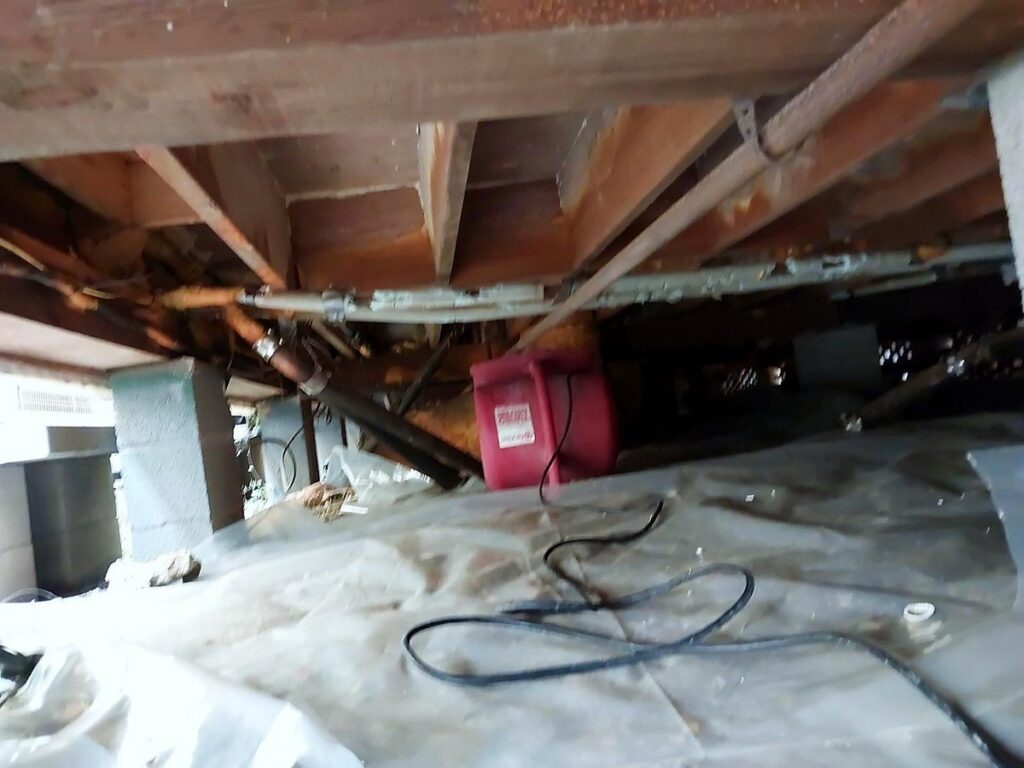
Most people only visit their crawl space when something breaks. That’s understandable. It’s dark, cramped, and out of the way. But the air down there rises into your living space, and the joists hold up your floors. When the first deep cold arrives, warm pipes, ducts, and floors meet cold air and cold soil. Moisture can then collect where you can’t see it. Crawl space humidity in Pleasant Valley and Staatsburg homes is easier to manage with a quick check now. Waiting until a musty smell shows up in spring makes it harder.
How Cold Does It Get in This Part of Dutchess County?
Cold enough to test any crawl space. The closest long-term record is the Millbrook 3 W station. Its NOAA 1991–2020 climate normals (USW00064756) show about 141 nights a year at or below freezing. On roughly 32 days a year, the high never gets above 32°F.
January is the coldest month there, with a normal low of about 15.8°F. Long stretches like that keep crawl space soil, foundation walls, and rim joists cold for weeks at a time.
Why Do Cold Snaps Affect Crawl Space Moisture?
It comes down to warm, moist air meeting cold surfaces. When that happens, water condenses, the same way a bathroom mirror fogs after a hot shower. In a crawl space during a cold snap, that can happen in several places:
- Cold water lines and ducts. If heated air leaks from ductwork, it can condense on nearby cold surfaces.
- Rim joists. The band of wood at the top of the foundation is often the coldest framing in the house.
- Foundation walls. Concrete and block stay cold and can collect moisture on the inside face.
- Under the subfloor. Warm air from the house can move down through gaps around pipes and wires.
Moisture from the ground adds to it. Bare soil releases water vapor all year. If there’s no vapor barrier, or the barrier is torn, that moisture rises into the crawl space air.
Signs Your Crawl Space Is Too Damp
You don’t need to crawl the whole space to spot trouble. From the access door, with a good flashlight, look for:
- Droplets or frost on pipes, ducts, or the underside of the subfloor
- Dark staining or white fuzzy growth on joists
- Insulation sagging, falling, or looking wet
- A musty smell near the access or in rooms above
- Rust on metal straps, nails, or duct hangers
- Standing water or wet soil on top of the plastic
- Floors above that feel cold, soft, or uneven
The EPA’s brief guide to mold, moisture, and your home says condensation can be a sign of high humidity. If you see it collecting on walls or pipes, it advises drying the surface quickly and reducing the moisture source.
What Helps Keep a Crawl Space Dry
The EPA guide lists several ways to prevent condensation and keep humidity down. It recommends keeping indoor humidity below 60 percent, ideally 30 to 50 percent. Its tips include insulating cold water pipes and other cold surfaces, plus adding air movement where practical.
For a crawl space, that often means:
1. Check the vapor barrier. Plastic sheeting should cover the soil, overlap at the seams, and run up the walls a bit.
2. Insulate cold water pipes. Foam sleeves reduce condensation and help protect against freezing.
3. Seal duct leaks. Mastic or foil tape on joints keeps warm air in the ducts.
4. Air-seal the rim joist. A contractor can seal and insulate this area to reduce cold spots.
5. Make sure dryer vents and bath fans exhaust outdoors, never into the crawl space.
6. Measure humidity. An inexpensive hygrometer left in the crawl space shows how damp it really gets.
7. Consider a dehumidifier. Sealed or encapsulated crawl spaces often rely on one made for that use. A contractor can advise.
Whether to keep crawl space vents open or closed in winter depends on how your crawl space was built. Ask a contractor who can see your setup.
Homes in Pleasant Valley and Staatsburg
Both places have plenty of established homes. The Census Bureau’s ACS 2020–2024 five-year release (table B25035) has the details. The town of Pleasant Valley’s median year built is 1979 (±5). According to table B25034, about half of the town’s homes were built before 1980.
Staatsburg is a small CDP with only about 200 housing units in the survey, so its figures have wide margins of error. Its median year built is listed as 1959, with a margin of ±30 years. Table B25034 estimates that about 60 percent of its homes predate 1980.
Homes from those decades may have crawl spaces with thin or missing vapor barriers, fiberglass batts that have fallen, and ductwork that was never sealed. That’s why crawl space humidity in Pleasant Valley and Staatsburg homes is worth checking each winter.
A Simple Winter Monitoring Routine
You don’t have to crawl under the house every week. A little monitoring from above goes a long way.
- Put a hygrometer with a memory function in the crawl space, near the access door. Check the highs and lows once a month.
- After a cold snap of several days, open the access door and look for frost or droplets on the nearest pipes and ducts.
- Notice the floors above. Cold spots, new squeaks, or a soft area can point to wet framing below.
- Pay attention to smells in the rooms over the crawl space, especially when the heat first turns on.
- Keep the access door closed and sealed between checks so cold air and pests stay out.
Write down what you find. A few months of notes will show whether crawl space humidity in Pleasant Valley homes like yours is steady or climbing. That helps a contractor recommend the right fix.
When Is Mold a Job for a Professional?
The EPA guide offers a simple size rule. If the moldy area is smaller than about 10 square feet, roughly a 3-foot by 3-foot patch, most homeowners can handle the cleanup. Bigger areas, mold that keeps coming back, or growth on structural framing are better left to a professional.
Crawl spaces add their own challenges. They’re tight, poorly lit, and hard to work in safely. Wear gloves, eye protection, and a properly fitted respirator if you go in. If your home was built before 1978, painted surfaces could contain lead. Older pipe wrap and duct insulation may contain asbestos, so have them tested before anyone disturbs them.
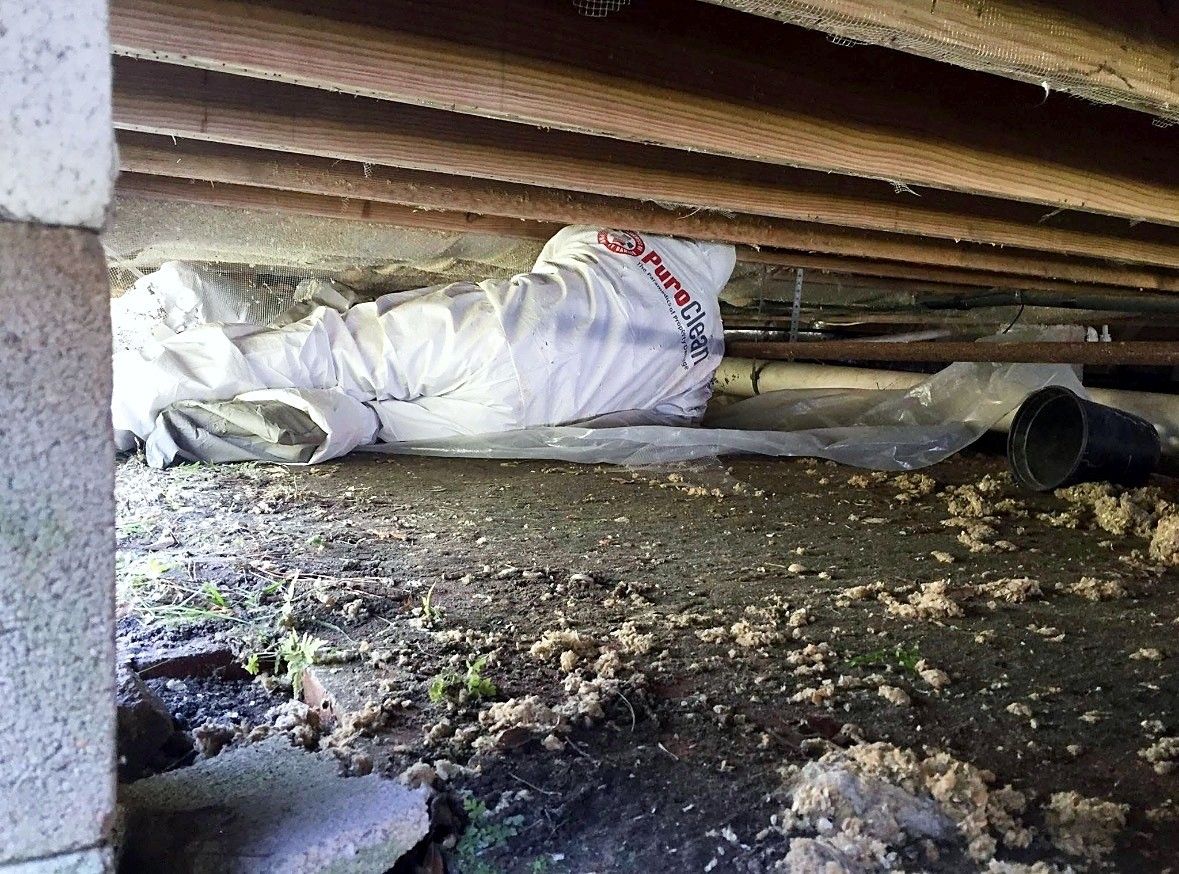
How We Dry and Treat a Damp Crawl Space
If water or mold has built up, our water damage restoration team starts by measuring moisture in the joists, subfloor, and air. We remove wet insulation and damaged plastic, then set dehumidifiers and air movers sized for the space.
When mold is present, we set up containment and use HEPA filtration while we clean the framing. Our approach follows the ANSI/IICRC S520 standard, which describes conditions from normal background levels (Condition 1) to active growth (Condition 3). Drying a crawl space often takes several days, depending on how wet the wood is and how well the space can be closed off.
Once it’s dry, we can talk with you about the vapor barrier and insulation so moisture doesn’t build up again. You can see our full list of restoration services for the rest of the house, too.
Example: A Staatsburg homeowner notices a musty smell in the hallway after a week of single-digit nights. With a flashlight at the crawl space door, they spot frost on the ductwork and a torn vapor barrier. This is an invented scenario, not a real customer.
Frequently Asked Questions
What Is a Good Level of Crawl Space Humidity in Pleasant Valley Homes?
The EPA recommends keeping indoor humidity below 60 percent, ideally between 30 and 50. A hygrometer in the crawl space lets you see where yours sits.
Can Mold Grow in a Crawl Space in Winter?
Mold growth usually slows in cold weather, but damp wood and insulation stay wet. When temperatures rise, growth can pick up again.
Do Crawl Space Vents Belong Open or Shut in Winter?
It depends on your home’s design. Some vented crawl spaces benefit from closing vents in the coldest months to protect pipes. Ask a contractor who can see your space.
Is a Torn Vapor Barrier a Big Deal?
It can let more ground moisture into the crawl space. Small tears can be taped, but large gaps or missing sections should be replaced.
Do You Serve Pleasant Valley and Staatsburg?
Yes. Both are part of our service area, along with Hyde Park, Millbrook, and the rest of Dutchess County.
Ask Us About Crawl Space Humidity in Pleasant Valley
The owners of PuroClean of Poughkeepsie, Jonathan Beever, Andrew Rankel, and Shawn McDermott, live and work in the area. We’re IICRC certified and EPA Lead Safe Certified. You can reach us 24/7 at (845) 320-4646. We’re located at 9 West Oakley Street, Suite 4, Poughkeepsie, NY 12603. Homeowners in Pleasant Valley, Staatsburg, Hyde Park, Millbrook, Poughkeepsie, Arlington, Wappingers Falls, Fishkill, East Fishkill, Hopewell Junction, Beacon, Highland, and Newburgh call on us. So do neighbors across Dutchess County and Orange County.