


Ask the Right Questions Before You Grab a Mop
Water on the floor has a way of making your brain freeze. One moment you are going about your day, the next you hear dripping, feel a wet carpet under your feet, or notice water running from the ceiling after a heavy storm. In those first 15 to 30 minutes, the choices you make can shape how big the damage becomes and how long your home or business is out of order.
Instead of rushing for a mop or a towel, it helps to slow down and start with a few smart questions. The right questions keep you focused on safety, stop more water from entering, and guide you on whether this is something you can manage or if you need professional emergency water damage restoration.
We are going to walk through the key questions that help you think clearly in a stressful moment. You will see how to look at safety, where the water is coming from, how far it has spread, and when to get experts involved, especially when storms roll through Powder Springs and the Georgia humidity is high.
Is It Safe to Stay Inside Right Now?
The first question is always about safety: Is it actually safe to stay where you are? Water and buildings do not mix well, and water and electricity are an even worse pairing.
Ask yourself:
- Is there standing water near outlets, power strips, or electrical cords?
- Do you see any sparks, hear buzzing, or smell burning near walls or appliances?
- Do you notice a ceiling that is sagging or bulging with water overhead?
- Are the floors slippery or covered with debris that could cause a fall?
After a strong summer storm in our area, power can flicker or go out. If there are downed lines outside, that can affect indoor safety. You do not want to be walking through water if there is any chance something is still live. Hot, humid air can also trap strong odors, including fuel smells, sewer smells, or chemicals. Any sharp, unpleasant odor is a warning sign.
Depending on what you see, you may need to:
- Shut off electricity to the affected area using the breaker panel, if you can get to it safely and without walking through water
- Turn off the main water supply if a plumbing issue is obvious
- Keep children and pets away from wet areas
- Leave the building and call emergency services if you suspect electrical danger, a gas leak, or structural damage
If the answer to “Is it safe?” is anything less than yes, your next move is to get everyone out and get help. Cleanup can wait until people are out of harm’s way.
Where Is the Water Coming From and What Type Is It?
Once you are safe, the next question is: Where is this water coming from? Finding the source quickly is one of the most helpful steps you can take.
Common sources include:
- Sudden plumbing failures like a burst supply line or broken pipe
- Appliance leaks from a washing machine, dishwasher, or water heater
- Roof leaks after heavy rain or wind-driven storms
- Water intrusion from outdoors when rain overwhelms drainage
As you look around, try to see if the water is clean tap water, slightly dirty, or clearly contaminated. Professionals often think in three broad categories:
- Clean water from a supply line or faucet
- Gray water with some soil or soap from appliances or sinks
- Black water that might contain sewage, outdoor runoff, or unknown pollutants
The question “What kind of water is this?” matters a lot. Contaminated water can bring health risks, so it is not something to handle on your own. It can spread germs into carpet, walls, and anything it touches.
Helpful steps at this stage include:
- Closing the main water shutoff if you suspect a pipe or appliance supply line
- Taking quick photos or short videos of any obvious source and the surrounding area for insurance records
- Staying away from any water that looks dirty, smells bad, or might be connected to a sewer issue
Any time you are unsure about the type of water, it is safer to assume it is not clean and let trained professionals handle it.
How Far Has the Water Really Spread?
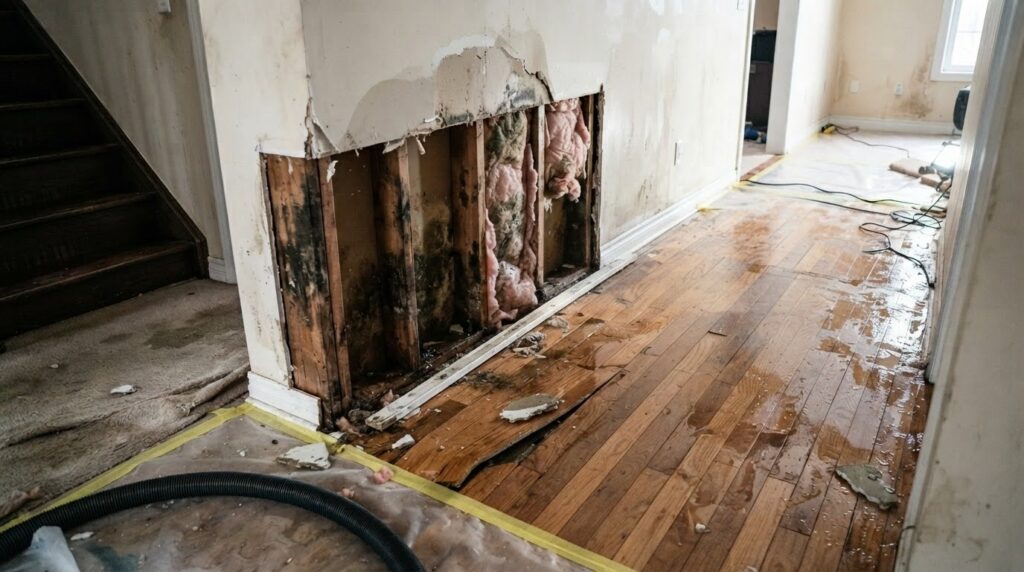
The next key question is: How far has this water really gone? What you see on the surface is usually only part of the story. Water loves to travel into anything porous.
In our hot and often humid Georgia climate, wet materials do not dry quickly on their own. Water can seep into:
- Wall cavities behind paint or drywall
- Flooring layers under wood, laminate, or tile
- Cabinets and built-ins, especially at the base
- Ceilings on lower levels if a leak started above
Ask yourself:
- Which rooms show visible puddles, wet carpet, or damp flooring?
- Are there water stains or discoloration on ceilings or walls near the leak?
- Are doors, drawers, or cabinets starting to swell, stick, or feel tight?
- Is there a damp or musty smell in rooms that look dry at first glance?
Professionals answer “How far did this go?” using tools like moisture meters and thermal cameras. These help find water that is hidden inside materials, where mold can start growing if it stays wet. Incomplete drying often means bigger repairs later on, including warped flooring, peeling paint, or soft spots in walls and ceilings.
Can You Handle This Yourself or Do You Need Experts?
With a basic idea of safety, source, and spread, the next question is: Can you realistically handle this, or do you need emergency water damage restoration experts?
Run through a quick decision checklist:
- How deep is the water? A thin, small puddle is very different from water covering a large area
- How long has the water been there? The longer things stay wet, the higher the risk of mold and damage
- Is water near electrical panels, outlets, or large appliances?
- Is the damage limited to one small area, or are several rooms or levels affected?
Household fans and a shop vacuum might look helpful, but they usually do not pull enough moisture out of flooring, walls, and the air. Professional teams bring:
- Powerful extraction equipment that can remove large amounts of water much faster
- Commercial dehumidifiers designed to dry materials, not just the room air
- Ongoing monitoring so equipment is adjusted to match how your property is responding
Powder Springs and the surrounding area often deals with strong summer storms and high humidity, which can speed up mold growth in wet drywall, carpet, and wood. For many situations, having a trained team respond within the first day or two can make a big difference in how much can be saved.
What to Do First While Help Is on the Way
If you have decided you need expert help, the next question is: What can you safely do while you wait, without putting yourself in danger or making things worse?
Think in terms of priorities:
- What items are closest to the water and most at risk right now?
- Which things are hard or impossible to replace, like photos, important papers, or keepsakes?
- What areas should you leave alone so professionals can see the full damage for insurance?
If it is safe to be in the area and the water is from a clean source, you can often:
- Move small items, rugs, and light furniture out of wet rooms
- Place foil, plastic, or small wood blocks under furniture legs to keep them off damp flooring
- Open doors and interior windows to encourage gentle airflow if weather allows and there is no security or rain concern
- Gather insurance information and continue taking photos as conditions change
Avoid these common mistakes:
- Never use a household vacuum on water
- Do not try to remove heavy or waterlogged ceiling materials or large sections of wall by yourself
- Do not enter any area that feels soft underfoot, smells like gas, or shows signs of electrical arcing or burnt plastic
Doing less is often smarter than doing more if you are uncertain. Safe, simple steps are helpful, but some tasks are best left to trained technicians with the right tools and protective gear.
Turn Your Questions Into a Local Emergency Plan
The final question is: How can you be more prepared next time? Water losses rarely happen on a good day, but a simple checklist can keep the panic level down.
You can create a short, written plan that includes:
- The key questions from above, in the order you should think about them
- Notes on where your main water shutoff is located and how to operate it
- A list of rooms or areas that are most vulnerable during heavy rain or strong winds
- Basic steps you want to take to protect important papers, electronics, and sentimental items
If you live or work in Powder Springs, it also helps to think ahead about storm season. Knowing how your property handles strong rain, where water tends to collect, and how your drainage works gives you a head start. Reviewing your insurance policy before peak storm months can also cut down on surprises later.
As a local property restoration team, we at PuroClean of Powder Springs see how stressful sudden water damage can be. Taking time now to plan, ask the right questions, and understand when to call for emergency water damage restoration can make the next sudden leak or storm-related water issue easier to manage and faster to recover from.
Frequently Asked Questions
What is the first question I should ask when I find water damage?
Start with safety before anything else. If there is standing water near electricity, a sagging ceiling, or signs of structural trouble, leave the area and get help right away.
How do I know if the water is too risky to handle myself?
If the water is dirty, has a bad odor, may involve sewage, or came in from outdoors during a storm, treat it as unsafe. In those cases, it is best to stay out of the area and call trained restoration professionals.
Why does water damage often end up being worse than it looks?
Water rarely stays where you first see it. It can move under floors, behind walls, and into cabinets or ceilings, which is why hidden moisture is such a common problem.
When is DIY cleanup not enough?
DIY cleanup is usually not enough when multiple rooms are affected, water has been sitting for more than a short time, or wet materials like drywall and flooring are involved. Professional equipment is designed to remove deeper moisture that towels, fans, and shop vacs can miss.
What should I do while waiting for the restoration team to arrive?
If it is safe and the water is from a clean source, move small items out of the wet area and take photos for documentation. Avoid using household vacuums on water or disturbing damaged walls and ceilings.
Get Started With Your Project Today
If water has disrupted your property, we are ready to respond quickly and help limit further damage. Our specialized emergency water damage restoration services are designed to get your business or home back to normal as safely and efficiently as possible. Reach out to Puroclean – Powder Springs so we can assess the damage, outline a clear plan, and start work right away. If you prefer to talk through your situation first, you can contact us for prompt assistance.