


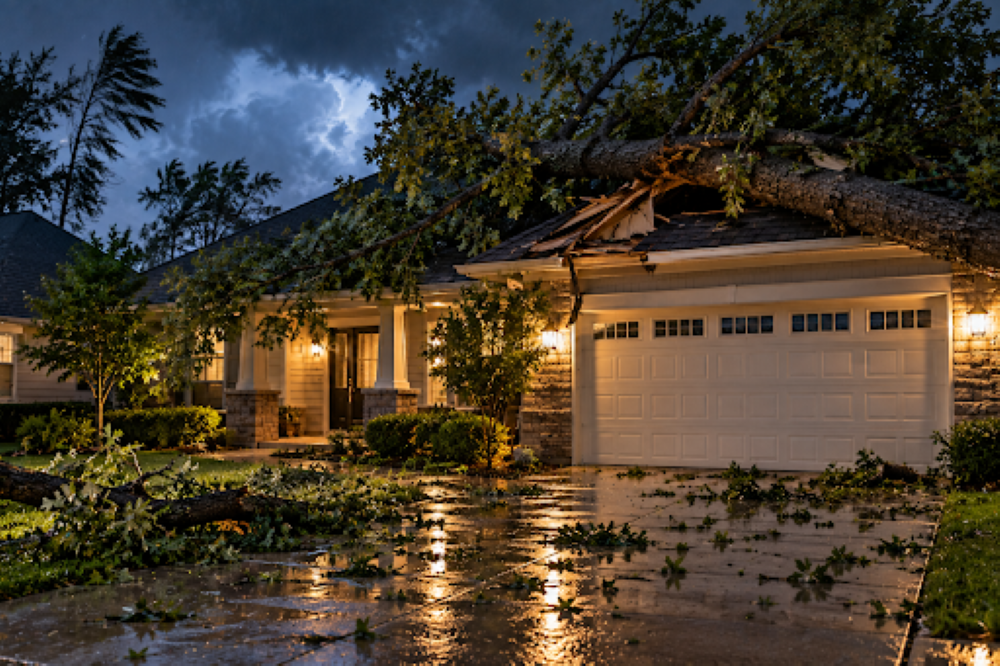
Overnight Storm Damage in Powder Springs: From Call to Cleanup
Overnight storms in Powder Springs can turn calm nights into stressful emergencies in seconds. A loud crack of thunder, wind that sounds like a train, then you spot water dripping from a ceiling light or hear glass shatter in another room. When that happens, those next few hours matter for your safety, your belongings, and the future of your home or business.
In this guide, we walk through the dispatcher-to-driveway timeline for a typical 2 AM storm emergency. From the first phone call to safe shutoffs, to temporary tarping at night and insurance photos at dawn, knowing the steps in advance makes a scary situation feel a lot more manageable.
From a 2 AM Storm to the First Phone Call
A strong thunderstorm rolls through Cobb County. You hear hail on the roof, wind pushing against the siding, and then you spot water streaking down a wall or smell smoke after a lightning strike. Maybe a tree limb hits the roof or a window, sending rain and debris inside.
The first minutes are about three things:
- Keeping people and pets safe
- Limiting how much water and debris get inside
- Protecting valuables from quick damage
This is where a clear dispatcher-to-driveway process helps. A trained 24-hour property restoration team coordinates the phone call, safety questions, quick protective steps, and early documentation so the night does not feel like chaos.
Before you call, do a fast safety check if it is clearly safe to move around:
- Look for sparks or live electrical hazards
- Watch for broken glass and unstable furniture
- Listen for odd creaks or cracks that might mean a structural problem
Then move everyone to a safer area away from the damage, especially kids and pets.
The First Five Minutes on the Phone
Once people are in a safer spot, call a 24-hour property restoration provider. Having a few details ready helps that first conversation go faster.
Try to have:
- Your address and any gate or building access info
- Where you see damage, like roof, windows, ceilings, or walls
- Any signs of smoke, burning smell, or flickering lights
- Whether water is still coming in and from where
- Whether anyone is staying inside the property right now
On the call with a trained dispatcher, you can expect:
- A calm voice walking you through what they need to know
- Safety questions to rule out immediate threats
- An estimated arrival window based on conditions
- Simple instructions about what not to touch or turn on
This call sets the tone. Even in the middle of the night, a clear plan and a realistic ETA can bring your stress level down.
Staying Safe Until the Crew Arrives
After the call, there may be a short wait before the crew reaches your driveway. During that time, focus on safety, not cleanup.
If it is clearly safe and you know where to do it, you may:
- Shut off the main water valve if a pipe or line is broken
- Turn off power at the main panel if you see water near outlets or appliances
- Close doors to damaged rooms to keep wind and rain from spreading
Just as important is what you should avoid:
- Do not walk through standing water near electrical cords or outlets
- Do not climb on the roof or use ladders at night in wet conditions
- Do not disturb soot, ash, or odd-looking debris that could be contaminated
Set up simple no-go zones: close doors, block off rooms with heavy glass, debris, or sagging ceilings, and keep curious kids and pets far from the damage. Flashlights or battery lanterns are safer than candles if the power is out.
Driveway Arrival, Nighttime Tarping, and First-Light Documentation
When the restoration team pulls up, the process starts outside. Before anyone goes in, they usually:
- Walk around the property checking for downed power lines
- Look for large tree limbs on the roof or leaning on walls
- Pay attention to any smoke, heat, or odd odors around the structure
Once the outside is cleared as reasonably safe, they move inside for a quick triage. That often includes:
- Visual checks of ceilings and walls for bulging or fresh cracks
- Moisture readings to see how far water has traveled
- Verifying that power and water are shut down or safe to use
For the rest of the night, the focus is on stopping damage from getting worse. Temporary steps may include:
- Tarping reachable roof sections where water is entering
- Boarding up broken windows or doors to keep out rain and wind
- Building plastic barriers to separate damaged and undamaged rooms
- Extracting standing water from floors and surfaces
By dawn, the property is usually in a more stable state. The storm may still be passing, but the biggest sources of new damage are under control.
Once there is enough daylight to see clearly, the team does a deeper look. That early morning walkthrough often adds:
- A closer check of roofing, siding, and windows from the outside
- Identification of water paths behind walls or across floors
- Notes on any soot, smoke patterns, or lingering odors
This is also when organized insurance documentation really picks up. Restoration pros help by:
- Taking clear photos before and after temporary work
- Listing which rooms and items were affected
- Recording when you noticed the damage and what was done overnight
Good documentation supports your claim by showing cause, timeline, and steps taken to prevent further loss. It helps your insurance carrier sort out what was storm-related and what was already worn or damaged before.
From Emergency Response to Full Restoration Plan
After the storm damage is stable and documented, the focus shifts from emergency response to a full restoration roadmap. That plan usually covers:
- Drying and dehumidification to pull moisture out of surfaces and air
- Cleaning and odor control if smoke, soot, or dirty water are involved
- Debris removal from damaged building materials and contents
- Sanitizing surfaces that were exposed to stormwater
- Reconstruction planning where repairs or rebuilds are needed
Working with a single 24-hour property restoration partner means one team can coordinate water, fire, mold, biohazard, and reconstruction steps, instead of you juggling several contractors and repeating your story over and over.
Communication is key during this longer phase. Typical touchpoints include:
- Regular updates on drying progress and what comes next
- Coordination with your adjuster about scope and questions
- Conversations about materials and finishes for repairs
- Target timelines for getting your home or business back to normal
Be Ready Before the Next Storm and FAQ
Preparation makes any future overnight storm easier to handle. You can:
- Save the number of a trusted 24-hour property restoration team in your phone
- Learn where your main water and electric shutoffs are located
- Create a simple storm plan so everyone knows where to go and who to call
- Keep a small emergency kit with flashlights, batteries, and basic supplies
Fast, informed action and professional support reduce damage and disruption, especially during seasons with more severe storms in Georgia. A short planning talk now can save hours of confusion during a 2 AM emergency later.
Frequently Asked Questions About Overnight Storm Damage
How Fast Can a 24-Hour Restoration Team Arrive in Powder Springs?
Response times depend on weather, road conditions, and distance, but crews are on call at all hours and are typically dispatched right away, with arrival often within a few hours, even in the middle of the night.
What to Document for Insurance Before Restoration Work Begins
If it is safe, take quick photos or short videos that show whole rooms plus close-ups of damage, including where water entered, any shattered glass, and affected belongings, then let the restoration team build a more detailed photo and written record.
Is It Safe to Stay in My Home After Overnight Storm Damage?
It depends on the situation, but if you notice electrical problems, a strong smoke odor, sagging ceilings, or heavy debris, it is safer to stay outside or in an undamaged area until professionals say it is safe.
Should I Call Insurance Before or After a Restoration Company?
You can do either first during an emergency, but many people call a restoration company immediately so temporary protections can start while they also report the claim to their insurance carrier.
Is Temporary Tarping and Board-Up Covered by Insurance?
Many policies include reasonable emergency steps, such as tarping and board-up, as part of the claim to limit further damage, but coverage details vary, so it is best to review your policy and check with your insurance representative.
Restore Your Property Safely and Quickly Today
When water, fire, or mold damage affects your home or business, you need fast, reliable help you can trust. At Puroclean – Powder Springs, our 24-hour property restoration services are ready whenever you need us, day or night. We work efficiently to minimize disruption, protect your belongings, and get you back to normal as quickly as possible. If you are facing an emergency or have questions about your next steps, contact us so we can help you move forward with confidence.