


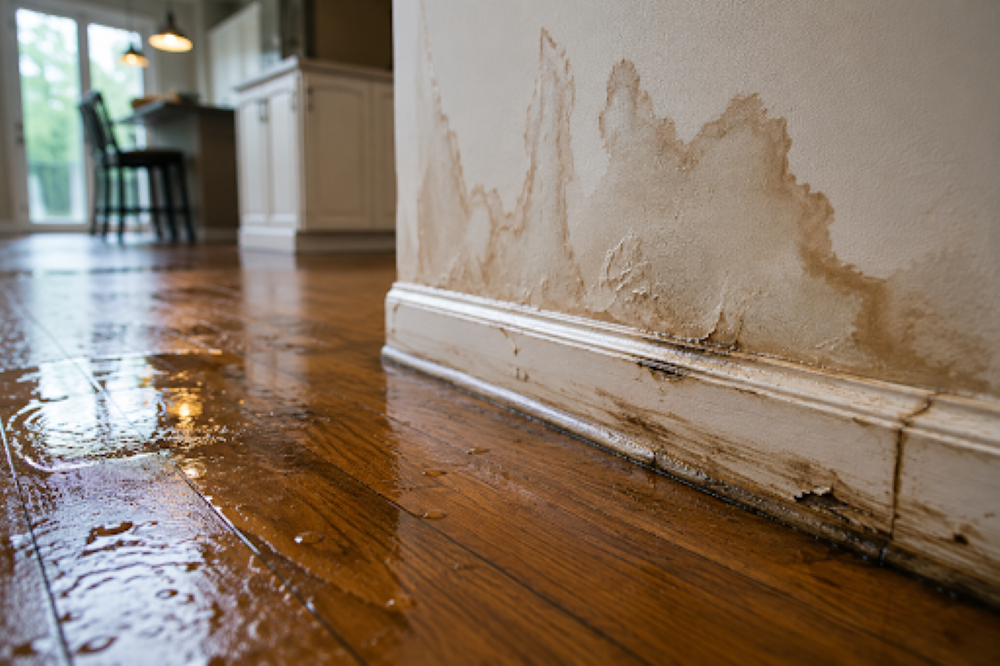
Stop the Water, Save Your Home
Water under a slab does not stay in one place. In many Powder Springs homes, it can move under flooring, into walls, and under cabinets long before anyone notices a wet spot. By the time you see a puddle, the water may have already spread across several rooms.
When that happens, telling a slab leak from surface water intrusion is very important. If you guess wrong, you can waste time and let water sit where you cannot see it. That can lead to warped floors, damaged cabinets, and even hidden mold growth. In a slab-on-grade home, a few hours can make a big difference.
In this guide, we will share simple ways to tell if your water problem is coming from a pipe under the slab or from rain and runoff outside. We will also walk through safe first steps you can take while you wait for professional water damage restoration in Powder Springs, GA.
How Powder Springs Homes Are Built and Why It Matters
Across Georgia, most homes do not have basements, and that is especially true around Powder Springs. In this area, most homes sit on concrete slabs with no basement and no open crawlspace. The concrete rests right on the ground, and the living space sits on top of that. This type of structure changes how and where water can show up.
Many of the plumbing lines are run under that concrete slab. If one of those lines leaks, the water has to work its way up through tiny cracks and gaps. It does not pour out of a ceiling or a visible pipe, so it is easy to confuse it with water from rain.
Local conditions also play a part. Clay soil can swell when it is very wet and shrink when it dries out, and heavy rains can make that soil move, which can stress buried pipes. Older water lines under the slab can also weaken over time. On top of that, patios, driveways, and walkways sometimes slope toward the house instead of away from it.
When those slopes and soil issues mix with sudden storms, surface water can end up right against your foundation. That is why it helps to think about how your home is built and how water might be moving under and around it.
Slab Leak Clues Under a Georgia Slab Foundation
Slab leaks often start quietly. There may be no puddle at first, just small hints that something is off. Paying attention to these clues can help you act early.
Common slab leak symptoms include:
- Warm spots on tile or hardwood floors, often in the middle of a room
- The same area of flooring staying damp or darker than the rest
- Water bills slowly rising even though your daily use has not changed
You might also notice sensory signs that point to water under the slab:
- Hearing water running when every faucet and appliance is turned off
- Floors that feel spongy, soft, or start to buckle in a specific area
- Mildew or musty odors in interior rooms that are not near exterior doors
If you suspect a slab leak, a few immediate actions can help reduce damage while you line up proper help.
- If it is safe, shut off the main water supply to stop continuous flow
- Avoid turning on the HVAC if the floor feels wet, since air movement can spread moisture and odors
- Keep people and pets away from any area where the floor feels weak or raised
- Call a professional who offers water damage restoration in Powder Springs, GA so they can check moisture levels and help locate the source
Specialized tools are often needed to trace water paths and find the exact break in a buried line, so fast professional help is important.
Spotting Surface Water Intrusion After Heavy Rains
Surface water intrusion is different. Here, the water starts outside and works its way in. It might slide under a door, seep through joints at the edge of the slab, or sneak in where patios, driveways, or porches meet the house.
Around Powder Springs, quick storms can drop a lot of rain in a short time. When that happens, some common issues show up:
- Gutters that overflow because they are clogged or undersized
- Downspouts that dump water right next to the foundation
- Water creeping in at door thresholds, especially at back doors and garage entries
Telltale signs of surface water intrusion include:
- Water appearing soon after a storm, then drying up between rains
- Dampness or staining along exterior walls or right at sliding glass doors
- Visible puddles sitting against the foundation or patio edges outside
- Muddy or debris-filled water lines on flooring or baseboards near entry points
If the water looks dirty, has bits of mulch, or has a faint brown color, it is usually from outside rather than from a clean interior supply line.
Slab Leak vs. Surface Water: Quick Comparison and First 24 Hours
When you see water, it helps to run through a quick mental checklist. While only a trained pro can confirm the exact source, you can often narrow it down.
Think about:
- Timing
– Moisture present all the time and higher water bills can point to a slab leak
– Moisture that appears only after rain can point to surface water
- Location
– Warm spots or dampness in the middle of a room can suggest a slab issue
– Wet areas along exterior walls and doors can suggest outside intrusion
- Water quality
– Clear, clean water is often from supply lines
– Water with dirt, leaves, or mulch is more likely from outside
Safety should always come first. If you see wet outlets, soaked baseboards near wiring, or sparks or flickering, stay away from that area. If the air smells strongly musty or moldy, limit time in that room, especially for kids, older adults, or pets.
During the first 24 hours, you can take some careful steps while you are waiting on help.
For suspected slab leaks:
- Turn off the main water supply if you can safely access it
- Try not to use sinks, showers, or toilets so you do not add to the leak
- Lift valuables, electronics, and area rugs up off the floor
- Take photos or videos of what you see so you can share them with the restoration team and your insurance carrier
For surface water intrusion:
- If it is safe, block incoming water with towels, sandbags, or plastic sheeting
- Redirect downspouts so they point away from the house, not at the slab
- Move furniture, boxes, and rugs out of the wet area
- Gently blot or mop standing water, but avoid pushing water into walls or under baseboards
There are also things you should avoid doing on your own:
- Do not rip up flooring or cut into walls without guidance; that can spread damage or create safety issues
- Do not use small household fans on water that may be dirty or on areas that might already have mold growth
- Do not walk on floors that are sagging, raised, or sound hollow; they may not be stable
When to Call the Pros and How to Protect Your Home Going Forward
It is time to involve professionals when:
- Water affects more than a small, easy-to-dry area
- Moisture has been present for more than a day
- The same spot gets wet again and again
- You notice mold, strong musty odors, or anyone in the home starts to feel unwell around the affected area
A local team that provides water damage restoration in Powder Springs, GA can:
- Perform moisture readings through floors and walls
- Track where the water is coming from and how far it has spread
- Extract standing water and start drying slab-on-grade structures with the right type and amount of equipment
- Coordinate with plumbers if a slab leak needs repair
- Check for structural issues and handle the rebuild of flooring, baseboards, and other finishes
To protect your home before the next big storm or leak, it helps to build a few simple habits into your routine and address exterior drainage before it becomes urgent.
- Glance at your water bill each month for unexplained jumps
- Walk the outside of your home after heavy rain and look for puddles against the slab
- Keep gutters clear and make sure downspouts move water away from the foundation
- Pay attention to any recurring damp spots inside, even if they seem minor
It also helps to know where your main water shut-off is and to keep a small emergency kit with a flashlight, towels, and plastic sheeting in an easy spot. Having contact information for a trusted local restoration company ready before you need it can save time and stress when water suddenly appears in your Powder Springs home.
Protect Your Property With Fast, Professional Help Today
If water has affected your home or business, we are ready to respond quickly and limit further damage. Our experienced team at Puroclean – Powder Springs provides detailed inspections, clear communication, and proven solutions for water damage restoration in Powder Springs, GA. Reach out now so we can assess the situation, start mitigation, and help you move toward a safe, fully restored space. To schedule service or ask questions, please contact us today.