Table of Contents
To prevent sink mold, it’s essential to control moisture, remove organic residue, and improve airflow—common problem areas in kitchens and bathrooms. If you notice black or green growth or a persistent musty odor, act quickly. Most surface mold around sinks can be prevented or resolved with proper drying, routine cleaning, and regular drain care. Ongoing growth, hidden leaks, or recurring odors may require professional help from PuroClean in Sacramento to address moisture at the source.
What Is Sink Mold?
Sink mold is fungal growth that develops on or around sinks, drains, faucets, and cabinets when moisture lingers. Mold spores are always present indoors; they become a problem only when damp conditions allow them to multiply.
Why Sink Mold Is Common in Sacramento Homes
- Frequent water use (handwashing, dishes, brushing teeth)
- Hard-to-dry areas (drain rims, faucet bases, P-traps, under-sink cabinets)
- Seasonal humidity swings and limited ventilation in bathrooms and kitchens
What Causes Sink Mold?
Sink mold doesn’t appear randomly. It’s triggered by a predictable set of conditions.
- Persistent moisture: Standing water or condensation around fixtures
- Organic buildup: Soap scum, food particles, and grease feeding mold
- Low airflow: Enclosed cabinets or rooms without exhaust fans
- Hidden leaks: Slow drips under the sink or around supply lines
How to Prevent Sink Mold (Step-by-Step)
Prevention works best when you remove moisture and food sources consistently.
- Dry after use. Wipe the basin, drain rim, and faucet base to eliminate lingering water.
- Improve ventilation. Run exhaust fans during and after use; open windows when possible.
- Clean routinely. Use mild soap weekly; scrub seams, aerators, and drain edges.
- Maintain the drain. Flush with hot water weekly to reduce residue.
- Inspect under the sink. Check for leaks, damp cabinets, or warped materials.
How to Remove Sink Mold Safely
Small, surface-level mold can often be handled with household methods.
DIY Removal (For Light Growth)
- Vinegar method: Spray white vinegar, wait 10 minutes, scrub, rinse, dry.
- Hydrogen peroxide: Apply 3% solution, wait, scrub, and dry thoroughly.
- Baking soda paste: Scrub textured areas to lift residue.
Always dry the area completely after cleaning to prevent regrowth.
When DIY Isn’t Enough
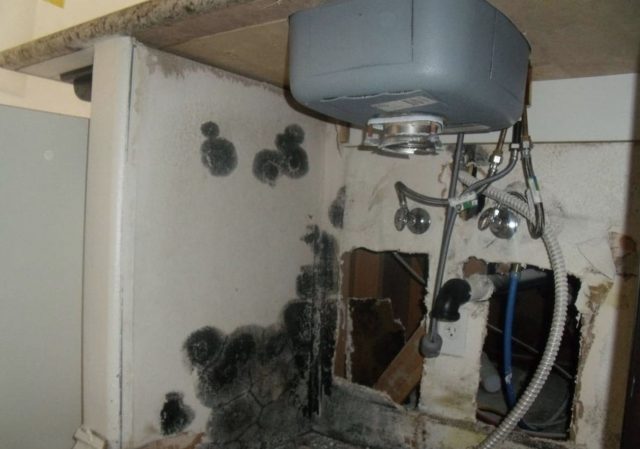
If mold returns quickly, smells persist, or growth appears under cabinets or inside walls, the issue is likely moisture-related and needs professional remediation.
Sink Mold vs. Drain Odor: What’s the Difference?
| Issue | Common Signs | Primary Cause | Fix |
|---|---|---|---|
| Sink mold | Visible spots, fuzzy growth | Surface moisture | Clean, dry, ventilate |
| Drain odor | Musty/rotten smell | Organic buildup in P-trap | Baking soda + vinegar, hot water |
| Hidden mold | Recurring smell, cabinet damage | Leaks or trapped moisture | Professional inspection |
Health Concerns Linked to Sink Mold
While minor sink mold is often localized, prolonged exposure can irritate allergies or asthma. Sensitive individuals may notice sneezing, congestion, or eye irritation. Addressing moisture promptly reduces risk.
When to Call PuroClean
Contact PuroClean if you notice:
- Repeated mold despite cleaning
- Soft or swollen cabinetry under the sink
- Persistent musty odors with no visible source
- Evidence of leaks or water damage
Professional remediation targets both mold and the moisture causing it.
FAQs About Sink Mold
Is sink mold dangerous?
Light surface mold is usually manageable, but recurring or hidden mold can affect indoor air quality and should be evaluated.
Why does my sink smell musty even after cleaning?
Odors often come from drain buildup or hidden moisture under the sink. Cleaning the P-trap and checking for leaks helps.
Can vinegar permanently remove sink mold?
Vinegar can remove light mold, but it won’t prevent regrowth if moisture problems remain.
Does sink mold mean I have a plumbing leak?
Not always, but frequent regrowth or damp cabinets strongly suggest a slow leak.
How often should I clean to prevent sink mold?
Wipe daily, clean weekly, and inspect under-sink areas monthly.
Call to Action
If sink mold keeps coming back or you suspect hidden moisture, contact PuroClean in Sacramento, CA for a professional assessment and lasting solution.
Key Takeaways
- Prevent sink mold by controlling moisture, residue, and airflow around plumbing fixtures
- Daily drying and weekly cleaning stop most mold before it starts
- Drain odors and mold near sinks are related but not the same issue
- Persistent growth often points to hidden moisture or plumbing leaks
- DIY methods work for light surface growth only
- Professional help ensures moisture problems are fixed at the source