Water-damaged hardwood floors can sometimes be dried and saved, especially when the water was clean and drying starts quickly. Floors soaked by sewage or floodwater, boards that have buckled off the subfloor, and many engineered or laminate products are more likely to need replacement. This guide covers the warning signs, the factors that decide the outcome, and what professional floor drying involves, so you know what to expect before anyone pulls up a board.
Key Takeaways
- Cupping, crowning, and buckling are the three main ways wood reacts to water, and each one points to where the moisture is.
- Clean water and fast drying give a hardwood floor its best chance. Contaminated water usually means removal.
- Solid hardwood generally tolerates drying better than engineered flooring, and laminate rarely recovers once its core swells.
- Sanding a cupped floor before it is fully dry can cause new damage later.
- Moisture readings, not appearance alone, decide whether drying or replacement makes sense.
Signs of Water-Damaged Hardwood Floors
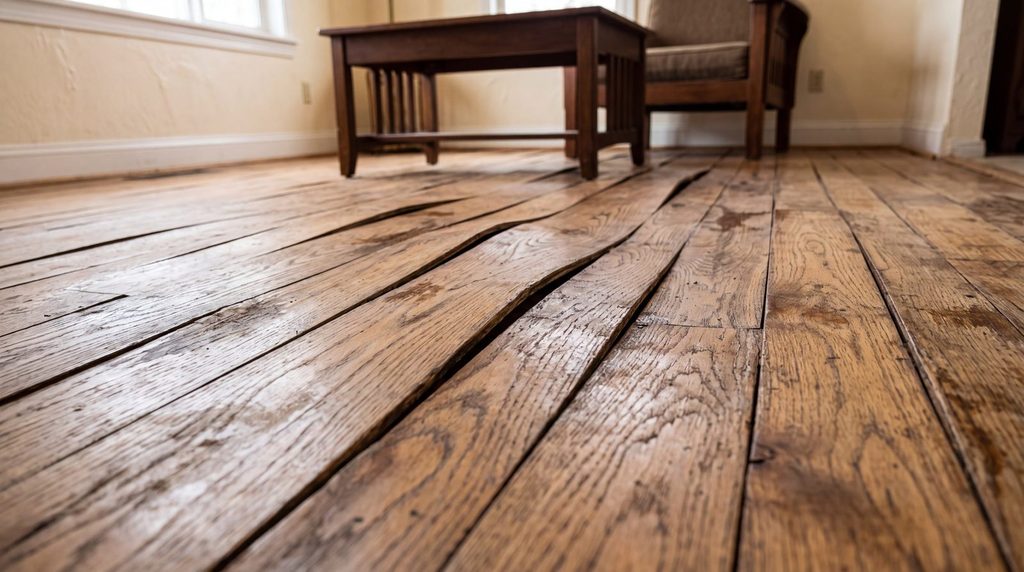
Wood absorbs moisture and swells, so the shape of the boards tells you a lot about what is happening underneath.
- Cupping: The edges of each board rise higher than the center. This usually means moisture is coming from below, such as a wet subfloor, a damp slab, or crawl space water damage under the home.
- Crowning: The center of each board sits higher than the edges. It can happen when the top surface stays wet, or when a cupped floor is sanded flat before it has dried.
- Buckling: Boards lift away from the subfloor, sometimes by several inches. This is the most severe reaction and usually follows prolonged saturation.
Other signs include dark or gray staining around board edges, a finish that turns cloudy or white, soft spots, and a musty odor. Water does not always arrive from above. A slow leak from an appliance or HVAC system can wet a floor from underneath long before a stain appears, which is why hidden water damage after an AC leak can show up first as a slight cup in the boards.
What Decides Whether a Hardwood Floor Can Be Dried
Four factors usually decide the outcome: the type of water, how long the wood stayed wet, the type of flooring, and the condition of the subfloor.
The Type of Water
The Institute of Inspection, Cleaning and Restoration Certification (IICRC) classifies water by contamination level. Category 1 comes from a clean source, such as a broken supply line. Category 2 contains significant contamination, such as washing machine or dishwasher discharge. Category 3 is grossly contaminated and includes sewage and outside floodwater.
Treat any water that came in from outside, such as river flooding or yard runoff, as contaminated until a professional says otherwise. For homes close to the river, see water damage risk near the American River.
How long the wood stayed wet
The longer water sits, the deeper it moves into the boards and subfloor. Clean water can also become contaminated as it sits. The U.S. Environmental Protection Agency (EPA) recommends drying water-damaged areas within 24 to 48 hours to help prevent mold growth.
The type of flooring
Solid hardwood, engineered hardwood, and laminate can look alike once installed, but each is built differently, and that changes how it handles water. For carpeted rooms, see whether carpet and pad can be saved after a flood.
| Flooring | How it reacts to water | Drying outlook |
|---|---|---|
| Solid hardwood | Swells and cups, but each board is one piece of wood that can often be sanded and refinished after drying | Best candidate when the water was clean and drying starts quickly |
| Engineered hardwood | A thin hardwood layer over a plywood or fiberboard core; layers can separate | Depends on the core material and whether the layers have delaminated |
| Laminate (not real wood) | Fiberboard core swells and does not return to its original shape | Usually replaced |
The subfloor
A plywood or oriented strand board (OSB) subfloor can swell or delaminate when saturated. A concrete slab holds moisture and dries slowly. Either way, the subfloor has to dry along with the boards. If it stays wet, cupping can return after the surface looks fine. If the home has a crawl space, water or high humidity below it can keep the subfloor damp. Learn more about crawl space water damage in Sacramento homes.
What Professional Hardwood Floor Drying Involves
Professional floor drying is a mitigation step: the goal is to remove moisture and limit further damage before anyone decides on repairs.
- Inspection and moisture mapping: Technicians use moisture meters to compare affected boards with dry flooring elsewhere in the home. Thermal imaging may help show how far the water spread.
- Water extraction: Standing water is removed first. Restoration professionals may also use specialized floor drying systems that pull moisture up through the boards.
- Controlled drying: Dehumidifiers and air movers lower the humidity so the wood releases moisture gradually. Drying wood too fast with direct heat can stress the boards and cause cracking.
- Monitoring: Readings are taken regularly until the flooring and subfloor return to normal moisture levels for the home.
- Waiting before refinishing: Boards often settle as they dry. Sanding, refinishing, or replacing boards is a restoration decision made after the wood has stabilized.
When Replacement Is More Likely
Drying is not always the right call. Replacement becomes more likely when:
- The floor was soaked by sewage or floodwater.
- Boards have buckled and pulled away from their fasteners.
- Engineered layers have separated, or laminate has swollen.
- Mold is growing under the boards or on the subfloor.
- Cupping remains after the floor and subfloor reach normal moisture readings.
- A long-term hidden leak has softened or rotted the subfloor.
Sometimes only part of a floor needs replacing. Whether new boards can match the existing floor depends on the species, finish, and product availability.
What to Do While You Wait for an Inspection
- Turn off power to the affected area if outlets or cords are near the water, and only if you can reach the panel safely.
- Stop the water source if you can do so safely.
- Move rugs and furniture off the wet floor.
- Wipe up standing water only if it came from a clean source. Stay off floors touched by sewage or outside floodwater.
- Take photos and note the date and time for your insurance company.
- Do not sand, nail down, or seal boards while they are still wet.
If storms are the cause, the steps in what to do if heavy rain causes water damage also apply.
Get your hardwood floors inspected by PuroClean Home Rescue
If water has reached hardwood floors in your Rancho Cordova or Sacramento-area home, PuroClean Home Rescue can inspect the boards and subfloor, take moisture readings, and explain whether drying is a realistic option. The sooner extraction and drying begin, the more options you are likely to have. Contact PuroClean Home Rescue or call (866) 722-7876 to schedule an inspection, or learn more about water damage restoration in Rancho Cordova.
FAQs about Water-Damaged Hardwood Floors
Will Cupped Hardwood Floors Flatten on Their Own?
Sometimes. Mildly cupped boards can flatten as the floor and subfloor dry, which is why drying comes before sanding. If cupping remains once moisture readings return to normal, refinishing or replacing boards may be considered.
How Long Does It Take to Dry Hardwood Floors after Water Damage?
It varies with how much water the wood absorbed, the subfloor type, and the humidity in the home. Professionals track progress with regular moisture readings rather than a fixed timeline.
Can I Dry My Hardwood Floor with Fans and a Shop Vacuum?
For a small clean-water spill caught right away, wiping it up and improving airflow may be enough. Fans alone rarely dry the subfloor, and a shop vacuum should not be used on contaminated water. A moisture meter reading is the only reliable way to know the wood is dry.
Is a Musty Smell from My Floor a Sign of Mold?
It can be. A musty odor often points to trapped moisture under the boards, and that moisture can support mold growth. If you notice the smell, ask about an inspection before pulling up flooring yourself, since disturbing mold can spread it. Learn more about mold remediation.
Does Homeowners Insurance Cover Water-Damaged Hardwood Floors?
Coverage depends on your policy and on what caused the water. Contact your insurance company before repairs begin, and keep photos, dates, and any moisture readings from the inspection.