


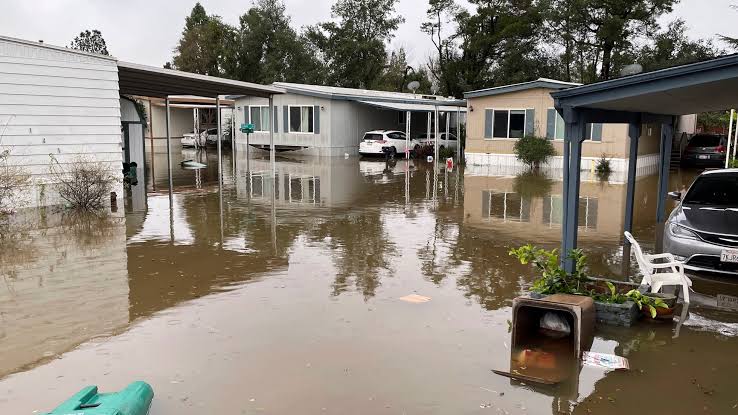
What Homeowners and HOA Boards Need When Water Damage Strikes an Age-Restricted Community
Rancho Cucamonga has a significant and growing population of active adult residents living in age-restricted 55+ communities throughout the city. Developments along Haven Avenue, Milliken Avenue, and the foothill corridors have specifically designed communities for residents who have downsized from larger family homes and chosen the maintenance-reduced lifestyle that HOA-managed active adult living offers.
These communities are well maintained, well managed, and increasingly popular as the Inland Empire’s demographic profile shifts. They also carry a specific set of emergency water restoration and water damage restoration service considerations that standard residential and commercial restoration protocols do not fully address, shaped by the age of the residents, the construction characteristics of the community, and the HOA management structure that governs how restoration decisions are made.
When water damage occurs in a 55+ active adult community in Rancho Cucamonga, the response needs to account for all of these dimensions simultaneously.
Why 55+ Communities Face Unique Water Damage Risks
Active adult communities in Rancho Cucamonga face water damage risks that reflect both the age of the residents and the construction era of many of these developments.
Resident detection patterns differ significantly in a 55+ community compared to a family household. Many active adult residents travel extensively, spend extended periods visiting family, or maintain a seasonal lifestyle that leaves their unit unoccupied for weeks at a time. A slow plumbing failure that would be detected within hours in an occupied family home can develop for days or weeks in a unit whose owner is traveling, producing the kind of deep structural saturation that emergency water restoration is designed to interrupt but that becomes significantly more complex the longer it has been present.
Accessibility considerations during water restoration service affect active adult residents in ways that younger homeowners rarely experience. Drying equipment positioned in living areas creates trip hazards for residents with mobility challenges. Noise from air movers and dehumidifiers running continuously creates disruption for residents with hearing aids or sleep-related health conditions. And the physical and cognitive stress of managing a water damage event can be genuinely overwhelming for residents who are managing the situation without family members nearby to assist.
Aging community infrastructure in developments built in the 1990s and early 2000s presents the same plumbing deterioration risks that affect all Inland Empire properties of that era, compounded by the high-occupancy patterns of active adult communities where shared amenity facilities, community pools, and common area plumbing run at volumes that accelerate wear.
The HOA Management Layer in Active Adult Community Water Events

Active adult communities in Rancho Cucamonga are managed by HOA boards whose responsibilities include the shared infrastructure, common areas, and in many cases the building exterior and roof systems that serve individual units. When a water damage event occurs, the division of responsibility between the individual unit owner and the HOA creates a coordination requirement that standard water restoration service does not automatically accommodate.
Common water damage scenarios in active adult communities where HOA responsibility intersects with unit owner restoration needs include:
- Roof and gutter system failures where the HOA-maintained exterior allows water entry into individually owned units, creating a coverage question between the HOA master policy and the unit owner’s individual policy
- Shared plumbing riser failures in multi-story active adult buildings where a single plumbing failure affects multiple units across multiple floors simultaneously
- Common area flooding events from pool equipment failures, irrigation system malfunctions, or community building plumbing failures that migrate into adjacent residential units
- HVAC system failures in communities where the HOA maintains shared or central systems serving multiple units
In each of these scenarios, emergency water restoration requires documentation that clearly establishes the source of the event, the HOA infrastructure involved, and the damage scope in each affected unit, supporting simultaneous claims across both the HOA master policy and individual unit owner policies.
Our water damage restoration service for active adult community events includes this dual documentation as a standard component, giving both the HOA board and individual affected residents the records they need for their respective claims without requiring either party to manage the documentation process independently.
Emergency Water Restoration Response in an Occupied 55+ Community
Emergency water restoration in an occupied active adult community requires a response approach that balances speed and thoroughness with the specific needs of the resident population.
Communication with residents and family contacts. When an emergency water restoration event affects a unit whose owner is traveling or temporarily away, establishing communication with the owner or their designated family contact is a first priority alongside the physical response. Many active adult community residents have established emergency contact arrangements with adult children or other family members, and our team works within those established relationships rather than creating parallel communication that adds stress to an already difficult situation.
Accessibility-aware equipment placement. Commercial drying equipment deployed in an active adult residence is positioned with fall hazard awareness as a primary consideration, with power cords routed to minimize floor-level trip risk and equipment placement that maintains clear pathways through the living space throughout the drying period.
Noise and disruption management. Drying equipment runtime can be scheduled and configured to minimize overnight noise disruption where the restoration timeline allows, and daily monitoring visits are coordinated with the resident’s schedule rather than arriving unannounced.
Family communication support. Adult children and family members of affected residents often want direct information about the water restoration service process, the timeline, and what the restoration involves. Our team communicates directly with designated family contacts throughout the process, reducing the burden on the resident to serve as information intermediary.
What Emergency Water Restoration and Water Damage Restoration Service Covers
Effective emergency water restoration and complete water damage restoration service in a Rancho Cucamonga active adult community addresses every dimension of these specific properties:
- Rapid emergency response available around the clock regardless of whether the affected resident is present or reachable at the time of the event
- HOA coordination from the first hour, establishing clear communication with property management and the HOA board about the scope of the event and the shared infrastructure involvement where applicable
- Dual insurance documentation supporting both the unit owner’s individual policy claim and the HOA master policy claim with appropriate scope separation
- Moisture mapping covering all affected units and common area spaces involved in the event, not just the unit where the visible damage is most apparent
- Accessibility-aware restoration operations throughout the drying and water restoration process
- Extended monitoring with daily resident check-ins to confirm that the drying process is proceeding without creating additional disruption or hazard for the occupant
- Family contact communication maintained throughout the water damage restoration service process for residents who have designated family contacts for emergency situations
- Complete clearance documentation confirming the unit has been returned to a safe and fully dried condition before the restoration file is closed
The Insurance Landscape for Active Adult Community Water Events
Unit owners in Rancho Cucamonga’s active adult communities typically carry HO-6 condominium or townhome policies that cover interior finishes, contents, and liability within the unit. These policies interact with the HOA master policy in ways that create coverage questions whenever a water event involves shared building systems or when damage crosses the boundary between unit owner responsibility and HOA responsibility.
California law and most HOA governing documents define this boundary in specific terms, but the practical application of those definitions to a specific water damage event requires documentation that clearly establishes where the water originated, what shared systems were involved, and what damage occurred within each party’s area of responsibility.
A water damage restoration service file that documents these elements clearly from the first response supports faster claim resolution for both the unit owner and the HOA board, and reduces the likelihood of coverage disputes between the two policies that delay the restoration process and increase stress for the affected resident.
For additional context on how water damage restoration documentation protects your insurance position in California’s current claims environment, our blog on Water Damage Restoration in Rancho Cucamonga: When Your Insurance Claim Gets Denied covers the documentation standards that matter most when carrier scrutiny is elevated.
A Note for HOA Boards and Property Managers
Active adult community HOA boards and property management companies in Rancho Cucamonga that have not established a preferred emergency water restoration vendor relationship are making restoration decisions under pressure during an active event rather than from a position of preparation.
A preferred water restoration service relationship established before an event occurs means faster response, a team already familiar with the community’s infrastructure, and documentation standards that the HOA’s insurance carrier recognizes as professional standard. It also means that when a water event affects a resident in the community, the HOA board can provide immediate, confident direction rather than searching for a qualified emergency water restoration company while the damage continues.
For property managers interested in establishing that relationship, our blog on Water Mitigation Company Near Me for Rancho Cucamonga Property Managers covers exactly what a preferred vendor relationship looks like and what it delivers for portfolio management operations.
Your Community’s Residents Deserve a Restoration Team That Understands Them
Emergency water restoration in a 55+ active adult community is not a generic residential job performed on a slightly older demographic. The accessibility considerations, the HOA coordination requirements, the dual insurance documentation needs, and the communication responsibilities to residents and their families are all dimensions of the water damage restoration service that require intentional planning rather than improvised response.
PuroClean of Rancho Cucamonga serves active adult communities throughout Rancho Cucamonga, Ontario, Upland, Fontana, Claremont, and across San Bernardino and western Riverside counties around the clock. When water damage affects your community’s residents, call (909) 481-4399. We will respond immediately, coordinate with the HOA board and property management, work respectfully and carefully within the resident’s home, and produce the complete water restoration documentation that every party needs. For additional context on how our moisture mapping process establishes the true scope of a water event across shared building assemblies, our blog on The Role of Residential Moisture Mapping in Water Damage Restoration explains exactly how the assessment process works in multi-unit environments.