


What Day Creek, Etiwanda, and Hillside Homeowners Need When Storm Water Comes Down Fast
The foothill neighborhoods of Rancho Cucamonga sit at one of Southern California’s most dramatic landscape transitions. Where the San Gabriel Mountains meet the Inland Empire flatlands, the terrain compresses centuries of alluvial deposit into a fan-shaped geography that gives these neighborhoods their distinctive elevated character and their distinctive storm water risk.
Homes along the Day Creek corridor, in upper Etiwanda, and throughout the foothill communities north of Banyan Street occupy some of the most desirable real estate in San Bernardino County. They also occupy land where emergency water restoration scenarios play out differently than anywhere else in Rancho Cucamonga, shaped by geology, gradient, and the specific behavior of water moving rapidly off steep mountain terrain during atmospheric river and heavy rain events.
At PuroClean of Rancho Cucamonga, we know these neighborhoods and we understand what emergency water restoration requires when the hills send water down faster than the drainage infrastructure was designed to handle.
How Foothill Geology Creates Unique Emergency Water Restoration Scenarios
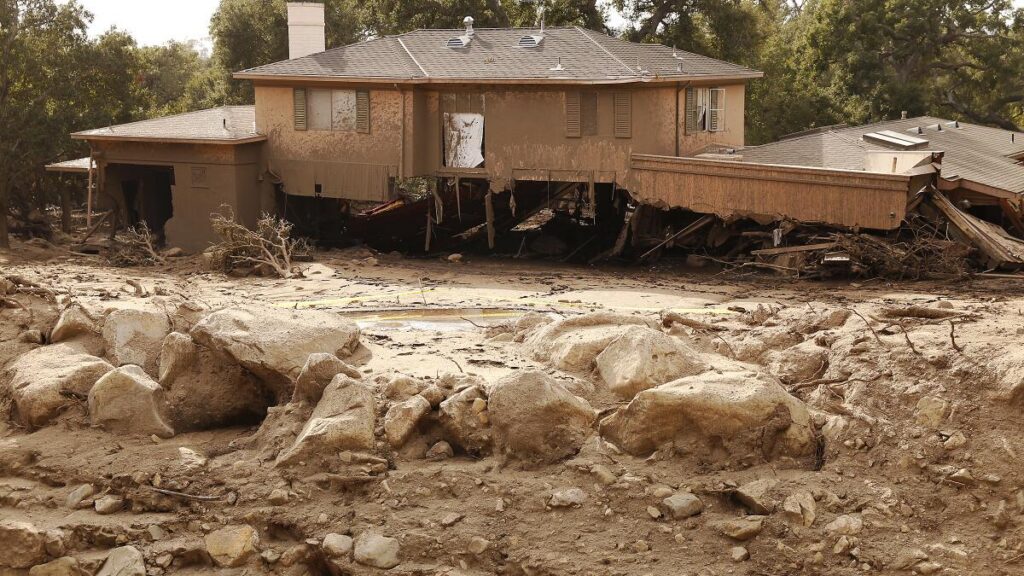
The alluvial fans that form the foundation of Rancho Cucamonga’s foothill neighborhoods were built over millennia by debris flows and sediment-laden water moving off the San Gabriel Mountains. That same process activates during significant storm events, and modern residential development sitting on those fans is directly in its path.
When heavy rainfall saturates steep mountain terrain above the foothill communities, water moves downslope carrying sediment, debris, and in post-wildfire conditions, significant ash and burned material. This flow concentrates in natural drainage channels that correspond closely to the street and drainage infrastructure built along their paths, but under high-volume conditions it exceeds those channels and spreads across adjacent properties.
The water that reaches a foothill home during one of these events is fundamentally different from a standard plumbing failure or appliance overflow. It is high-velocity, sediment-laden, and in many cases carrying debris that damages building components on contact. It enters properties through every low-level opening simultaneously rather than from a single identifiable source. And it deposits material that creates cleanup and contamination challenges well beyond what standard emergency water restoration extraction addresses.
The Debris Flow Problem in Emergency Water Restoration
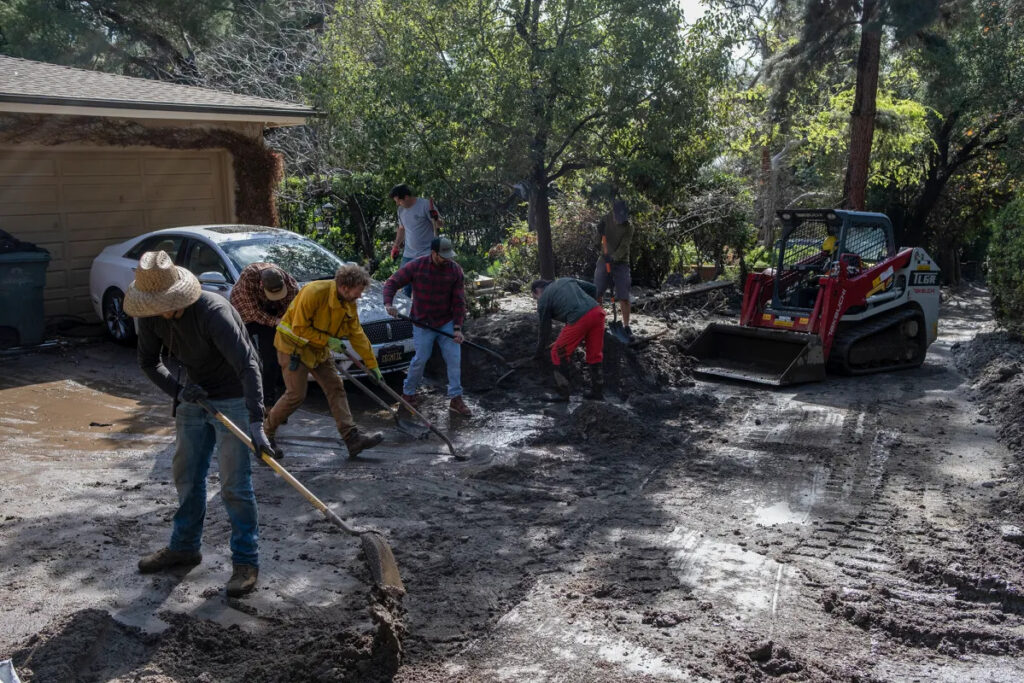
Sediment and debris deposited by foothill flooding events is not simply dirt that can be shoveled out and forgotten. In the context of emergency water restoration, debris flow material presents several specific challenges:
Sediment infiltrates flooring systems, subfloor assemblies, and wall base zones in ways that standing water alone does not. Fine particles carried in suspension penetrate gaps and penetrations throughout the building envelope and deposit throughout the floor assembly, requiring extraction methods that standard water removal equipment is not designed to address.
Debris flow material in post-wildfire conditions carries elevated levels of ash, heavy metals, and chemical compounds from burned vegetation and structures. In the years following significant fires above Rancho Cucamonga’s foothill communities, this post-fire debris flow contamination adds a chemical dimension to the standard biological contamination of Category 3 flood water.
Structural impact from debris-laden flow can damage foundation perimeter elements, exterior wall bases, and below-grade components in ways that are not immediately visible but affect the structural integrity assessment that emergency water restoration requires before crews work in affected areas.
Our emergency water restoration response for foothill properties includes debris removal and sediment extraction as a primary step before standard extraction and drying equipment is deployed, because applying drying protocols to a structure that still contains deposited sediment produces incomplete results regardless of the equipment quality.
What Emergency Water Restoration Covers for Foothill Properties
When our team responds to an emergency water restoration call in Rancho Cucamonga’s foothill communities, the response accounts for the specific conditions alluvial fan flooding produces:
- Structural safety assessment including evaluation of foundation perimeter and below-grade elements for debris flow impact before crews begin interior work
- Debris and sediment removal from all affected areas as a prerequisite to extraction and drying
- Water category confirmation accounting for post-wildfire contamination where relevant to the specific event and terrain above the affected property
- Full moisture mapping using thermal imaging to identify sediment-carried moisture in wall bases, subfloor assemblies, and below-grade spaces
- Contamination-appropriate extraction and decontamination matched to the specific water category and debris composition present
- Extended structural drying calibrated for the dense sediment-affected materials and the specific ambient conditions of the post-storm Inland Empire environment
- Complete insurance documentation supporting claims that may involve standard homeowner coverage, flood insurance, and in some cases earth movement coverage depending on the specific event characteristics
For context on how atmospheric river events specifically affect Rancho Cucamonga’s broader residential market during high-volume storm periods, our blog on Emergency Water Restoration During Atmospheric River Events explains the regional storm dynamics that drive foothill flooding events. And for homeowners concerned about mold development following a debris flow event, our blog on Mold Removal in Post-Wildfire Rebuild Homes covers the contamination and mold risk factors specific to post-fire terrain above Rancho Cucamonga’s foothill communities.
The Insurance Question for Foothill Flood Events
Emergency water restoration claims for foothill flooding in Rancho Cucamonga’s alluvial fan neighborhoods sometimes encounter a coverage complexity that flat-land flood claims do not. The distinction between flood damage, surface water intrusion, and earth movement is not always clear when a debris flow event combines all three simultaneously, and carrier interpretations of which policy provision applies can vary significantly.
Standard homeowner’s policies generally cover sudden and accidental water damage but exclude flood and earth movement. NFIP flood insurance covers surface flooding from external sources. Debris flow that carries both water and sediment onto a property can be characterized differently by different carriers, making documentation of exactly what occurred, how water entered the property, and what the sediment composition indicates about the event type genuinely consequential for claim outcomes.
Our emergency water restoration documentation for foothill events includes event characterization with photographic evidence of entry points, debris composition, and flow direction that gives your carrier and any independent adjuster the factual record they need to apply coverage correctly. For additional context on how thorough restoration documentation protects your insurance position, our blog on Costs of Delayed Water Damage Repairs explains why early professional response and complete documentation consistently produce better claim outcomes than delayed or self-managed responses.
The Foothills Are Beautiful. We Help Keep Them That Way.
Living in Rancho Cucamonga’s foothill neighborhoods means accepting a relationship with the mountain terrain above that most Inland Empire communities do not share. The views, the air quality, and the character of these neighborhoods are worth it. The storm water risk that comes with that terrain is manageable with the right preparation and the right response team.
PuroClean of Rancho Cucamonga serves the Day Creek corridor, upper Etiwanda, Rancho Etiwanda Estates, and all foothill communities throughout northern Rancho Cucamonga and the surrounding Inland Empire around the clock. When the hills send water down faster than the drains can handle it, call (909) 481-4399. We understand this terrain, we know what it does to properties during a significant storm event, and we will be there with the right equipment and the right approach from the first hour.