


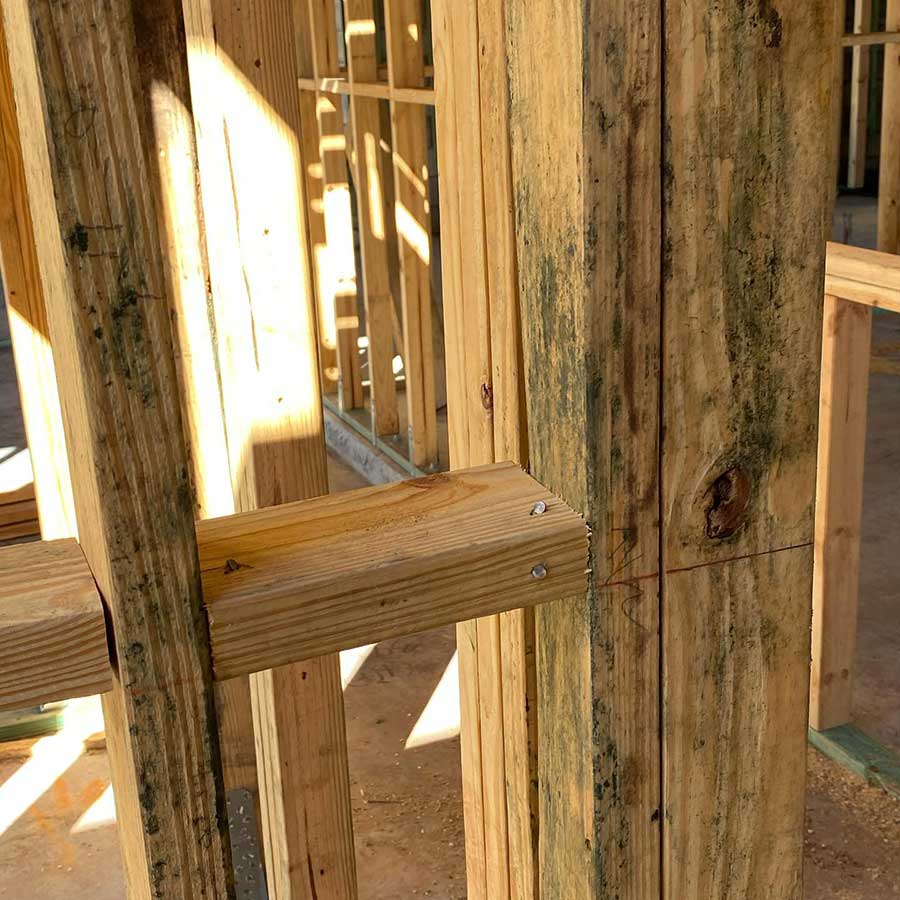
Why Brand New Construction Is Not Always Mold-Free Construction
There is a particular kind of frustration that comes with finding mold in a home that is less than two years old. You rebuilt after a wildfire, or you purchased a newly constructed replacement home in a fire-affected neighborhood, and the last thing you expect is a mold problem in walls that were framed twelve months ago.
In Rancho Cucamonga and the broader Inland Empire, it happens more than most homeowners or builders will readily acknowledge. Post-wildfire rebuild construction in Southern California carries a specific set of conditions that create elevated mold risk in newly built homes, and understanding why helps homeowners recognize the signs earlier and make better decisions about mold removal before the problem expands.
Why Fast-Tracked Rebuild Construction Creates Mold Risk
When wildfire destroys a neighborhood, the pressure to rebuild quickly is enormous. Homeowners are displaced, insurance timelines are running, and contractors are working at maximum capacity to restore as many properties as possible in compressed timeframes.
That pressure produces a construction dynamic that is genuinely at odds with proper moisture management. Framing lumber that arrives on site after a rainfall event and is enclosed inside wall assemblies before reaching acceptable moisture content. Concrete foundations and slabs that are poured and built over before curing is complete. Drywall installed during periods of elevated ambient humidity that gets sealed inside the building envelope before it has equilibrated.
Each of these situations introduces construction moisture into the building assembly. In a normally paced project with adequate drying time between trades, that moisture dissipates before the home is enclosed. In a fast-tracked rebuild, it gets sealed in and becomes a sustained moisture source inside the wall cavity, exactly where mold needs it to be.
The Inland Empire Climate Factor in New Construction Mold

Rancho Cucamonga’s climate creates a particular challenge for post-wildfire rebuild construction that more temperate regions do not face in the same way. The Inland Empire’s temperature swings between hot dry summers and cooler winters with periodic rain drive repeated expansion and contraction cycles in building materials.
Lumber and drywall that were enclosed with elevated moisture content respond to these cycles by repeatedly swelling and releasing moisture into the wall cavity. During cooler periods, that released moisture can reach condensation point against cooler surfaces within the assembly. The result is a cyclic moisture environment inside a wall that appears perfectly dry from both the interior and exterior surfaces.
This is one of the reasons mold removal calls in newer Rancho Cucamonga rebuild homes frequently come eighteen to thirty-six months after construction completion rather than immediately. The mold establishing itself in the wall cavity during the first winter cycling only becomes visible or detectable as a smell during the second season, by which time the colony is well established.
Warning Signs in a Post-Rebuild Home
Because construction moisture mold develops inside wall assemblies rather than on visible surfaces, the early indicators are subtle. In a newer Rancho Cucamonga rebuild home, these signs warrant professional mold removal assessment:
- Any HVAC performance issues or persistent humidity levels above 60 percent in a home that should be well-sealed
- A musty odor that appears in specific rooms, particularly exterior-facing bedrooms or areas adjacent to the original fire boundary
- Unexplained allergy or respiratory symptoms among occupants that improve when they leave the home
- Paint bubbling or peeling on interior wall surfaces without an obvious water source, which can indicate moisture vapor movement through the drywall from the cavity behind
- Visible efflorescence or moisture staining at the base of walls near the foundation, particularly in the first two winters after construction
What Mold Removal Involves in a Newly Built Home
Mold removal in a post-wildfire rebuild home requires the same professional protocols as any other mold remediation job, with one additional layer of complexity: identifying and addressing the construction moisture source before closing walls back up.
The process our team follows in these properties includes:
- Thermal imaging and moisture mapping to locate elevated moisture zones within wall assemblies without unnecessary demolition
- Targeted wall opening at confirmed high-moisture zones to assess the extent of mold growth and the condition of framing and insulation
- Moisture content testing of structural lumber to establish whether construction moisture is the source or whether an external water event has contributed
- HEPA vacuuming and antimicrobial treatment of all affected framing and structural surfaces
- Drying of the wall cavity before reconstruction to confirm moisture levels in the framing have reached acceptable content for the species and application
- Clearance verification before walls are closed, providing documentation that the assembly is clean and dry
The documentation produced through this process is particularly valuable in a post-wildfire rebuild context because it creates a professional record that supports any warranty claim against the builder or contractor if construction moisture is confirmed as the source.
Builder Warranty and Insurance Considerations
Mold resulting from construction defects in a post-wildfire rebuild may be covered under California’s builder warranty provisions, which provide certain implied warranties on new residential construction. Establishing that mold growth originated from construction moisture rather than occupant behavior or an external event requires professional documentation, specifically moisture content readings in structural lumber, thermal imaging records showing the moisture distribution pattern, and a written assessment of the probable cause.
Our mold removal file for rebuild properties includes this documentation as a standard component, giving homeowners the evidence they need to pursue a warranty or insurance claim alongside the remediation itself.
New Home, Unexpected Problem. You Are Not Alone.
Finding mold in a home you just rebuilt is genuinely demoralizing. It should not have happened, and the fact that it did is almost never the homeowner’s fault. What matters now is addressing it properly so it does not come back.
PuroClean of Rancho Cucamonga handles mold removal across Rancho Cucamonga, Ontario, Fontana, Upland, Claremont, and throughout the Inland Empire. If your post-wildfire rebuild home has developed a smell that should not be there, or if you have seen paint behavior or humidity patterns that do not feel right in a new home, give us a call at (909) 481-4399. We will figure out exactly what is happening, remove it properly, and give you the documentation you need to take the next step, whether that is with your builder, your insurer, or simply your own peace of mind.