


Why Older Homes in This Historic Community Need More Than a Standard Clean Up Approach
Water damage clean up in Grapeland is a job that rewards patience, thoroughness, and a genuine understanding of what these homes are built from. The neighborhood’s older housing stock, agricultural soil heritage, and aging infrastructure create clean up scenarios that differ meaningfully from what a newer Rancho Cucamonga subdivision presents, and the gap between a clean up done right and one done quickly shows up in ways that Grapeland homeowners feel for months afterward.
If water has gotten into your Grapeland home, here is what professional water damage clean up in this neighborhood actually involves and why the details matter more than most homeowners initially expect.
What Water Damage Clean Up Looks Like in an Older Grapeland Home
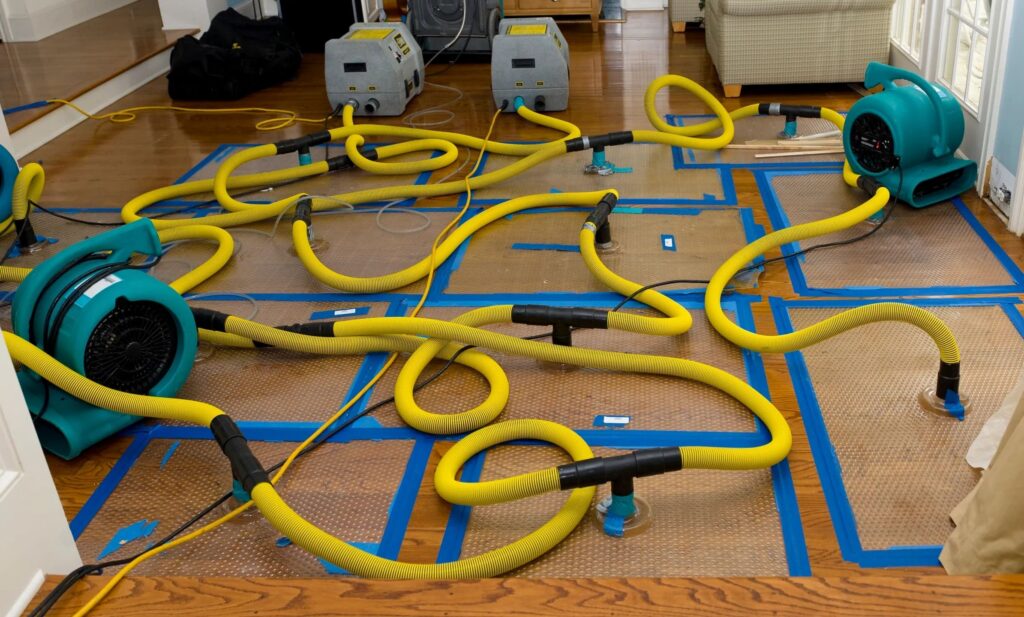
Water damage clean up in any property follows the same general sequence: identify the source, stop the flow, extract standing water, remove unsalvageable materials, dry the structure, and verify clearance. In a Grapeland home, each of those steps has specific characteristics shaped by the age and construction of the property.
Source identification in older Grapeland homes regularly involves plumbing infrastructure that has been in service for decades. Galvanized supply lines, original fixture connections, and cast iron drain components fail in ways that newer PVC and copper systems do not, and identifying the precise failure point sometimes requires opening wall assemblies that show no surface indication of moisture because the water traveled significant distances from the source before appearing anywhere visible.
Material assessment in a Grapeland clean up involves original building materials that require different handling decisions than modern construction. Original hardwood floors, solid wood subfloor sheathing, and plaster wall assemblies all absorb and release moisture differently from the engineered wood and drywall that dominate newer residential construction. Each requires specific drying parameters and monitoring protocols to determine whether it can be dried in place or requires removal.
Extraction in homes with original hardwood flooring requires equipment and technique specifically calibrated for wood rather than standard carpet and pad extraction. Over-aggressive extraction on original hardwood accelerates cupping and cracking. Insufficient extraction leaves moisture in the wood that standard drying equipment cannot remove efficiently. Getting this step right in a Grapeland home often determines whether the original floors survive the event.
The Hidden Clean Up Challenge: What Is Inside the Walls

Water damage clean up in Grapeland’s older homes consistently reveals a challenge that newer construction does not present in the same way: the wall cavity contents.
Homes built in the 1950s through 1970s in the Cucamonga Valley area were frequently insulated with materials that are not found in modern construction, including rock wool, cellulose, and in some cases original fiberglass batts that have been in place for fifty years. When water enters these wall cavities, the insulation material absorbs and retains moisture at a rate and depth that modern fiberglass and foam do not.
More significantly, original plaster wall systems in Grapeland homes behave very differently from drywall in a water damage clean up context. Plaster is dense, slow to dry, and significantly more resistant to standard air mover drying protocols than drywall. A clean up approach calibrated for drywall consistently underestimates the drying time and equipment requirements for a plaster wall system, producing moisture readings that appear acceptable at the surface while the plaster substrate and framing behind it remain elevated.
This is one of the most consistent sources of secondary damage in Grapeland water damage clean up jobs handled by teams without experience in older construction. The surface clears. The wall does not. Three weeks later the homeowner has a mold problem that traces back to an incomplete clean up.
What Proper Water Damage Clean Up Covers in Grapeland
Thorough water damage clean up in a Grapeland home addresses every layer of the damage in the correct sequence:
- Full moisture mapping using thermal imaging before any extraction begins, establishing the true extent of water migration in plaster walls and original subfloor assemblies
- Material-specific extraction protocols for original hardwood flooring that preserve the wood while removing moisture effectively
- Plaster wall drying assessment determining whether walls can be dried in place with extended equipment run times or require opening to access the insulation and framing behind them
- Insulation evaluation in any wall cavity where moisture penetration is confirmed, with removal decisions based on material type and saturation level rather than generic protocols
- Extended drying timelines calibrated to the specific materials present rather than standard residential assumptions
- Daily monitoring at multiple depths confirming that dense original materials are actually drying rather than simply reading dry at the surface
- Mold assessment for any assembly with documented moisture exposure beyond 48 hours, given the dense material characteristics that create favorable mold conditions in Grapeland’s older construction
For context on why daily moisture monitoring at depth matters specifically in older construction with dense building materials, our blog on The Role of Residential Moisture Mapping in Water Damage Restoration explains how thermal imaging and deep material readings produce the complete picture that surface assessment alone consistently misses.
Protecting Original Features During Water Damage Clean Up
One of the most important conversations in a Grapeland water damage clean up job is the preservation discussion. Original hardwood floors, plaster medallion ceilings, solid wood window and door casings, and period-appropriate trim details are features that define the value and character of these homes. They are also features that an aggressive clean up approach, one that defaults to demolition when drying in place requires more time and attention, can eliminate unnecessarily.
Our approach to water damage clean up in Grapeland prioritizes preservation assessment before any removal decisions are made. Specifically:
Original hardwood floors are evaluated for moisture content at multiple points across the affected area before the decision between drying in place and removal is finalized. In many cases, controlled drying with appropriately placed equipment and extended monitoring produces acceptable outcomes without floor removal, preserving original material that cannot be authentically replicated with modern replacements.
Plaster wall surfaces are assessed for structural integrity and moisture depth before any cutting or removal begins. Where moisture is confirmed in the plaster substrate but the surface remains structurally intact, targeted access openings rather than full wall demolition allow drying of the cavity behind without destroying the original wall finish entirely.
Original millwork and trim is documented photographically before any water damage clean up work begins in areas where it may be affected, establishing a pre-loss record that supports both preservation decisions during the job and replacement cost documentation for the insurance claim where removal cannot be avoided.
Your Clean Up Starts With a Call. The Rest We Handle.
Water damage clean up in a Grapeland home is not a one-size-fits-all job. The materials are specific, the infrastructure is aging, and the character of what exists in these homes is worth the extra attention that doing the job properly requires.
PuroClean of Rancho Cucamonga serves Grapeland and every neighborhood across Rancho Cucamonga, Ontario, Fontana, Upland, Claremont, and throughout San Bernardino and western Riverside counties around the clock. For additional context on how we approach water damage restoration claims for older Inland Empire homes with aging infrastructure, our blog on Water Damage Restoration When Your Insurance Claim Gets Denied covers the documentation standards that protect your position with California carriers when older plumbing failures are involved. And for homeowners who want to understand the full water restoration scope that follows a thorough clean up, our blog on Water Restoration in Rancho Cucamonga’s Grapeland Neighborhood explains what comes next after clean up is complete.
Call (909) 481-4399 the moment water appears where it should not be in your Grapeland home. We will be there fast, assess what your home actually needs, and handle the clean up with the care that original materials and genuine neighborhood character deserve.